Alta California Lager 2021

One of the best beers I have ever made was the 2019 edition of Alta California Lager, a Mexican-style light lager. Although I can buy excellent commercial examples easily enough at the grocery store, it is a fun challenge to make this somewhat unforgiving style. The 2020 version was okay, but not quite as good. That round used flaked corn instead of cereal-mashed grits, and I also had to use tap water (because I brewed it near the start of the pandemic, and wasn’t going out much) instead of mineral-light water built from RO.

My main changes for the 2021 version were to modify slightly for my Foundry system parameters, build up from RO water, throw in some BruTanB for clarification/oxidation mitigation, and use gelatin at the time of kegging for fining. I also went back to a cereal mash instead of flaked corn, in order to up the corn flavor and also hopefully get slightly better clarity. It’s also just a bit fun to do a cereal mash (sometimes)!

Alta California Lager 2021

  • 6 lb. Pilsner Zero malt (Viking)
  • 2 lb. Vienna malt (Weyermann)
  • 2 lb. corn grits
  • 4 oz. rice hulls
  • 0.45 oz. Magnum hop pellets (10.1% alpha), 60 minute boil
  • 0.5 tsp. BruTanB, 10 minute boil
  • 1 Whirlfloc tablet, 5 minute boil
  • 0.8 oz. Sterling hop pellets, 5 minute boil
  • 1 tsp. Fermax yeast nutrient, 5 minute boil
  • 1 pkg. Mexican Lager yeast (WLP940), prepared in 1.75L starter

Target Parameters

  • 1.046 s.g., 1.011 f.g., 4.6% abv, 21 IBU, 4 SRM
  • 6.5 gallons of RO water with 1.5 g CaCl to hit target parameter of 17 ppm Ca and 29 ppm Cl
  • 60 minute full volume infusion mash with cereal mash, 152°

Procedure

  • I made a 1.75L starter with 175g of DME, on March 4 (two days before brewing). I cold crashed the starter on the morning of the brew day (March 6), because fermentation had slowed greatly, but not quite stopped.
  • For the cereal mash, I used 2 pounds of corn grits plus 0.5 lb. pilsner malt. I had to add ~1 gallon of water to get the right consistency. I added another ~0.5 gallon due to absorption over the course of the cereal mash. I held the mash around 158° to 160° for 5 minutes before bringing it to a boil. It was closer to a 40 minute boil instead of the planned 30 minutes, to compensate for the fact that the boil stopped as I added cold RO water.
  • For the main mash, I added 6.5 gallons of RO water with 1.5 g CaCl in the main mash tun. This was heated to 150°. I added the hot cereal mash first, and then added the dry malts and stirred them. After adding the cereal mash, it hit around 146 to 148°; not bad! I let the mash settle for 10 minutes before recirculating at 152°. I did a 75 minute mash, just to be safe with full conversion. An iodine test showed full conversion after 65 minutes. Then, I raised the mash to 168° for 10 minutes, before removing the grains.
  • In total, I collected 6.75 gallons of runnings with a gravity of 1.039, for 70% mash efficiency.
  • I boiled for 15 minutes before adding the hops, to bring down the volume and bring up the gravity a touch. So, this meant a 75 minute boil total. Everything else followed the schedule in the recipe.
  • After the boil, I chilled the beer down to ~70°, transferred to the fermenter, and chilled down to 48°. I oxygenated for 40 seconds and then pitched the yeast.
  • I brewed this beer on 6 March 2021.
  • Starting gravity was 1.045, and I fermented at 50°.
  • I raised the beer to 54° on 12 March 2021, and then to 60° on 15 March 2021. On 29 March 2021, I cold crashed and let it sit near freezing until kegging on 5 April 2021.
  • I did a closed transfer, and then briefly opened the lid to add 1 tsp. of gelatin in 1 cup of water, for fining.
  • Final gravity was 1.012, for 4.3% abv.

Tasting

  • Appearance
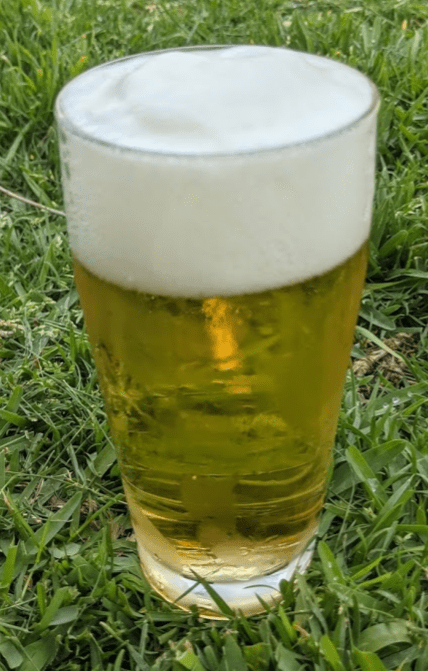
    • Brilliantly clear, light yellow beer with a persistent and fine white head. Gorgeous!
  • Aroma
    • Very clean and crisp, with a subtle, slightly sweet note (probably from the corn) along with a grainy malt note.
  • Flavor
    • The flavor profile is pretty subtle and unobtrusive on this one, making it a very easy drinking beer. There is a very light corn (not DMS!) note, layered on top of the grainy malt character. Bitterness is pretty low and very clean.
  • Mouthfeel
    • Medium-light body, moderately high carbonation, smooth and light finish.
  • Would I Brew This Again?
    • Absolutely! This is a really delightful beer, and I’m so glad that I made it again. It drinks so easily, especially on a warm afternoon, and is just about a perfect beer. The extra work for the cereal mash was perhaps worth it? The gelatin certainly helped the clarity, and I think the fact that I used BruTanB, did a closed transfer, and then purged the keg before adding the gelatin, followed by additional purges, probably helped stave off early oxidation. I’m so impressed by this beer! I might try it next time with flaked corn, and gelatin. My only other very minor note is that I could mash a touch lower, to lighten up the body a bit more…perhaps a 90 minute mash at 145° or so? That’s the only reason I gave it a 9.5 instead of a perfect 10!
  • Overall
    • 9.5/10

Dance Party IPA

This one was a total experiment for me! Experimental hops, experimental yeast, and experimental fermentation. My local homebrew shop had a new variety called Samba, with tropical characters that sounded pretty neat! So, I picked up a few ounces for a batch. I also had been meaning to try out Lallemand’s new dry Voss kveik strain, so grabbed some of those packets.

For this beer, I wanted a tropical/citrus character and fairly light drinkability, alongside a “full-strength” IPA. So, I combined Centennial, Samba, and Simcoe for a whirlpool as well as a dry hop addition.

Dance Party IPA

  • 12.5 lb. 2-row Xtra Pale Malt (Viking)
  • 0.75 lb. Carapils malt (Briess)
  • 1 oz. Magnum hop pellets (10.6% alpha), 60 minute boil
  • 1 Whirlfloc tablet, 5 minute boil
  • 1 oz. Centennial hop pellets (8.1% alpha), 15 minute whirlpool
  • 1 oz. Samba hop pellets (11.6% alpha), 15 minute whirlpool
  • 1 oz. Simcoe hop pellets (12.7% alpha), 15 minute whirlpool
  • 1 pkg. Voss Kveik Ale dry yeas (Lallemand)
  • 1 oz. Centennial hop pellets (8.1% alpha), dry hop in keg
  • 1 oz. Samba hop pellets (11.6% alpha), dry hop in keg
  • 1 oz. Simcoe hop pellets (12.7% alpha), dry hop in keg

Target Parameters

  • 1.059 s.g., 1.013 f.g., 6.1% abv, 62 IBU, 4 SRM
  • Claremont tap water, with Campden tablet and 5 g of gypsum added at the boil, to bump up the bitterness
  • 60 minute full volume infusion mash, 152°

Procedure

  • I mashed in with 7.25 gallons of water at 159°, to hit a mash temperature of 152°. I added 6 mL of 88% lactic acid, to adjust the mash pH.
  • After a 60 minute mash with recirculation at 152°, I bumped up the temperature to 168° for a 10 minute mash-out.
  • Following the mash, I removed the grain basket and brought the kettle to a boil.
  • In total, I had 6.3 gallons with a gravity of 1.050, for 66% mash efficiency. I added 5 g of gypsum to the boil, to bump up the sulfate.
  • I boiled for 60 minutes, adding finings and hops per the schedule.
  • After the boil, I did a 15 minute whirlpool at around 195°, and then chilled down to 90° and transferred to the fermenter.
  • Starting gravity was 1.050. I brewed this beer on 27 March 2021.
  • I pitched the packet of yeast directly, and began fermentation at 90°. After 18 hours, I raised the temperature to 95°, and then raised to 100° at the 24 hours mark after yeast pitch. After 72 hours, I lowered the temperature to 90°.
  • I kegged the beer on 7 April 2021, with the dry hops floating loose in the keg and a screen on the floating dip tube to filter out hops.
  • Final gravity was 1.013, for 5.8% abv.

Tasting

I didn’t have time to do a formal tasting on this one before the keg was kicked, but have a few general perceptions. First, the fermentation had a super clean character, and the kveik lives up to its reputation. I would totally do this fermentation profile again! Second, I really enjoyed the hop combo, but think that I probably overbittered it a bit, and the hops drowned out any potential malt character. There was a touch of astringency from the dry hops also, at times, which I think also detracted from the final flavor. So, if I redo this kind of IPA I might use a more character-rich base malt such as Vienna or Maris Otter and maybe a touch more of a crystal malt (e.g., crystal 20 or even crystal 40). That aside, the Samba hops did live up to their tropical reputation, and played well with the rest of the hops. It might be interesting to switch up the hop combos; I think this beer would be great with any combo of Samba, Citra, and/or Mosaic.

So…I would probably do this again, but modify things significantly. It was definitely worth the experiment, and I’ll likely dive into more kveik fermentations this summer! I give the beer itself a 5/10…not awful, but not quite where I want it to be either.

What’s Brewing? April 2021 Edition

April brewing updates! At the last possible minute!

Beer Batch Updates

  • My “Dance Party IPA” has been kegged, consumed, and kicked! It was a kveik-based tropical-type IPA.
  • I brewed an experimental light ale on 16 April, called “Easy Days Ale.” It’s intended to be a relatively light, flavorful, drinkable brew.
  • On 24 April, I brewed a California common lager, and it’s fermenting along as expected.
  • I kegged the Belgian quad for my club’s barrel project. The beer tastes super good! I had enough left over to set up two bottles, which are now conditioning and will be popped open in a few weeks.

What’s On Tap?

  • This year’s edition of the Alta California Lager is on tap, drinking really nicely.
  • I now have a Pliny the Elder clone on tap, brewed as a 2.5 gallon batch.
  • Twisted Schwarzbier has been a quaffable, enjoyable dark lager.

What’s Coming Up?

  • I have a whole string of lagers planned…on May 1, I’ll be doing a Schell’s Pilsner Clone, and on the following week I hope to do another brew of Mow the Damn Lawn.
    • I plan to rebrew Dunkel-Osteus (Munich Dunkel).

Twisted Schwarzbier

I have brewed schwarzbier once before, and it came out pretty good. I wanted to revisit the style as a warmer-weather dark beer, and so picked out a second recipe from Brewing Classic Styles. This version differed from the last in that it emphasizes pilsner malt more than Munich.

I am contractually obligated to use Space Balls references in any schwarzbier name, with zero apologies from doing so. Thank you.

Twisted Schwarzbier

  • 9 lb. Viking Pilsner Zero malt
  • 1 lb. Munich I malt (Weyermann)
  • 11 oz. Carafa Special II malt (Weyermann)
  • 1 oz. Vanguard hop pellets (6.5% alpha), 60 minute boil
  • 0.5 oz. Mt. Hood hop pellets (4.6% alpha), 15 minute boil
  • 0.5 oz. Mt. Hood hop pellets (4.6% alpha), 5 minute boil
  • 1 tsp. Fermax, 10 minute boil
  • 1 Whirlfloc tablet, 5 minute boil
  • Repitch of Harvest lager yeast (Imperial L17)

Target Parameters

  • 1.049 o.g., 1.013 f.g., 4.7% abv, 30 IBU, 24 SRM
  • 60 minute infusion mash at 152°, full volume
  • Claremont tap water, treated with Campden tablet

Procedure

  • I mashed in with 7.5 gallons of water at 158°, to hit my mash target of 152°. After adding 5 mL of 88% lactic acid, I held the mash at 152°, with recirculation, for 60 minutes. I then raised the mash to 168°.
  • After the mash, I removed the grain basket and collected 6.75 gallons of wort with a gravity of 1.041, for 69% mash efficiency.
  • I brought the wort to a boil, adding hops and finings per the recipe. After 60 minutes, I turned off the heat and chilled it down to 70°, before transferring to the fermenter and chilling down to 52° in the fermentation chamber.
  • After the wort hit fermentation temperature, I oxygenated with 30 seconds of pure O2, and then pitched the yeast.
  • I brewed this beer on 6 February 2021. It had a starting gravity of 1.048.
  • I started fermentation at 52°, held it here for three days, raised to 54° for three days, and then finished at 56° for three days, before cold crashing.
  • I kegged the beer on 27 February 2021. Final gravity was 1.014, for 4.5% abv.

Tasting

  • Appearance
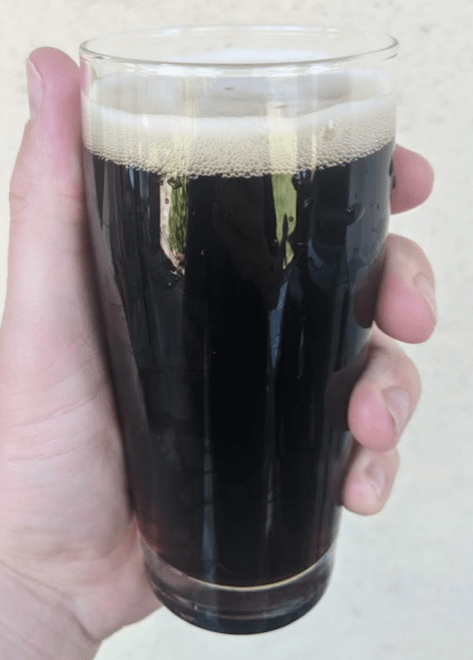
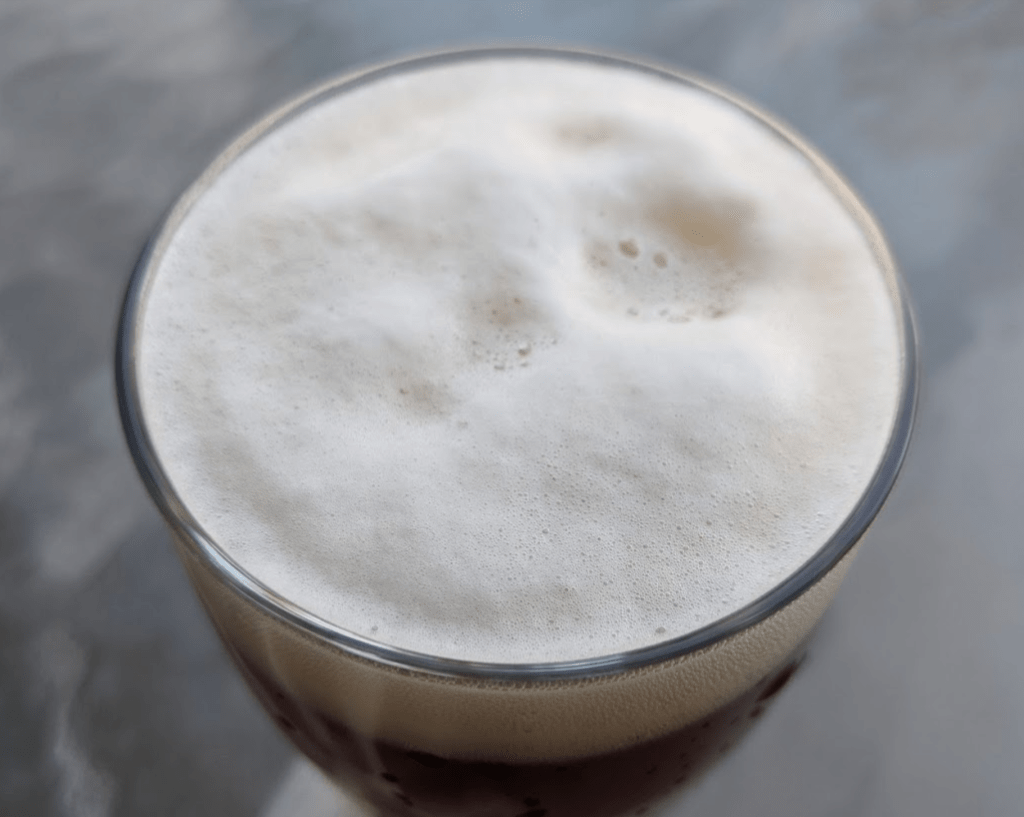
    • Brilliantly clear, deep brown beer, pouring with a persistent tan head.
  • Aroma
    • Roasty and coffee aroma, at a moderately high level.
  • Flavor
    • Roasty malt and coffee flavor, with a bready malt character in the background. Moderately high level of bitterness. Clean yeast character. Extended bitterness on the finish.
  • Mouthfeel
    • Medium-light body, moderate carbonation, off-dry finish.
  • Would I brew this again?
    • Perhaps? It’s a good, clean beer, but if feels like I could dial back the roast/coffee character a touch and move the base malts (especially the Munich) more to the forefront. I think if I were to rebrew this, I would add a bit more Munich, or maybe add in some Vienna, and reduce the percentage of pilsner malt. That said, this beer is very drinkable, so I wouldn’t make it too heavy for the base malts. Based on the BJCP written descriptions, it seems to be a great example of the schwarzbier style, but just isn’t to my taste.
  • Overall
    • 9/10

Alstadt Altbier 2.0

Altbier is a really enjoyable style for me, but it’s tough to find a good version commercially in our area. So, I’ve been brewing it from time to time in the quest for a perfect batch. I think I might have found one!

My jumping off point was the Alstadt Altbier recipe from Horst Dunbusch’s Altbier book. I made a version of it last year, and was fairly happy with the results. At the time, I noted that I would like a touch more hop character, and would also like to experiment with using CaraMunich or something similar instead of American Crystal 60. So…that’s what I did for the latest version!

The base of the new batch is fairly similar to the old one, with 61% pilsner malt,14% Munich I, and 14% Vienna malt. Instead of crystal 60, though, I used an even split of Briess’s Caramel Munich 60L and Weyermann’s Caramunich I. I also swapped out Carafa Special III for Carafa Special I, in the color adjustment (I figure such a small amount won’t make a major flavor difference, but the devil is in the details). Finally, I dropped in some Spalt for the aroma addition (instead of Mt. Hood).

The end result is spectacular. The aroma in a freshly poured glass is absolutely heavenly, and the beer drinks so easily. I will be making this again!

Alstadt Altbier 2.0

  • 6.5 lb. Pilsner Zero malt (Viking)
  • 1.5 lb. Munich I malt (Weyermann)
  • 1.5 lb. Vienna malt (Weyermann)
  • 0.5 lb. Caramel Munich 60L malt (Briess)
  • 0.5 lb. Caramunich I malt (Weyermann)
  • 2 oz. Carafa Special I malt (Weyermann)
  • 1.2 oz. Sterling hop pellets (7.4% alpha), 60 minute boil
  • 1.0 oz. Spalt Spalter hop pellets (3.0% alpha), 5 minute boil
  • 1 Whirlfloc tablet
  • 1 pkg. German ale dry yeast (Fermentis K-97)

Target Parameters

  • 1.048 s.g., 1.012 f.g., 4.8% abv, 34 IBU, 13 SRM
  • 60 minute infusion mash, full volume, 152°
  • Claremont tap water treated with Campden tablet

Procedure

  • I mashed in with 7.1 gallons of water at 158°, to hit a mash temperature of 152°. I added 4mL of 88% lactic acid and held the mash here (with recirculation) for 60 minutes, before raising to 168° for the 10 minute mash-out.
  • After removing the grain basket, I had 6.4 gallons of wort with a gravity of 1.040. This is only 64% mash efficiency–this spurred me to tighten down the mill from 0.037″ to 0.034″.
  • I brought the runnings to a boil, adding malt and finings per the recipe. After the 60 minute boil, I chilled to 78° and transferred to the fermenter. I think let it sit at ambient for a few hours before pitching the yeast at ~69°. Ambient was around 60°, so the beer finished out fermentation at that temperature.
  • I brewed the beer on 1 January 2021, and it had a starting gravity of 1.046. I kegged the beer on 31 January 2021, and it had a final gravity of 1.013. This works out to 4.3% abv.

Tasting

  • Appearance
    • Deep amber color, brilliantly clear. Persistent and creamy ivory colored head.
  • Aroma
    • Floral hops and rich bread crust aroma, both very prominent. This is a delicious combo! So good!
  • Flavor
    • Rich malty flavor of bread crust, and a clean yeast character. There is a slightly floral hop flavor. The beer is moderately bitter, with the balance tilted very slightly to bitter over malty. There is a low level of a cherry/fruity ester.
  • Mouthfeel
    • Medium body, moderate carbonation, slightly dry finish, but not too much so.
  • Would I brew this again?
    • YES. This is the best altbier I have ever done, and it is a massive step beyond the previous (also pretty good) version. The malt and hop character are amazing, making an incredibly interesting and very drinkable beer.
  • Overall
    • 10/10