
German pils is perhaps my favorite style. It’s surprisingly complex, highlights both malt and hops in a non-IPA sort of way, and is a fun challenge to do well. At current count, I’ve made 16 batches over the past 7 years.
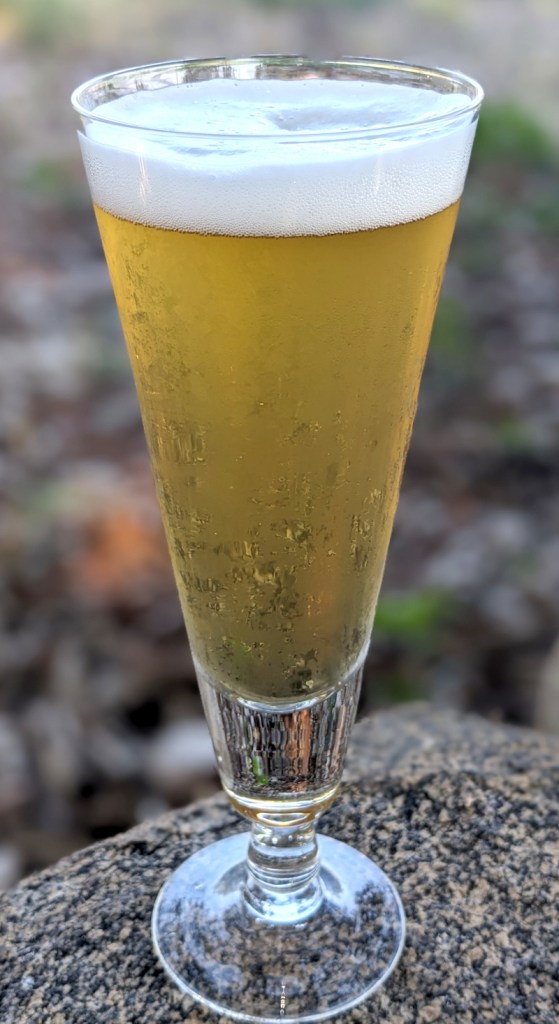
My latest batch retreads the Pfriem Pils recipe from Dave Carpenter’s Lagers book. I’ve made versions of this twice previously, and it’s a really solid beer. Every iteration has some changes in hops, grist, and yeast, and this version is no different. I leaned into the HOPBOX European hops I had on hand, ending up with a nice combo of Hallertauer Mittelfrueh, Saaz, and Tettnang. Although the original recipe calls for acidulated malt, I worked with lactic acid instead, which provides pretty much the same effect. Lallemand’s Diamond Lager yeast rounded out the recipe–this strain is (in my opinion) one of the best dry lager yeasts out there right now. It ferments quickly and cleanly, and drops clear with minimal fuss.
Pfriem Pils 2023
- 9.5 lb. Viking Pilsner Zero malt
- 0.5 lb. Carafoam
- 0.5 tsp. BrewTanB (added to mash)
- 1.5 oz. Hallertauer Mittelfrueh hop pellets (5.2% alpha), 60 minute boil
- 0.5 tsp. BrewTanB, 10 minute boil
- 1 Whirlfloc tablet, 5 minute boil
- 1 oz. Saaz hop pellets (2.4% alpha), 5 minute boil
- 0.5 oz. Tettnang hop pellets (2.2% alpha), 5 minute boil
- 1 oz. Saaz hop pellets (2.4% alpha), 10 minute whirlpool
- 1.5 oz. Tettnang hop pellets (2.2% alpha), 10 minute whirlpool
- 2 pkg. Diamond Lager dry yeast (Lallemand)
Target Parameters
- 1.046 s.g., 1.007 f.g., 5.1% abv, 4 SRM, 36 IBU
- Full volume step mash, with 45 minutes at 144°, 30 minutes at 156°, and 10 minutes at 168°; 60 minute boil
- Water built up from RO, to hit target parameters of 59 ppm Ca, 8 ppm Mg, 89 ppm SO4, and 63 ppm Cl, with RA=-47 ppm
Procedure
- To 7.5 gallons of RO water, I added 2.9 g gypsum, 2.4 g epsom salt, and 3.7 g of calcium chloride, in order to hit my target parameters.
- I heated the strike water to 146°, and added the grains and BrewTanB. I set the mash for 144° with recirculation, holding it here for 45 minutes. Then, I raised the mash to 156° for 30 minutes, and finally mashed out at 168° for 10 minutes.
- After removing the grains, I had 6.6 gallons of runnings with a gravity of 1.037, for 66% mash efficiency.
- I brought the kettle to a boil, boiling for 60 minutes and adding the hops and finings per the recipe. Finally, I turned off the heat and chilled down to 82°. I let things settle, transferred to the fermenter, and let it chill to 50° before pitching the yeast.
- Starting gravity was 1.044. I brewed this beer on 12 August 2023.
- The beer was held at 52° for the bulk of fermentation, and raised to 60° on 19 August. I crashed it to 34° on 27 August 2023.
- I kegged the beer on 7 September 2023, using a closed transfer. It tastes amazing at this point, with notes of hay in the aroma. In terms of appearance, it’s still reasonably hazy. Final gravity was 1.012, for 4.2% abv. It’s a true session beer!
Tasting
- Appearance
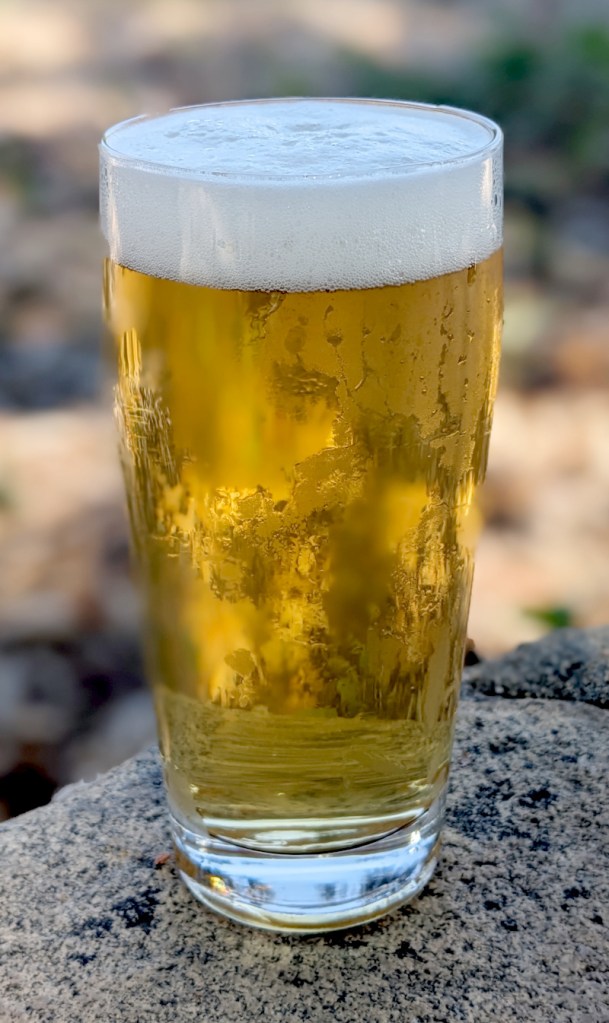
- Very clear, nearly brilliant; a light yellow beer with a persistent and creamy white head.
- Aroma
- Lightly spicy (like a spice cake); malt aroma is slightly sweet.
- Flavor
- Medium-high bitterness with a lingering finish; slightly herbal quality to the hop profile. The beer has a crackery malt flavor, with a bit of sweetness also. The balance is tilted towards the bitter side.
- Mouthfeel
- Smooth, moderate body, with medium-low carbonation (especially when “slow-poured”). Moderately dry and very crisp finish.
- Would I Brew This Again?
- Yes! It’s a great recipe. I might like to try it with more floral-type hops, such as the Edelweiss blend, for something different. I perfected a slow-pour on my faucet, to approximate the creamy and highly persistent heads you can get with the “side-pour” taps. Now that I’ve figured this out, I’m happy with the beer on home draft.
- Overall
- 10/10
 Andy's Brewing Blog
Hi Andy,
Thanks for sharing the Water profile. I just began using RO water but am uncertain about the conversion of ‘ppm’ to Teaspoons (or Grams).
Can you direct me to some conversion table that may help me. I usually brew Czech or German Lagers, and an occasional Amber Ale.
Thank you,
Rob Flott
robflott@sbcglobal.net
LikeLike
Hi Rob! That’s a great question. I use the Water Profile Tool in BeerSmith to figure out the amounts. The Brewer’s Friend website also has a (free) tool — https://www.brewersfriend.com/water-chemistry/. It will give you additions either by mass or volume (tsp/tbs). I would suggest going by mass if you have a good scale, but that is just my paranoia about my water! A teaspoon/tablespoon measure will likely get you in the right ballpark.
LikeLiked by 1 person