Kölsch Minimus

I keep coming back to the kölsch style, iterating through various grain bills and yeast choices. My past attempts (here [with process notes], here, and here) have been pretty good, but not quite on the mark of what I’m looking for.
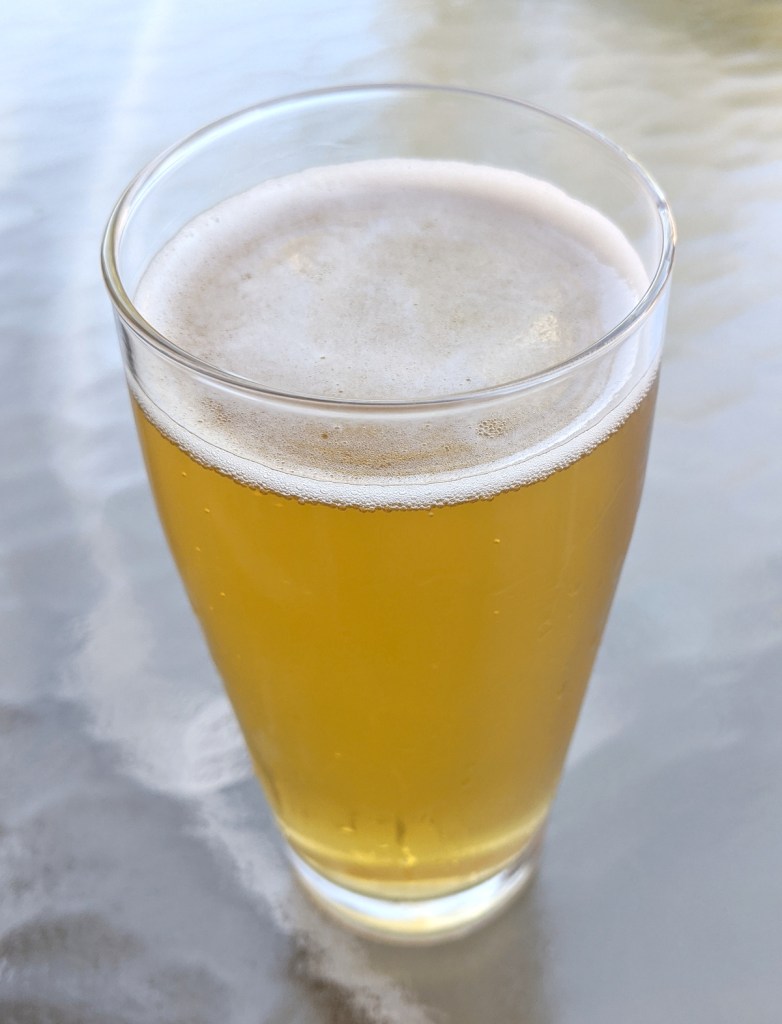
pale gold beer with thin white head in clear glass, sitting on glass patio table

My recipes have evolved considerably over three attempts. The first version (Vitamin K Kölsch Clone), brewed way back in 2015, was a fairly typical American brewpub version, with a measure of wheat malt. My next version, Kölsch Simple, used a Kolsch base malt from Schill Malting, but ended up a bit darker and maltier than typical for the style. My most recent attempt, Kölschy Kölsch, was closer to the mark but still a bit stronger on the malt character than I wanted.

So here we are at kölsch attempt number four! I wanted something quite drinkable, with an abv on the lower end of things, and a simple malt character. Kölsch Minimus is the result! My recipe philosophy was to go with a majority (95%) pilsner malt, and then a touch of Munich I (5%) to add a teeny bit of character. Hops were all American equivalents of German hops, and I used a dry yeast (K-97) for fermentation.

Kölsch Minimus

  • 9.5 lb. pilsner malt (Weyermann)
  • 0.5 lb. Munich I malt (Weyermann)
  • 0.8 oz. Sterling hop pellets (7.4% alpha), 60 minute boil
  • 1 tsp. Fermax, 10 minute boil
  • 1 Whirlfloc tablet, 5 minute boil
  • 0.2 oz. Sterling hop pellets (7.4% alpha), 5 minute boil
  • 1 pkg. SafAle German Ale yeast (K-97)

Target Parameters

  • 60 minute infusion mash, 152°, batch sparge
  • 1.046 o.g., 1.012 f.g., 4.5% abv, 21 IBU, 3 SRM
  • Claremont tap water adjusted to hit hit 52 ppm Ca, 2 ppm Mg, 26 ppm Na, 40 ppm SO4, 94 ppm Cl, 24 ppm HCO3, -19 ppm RA, 20 ppm alkalinity

Procedure

  • The night before brewing, I prepared my water by adding 7.5 mL 88% lactic acid and 1/2 Campden tablet to 9 gallons of tap water. The lactic acid knocked out the carbonates, to bring the hardness of the water down.
  • I mashed in with 3.5 gallons of water at 163°, to hit a mash temperature of 152°. After 60 minutes, I added 1.5 gallons of water at 185°, let sit 10 minutes, vorlaufed, and collected the first runnings. I then added another 3.75 gallons of water at 185°, let sit 10 minutes, vorlaufed, and collected the second runnings.
  • In total, I collected 7.2 gallons of runnings with a gravity of 1.041, for 77% mash efficiency.
  • I boiled the wort for 60 minutes, adding hops and finings per the recipe.
  • After the boil, I chilled the wort down to 74°, transferred it to the fermenter, pitched the yeast, and chilled the beer the rest of the way down to 64° in the fermentation chamber.
  • I brewed the beer on 7 June 2020, with a starting gravity of 1.048.
  • I kept fermentation temperature at 64° for six days (until 13 June 2020), when I moved the fermenter to ambient in order to make room for another beer in the fermentation chamber. By this point, bubbling through the airlock had largely ceased.
  • I kegged the beer on 22 June 2020, transferring into a CO2-purged keg. The fermenter had a slight whiff of sulfur when opened; it wasn’t overpowering, and was subtle enough to be pleasant against my taste of the uncarbonated beer.
  • Final gravity was 1.009, for 5.1% abv.

Tasting

  • Aroma
    • Subtle malt aroma with a slightly grainy character; I don’t pick up any fruitiness from the yeast, but there is a very subtle sulfury character that is quite pleasant against the malt. No noticeable hop aroma.
  • Appearance
    • Pale gold, slight haze; white head that thins out shortly after pouring but is reasonably persistent
  • Flavor
    • Soft, highly drinkable beer, with a pleasantly understated grainy/sweet malt character. Bitterness is moderate against the malt, and quite smooth. Hop flavor is low, with a spicy quality (as expected with these hops). I get very little in the way of yeast character.
  • Mouthfeel
    • Medium-light body, moderate carbonation, crisp finish.
  • Would I brew this again?
    • This is probably the best kölsch-style ale I have brewed to date. The malt character is exactly where I want it, and the hops are pretty much perfect too. I’m pleased with how the yeast performed here. The only minor flaw is in the clarity of the beer–I am simply too lazy to fine this batch, and I was a bit worried about oxidation if I opened up the keg. I suspect it will clarify a little more with extended time in the keg, although this is likely at the risk of flavor degradation.
  • Overall
    • 8.5/10

What’s Brewing? July 2020 Edition

After a flurry of brewing in June, I took a few weeks off to let some batches ferment, condition, and carbonate. My lagers are often a little rushed to the tap, so my hope is to build in more wiggle room in my schedule so that the beers get more time to…well, lager. Even so, the fermenters and kegs are pretty full right now!

Beer Batch Updates

  • I kegged my amber ale on 23 June 2020, after 10 days in the fermenter. As is usual for ales these days, I’m carbonating with corn sugar, and topping that off with a bit of CO2 from my cylinder. I ended up with 5.0% abv, pretty much exactly along calculations for his recipe! I threw the beer into the lagering chamber on 7 July 2020, after two weeks of carbonating at ambient temperature.
  • My kölsch-style ale is carbonating and conditioning. In this case, I’m force carbonating at 33°, to help keep the delicate flavors more intact (versus letting it sit at roughly room temperature to carbonate), and also to get a jump start on dropping out the yeast. I used K-97 on the batch, which experience shows tends to flocculate pretty slowly. This beer started at 1.048 and ended at 1.009, for 5.1% abv. Initial tastes are pretty good–it’s still super hazy, but the flavor is really nice.
  • I brewed a light (lite) American lager on 20 June 2020, the famous “Mow the Damn Lawn” recipe from Annie Johnson. It’s a wonderfully simple beer, with just 2-row and flaked rice, clocking in at 1.045 o.g. I repitched a jar of Que Bueno yeast (Imperial) from my Mexican-style lager, and the little yeasties took off! Even though I was fermenting at 49°, I got pretty steady bubbling out of the blowoff tube within 12 hours. I’m going to let this beer get a good long fermentation, and hopefully a good long conditioning phase.
  • A few days after my light lager (24 June), I set in for a Munich helles-style lager. I patterned the recipe after one from Gordon Strong, with a bulk of pilsner malt supplemented by light Munich and touches of Carahell and Carapils. I’m also hoping to have a long conditioning phase with this one.
  • For both of the above lagers, they ran at 50° from 24 June to 1 July. I let them free-rise to 54° on the evening of 1 July, up to 58° on 3 July, up to 60° on 4 July, and then started a slow drop to 55° on 5 July. I ratched it down to 50° on 6 July. Over the course of the day on 7 July, I dropped to 45° and then 40°. On 8 July, I dropped to 35°, before a final drop to 33° on 9 July 2020 (today).

What’s On Tap?

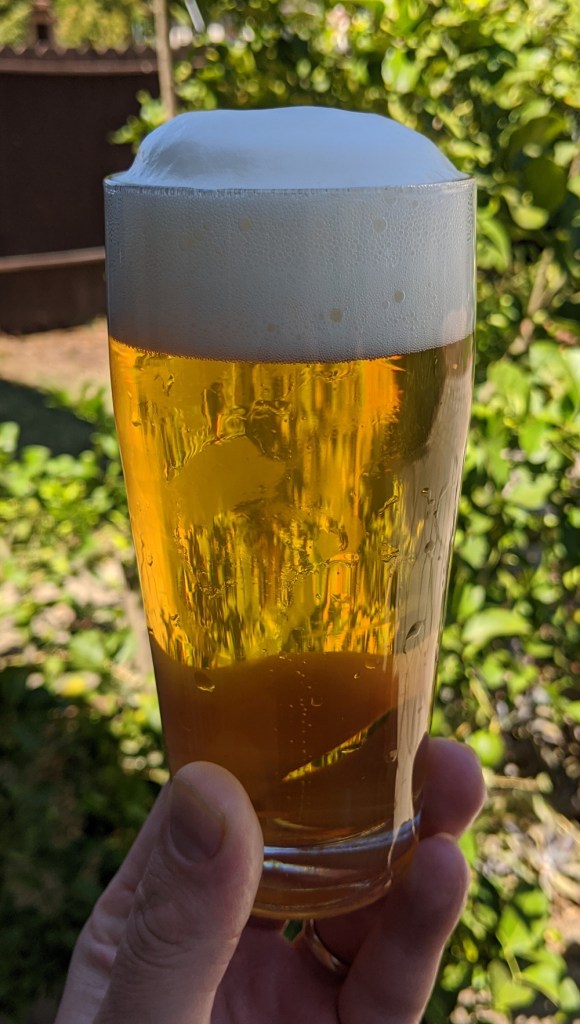
golden lager with frothy white head, held aloft in clear Willi Becher glass against green sunlit yard
Tremonia Lager, in a Willi Becher Glass
  • Adalatherium Pale Ale
    • I put this beer on tap just a few days before the June “What’s Brewing?” update, and now it’s really at peak drinkability, and pretty nice clarity too. As described in the tasting notes, the yeast/hop combo doesn’t quite work, but it’s not a dumper, either. How’s that for a ringing endorsement? It’s definitely gotten better as it sits in the keg.
  • Tremonia Lager
    • My first-ever Dortmunder Export is pretty delightful, and makes a nice pale lager for afternoon sipping. It continues to drink nicely, although I expect I’ll probably finish up the keg soon.
  • Alstadt Alt
    • After a month of kegging and conditioning, the beer is finally dropped clear. It’s super enjoyable!

What’s Coming Up?

  • I need/want to do another IPA soon, and am thinking about a session rye IPA (RyePA?). The idea is to do something in the classic northwest IPA tradition, with old-school citrus/piney hops.
  • It’s been years since I did a Berliner-weisse style beer, and with the warm summer months, there’s no better time. I’m going to give it a try sometime soon, probably with a smallish (3 gallon) batch and a yogurt-based culture.
  • Also along the lines of lightly soured beers, I plan to do the Raspberry Belgian.

Other Than Beer

  • I snagged some Willi Becher glasses, to upgrade my drinkware. I used to love my lonely single Willi Becher, but it broke. Searching online, it was easy to find these glasses in the 16 oz. and 20 oz. sizes, but I honestly don’t want (or need) to pour that amount of beer most of the time! I settled on 0.375 L / ~12 oz. glasses, but wow, they were hard to find at a decent price. I eventually got success, and am really happy with them (see the above photo). In a good slow pour, the head piles up so nicely!

Alstadt Alt

German brewing is more than lagers and wheat ales, although I’ve certainly had fun with those lately. For my latest foray, I’m exploring the world of altbiers. I’ve brewed an Americanized version of this amber-colored ale previously, with moderately good results. However, I felt like it was time to delve once more into the classic style.

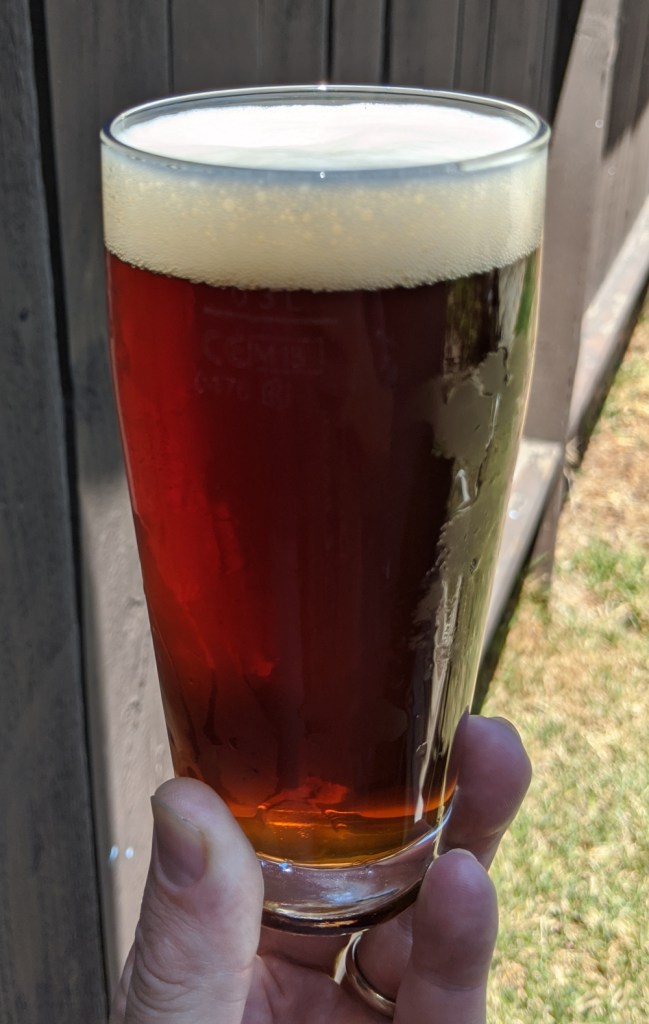
copper-colored beer with off-white head in clear glass, held aloft in hand

I started with the book on altbier by Horst Dornbusch. This volume is part of the Classic Beer Style series from Brewers Publications–I really love them because they are compact, informative, and full of recipes. Some of the books (like the altbier one) are over 20 years old now, which does make me wish for a minor polish to reflect advances in malts and yeasts available to homebrewers nowadays. Nonetheless, the series provides a really nice way to cut straight to the point of a style.

The altbier book has nine recipes of varying grain bills and starting gravities, so I started with something of lower alcohol and straightforward composition. This recipe was Alstadt Alt (p. 100 of the book), described as being typical of the style served in Düsseldorf. The recipe clocks in at 1.048 o.g., 4.8% abv, and 40 IBU. Its grain bill is fairly simple, with 60% “two-row malt,” 15% Munich, 15% Vienna, and 10% crystal 60. This is an area where I think a modern update would be most needed, so I had to punt a bit on malt varieties. I settled on a pilsner malt (consistent with recommendations from elsewhere in the book), with light Munich, Vienna, and American crystal 60. I suspect a German crystal equivalent (maybe CaraMunich II) would also work for the latter, and might produce something truer-to-style (whatever that means).

Curiously, my initial formulation came a bit short of the color in the book’s recipe, at 10 SRM vs. 18 SRM. As I played around in BeerSmith, substituting Munich II for Munich I barely kicked up the color (maybe by 0.5 SRM), and same for substituting in American 2-row for the pilsner malt. I have no idea why this is; perhaps a calculation error by the author? So, I added a touch of Carafa Special III to bring the color more closely to style (14 SRM). This is still a tiny bit lighter than the original recipe (18 SRM), but I thought would be just fine.

In any case, this was a fun batch to brew and a fun style to drink. I’ll be making more altbiers in the future!

Alstadt Alt

  • 6.25 lb. Superior Pilsen malt (Great Western)
  • 1.75 lb. Munich I malt (Weyermann)
  • 1.75 lb. Vienna malt (Great Western)
  • 1.25 lb. Crystal 60 malt (Great Western)
  • 2 oz. Carafa Special III
  • 0.75 oz. Magnum hop pellets (13.2% alpha), 60 minute boil
  • 0.5 oz. Mt. Hood hop pellets (4.6% alpha), 5 minute boil
  • 1 tsp. Fermax, 10 minute boil
  • 1 Whirlfloc tablet, 5 minute boil
  • 1 pkg. German Ale/Kolsch yeast (White Labs WLP029), repitched slurry from my kölsch

Target Parameters

  • 60 minute infusion mash, 152°, batch sparge
  • 1.049 o.g., 1.011 f.g., 5.0% abv, 34 IBU, 14 SRM
  • Claremont tap water

Procedure

  • I mashed in with 3.75 gallons at 162°, to hit a mash temperature of 151°. It was down to 149° after 30 minutes.
  • After a 60 minute mash, I added 1.3 gallons of water at 185°, let sit for 10 minutes, vorlaufed, and collected first runnings.
  • Next, I added 3.75 gallons of water at 185°, let it sit for 10 minutes, vorlaufed, and collected the second runnings.
  • In total, I collected 7.1 gallons of runnings with a gravity of 1.039, for 68% efficiency. This was a touch lower than expected, but we’ll just roll with it!
  • I brought the kettle to a boil, boiling for 60 minutes and adding hops and finings per the schedule.
  • After 60 minutes, I chilled down to 75°, transferred to the fermenter, and chilled down to 65° in the fermentation chamber.
  • Once the wort was at temperature, I pitched a slurry of yeast I had saved from my kölsch-style ale. Fermentation kicked off pretty quickly.
  • I brewed the beer on 9 May 2020, and it had a starting gravity of 1.047.
  • Fermentation was at 65° for around the first two weeks, and then I pulled it out to ambient for the rest of the fermentation.
  • I kegged the beer on 11 June 2020, adding 2.9 oz. of corn sugar in 1 cup of water. I had nearly a full keg, which was nice.
  • Final gravity was 1.012, for 4.6% abv.
  • I kept the keg at 66° until 20 June 2020, when I put it into the lagering chamber to cold crash at 33°. I also hooked it up to CO2 gas directly, to finish out carbonation to the desired level (~2.6 volumes of CO2).
  • As expected for the German ale yeasts, flocculation was pretty minimal, so on 22 June 2020, I added 1/2 tsp. of gelatin dissolved in 1/2 cup of water and held at 150° to pasteurize. In other circumstances, I might have been more patient, but I had a tap open up on my keezer, and wanted to fill the space!

Tasting

  • Appearance
    • Deep copper in color and clear, with an ivory-colored and relatively persistent head. The head starts pretty tall, but settles to a thin blanket as the beer warms up.
  • Aroma
    • Lightly bready aroma, slightly crusty, with a touch of caramel; maybe a hint of hop spice, but the aroma is decidely on the malty side. I don’t really pick up anything in the realm of yeast character.
  • Flavor
    • Bready malt character, very nice; moderate and firm bitterness, but the balance of the beer is nicely balanced between malt and hop (maybe slightly tilted towards the hoppy side). The beer is surprisingly light and quaffable. Hop character is pretty clean, with a spicy character. The finish is smooth, with an extended yet pleasant bitterness.
  • Mouthfeel
    • Moderately light body, moderate carbonation; finish is moderately dry but not overly so. This beer drinks very smoothly, especially as it has conditioned.
  • Would I brew this again?
    • This is a nice recipe…I’d definitely give it a try again! I would like to try it with an all-German grain bill, especially to substitute in CaraMunich II for the crystal 60. I like that this beer has plenty of malt character, without being cloying. It’s a pretty solidly drinkable summer amber beer. My perceptions of the beer match up partially with how it is described in the recipe. The beer is described as medium-coppper in color, and I perceive mine as a deep copper (there is no way their color value of 18 SRM isn’t amber!). Hop character is maybe a bit lower on mine (I don’t perceive much, and the recipe is described as having “a light hoppy nose”). In terms of the BJCP guidelines, it hit those pretty darned well. It could maybe have a touch more hop character in the aroma, but there is very little I would change about this beer otherwise. It’s a winner!
  • Overall
    • 9/10