Munich Madness II

German beers are certainly my favorite, although a classic German pils is probably my most frequently brewed style within that realm (19 batches since 2016). I haven’t done many märzens, and it seemed like a good seasonal style to explore again. My first version was Monks’ Fortitude Märzen, and it was an exceptional beer. Malt is at the forefront of this style, with Monks’ Fortitude hitting 1.055 with 71% Vienna, 25% Munich II, and 4% Carared malts. For my latest foray into märzens, I took a page from Brewing Classic Styles, via their Munich Madness recipe. Atlhough BCS is pushing 20 years old, it has stood the test of time as a handy reference, especially for styles that have been pretty constant.

My version of Munich Madness has been adjusted slightly from the original, primarily to lower the abv a bit. The original had a starting gravity of 1.059, so I dropped it to 1.054 to hit the lower bound of the BJCP style and also make it a bit more drinkable for my tastes. This was done by maintaining the grain proportions and dropping the amounts slightly, and drops the recipe from around 6% to the lower end of 5%.

Munich Madness II

  • 4.75 lb. pilsner malt (Rahr)
  • 3.5 lb. Munich I malt (Weyermann)
  • 2.75 lb. Vienna malt (Weyermann)
  • 0.75 lb. Caramel Munich 60L malt (Briess)
  • 0.5 tsp. BrewTanB, added to mash
  • 2 oz. Hallertauer Mittelfrueh hop pellets (2.7% alpha), 60 minute boil
  • 0.5 tsp. BrewTanB, 10 minute boil
  • 1 Whirlfloc tablet, 5 minute boil
  • 3 pkg. Diamond Lager dry yeast (Lallemand)

Target Parameters

  • 1.054 o.g., 1.013 f.g., 5.3% abv, 19 IBU, 10 SRM
  • Full volume mash at 152° for 60 minutes, 10 minute mash-out at 168°
  • Claremont tap water, with Campden tablet, adjusted to hit water profile of 56 ppm Ca, 12 ppm Mg, 87 ppm Na, 89 ppm SO4, 110 ppm Cl, and 20 ppm CO3.

Procedure

  • Starting with 7.5 gallons of tap water, I added a Campden tablet and 6.25 mL of 88% lactic acid, followed by 2 g of gypsum, in order to hit my water profile.
  • I heated the water to 158°, and added the grains, holding at 152° with recirculation for 60 minutes before heating to 168° and holding there for 10 minutes.
  • At the end of the mash, I removed the grains. In total, I collected 6.75 gallons of runnings with a gravity of 1.045, for 70% mash efficiency.
  • I brought the runnings to a boil, adding hops and finings per the recipe. After 60 minutes, I turned off the heat and chilled to 80° before transferring to the fermenter.
  • I chilled the fermenter overnight down to 50°, before pitching the yeast.
  • I brewed the beer on 13 September 2024 and pitched the yeast on 14 September 2024. Starting gravity was 1.053.
  • I fermented at 52° until 30 September 2024, when I let the beer free rise to 60°, and then pulled to ambient (~74°) on 5 October 2024.
  • I kegged the beer via closed transfer on 12 October 2024. Final gravity was 1.012, for 5.4% abv.
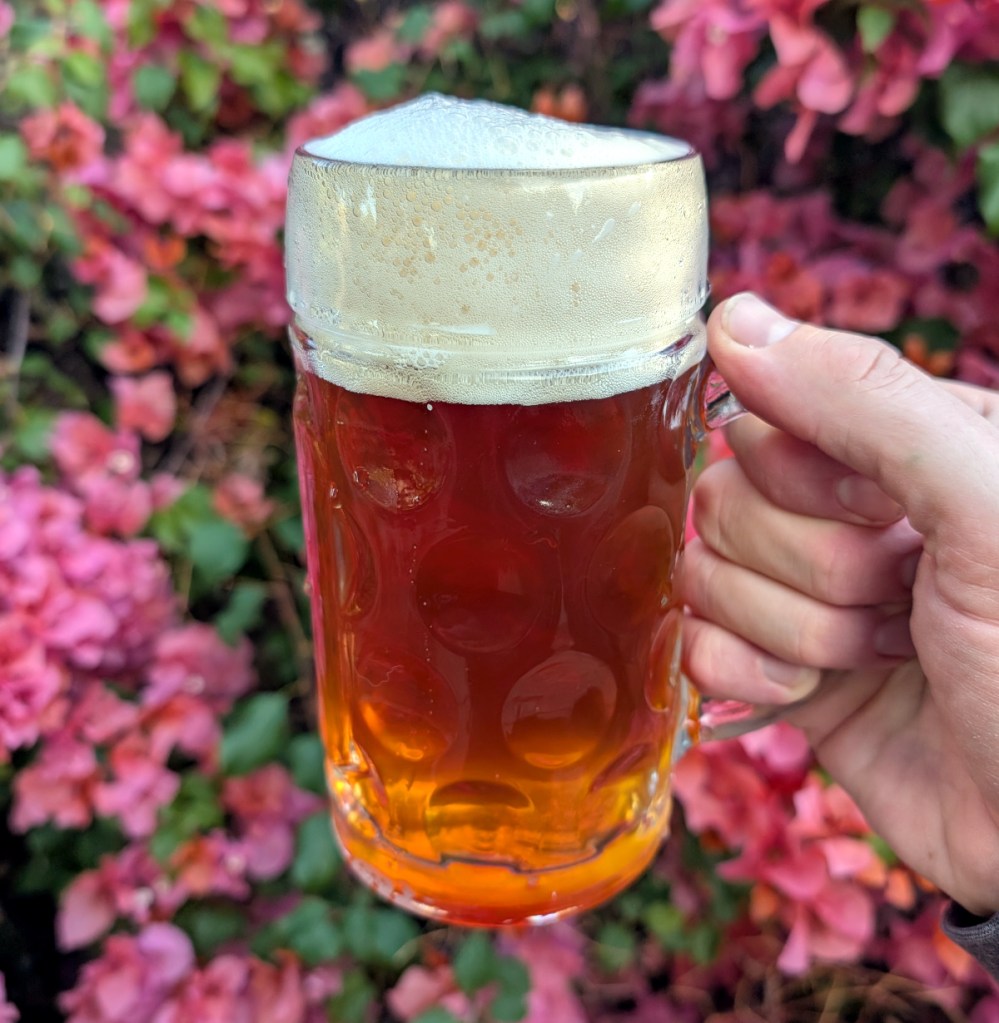
amber beer with ivory head held aloft in dimpled German mug, with background of pink flowers

Tasting

  • Appearance
    • The beer pours with a tall and persistent ivory head; it is a clear and medium amber-orange beer.
  • Aroma
    • A moderate bread crust malt character at the forefront; slight spicy hop aroma behind that.
  • Flavor
    • Very rich, malty character dominates the flavor, with some bready notes. A medium-low, clean bitterness with a hint of spice is behind that. Yeast profile is clean. It is a very easy drinking beer!
  • Mouthfeel
    • Medium body, moderate carbonation, smooth finish that is slightly dry.
  • Would I brew this again?
    • This is a fantastically drinkable fall lager, which is interesting but not so interesting that I can’t have another. The malt character is excellent. I rushed this beer just a touch (relative to a “traditional” märzen) in terms of lagering, and a little more time would help it condition and clear to brilliance. Overall, though, this is a winner! [note added after the post was published – by mid-December, the beer had cleared to brilliant; so, a minimum of two months seems to be optimal for this style, recipe, and yeast]
  • Overall
    • 8/10

Oktoberfest 2023

It’s nice to brew a festbier from time to time; I most recently made one nearly four years ago! They are a perfect style for fall and winter, given their malt complexity as well as their high drinkability.

For this version, I followed Gordon Strong’s Modern Oktoberfest recipe from Modern Homebrew Recipes. My main adjustment was to swap in some Bohemian floor-malted malts that I had on-hand from the recent Czech dark lager project.

Oktoberfest 2023

  • 9 lb. Pilsner Zero malt (Viking)
  • 4 oz. Floor-Malted Bohemian Pilsner malt (Weyermann)
  • 1 lb. 10 oz. Floor-Malted Bohemian Dark malt (Weyermann)
  • 0.5 lb. Munich I malt (Weyermann)
  • 1 lb. Vienna malt (Weyermann)
  • 0.5 tsp. BrewTanB, added to mash
  • 1 oz. Hallertauer Mittelfrueh hop pellets (5.2% alpha), 60 minute boil
  • 0.5 tsp. BrewTanB, 10 minute boil
  • 1 Whirlfloc tablet, 5 minute boil
  • 0.5 oz. Hallertauer Mittelfrueh hop pellets (5.2% alpha), 5 minute boil
  • 2 pkg. Novalager dry yeast (Lallemand)

Target Parameters

  • 1.056 s.g., 1.005 f.g., 6.7% abv, 21 IBU, 5 SRM
  • Full-volume infusion mash, held at 146° for 40 minutes, 158° for 20 minutes, and 168° for 10 minutes
  • Claremont tap water, adjusted with lactic acid and minerals to hit target parameters of 59 ppm Ca, 12 ppm Mg, 54 ppm Na, 50 ppm SO4, 107 ppm Cl, 10 ppm HCO3, 8 ppm alkalinity, -41 ppm RA

Procedure

  • I collected 8.1 gallons of water, adding 5.7 mL of 88% lactic acid in order to knock out the carbonates. Next, I added 3 g of CaCl to achieve my target water profile.
  • I heated the strike water to 151° and added the grains along with 0.5 mL of 88% lactic acid, to hit a calculated pH target of 5.4 and a mash temperature of 146°.
  • After holding the mash at 146° for 40 minutes, I raised the temperature to 158° for 20 minutes, before finally raising it to 168° for a 10 minute mash-out.
  • I removed the grains, collecting in total 7.25 gallons of runnings at a gravity of 1.044, for 69% mash efficiency.
  • I brought the runnings to a boil, adding hops and finings per the recipe. After 60 minutes, I turned off the heat and chilled down to 79° before transferring to the fermenter.
  • I chilled the wort to 49° before pitching the yeast. I brewed this beer on 16 September 2023. Starting gravity was 1.053.
  • Fermentation temperature was held at 52° for the first 10 days, and then raised to 54° on 26 September 2023. I raised it to 58° on 28 September, 60° on 1 October, and cold crashed to 34° on 4 October 2023.
  • I kegged the beer on 14 October 2023, using a closed transfer.
  • Final gravity was 1.010, for 5.7% abv.

Tasting

  • Appearance
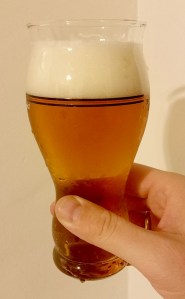
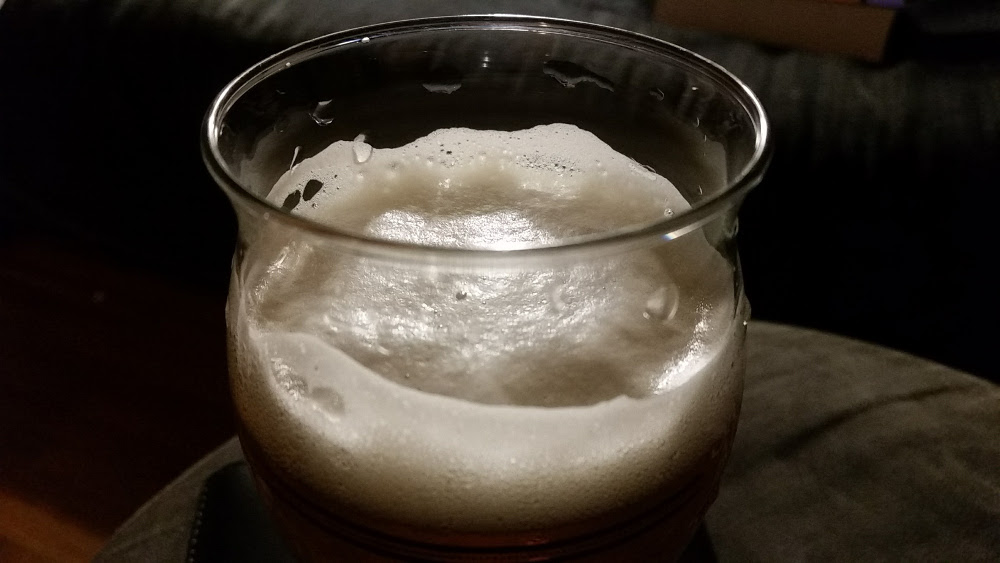
    • This festbier pours with a tall white head that subsides rapidly; it’s a bit disappointing in that regard. The beer is a medium gold color and very clear, but not brilliant.
  • Aroma
    • Clean and malty aroma, with a slight doughy quality.
  • Flavor
    • Soft but forward maltiness, with lightly toasty and doughy qualities. Medium-low bitterness.
  • Mouthfeel
    • Medium body, medium carbonation, and a smooth, soft finish.
  • Would I Brew This Again?
    • This is an incredibly drinkable beer! The flavor is spot on, although the head and head retention are not at all what I want. For this reason, I would probably try a different malt combination next time.
  • Overall
    • 7/10

Festbier Head-to-Head

I’ve been wanting to do a head-to-head comparison of my festbier versus commercial examples, and finally got the chance to do so tonight. My buddy Steve stopped by, and I poured out three sampler glasses for each of us. Steve didn’t know which was which, other than that one was homebrew and two were commercial beers.

For my commercial comparison, I chose Ayinger’s October Fest-Märzen and Sierra Nevada’s Oktoberfest. Both were available at local stores, and are reasonably well regarded. I sampled the beers before and after brewing, to give me a bit of an idea what to expect in a festbier.

festbiers

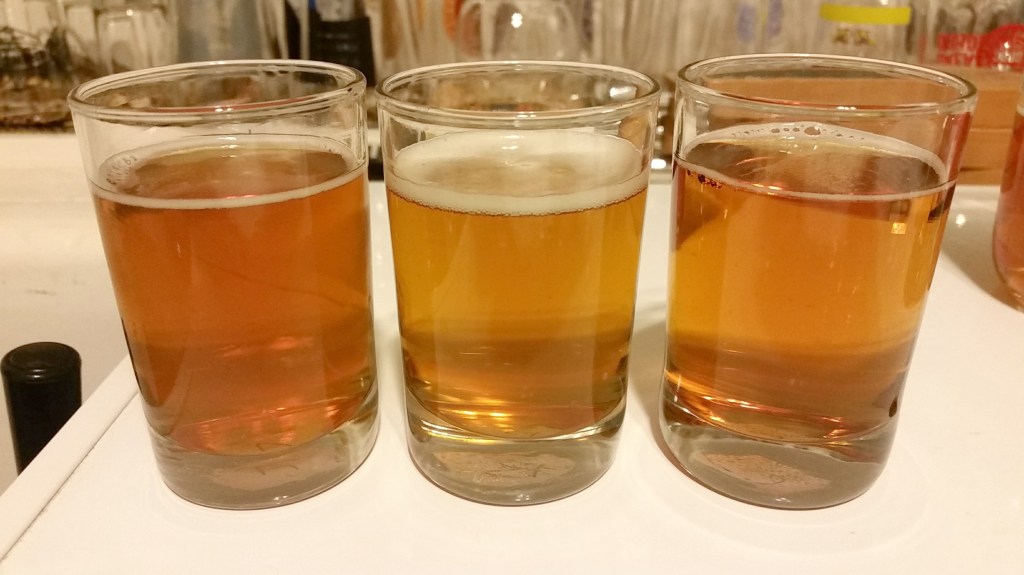
Three festbiers (from left): Ayinger’s October Fest-Märzen, my Festivus Simplex, and Sierra Nevada’s Oktoberfest.

Steve and I tasted simultaneously, but I tried to avoid giving him any leading comments or critiques that might sway his opinion. Our observations are below; I transcribed his comments, but wrote down my personal observations without telling him, so as to avoid that avenue of bias.

  • We noticed that my beer has an ever so slightly lighter color, as well as a taller and more persistent head. All of the beers are quite clear.
  • Steve noted that the Ayinger version had a more prominent malty aroma. We both perceived malty sweetness and a hint of ginger in the flavor (the latter likely from the hops). I think that the maltiness is potentially from mild oxidation, which wouldn’t be a huge surprise for a beer that might have sat on a store shelf for some time after import. The malty character had that slightly cloying aspect from oxidized beers, as I experienced in an excellent seminar at the 2017 Homebrew Con.
  • The Sierra Nevada version came across as a little less carbonated to me, and Steve remarked that the flavor was a little flatter on the tongue. We both noted that the taste was less complex, and its head was not very persistent relative to the other two beers.
  • Steve described my homebrew as having a more complex taste than the Sierra Nevada version, and he preferred that mine had a less distinct after taste than the other two beers. For me, the hop aroma on mine was a touch more pronounced than in the Sierra Nevada and maybe a shade more than in the Ayinger, which I liked.
  • When asked to guess which was the homebrew, Steve guessed mine, based on the slight color difference and some intangibles in flavor. When asked which he preferred, he ranked my homebrew and the Ayinger pretty closely, with the Sierra Nevada in third place. I am biased, but I preferred my homebrew by a slight margin (although perhaps a fresh example of Ayinger would perform better), and agreed that the Sierra Nevada came in third place.

Overall, I think my festbier is definitely a contender against the two commercial varieties I sampled. It captures the style quite well, and in some ways (especially appearance, via head and head retention) exceeds the commercial examples. As I noted in my earlier tasting, I could up the maltiness just a shade. But overall, I’m pretty thrilled with how my version of a fall favorite turned out! This exercise in comparison was really educational–I’ll be trying it again for selected beers.

Beer Tasting: Festivus Simplex

Tasting time! Tasting time! For this round, I’m evaluating my festbier.

  • 20171113_174304The Basics
    • 1.056 o.g., 1.014 f.g., 5.5% abv, 21 estimated IBU, 6 SRM
  •  Appearance
    • Burnished gold and quite clear, with a thick white head that is quite persistant. Very pretty!
  • Aroma
    • Modestly malty (characterized by bready and toasty note), with a slightly spicy hop aroma.
  • Flavor
    • Gorgeously malty character that is at the forefront, with bready aspects dominating, but still quite drinkable. The bitterness is clean, moderate, and well balanced against the malt; there’s not much in the way of hop flavor, other than a slight herbal and spicy character. I feel like I could up the malt character a bit (maybe even go completely with Munich and Vienna, cutting out the pilsner malt) and the beer would be even better.
  • Mouthfeel
    • Moderate body, with a moderately high (but not effervescent) carbonation. The finish is slightly dry, but not overly so, and doesn’t linger forever.
  • Would I brew this again?
    • Absolutely! This is a really nice festbier, and falls squarely into everything I’m looking for in a drinkable fall lager. I might up the maltiness just a touch.
  • Overall
    • 9/10

20171113_174444

20171113_174253