Pryes Miraculum Midwest IPA

IPA’s are way too abundant at the expense of other styles, and yet there is a good reason why they are so popular. I truly enjoy the classic American IPA’s, with their malt complexity and citrusy hops. Hazies don’t do it for me, because they’re not crisp enough, and something has been lost in the quest for the pilsner-malt-only “West Coast IPAs.” That something is yeast and malt character. Hops are great, but it’s a one-note beer if the other ingredients recede beyond the horizon. So, the “Midwest IPA” is a bit of an atavistic species, a relict population from the late 1990’s when it was still acceptable to use 10 percent crystal malt in an IPA and Pinesol was a desirable hop character.

Craft Beer & Brewing has been killing it with their recipes, and I had great success with one in the recent past and a few just about ready to serve. The magazine hits some budding and uncommon styles, and I first learned about Midwest IPA’s here. I am still not totally convinced this is a unique style, so much as a population of recipes that has retained ancestral traits that others do not. Bell’s Two-Hearted Ale is considered a foundational example; having sampled it I consider it a “traditional American IPA.”

No matter what you call the style, the Summer 2025 issue of Craft Beer & Brewing had a recipe for a clone of Pryes Brewing’s Midwest IPA that looked like a good wintertime brew. My recipe is pretty similar, with some minor ingredient swaps. I used Barke Munich instead of Munich II, and CaraRed instead of CaraAmber. Columbus hops were substituted as the main bittering charge instead of Galena, and I used New England East Coast Ale yeast instead of WLP007 (Dry English Ale). Of course it’s not the same beer exactly, but definitely in the same neighborhood as the original.

Pryes Miraculum Midwest IPA

  • 11.75 lb. 2-row pale malt (Rahr)
  • 14 oz. Barke Munich malt (Weyermann)
  • 5 oz. Carahell malt (Weyermann)
  • 5 oz. Carared malt (Weyermann)
  • 2 oz. Carafa Special II malt (Weyermann)
  • 0.5 tsp. BrewTanB, added to mash
  • 0.4 oz. Columbus (Tomahawk) hop pellets (15.6% alpha), 60 minute boil
  • 1 oz. Simcoe hop pellets (12.4% alpha), 20 minute boil
  • 1 oz. Centennial hop pellets (8.1% alpha), 10 minute boil
  • 0.4 oz. Columbus (Tomahawk) hop pellets (15.6% alpha), 10 minute boil
  • 0.5 tsp. BrewTanB, 10 minute boil
  • 1 Kick Carrageenan tablet, 5 minute boil
  • 1 oz. Simcoe hop pellets (12.4% alpha), 10 minute whirlpool
  • 1 oz. Centennial hop pellets (8.1% alpha), 10 minute whirlpool
  • 2 pkg. New England East Coast Ale Yeast (Lallemand)
  • 3 oz. Simcoe hop pellets (12.4% alpha), dry hop
  • 3 oz. Centennial hop pellets (8.1% alpha), dry hop
  • 2 oz. Cascade hop pellets (7.3% alpha), dry hop

Target Parameters

  • 60 minute infusion mash, 152°, full volume mash
  • 1.062 o.g., 1.014 f.g., 6.3% abv, 75 IBU, 10 SRM
  • Claremont tapwater, adjusted to hit roughly 89 ppm Ca, 25 ppm Mg, 102 ppm Na, 195 ppm SO4, 130 ppm Cl, 10 ppm bicarbonate, RA=-70

Procedure

  • Starting with 7.5 gallons of Claremont tap water, I added 7.7 mL of 88% lactic acid to drop out the carbonates, and then added 6 g of gypsum and 2 g of Epsom salt to build out the water profile.
  • I heated the water to 158°, added the grains, and held the mash at 152° with recirculation for 60 minutes. Then, I raised the mash to 168° for a 10 minute mash out.
  • I removed the grains, collecting 6.6 gallons of runnings with a gravity of 1.051, for 67% mash efficiency.
  • I brought the kettle to a boil, adding hops and finings per the recipe.
  • At the end of the 60 minute boil, I added the hops and whirlpooled for 10 minutes before chilling down to 75° and transferring to the fermenter.
  • Once in the fermentation chamber, I chilled the wort down to 64° before pitching the yeast.
  • I brewed the beer on 11 October 2025. Starting gravity was 1.062. I fermented at 67°.
  • The airlock was showing activity on the morning after pitching.
  • Dry hops went in on 17 October 2025, and I cold crashed the beer on 22 October 2025.
  • I kegged the beer on 30 October 2025, using a closed transfer.
  • Final gravity was 1.011, working out to 6.7% abv.

Tasting

  • Appearance
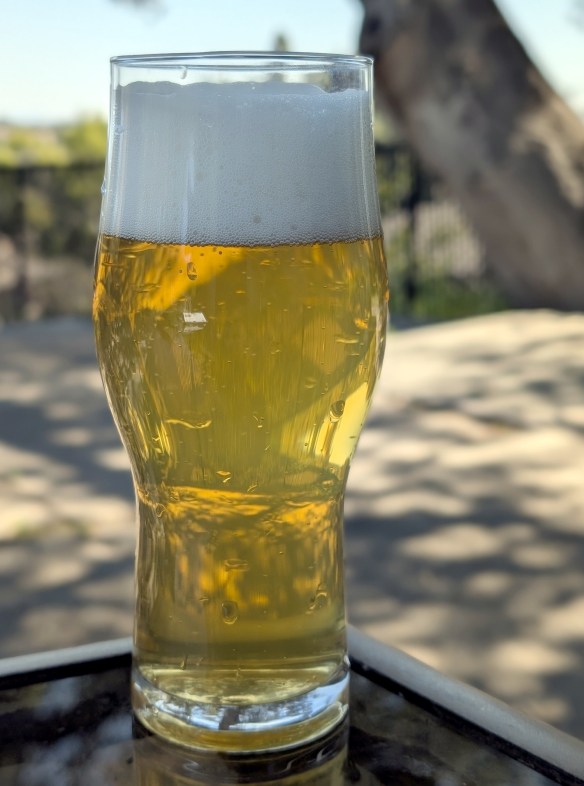
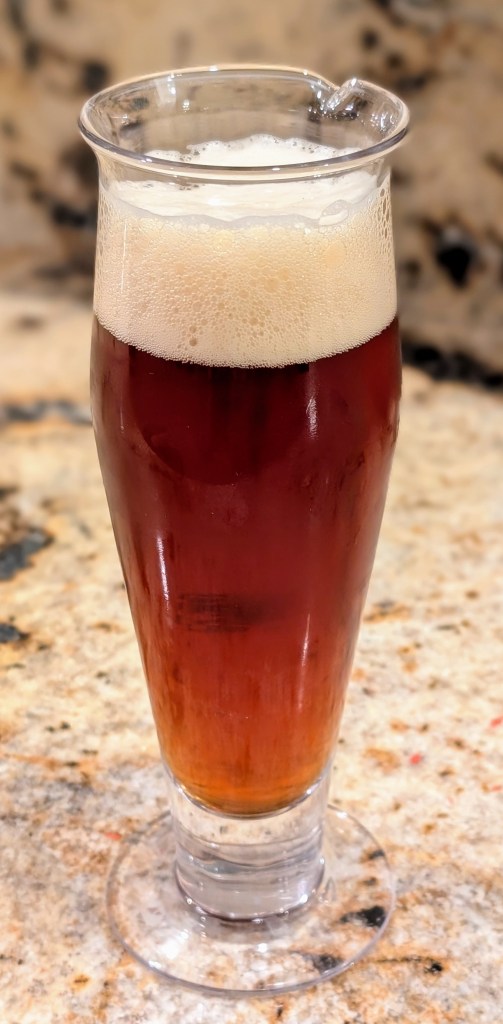
    • Medium amber in color, relatively clear with slight haze, pours with a persistent fine white head and slight lacing on the glass.
  • Aroma
    • Moderate orange hop aroma with a slight bit of pine behind that; faint caramel maltiness. In early pours, the malt and hops clashed just a touch; with a little more conditioning, it’s really nicely balanced.
  • Flavor
    • This is a very bitter beer, with a resiny hop quality. The beer has a moderate level of maltiness, with a light caramel character. It’s less complex than I expected, and the hops and malt clash a bit. A bit of orange comes in at the midpoint of the taste, at a moderate level. There is a low level of breadiness in the malt.
  • Mouthfeel
    • Medium body, moderate carbonation, dry finish.
  • Would I Brew This Again?
    • This is a good, but not fantastic, beer. The malt character is nice, although the hop flavors are less forward than I expected, especially given the quantities, and something clashes slightly in the flavor and aroma. I wonder if the beer is a touch oxidized? That doesn’t seem likely, given the careful closed transfer and the nature of the flavor, but anything is possible. I enjoy the “old school” aspects of the beer, though, including body and maltiness. I think it might be better with just Cascade or Cascade+Chinook, or another more “traditional” American hop combo. The beer is definitely better when it has warmed slightly above the initial serving temperature.
  • Overall
    • 7/10

Steve’s Cali-Belgique IPA Homage

Homebrew is best enjoyed with friends and family, whether it’s a brew day or a warm summer afternoon sharing a new recipe out on the patio. The social aspect is a big part of my enjoyment of the hobby, as I make new friends and welcome old friends into the world of brewing.

Steve and I met through work, and we had our first brew session together in 2009. He was quickly hooked, and soon started his own brewing adventures. Like many brewers, Steve began with extract and transitioned into brew-in-a-bag before too long. He loved experimenting (an early attempt at smoked beer involved some Liquid Smoke added at bottling; do not try this at home, because even Steve grudgingly admitted that it wasn’t very good), and he also loved riffing off of commercial recipes. We would often bounce ideas off of each other, do side-by-side tastings, and give feedback for each others’ beers. We also had semi-regular “hostage swaps,” trading a growler of his homebrew for a growler of mine. Steve and I had many adventures in beer over the years, with brew days together, the San Diego AHA meeting in 2015, carpooling to club meetings, pouring our beers at festivals, and more. He was a creative brewer in ways that I am not–I like to carefully plan each recipe, and Steve was more the type to say, “hey, I wonder what happens if I add sage to this,” or “can I get an approximation of this style with a random yeast?” Steve’s sudden and untimely passing earlier this year has been hard–I lost a close friend, a role model, and a good brewing buddy.

In honor and memory of Steve, I wanted to brew one of “his” beers. A few recipes stand out for me – a sage saison, a Mirror Pond Pale Ale clone, and most all his Cali-Belgique recipe. Cali-Belgique IPA was one of Steve’s early brewing obsessions, attempting to clone one of Stone Brewing’s beers. No longer commercially available, Cali-Belgique was a modification of the flagship Stone IPA, fermented with Belgian ale yeast. Steve enjoyed this beer, and wanted to make his own version; I sampled a few early brews, as he got closer and closer to his vision for the beer. Along the way, it turned into an excellent recipe and one that was truly Steve’s own, not just a clone. I’ll forever associate this beer with him!

Crafting Steve’s Cali-Belgique

Unfortunately, I didn’t have Steve’s Cali-Belgique IPA recipe (I had never gotten around to brewing it myself, because I could readily get the beer from Steve), but I remembered that Steve pretty regularly phoned his recipes in to our local homebrew shop. So, I reached out to Charles at Pacific Brewing Supplies, and I was in luck! Charles happened to have the grain bill and hop list, which set us well on the way to reconstructing this recipe.

The latest version of Steve’s Cali-Belgique had 50% 2-row, 33.3% Belgian Pilsner malt, 8.3% Carapils, and 8.3% Dark Munich. Steve double-milled his grains, and Charles thinks Steve was hitting around 75% efficiency in his system. He started as an extract brewer, spent much of his brewing career using brew-in-a-bag, and spent the last part with an Anvil Foundry all-in-one system. Based on all of this, target gravity was probably around 1.064 or 1.065. For my own version, I increased the 2-row from 6 lb to 8 lb to improve the gravity on my system and make it match Steve’s system better. A future brew on my system should increase percentage on all grains. I assumed a mash temperature of around 152°, just for simplicity.

The latest version of Steve’s recipe included 1 oz. of Chinook (13% alpha), 2 oz. of Columbus (15% alpha), and 1 oz. of Centennial (10% alpha). I had to guess at usage, but assumed Chinook as the main bittering hop and then a combination of late hop and dry hop additions for the rest. Steve seemed to always be adjusting the recipe, so it’s safe to play around in the hopping approach, because that’s what he would do. Following Steve’s preferences and the original Stone IPA recipes, it was probably hitting around 65 IBU.

Yeast varied over the years, but Steve’s most recent batches used Abbaye or Monk dry yeast. For fermentation temperature, I remember the beer having the nice spicy yeast notes and phenols that come with a warmer temperature for these Belgian strains. So, I decided to ferment around 72°.

With all of this information gathered, it was time to brew and sample Steve’s Cali-Belgique. Cheers to you, Steve, and thanks for the many happy hours of stargazing, conversation, philosophy, and beer tasting.

Steve’s Cali-Belgique IPA Homage

  • 8 lb. 2-row malt (Great Western)
  • 4 lb. pilsen malt (Dingemans)
  • 1 lb. dextrin malt (Viking)
  • 1 lb. Munich dark malt (Viking)
  • 0.5 tsp. BrewTanB, added to mash
  • 1.15 oz. Chinook hop pellets (12.3% alpha), 60 minute boil
  • 0.75 oz. Centennial hop pellets (8.1% alpha), 10 minute boil
  • 0.75 oz. Columbus hop pellets (15.6% alpha), 10 minute boil
  • 0.25 tsp. BrewTanB, 10 minute boil
  • 1 Whirlfloc tablet, 5 minute boil
  • 1 pkg. Abbaye Belgian ale yeast (Lallemand)
  • 1 pkg. Monk ale yeast (CellarScience DY106B)
  • 1.25 oz. Columbus hop pellets (15.6% alpha), dry hop in fermenter
  • 0.25 oz. Centennial hop pellets (8.1% alpha), dry hop in fermenter

Target Parameters

  • 60 minute infusion mash, 152°, full volume mash
  • 1.063 o.g., 1.016 f.g., 6.2% abv, 68 IBU, 6 SRM
  • Claremont water adjusted with lactic acid and minerals to hit 76 ppm Ca, 22 ppm Mg, 89 ppm Na, 182 ppm SO4, 110 ppm Cl, 20 ppm bicarbonate

Procedure

  • Starting with 7.6 galllons of water, I added 6.33 mL of 88% lactic acid, to drop out the carbonates. Then, I added 4 g of epsom salt and 4 g of gypsum to kick up the sulfates.
  • I heated the strike water to 159°, before adding the grains and 25.7 mL of 10% phosphoric acid, holding the mash at 152° (with recirculation) for 60 minutes.
  • At the end of the mash, I pulled the grains. In total, I had 6.75 gallons at a gravity of 1.052, for 68% mash efficiency.
  • I brought the kettle to a boil and boiled for 60 minutes, adding hops and finings per the recipe. Then, I turned off the heat and chilled the wort to 72° before transferring to the fermenter and pitching the yeast.
  • Starting gravity was 1.060. I brewed the beer on 30 March 2025, and fermented at ambient (~65°).
  • When I checked the fermenter on 1 April 2025, there was no activity in the airlock, so I opened the fermenter and confirmed no activity. I had a pack of Abbaye Ale yeast on-hand, so pitched that. Krausen was visible by the next day. I put a heat pad on the beer, but it got a bit hot; around 80° by 3 April. Oops! I let it ride at ambient at that point.
  • I kegged the beer on 14 May 2025, adding the dry hops in a bag. I removed the hops on 18 May 2025.
  • Final gravity was 1.015, for 6.0% abv.

Tasting

  • Appearance
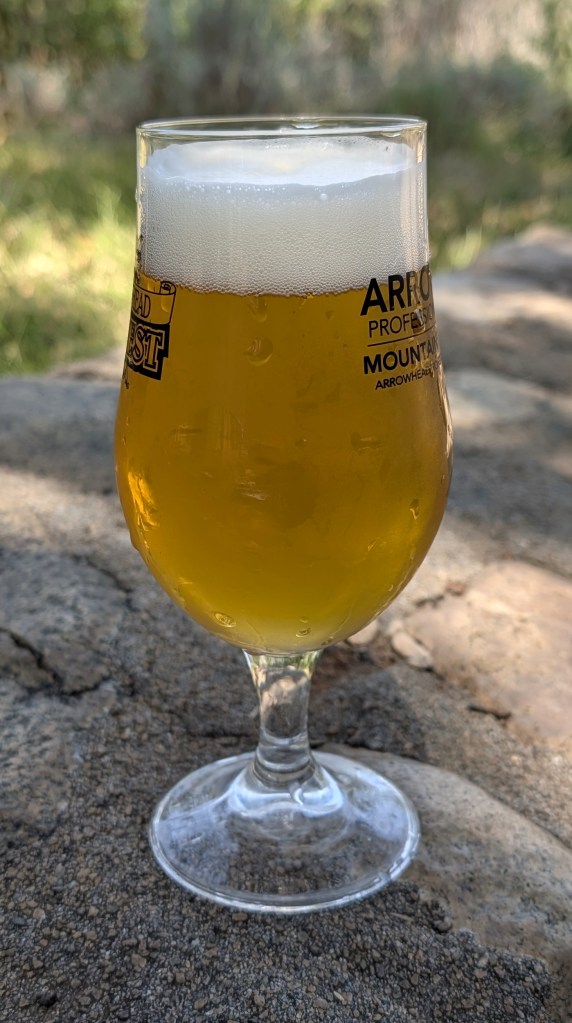
    • A very clear, gold beer, which has a thick and persistent white head
  • Aroma
    • I get a strong sensation of pineapple in the aroma as the beer warms up; some moderate alcohol notes, too. Yeast character dominates, and I don’t get much for hops or malt.
  • Flavor
    • This is a very bitter beer with a resinous edge to the hops. It has a medium-low maltiness, with a light caramel quality. There is a touch of clove flavor as the beer warms. The bitterness lingers on the tongue.
  • Mouthfeel
    • Medium body, medium carbonation, slightly dry finish.
  • Would I Brew This Again?
    • Yes! This beer goes down surprisingly smoothly, which I didn’t necessarily expect. I would like more dry hop aroma, and probably should just let the hops float free in the fermenter rather than bagging them. For a variant, I might try Eclipse and El Dorado, while keeping the same yeast. Mosaic or Galaxy could also work. The beer overall is quite good – the low hop aroma / low flavor complexity is the main reason that I gave it a lower score (no fault of the recipe – just my handling of the hops). That said, I don’t really remember Steve’s version of this having much for hop aroma. So, I might adjust the beer for my own preferences, but as something that captures his beer as I remember it, it’s pretty close!
  • Overall
    • 6.5/10
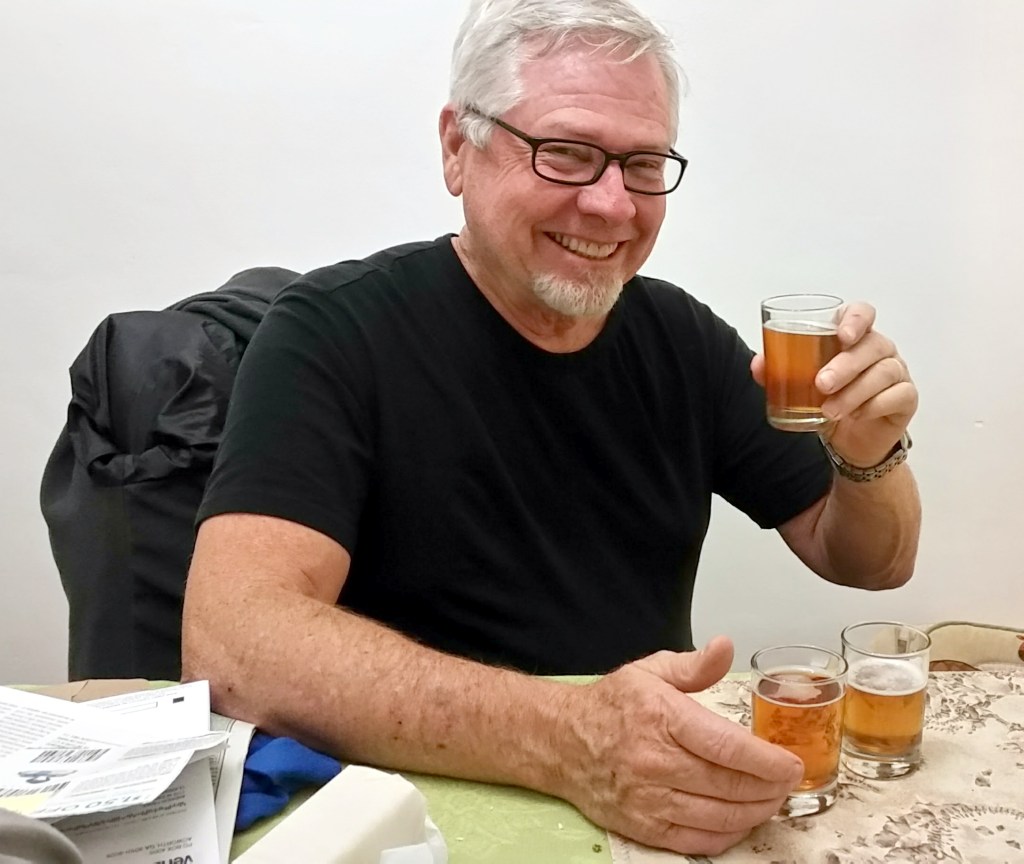
Steve helping with a festbier tasting, stacking my homebrew against commercial examples. I always enjoyed beer tasting with him…”I brewed up this new recipe…I’d love to get your thoughts on it!”

Denny Kong-ish West Coast IPA

I made my first version of this new-style West Coast IPA last year, and learned some lessons about hopping techniques in the process. During that previous batch, I used a hop bag that was too small for the dry hopping addition, and as a result the hop flavor/aroma were pretty underwhelming. This time around, I opted to let the hops float free in the fermenter. I use a BrewBucket 7.5, which has a rotating pickup arm, so I could do a closed transfer into the keg without excessive hop particles clogging things. The hop choices on this version used up some of my hop stash–three-quarters of a pound of hops went into the final recipe!

Denny Kongish West Coast IPA

  • 12 lb. 5 oz. pilsner malt (Rahr)
  • 1 lb. Vienna malt (Weyermann)
  • 0.5 tsp. BrewTanB, added to mash
  • 4 oz. dextrose, added to boil
  • 0.85 oz. Enigma hop pellets (17.9% alpha), 60 minute boil
  • 0.5 tsp. BrewTanB, 10 minute boil
  • 1 Whirlfloc tablet, 5 minute boil
  • 2 oz. LUPMOMAX Cashmere hop pellets (13.5% alpha), 30 minute whirlpool
  • 1 pkg. California ale dry yeast (WLP001, White Labs)
  • 4 oz. Idaho #7 hop hash (31.4% alpha), dry hop in primary fermenter
  • 2 oz. Azacca hop pellets (12.2% alpha), dry hop in primary fermenter
  • 2 oz. LUPOMAX Sabro HBC 438 hop pellets (19.0% alpha), dry hop in primary fermenter
  • 1.15 oz. Enigma hop pellets (17.9% alpha), dry hop in primary fermenter

Target Parameters

  • 1.063 s.g., 1.010 f.g., 7.0% abv, 64 IBU, 5 SRM
  • Full volume infusion mash, held at 149° for 120 minutes and 168° for 10 minutes
  • Neutralized Claremont tap water with Campden tablet, RO water, and mineral salts added to mash to achieve 51 ppm Ca, 8 ppm Mg, 33 ppm Na, 104 ppm SO4, 53 ppm Cl, 8 ppm CO3.

Procedure

  • Starting with 3 gallons of tap water, I added 2.5 mL of 88% lactic acid as well as a Campden tablet, along with 5 gallons of RO water, 0.75 CaCl, 1.5 g epsom salt, and 3.5 g gypsum to hit the target water parameters.
  • I heated the water to 155° and added the grains, along with 17.2 mL of 10% phosphoric acid for pH adjustment, to hit an estimated pH of 5.35.
  • I held the mash at 149° for 120 minutes, with recirculation, and then raised the mash to 168° for 10 minutes before pulling the grains.
  • In total, I collected 6.9 gallons of runnings with a gravity of 1.050, for 69% mash efficiency.
  • I brought the runnings to a boil, with a 90 minute total boil. After 30 minutes, I added the first round of hops, and then proceeded following the recipe.
  • After the 90 minute boil, I chilled to 170° before adding the whirlpool hops and letting them sit for 30 minutes while whirlpooling.
  • Next, I chilled to 68°, transferred to the fermenter, and chilled down to 64° before pitching the yeast.
  • I brewed the beer on 1 January 2025, and it had a starting gravity of 1.066.
  • I added the dry hops on 11 January 2025, loose into the fermenter.
  • I cold crashed the beer on 15 January 2025.
  • I kegged the beer on 18 January 2025, into a CO2 purged keg. Final gravity was 1.007–that’s wonderfully dry and works out to 7.8% abv. I had a similar experience last batch, so this mash regime works wonders!

Tasting

  • Appearance
    • Light gold beer, slight haze, which pours with an exceptionally persistent and creamy white head–it’s like a meringue! This head leaves beautiful lacing down the side of the glass. The beer is surprisingly clear. As a result, I am feeling good about my decision not to use post-fermentation finings; this likely helped with oxidation reduction.
  • Aroma
    • Citrus and dank hop aroma at a high level, neutral yeast profile, and no malt character to speak of in the aroma.
  • Flavor
    • Very bitter, citrus pith and dank hop character, with a bit of grapefruit along the way, and a long-lingering hop aftertaste. The hop flavor is a bit one-note; it has the usual issue with Azacca to my tastebuds, which is an orange pith quality on the edge of rotten orange. I’ve never understood the appeal of that hop! Low level of maltiness, but it is there. Clean fermentation character.
  • Mouthfeel
    • Medium-high carbonation, medium-light body, very dry finish.
  • Overall
    • 7.5/10
  • Would I Brew This Again?
    • I really like this recipe as a template for a double IPA; it is a clean background to let the hops shine. This is the first time in awhile that I have let the hops float free for dry hopping, and with the Brew Bucket’s rotating pickup arm, things worked well. Thanks to the closed transfer (and perhaps the BrewTanB?), the hop character has held up well. The beer is clear enough without finings, so I think there is no need to use Biofine Clear as the original recipe stipulates. Azacca, as usual for my experience, gives a harshness in the citrus note that I don’t care for. This formulation is a bit one-note on the hops. But, it’s okay overall! In a beer like this, a different hop combo would be the ticket to hoppiness.
      • Interesting note: when I tasted this again last night, after a rauchbier, I got more tropical notes, and the unpleasant orange wasn’t as apparent. I would rate the beer higher in that case – perhaps a 8.5/10.

Live Oak Canyon Ale 2024

As is tradition, I crafted a special batch for the Thanksgiving celebration, a multi-day affair with friends and family. This is a time when I like to roll out a special batch, often a bigger beer that can be savored in smaller (or bigger) pours. Last winter, I experimented with a wood-aged imperial red IPA, and it was so good that I decided to roll it forward into this year’s Thanksgiving beer. It was an extra fun brewing session, in that I hosted my homebrew club to assist with the brew day!

Stylistically, this is an imperial red IPA, or something like it. It’s very much a beer from yesteryear, in the thick of the IBU wars–big, bold, and unapologetically in your face. Versus the 2023 version, the 2024 edition is pretty much the same grist but different hops to reflect what I had on-hand. I used Moutere as my bittering hops, in order to finish out the ounce left in my hop stash; the addition of Centennial and Simcoe at the whirlpool and dry hop stages is different from last year (which used HBC 522 and Talus).

Live Oak Canyon Ale

  • 10.5 lb. 2-row malt (Briess)
  • 13 oz. caramel malt 120L (Briess)
  • 0.5 tsp. BrewTanB, added to mash
  • 1 oz. Moutere hop pellets (19.5% alpha), 60 minute boil
  • 0.25 tsp. BrewTanB, 10 minute boil
  • 0.75 lb. corn sugar, 5 minute boil
  • 1 Whirlfloc tablet, 5 minute boil
  • 2 oz. Centennial hop pellets (8.1% alpha), 15 minute whirlpool
  • 1 pkg. WLP001 (White Labs), California Ale dry yeast
  • 1 medium toast American oak Beer Stix carboy stick, added to primary and carried over to keg
  • 2 oz. Simcoe hop pellets (12.4% alpha), dry hop in keg

Target Parameters

  • 1.092 s.g., 1.015 f.g., 10.4% abv, 113 IBU, 17 SRM
  • Infusion mash, held at 152° for 60 minutes and 168° for 10 minutes, with sparge
  • Claremont tap water, with Campden tablet, adjusted with minerals to achieve 58 ppm Ca, 23 ppm Mg, 54 ppm Na, 155 ppm SO4, 60 ppm Cl, 10 ppm CO3, -47 ppm RA

Procedure

  • Starting with 5.6 gallons of water, I added 4 mL of 88% lactic acid to neutralize the carbonates. Then, I added 2 g epsom salts and 2 g gypsum, to achieve my target water profile.
  • I heated the strike water to 161°, added the grains, and hit a 152° mash temperature. I also added 4 mL of 88% lactic acid, to adjust the pH.
  • After a 60 minute mash and recirculation, I raised the mash temperature to 168° for 10 minutes, before pulling the grains.
  • I had neglected to pull the sparge water from the strike water, so I had to sparge with ~0.5 gallons of water, which topped up my volume a bit beyond that which was intended. This meant a longer boil.
  • In total, I collected 5.35 gallons of runnings with a gravity of 1.055, for 70% mash efficiency.
  • I boiled for 45 minutes before starting the formal timer, which meant a 105 minute boil total.
  • After the initial 45 minutes of boiling, I began adding hops and other finings per the recipe, with corn sugar added at the very end.
  • After the boil, I chilled the beer down to around 78°, before transferring to the fermenter and chilling to 64° in my fermentation chamber and pitching the yeast.
  • I brewed this beer on 12 October 2024; it had a starting gravity of 1.085. Once pitching the yeast, I fermented at 64°.
  • I soaked the oak stick in water overnight, and then put it into the microwave for around 90 seconds to flash steam and sanitize. I spritzed the oak with StarSan, before adding it to the fermenter. The oak was added to the primary fermenter on 15 October 2024.
  • I kegged the beer on 31 October 2024, adding the dry hops in a baggie and also transferring the oak to the keg. I left the beer at ambient for this phase.
  • Final gravity was 1.016, for 9.3% abv.
  • I left the keg at ambient until 6 November 2024, when I removed the dry hops and oak, moved the keg to the conditioning chamber, and let it condition and carbonate at 34°.

Tasting

  • Appearance
    • This is a deep reddish amber beer, very clear, which pours with a persistent and fine ivory head. It’s very pretty!
  • Aroma
    • The nose has a citrus and fresh pine hop aroma at a moderate level, with vanilla-type woodiness and light caramel behind that. The wood comes through more prominently as the beer warms, along with a light alcohol aroma.
  • Flavor
    • Very bitter, with resin and citrus pith qualities, and a hint of fresh orange zest; there is a modest level of woodiness as the beer warms up. A light and sweet caramel flavor is at the back end.
  • Mouthfeel
    • Medium body, moderate carbonation, dry finish.
  • Would I Brew This Again?
    • This is a good one! I think that last year’s version was maybe a touch better; perhaps Simcoe and Centennial don’t quite hit the mark for what the beer needs. The recipe upon which I based this beer used a mix of Simcoe and Mosaic, so I might try those in a future iteration. Either way, this is a highly drinkable beer for as big as it is, even if in the “sipping beer” category.
  • Overall
    • 9/10

Quick IPA

Sometimes I just need a quick IPA fix. I’m working through my hop stash, and threw together a recipe to finish off a few 2-oz. packages, targeting varieties that had classic citrus, pine, and resin character. The base recipe is just a typical classic American IPA, with a mix of 2-row, crystal, and biscuit malt. This time around, I aimed for a quick mash (30 minutes) and quick boil (30 minutes), to keep that brew day moving along!

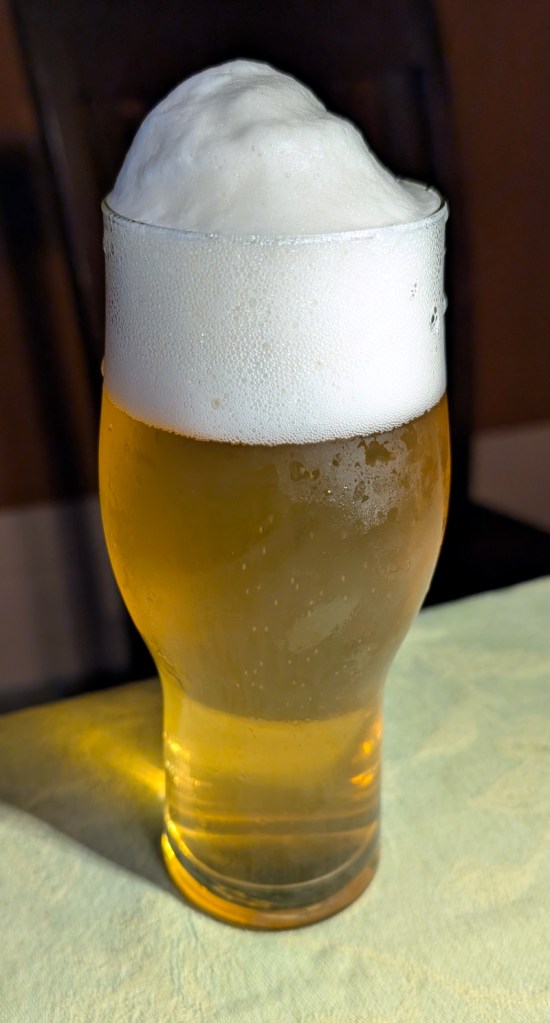
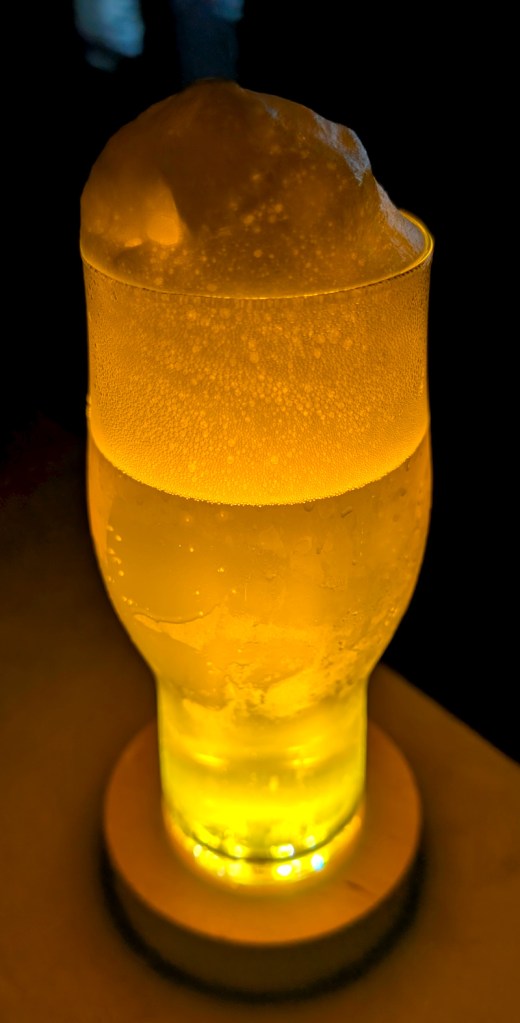
golden slightly hazy beer with tall white head held in tulip-style glass

Quick IPA

  • 12.75 lb. 2-row malt (Briess)
  • 0.5 lb. crystal 40 / caramel 100 (Viking)
  • 0.25 lb. biscuit malt (Dingemans)
  • 0.5 tsp. BrewTanB, in mash
  • 1.25 oz. Topaz hop pellets (18.9% alpha), 30 minute boil
  • 0.5 tsp BrewTanB, 10 minute boil
  • 1 Whirlfloc tablet, 5 minute boil
  • 0.75 oz. Topaz hop pellets (18.9% alpha), 5 minute boil
  • 2 pkg. New England East Coast Ale yeast (Lallemand)
  • 2 oz. Anchovy hop pellets (12.0% alpha), dry hop in keg
  • 2 oz. McKenzie hop pellets (11.7% alpha), dry hop in keg

Target Parameters

  • 1.061 s.g., 1.014 f.g., 6.2% abv, 68 IBU, 7 SRM
  • Full volume infusion mash, held at 152° for 30 minutes and 168° for 10 minutes
  • Claremont tap water adjusted to hit 100 ppm Ca, 19 ppm Mg, 87 ppm Na, 224 ppm sulfate, 110 ppm Cl, 20 ppm CaCO3, RA=-66, alkalinity=16

Procedure

  • I collected 7.25 gallons of tap water and added 6 mL of 88% lactic acid in order to neutralize the carbonates. Then, I added 7 g of gypsum and 2 g of epsom salt to hit my target water parameters.
  • I heated the water to 158° before adding the grains, and held the mash at 152° for 30 minutes, with recirculation.
  • At the end of the mash, I raised the temperature to 168° for 10 minutes before pulling the grains.
  • In total, I collected 6.25 gallons of runnings with a gravity of 1.051, for 63% mash efficiency. I suspect the low efficiency was due to the short mash time.
  • I brought the runnings to a boil, adding hops and finings per the recipe. After a 30 minute boil, I turned off the heat and chilled the wort down to 78°. Then, I transferred the wort to the fermenter and chilled to 66° in the fermentation chamber. This took about 6 hours, after which time I pitched the yeast.
  • I brewed the beer on 5 October 2024; it had a starting gravity of 1.056. I fermented the beer at 66°.
  • On 25 October 2024, I kegged the beer and added the dry hops loose to the keg; I put a hop screen in place on my floating dip tube.

Tasting

  • Appearance
    • Pours with a fluffy off-white head. A gold beer with moderate haze.
  • Aroma
    • I get some vanilla aroma as it warms; fascinating! As it warms caramel comes through more, along with (oddly enough) some berry. Moderately high hop-forward aroma, with pine, resin, and citrus pith qualities.
  • Flavor
    • Very bitter resin and pine hop character. Slight caramel quality at the back end, especially as the beer warms.
  • Mouthfeel
    • Very dry finish with a touch of astringency. Medium body, moderate carbonation.
  • Would I Brew This Again?
    • It’s a decent American IPA, very much in the old school. The berry quality on the aroma is interesting. It scratches my classic IPA itch, but is nothing exceptional. I gave it a 6, but the cool aroma bumps it to 7.
  • Overall
    • 7/10