No. 11 Bohemian Pilsner

I’ve been chasing the Bohemian pilsner style for awhile, with variable success. My most recent version, No. 11 Bohemian Pilsner, got pretty close to what I was looking for. It needed just a touch more malt character, so I increased the melanoidin contribution from 4 oz. to 5 oz. for my 2025 version. I was also a bit low on Carafoam, so I reduced that from 8 oz. to 5 oz.; I figured that would have a minimal effect. Finally, I’m using Viking pilsner zero malt as the base, versus Rahr.

Recipe Name

  • 10 lb. Viking Pilsner Zero malt
  • 5 oz. Carafoam malt (Weyermann)
  • 5 oz. melanoidin malt (Weyermann)
  • 0.5 tsp. BrewTanB, added to mash
  • 3.5 oz. Saaz hop pellets (2.4% alpha), 60 minute boil
  • 1.5 oz. Saaz hop pellets (2.4% alpha), 10 minute boil
  • 0.5 tsp. BrewTanB, 10 minute boil
  • 1 Whirlfloc tablet, 5 minute boil
  • 1 oz. Saaz hop pellets (2.4% alpha), 5 minute boil
  • 0.5 tsp. yeast nutrient (WLN1000), 5 minute boil
  • 2 pkg. Diamond lager yeast (Lallemand)
  • 1 oz. Biofine Clear, added to keg

Target Parameters

  • 60 minute infusion mash, 154°, full volume mash
  • 1.049 o.g., 1.010 f.g., 5.1% abv, 37 IBU, 5 SRM
  • Water built from RO, to hit target profile of 6 ppm Ca, 5 ppm Na, 6 ppm SO4, 6 ppm Cl, 14 ppm HCO3, RA=7 ppm

Procedure

  • I started with 7.4 gallons of RO water, to which I added 0.3 g gypsum, 0.3 g calcium chloride, 0.5 g baking soda, to hit target profile of 6 ppm Ca, 5 ppm Na, 6 ppm SO4, 6 ppm Cl, 14 ppm HCO3, RA=7 ppm.
  • I heated the strike water to 159°, before adding the grains, BrewTanB, and 4.1 mL of 88% lactic acid to hit my ideal pH.
  • I held the mash at 154°, with recirculation, for 60 minutes, before raising the temperature to 168° for a 10 minute mashout.
  • At the end of the mash, I pulled the grains and heated the runnings to a boil. In total, I started with 6.6 gallons of runnings at a gravity of 1.041, for 69% mash efficiency.
  • Once the kettle was at a boil, I added hops and finings per the recipe. After the full 60 minutes, I chilled the beer to 80°, transferred to the fermenter, and chilled the rest of the way to 50° before pitching the yeast. I set the fermentation chamber at 52°, and observed signs of fermentation within 12 hours.
  • I brewed this beer on 14 June 2025; it had a starting gravity of 1.049.
  • On 19 June 2025, I pulled the fermenter to ambient for about 4 hours, so that I could chill a second lager (Munich helles) down to 50°. During this time, the fermenter temperature rose to 60° and fermentation really kicked off. I chilled the beer back to 50° after this and completed fermentation at that temperature.
  • I cold crashed the beer on 17 July 2025, and kegged it on 4 August 2025 using a closed transfer. The beer had some haze to it still.
  • Final gravity was 1.011, for 5.0% abv. I hit my numbers really well on this batch!
  • To speed up the clarification process, I added 1 oz. of Biofine Clear on 25 August 2025.

Tasting

  • Appearance
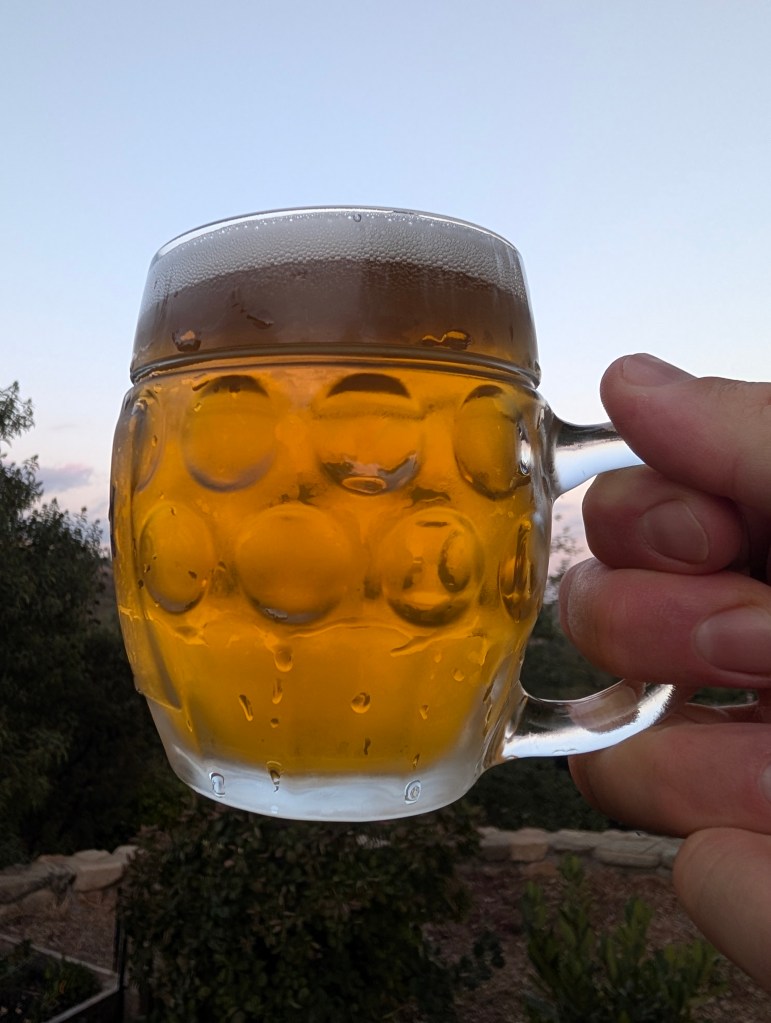
    • Brilliantly clear gold beer with a thick and persistent white head, which has a tall and creamy appearance when well poured.
  • Aroma
    • Medium-high malty aroma, medium low spicy/herbal hops as the beer warms.
  • Flavor
    • Bready maltiness at a medium level, against a bitter yet rounded hop character, with an herbal and slightly spicy quality.
  • Mouthfeel
    • Medium body, medium carbonation, smooth finish.
  • Would I Brew This Again?
    • This might be my best Bohemian pilsner yet. It is incredibly drinkable, and the balance between malt and hops is spot-on. Soft water definitely pays off, with the subtle bitterness that plays well against the malt.
  • Overall
    • 10/10

No. 11 Bohemian Pilsner

According to my records, I have made 18 batches of German pils over the years (starting in 2016), but only five batches of the original pilsner beer, Bohemian (Czech) pils. After a more than four year hiatus, it was time!

Taking lessons learned from previous recipes, I went for very fresh Saaz hops (from Yakima Valley Hops). Furthermore, I built the malt bill to have a touch of melanoidin malt, to avoid messing with a decoction but also not overwhelming with the honey-character that melanoidin brings at higher percentages. I used the Rahr pilsner malt as a base–although it is not “traditional,” I have found it to be an absolutely excellent malt for my tastes.

This isn’t my 11th batch, but I brewed it on 11/11 (Nigel Tufnel Day!), so the name was unavoidable.

No. 11 Bohemian Pilsner

  • 10 lb. pilsner malt (Rahr)
  • 0.5 lb. Carafoam malt (Weyermann)
  • 0.25 lb. melanoidin malt (Weyermann)
  • 0.5 tsp. BrewTanB, added to mash
  • 3.5 oz. Saaz hop pellets (2.4% alpha), 60 minute boil
  • 1.5 oz. Saaz hop pellets (2.4% alpha), 10 minute boil
  • 0.5 tsp. BrewTanB, 10 minute boil
  • 1 Whirlfloc tablet, 5 minute boil
  • 1 oz. Saaz, 5 minute boil
  • 1 tsp. tsp. WLN1000 yeast nutrient, 5 minute boil
  • 2 pkg. Diamond Lager yeast (Lallemand)

Target Parameters

  • 1.049 s.g., 1.014 f.g., 4.7% abv, 37 IBU, 5 SRM
  • Full volume infusion mash, held at 154° for 60 minutes and 168° for 10 minutes
  • RO water built to hit target of 6 ppm Ca, 5 ppm Na, 6 ppm SO4, 6 ppm Cl, 14 ppm HCO3, RA=7 ppm

Procedure

  • To 7.5 gallons of RO water, I added 0.3 g gypsum, 0.3 g calcium chlorie, and 0.5 g baking soda, to hit my water target parameters.
  • I heated the water to 160°, and added the grains to hit a mash target of 154°. I added 4 mL of 88% lactic acid to adjust the mash pH, and recirculated for 60 minutes.
  • Next, I heated the mash to 168° for 10 minutes, before pulling the grains and starting the ramp-up to the boil.
  • In total, I collected 6.75 gallons of runnings with a gravity of 1.042, for 71% mash efficiency.
  • I boiled for 60 minutes, adding hops and finings per the schedule. Finally, I turned off the heat and chilled to 75° before transferring to the fermenter.
  • Once in the fermenter, I chilled the wort to 52° before pitching the yeast.
  • I brewed this beer on 11 November 2023. Starting gravity was 1.049, exactly on target!
  • I held the fermentation temperature at 52° until 2 December 2023, when I moved the beer to ambient (~60°).
  • I kegged the beer on 26 December 2023. Final gravity was 1.014, for 4.7% abv.
  • Because I’ve been a bit slow to finish kegs lately, this beer ended up lagering for a full three months before tasting.

Tasting

  • Appearance
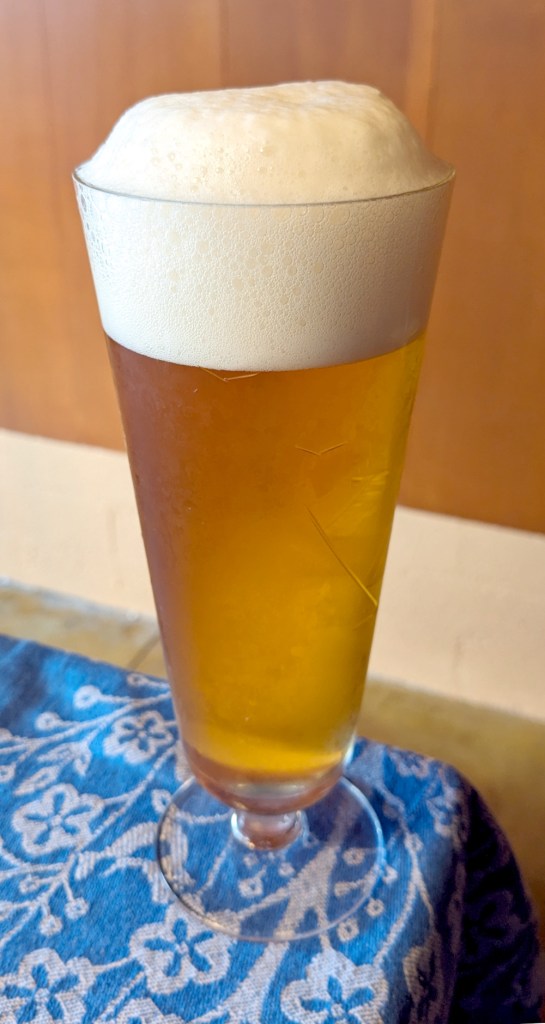
    • Beautiful medium gold color, brilliant clarity, pouring with a long-lasting, creamy white head that leaves nice tracks on the side of the glass.
  • Aroma
    • A whiff of spicy Saaz at the front, at some maltiness (slightly bready) back of that.
  • Flavor
    • Bitterness-forward, which lingers on the tongue, followed by a subtle maltiness. Clean fermentation profile. Tiny bit of caramel. I feel like the melanoidin is perhaps too much in the background–I would like a tiny touch more.
  • Mouthfeel
    • Medium body, medium carbonation, off-dry mouthfeel.
  • Would I brew this again?
    • Yes! It’s probably the best Bohemian pilsner I have made to date! It has a nice mix of malt/hops….It maybe could be a bit deeper gold in color, and I wouldn’t complain with a touch more melanoidin character. It was well worth the (not entirely intentional) extended aging, too.
  • Overall
    • 9/10 (for color)

Czech Pilsner

My homebrew club recently had a competition centered around Bohemian-style pilsners. I’ve done a few iterations, but haven’t quite hit where I want to yet. The primary issue concerns hop aroma–it’s really, really hard to get good Saaz as a homebrewer. Gotta keep trying.

Czech Pilsner

  • 10.5 lbs. Barke Pilsner malt (Weyermann)
  • 2.4 oz. melanoidin malt (Weyermann)
  • 0.3 oz. Carafa Special III malt (Weyermann)
  • 2 oz. Saaz hop pellets (3.0% alpha), 60 minute boil
  • 1 oz. Saaz hop pellets (3.5% alpha), 60 minute boil
  • 1 Whirlfloc tablet, 10 minute boil
  • 1 tsp. Fermax yeast nutrient, 10 minute boil
  • 2 oz. Saaz whole hops (2.8% alpha), 5 minute boil
  • 1 pkg. WLP800 Pilsner Lager yeast, prepared in starter

Target Parameters

  • 1.050 o.g., 1.010 f.g., 5.2% abv, 35 IBU, 5 SRM
  • 60 minute infusion mash, 150°, batch sparge
  • Water built from RO, to hit target of 20 ppm CA, 8 ppm Na, 15 ppm SO4, 35 ppm Cl, -61 ppm RA

Procedure

  • I made a 2L yeast starter a few days in advance, and cold crashed it, followed by decantation of the spent wort.
  • I built up the mash water using 0.6 g baking soda, 0.4 g CaCl, 0.4 g gypsum, added to 8.5 gallons of RO water.
  • I mashed in with 3.5 gallons of water at 161°, to hit a mash temperature of 150.2°. I added 7 mL of 88% lactic acid, to adjust the pH of the mash.
  • After a 60 minute mash, I batch sparged in two steps (first of 1.25 gallons, second of 3.6 gallons). At each step, I let the mash sit for 10 minutes, vorlaufed, and collected the runnings.
  • In total, I collected 6.9 gallons of runnings with a gravity of 1.043, for 75% mash efficiency. Right on target!
  • I boiled for 60 minutes, adding stuff per the recipe, and then chilled after flame-out.
  • I transferred the wort to my fermenter, and put it in the fermentation chamber to drop down to 48°. This took a few hours. Then, I oxygenated for 30 seconds and pitched the yeast.
  • I fermented the brew at 50°. The brew date was 25 May 2019.
  • After three weeks, I raised the temp to 65° for a few days, then cold crashed. After a few more days, I kegged the beer using a semi-closed transfer (CO2-flushed keg, but just air-pushed the beer into the keg). Alas, I neglected to take a final gravity!

Tasting

  • I didn’t get to do a formal tasting before the keg kicked, but did get a few quick observations.
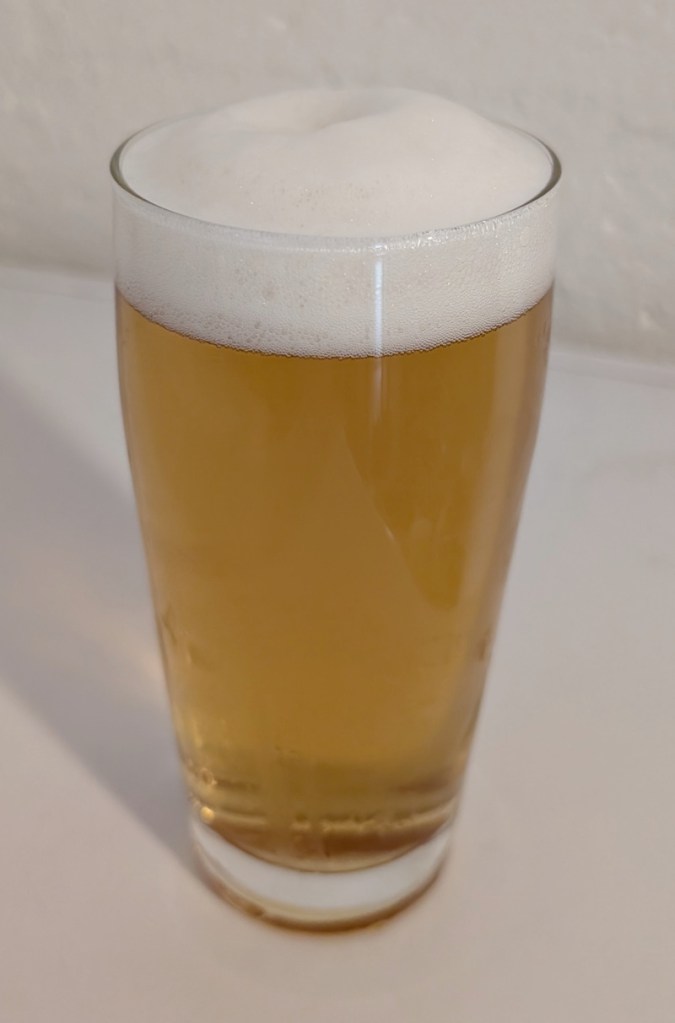
  • The beer flavor was a bit too forward on the melanoidin; I will just ditch that in the future! I am still in search of good hop aroma…overall, the beer is just OK with good clarity, decent head; not quite there yet. Bitterness level is about right. Malt body is about right.
  • Overall, 6/10.