Tmavý Ležák (Czech Dark Lager)

With the fall months bringing cooler evenings, I’m hankering for darker beers. In the past, that’s often meant porters and stouts. This year, I’ve been on a big lager roll. In fact, seven out of 20 beers for this year–more than a third!–have been lagers. German pils are of course a regular favorite, but in the dark realm I wanted to try a Czech-style dark lager. This past summer, I had an enjoyable sampling of the Czech Budvar tmavý ležák, and it was delicious! Inspired by that, I tracked down a Czech dark lager recipe in the Dark Lagers book by Kraus-Weyermann and Dornbusch.

This particular recipe, called Tmavý Ležák, promised a classic version of this classic style. To aim for maximum authenticity, I went through the effort of tracking down all of the exact grains. This meant some special orders, to get the floor-malted Bohemian dark malt from Weyermann, for instance. Hopefully the effort and expense would be worth it! I also elected to do a decoction mash as part of this, to experiment a little bit and up the malt character (presumably).

Tmavý Ležák

  • 5 lb. 12 oz. floor-malted Bohemian pilsner malt (Weyermann)
  • 3 lb. 6 oz. floor-malted Bohemian dark malt (Weyermann)
  • 1 lb. Carabohemian malt (Weyermann)
  • 6 oz. Carafa Special I malt (Weyermann)
  • 0.5 tsp. BrewTanB (add to mash)
  • 1 oz. Saaz hop pellets (3.25% alpha), 60 minute boil
  • 2 oz. Saaz hop pellets (3.25% alpha), 15 minute boil
  • 0.5 tsp. BrewTanB, 10 minute boil
  • 1 Whirlfloc tablet, 10 minute boil
  • 2 oz. Saaz hop pellets (3.25% alpha), 5 minute boil
  • 2 pkg. Novalager dry yeast (Lallemand)

Target Parameters

  • 1.047 s.g., 1.012 f.g., 4.6% abv, 29 IBU
  • Full-volume infusion mash, with 75 minute rest at 144°, 45 minute rest at 160°, 10 minute rest at 168°. I also did a decoction mash during the first rest.
  • Claremont water, neutralized to remove carbonates, with final target of 32 ppm Ca, 12 ppm Mg, 54 ppm Na, 50 ppm SO4, 60 ppm Cl, 10 ppm HCO3, RA=-22

Procedure

  • First, I heated the strike water to 148°, and added the grains to hit a target mash rest of 144°.
  • After 15 minutes with recirculation at 144°, I grabbed approximately a gallon of thick mash, heated it to 160°, and let it sit there for 15 minutes. Then, I brought it to a boil, and boiled for 30 minutes with frequent stirring before adding it into the main mash. The primary mash was held at 144° for this entire time, which means the 144° mash rest was around 75 minutes.
  • Next, I raised the mash temperature to 160° and held it there for 45 minutes.
  • Finally, I raised the mash to 168°, and held it there for 10 minutes.
  • Next, I removed the grains and brought the mash to a boil. I collected 6.75 gallons of runnings with a gravity of 1.039, for 68% mash efficiency.
  • I brought the runnings to a boil, adding hops and finings per the recipe. After 60 minutes, I turned off the heat and chilled to 80° before transferring to the fermenter. Then, I moved the fermenter to the fermentation chamber, where I chilled it the rest of the way (down to 50°).
  • I realized that I forgot the CaraBohemian malt in the mash, so had to improvise. I used 1.5 quarts of water with the milled grains, steeped it at 150° to 170° for 30 minutes, filtered, boiled for 10 minutes, and added this directly to the fermenter prior to pitching the yeast. Oops!
  • Starting gravity was 1.045. I brewed the beer on 9 September 2023.
  • After pitching the yeast, I did the initial fermentation at 52°, before raising to 54° on 26 September. Then, I raised to 58° on 28 September, and 60° on 1 October.
  • I cold crashed the beer to 34° on 4 October 2023.
  • I kegged the beer on 14 October 2023. Final gravity was 1.010, for 4.7% abv. All told, I hit my numbers pretty well!

Tasting

  • Appearance
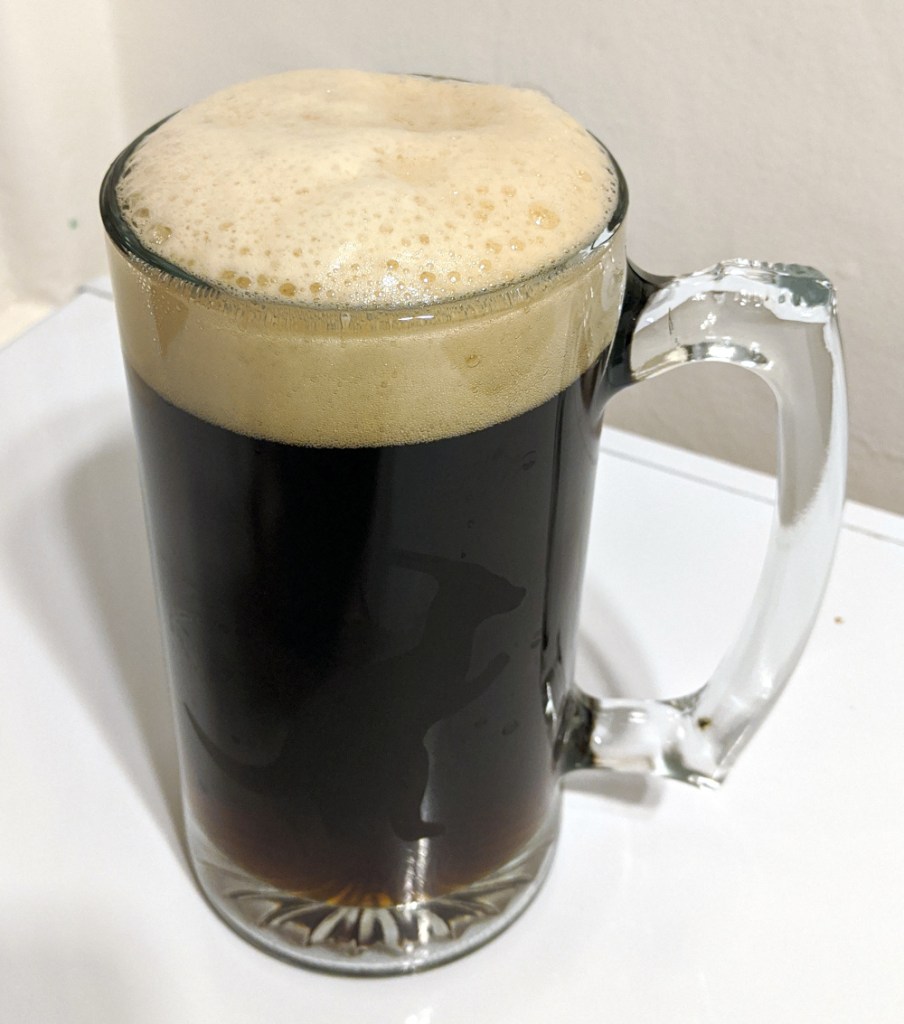
    • A very clear (but not brilliant), deep brown beer with garnet highlights on its edges. It’s almost chestnut in color when against a light source. The beer pours with a rich, fluffy, and persistent off-tan head, which leaves bits of lacing down the side of the glass.
  • Aroma
    • Malty and bread crust aroma, with a bit of cracker. There is a light hop spice, as well as a touch of dried dark fruit as the beer warms.
  • Flavor
    • Malt-forward, malty and bread crust flavor, with a medium level of spicy hop bitterness. There is a moderate coffee note and a slight hint of roastiness.
  • Mouthfeel
    • Medium-light body, with a dry finish. Moderate carbonation. Very drinkable!
  • Would I Brew This Again?
    • This recipe was a ton of effort in terms of ingredients and the decoction, but is also quite tasty and exceptionally easy to drink. The body is a touch thin for what I expected; it might benefit from backing off the hops just a touch, and perhaps ditching the decoction to reduce the length of time that the main mash was held at a low temperature. I suspect that may have dried out this beer a little more than desirable. That said, the overall drinkability tips the scales in favor of this beer!
  • Overall
    • 9/10

Czech-Style Dark Lager

I am loving the challenge of brewing lagers, lagers, and more lagers! It seems like there is always a new style to make, and the process has opened me up to a spectrum of flavors I haven’t experienced in the abundant craft beers from my area.

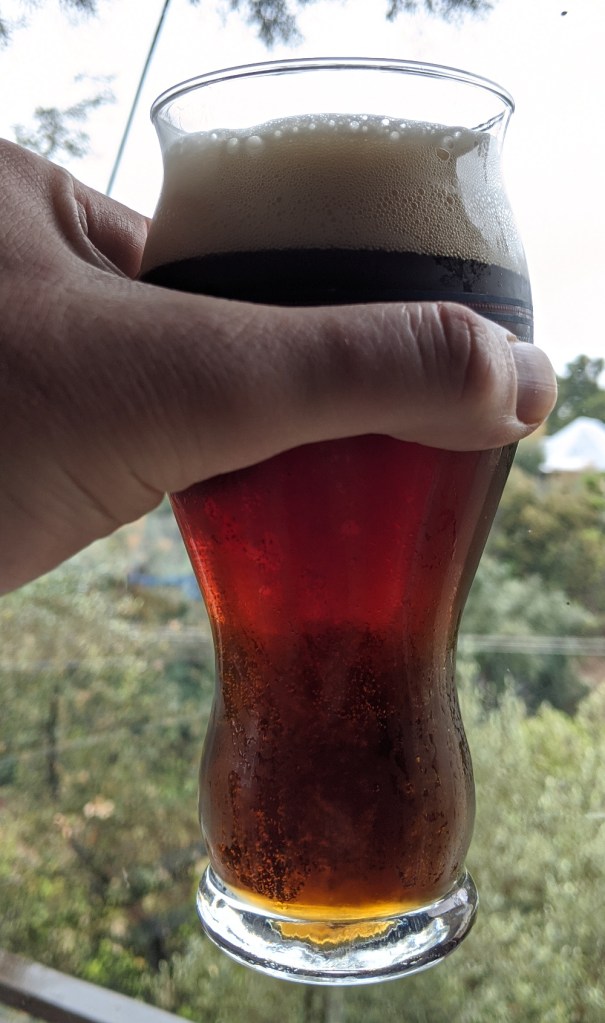
glass of beer held by hand, with the beer having a brown color, quite lear, and a tan head

Most of my lagers to this point have sat at the pale end, with a few forays into amber. A few years back I did a schwarzbier, and I’ve done a Munich dunkel twice, and that’s been about it for dark lagers. Sounds like it’s time to get to work! I like to have a darker beer on hand most of the time, and that space is usually filled by a porter or stout. A Czech-style dark lager seemed like a good candidate for my next brew.

The recipe is based primarily off of that in Modern Homebrew Recipes, by Gordon Strong. I increased the amount of dark Munich malt slightly, partly to increase the maltiness and partly to use up ingredients on-hand. I adjusted the dark specialty malts a touch, to adjust for ingredient availability at my LHBS. I elected to do a step infusion mash, rather than decoction, just for simplicity.

Czech-Style Dark Lager

  • 6 lbs. Vienna malt (Weyermann)
  • 2 lb. Munich malt (Bestmalz, 7.6 SRM)
  • 1.5 lb. Viking Munich Dark Malt (11.2 SRM)
  • 0.5 lb. Caramunich I (Weyermann), added at vorlauf
  • 5.5 oz. Carafa Special II (Weyermann), added at vorlauf
  • 2.5 oz. Carafa Special III (Weyermann), added at vorlauf
  • 3 oz. Saaz hop pellets (2.4% alpha), 60 minute boil
  • 1 tsp. Fermax, 10 minute boil
  • 1 Whirlfloc tablet, 5 minute boil
  • 1 oz. Saaz hop pellets (2.4% alpha), 5 minute whirlpool
  • German lager yeast (WLP830, White Labs), ~130 mL repitched from slurry harvested from Crystal Pilsner

Target Parameters

  • 75 minute infusion step mash, 15 minutes at 131°, 30 minutes at 147°, 30 minutes at 158°, batch sparge
  • 1.048 o.g., 1.012 f.g., 4.8% abv, 26 IBU, 21 SRM
  • 8.75 gallons of RO water with 3.4 g of CaCl, to hit 28 ppm Ca and 50 ppm Cl.

Procedure

  • I mashed in with 2 gallons of water at 149° and 3.25 mL of 88% lactic acid, stirring like crazy to drop down to a protein rest of 134°. This was a little above my target of 131°, but I figured this was okay.
  • After 15 minutes, I added 5 quarts of 180° water, to hit between 146° and 148°, depending on where I measured and how I stirred.
  • After 30 minutes, I added the remainder of the mash water (~6 quarts) at 185°, to bring the mash up to 154°. This was a touch lower than my goal of 158°, but I’m OK with it. I let this sit for 30 minutes, and in the last 5 minutes added the dark grains (CaraMunich, Carafa Special II and III).
  • I vorlaufed, drained the mash tun, and then added 3.58 gallons of water at 185°. I let this rest for 10 minutes, vorlaufed, and collected the second runnings.
  • In total, I collected 7.15 gallons of water at a gravity of 1.040, for 73% efficiency. I brought the kettle to a boil, adding finings and hops per the schedule. After 60 minutes, I turned off the heat and chilled.
  • After chilling down to 70°, I transferred the wort into the fermenter and continued the chill down to 52°. I oxygenated and pitched ~130 mL of harvested yeast slurry (from my Crystal Pils, around 1 week old).
  • Starting gravity was 1.048. I brewed this beer on 1 February 2020.
  • Fermentation temperatures were held between 52° and 54°. On 9 February, I moved the fermenter to ambient (~60°), to finish out fermentation.
  • I kegged the beer on 22 February 2020. Final gravity was 1.012, to reach 4.8% abv.

Tasting

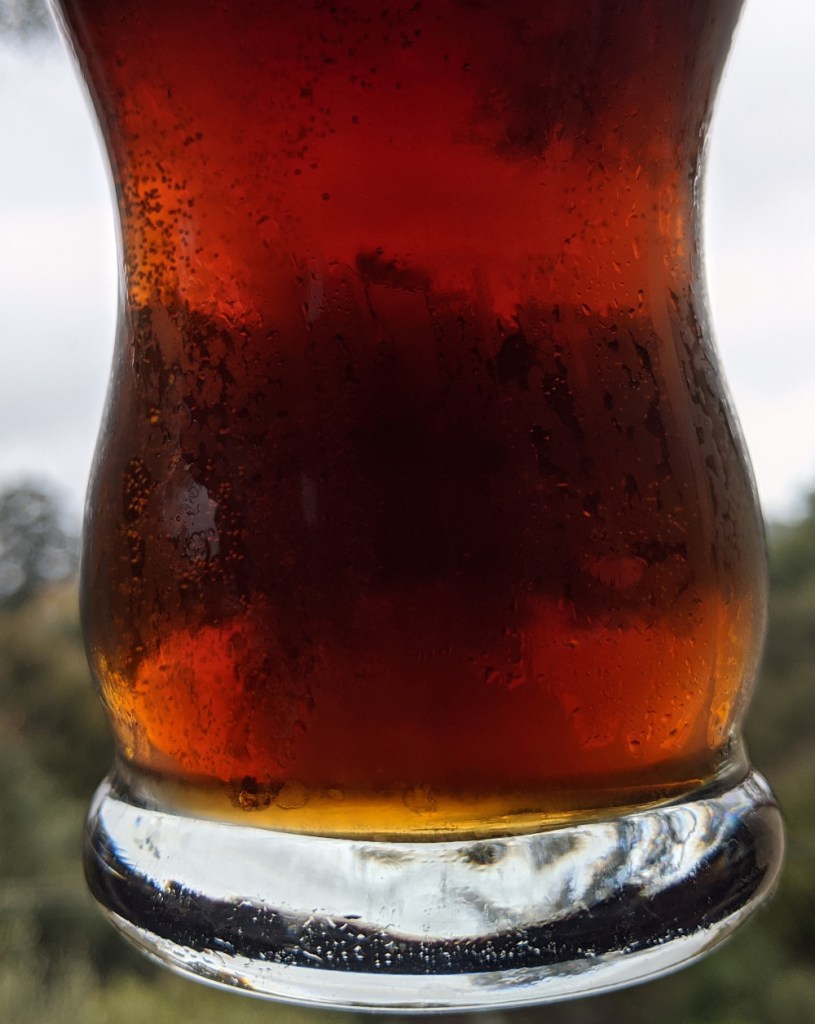
reddish-brown beer in glass
  • Appearance
    • This beer pours with a creamy, persistent, tall tan head. In the glass, it has a very deep amber, almost reddish brown color, and is brilliantly clear. The reddish tinge makes for a really pretty beer.
  • Aroma
    • Amazing. Crisp, spice-infused aroma, with bready notes behind that. This beer smell delicious!
  • Flavor
    • Malty, crusty breadiness, with a slight roasted, coffee-like note behind that. The flavors combine to produce a slight, dark dry fruitiness on the tongue that doesn’t show up in the aroma. It’s not fruitiness in the same way as a warm fermentation or the wrong yeast strain; it’s like the fruitiness you get in some roasts of coffee. It’s unexpected…and apparently within style, according to the 2015 BJCP. The bitterness level is fairly low, but perceptible. The hopping comes across as a smooth, extended bitterness that persists after the malt fades away on the tongue, so the balance is very slightly tilted towards the hops (but not overly so).
  • Body
    • The body is a touch lighter than I expected; I expected something more towards the medium-body, but it’s medium-light at best. I think the beer is slightly overcarbonated, but that should hopefully subside with time.
  • Would I brew this again?
    • Yes? This is a super interesting beer, and definitely a flavor space that I’ve not tasted before. It’s growing on me, and I think I’ll enjoy it plenty as I finish up the keg. However, there is a bit of a clash between the roastiness and fruitiness, which detracts slightly from enjoyability. So, it’s not a bad beer, just maybe not to my taste. If I brew this style again, I will choose a different recipe, maybe one with less roastiness to it. As I read about the style from the BJCP guidelines, apparently a pilsner malt base is more typical, so I might reformulate with a very different grist. All that said, this beer looks really great in a big pint mug!
  • Overall
    • 7/10
tall mug of dark lager with tan colored head