Clonal Common 2025

This is the third iteration of my “house” California common (steam beer) recipe, following previous brews in 2015 and 2021. The 2025 version is pretty much identical to the others, except I swapped Imperial Yeast’s Cablecar for White Labs’ equivalent`, based on what the homebrew shop had on-hand. Also, I decided to make a 3 gallon batch on this round; I enjoy the style, but it’s more of a 3-gallon enjoyment than a 5-gallon enjoyment these days. As mentioned previously, this fits into my “make more small batches” Brew Year’s Resolution, too.

Clonal Common 2025

  • 5.75 lb. 2-row brewer’s malt (Great Western)
  • 11 oz. Viking caramel 100 (crystal 40) malt
  • 6 oz. special roast malt (Briess)
  • 0.5 oz. Northern Brewer hop pellets (6.1% alpha), 60 minute boil
  • 0.5 oz. Northern Brewer hop pellets (6.1% alpha), 15 minute boil
  • 0.5 Whirlfloc tablet, 10 minute boil
  • 1 oz. Northern Brewer hop pellets (6.1% alpha), 60 minute boil
  • 1 pkg. Cablecar liquid yeast (Imperial Yeast #L05)

Target Parameters

  • 60 minute infusion mash at 150° with 168° mash-out, full volume mash
  • 1.050 o.g., 1.011 f.g., 5.1% abv, 36 IBU, 11 SRM
  • Claremont tap water, with Campden tablet

Procedure

  • I collected 4.75 gallons of Claremont tap water and added a Campden tablet, heating the water to 155° before I mashed in with the grains. I added 4 mL of 88% lactic acid to adjust pH and held the mash temperature at 150° for 60 minutes before raising the temperature to 168° for 10 minutes.
  • I removed the grains, collecting a total of 4.1 gallons at a gravity of 1.039, for 65% mash efficiency.
  • I brought the runnings to a boil, adding hops and finings per the recipe. After a 60 minute boil, I turned off the heat and chilled the wort to 73° with an immersion chiller.
  • Next, I transferred the wort to my small stainless steel fermenter and chilled it all to 64° in my fermentation chamber.
  • Finally, I pitched the yeast and held the fermenter at 64°
  • I brewed this beer on 17 May 2025; starting gravity was 1.050.
  • I pulled the fermenter to ambient (~68°) on 24 May 2025.
  • I kegged the beer on 1 June 2025, with 1 oz. of corn sugar added to the keg to encourage natural carbonation and reduce oxidation. I held the keg at ambient for a few weeks, before putting it into my conditioning chamber, force carbonating to final CO2 volume (~2.8 volumes) and lagering at 34°.
  • Final gravity was 1.012, which works out to 5.1% abv. I really hit my numbers on this one!

Tasting

  • Appearance
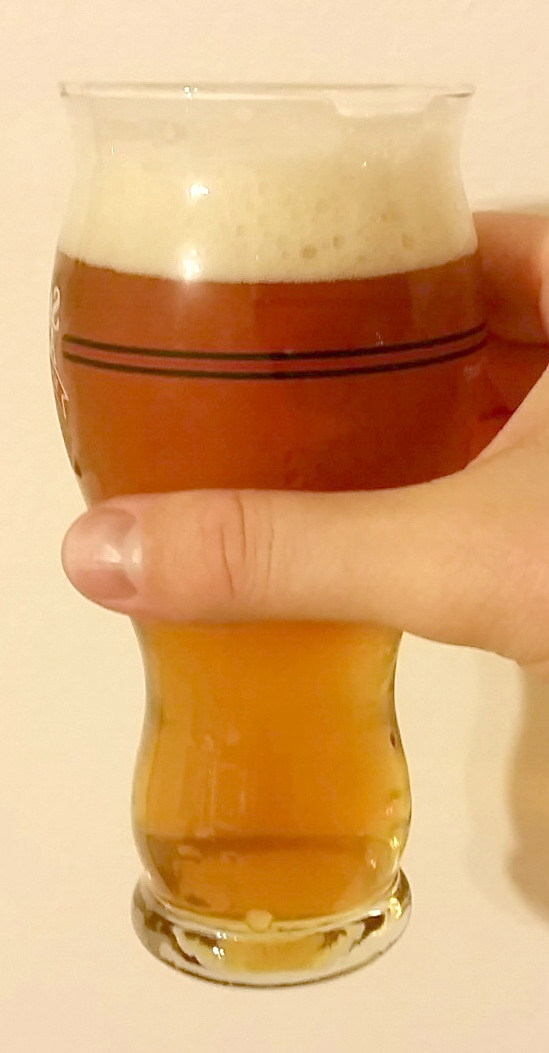
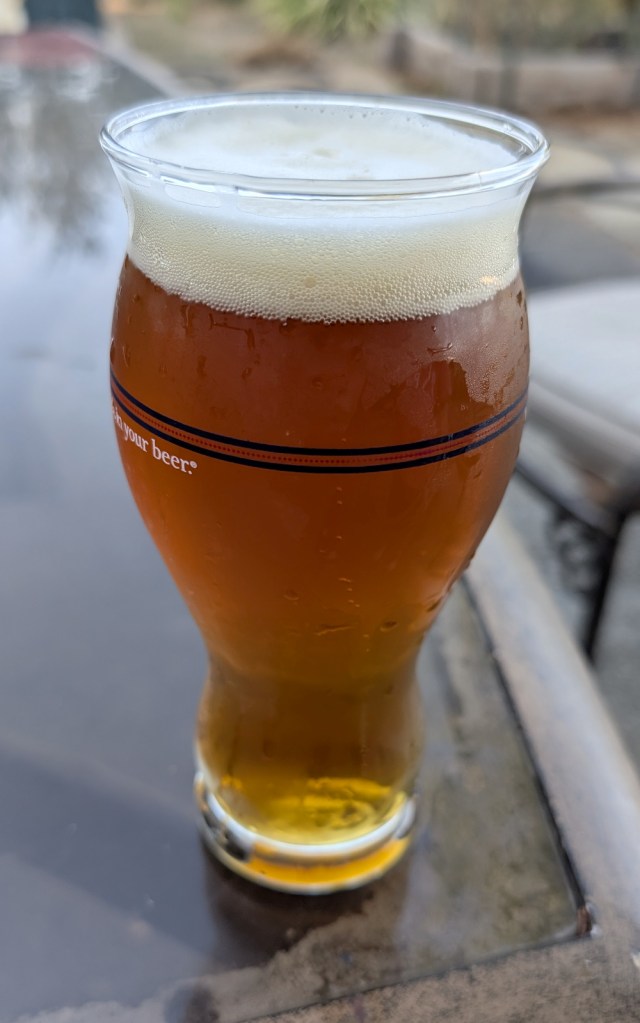
    • Light amber, clear beer with a slight chill haze. Pours with a creamy off-white head of good persistence.
  • Aroma
    • Light caramel malt aroma, light resiny and woody hop aroma, clean profile for yeast aroma.
  • Flavor
    • Medium-high bitterness with a resinous, woody profile, against a medium-low caramel and lightly grainy malt. Very low level of fruitness, almost imperceptible.
  • Mouthfeel
    • Medium carbonation, medium body, slightly dry finish accentuated by the hops.
  • Would I Brew This Again?
    • This is a solid recipe! I think it is a bit too bitter in this iteration, and I noted something similar in past batches. So, I think my next batch of this recipe will aim for around 30 IBU. The chill haze is annoying; I think some gelatin would be appropriate in the next batch.
  • Overall
    • 7.5/10

Clonal Common 2021

I like a good steam beer (a.k.a. California common) every once in awhile, and I last made a batch back in 2015. I hadn’t thought it was that long ago, but my notes don’t lie! This year’s version was largely the same recipe, but made with the base malts and caramel malts I had on hand. As before, this batch parallels recipes from BYO and Zymurgy, with only the most minor modifications.

Clonal Common 2021

  • 9.5 lb. Viking 2-row Xtra pale malt
  • 1 lb. Viking caramel 100 (crystal 40 equivalent)
  • 0.5 lb. special roast malt (Briess)
  • 1.15 oz. Northern Brewer hop pellets (7.3% alpha), 60 minute boil
  • 1 Whirlfloc tablet, 5 minute boil
  • 0.85 oz. Northern Brewer hop pellets (7.3% alpha), 10 minute whirlpool
  • 1 pkg. San Francisco Lager yeast (WLP810), prepared in 1L vitality starter

Target Parameters

  • 1.049 s.g., 1.015 f.g., 4.5% abv, 34 IBU, 9 SRM
  • Claremont tap water, treated with Campden tablet to remove chlorine
  • Full volume infusion mash at 152°, 60 minutes

Procedure

  • On the morning of my brew session, I made a 1L vitality starter to kick-start the yeast.
  • I heated 7.25 gallons of water up to 158°, to hit a 152° mash temperature target. I held it here for 60 minutes, before raising to and holding at 168° for 10 minutes. I added a bit of 88% lactic acid to the mash, to adjust pH.
  • I removed the grain basket, and noted 6.5 gallons of wort with a gravity of 1.045, for 72% mash efficiency.
  • Next, I brought the runnings to a boil, boiling for 60 minutes and adding the hops and kettle finings per the recipe. At the end of this, I turned off the heat and whirlpooled (with circulation) for 10 minutes with the whirlpool hop addition.
  • I chilled the wort, transferred it to the fermenter, and then chilled it down to 60° in the fermentation chamber before pitching the yeast.
  • I brewed this beer on 24 April 2021, and fermented at 60° for the first week. I pulled it out to finish up at ambient on 1 May 2021, and it looked like fermentation was pretty much done by this point.
  • I kegged the beer on 9 May 2021. It had a final gravity of 1.015, for 4.6% abv. I hit my numbers pretty well for this batch!

Tasting

  • Appearance
    • Deep gold/light amber color, and very clear, approaching brilliant. The beer pours with a creamy ivory head that is quite persistent. Overall, though, this batch is just a touch lighter in coor than is appropriate by the BJCP style guide.
  • Aroma
    • The beer has a light caramel aroma, with a slight “woody” hop character as appropriate for this style.
  • Flavor
    • This has a moderately high level of bitterness and a nice woody character to the hop flavor. This one tastes moderately malty with a light caramel note and a slight bit of toastiness. Yeast character is very clean. Overall, this one tilts towards bitterness rather than maltiness.
  • Mouthfeel
    • Medium-light body and moderate level of carbonation, with a clean, off-dry finish.
  • Would I brew this again?
    • Overall, this is a pretty nice California Common! There’s not much to say otherwise; I think the overall recipe is pretty well locked in. If I wanted to be a stickler for BJCP guidelines, I should adjust the color slightly with a bit of Carafa Special III or something like that. I also wouldn’t mind a tiny hint of fruitiness in the yeast character, and thus might try fermenting at a slightly higher temperature next time. All that aside, I’m pleased with this one!
  • Overall
    • 8.5/10

Beer Tasting: Clonal Common

With a little over a month in the keg, it’s time to test out the Clonal Common! The recipe is intended as a clone of Anchor Steam, in the California Common (steam beer) style. For the sake of comparison, we also picked up a 6-pack of commercial Anchor Steam beer.

Clonal Common

  • The Basics
    • Original gravity = 1.049; final gravity = 1.012; abv = 4.8%; estimated IBU = 35
  • Aroma
    • A sharp woody/minty aroma is prominent (I can only assume this is from the Northern Brewer hops), but not overwhelming. I also pick up a caramel malt aroma in the background. Overall, a clean and pleasant aroma.
  • Appearance
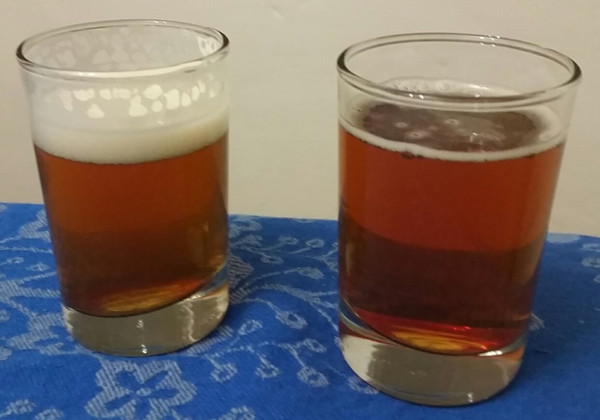
    • Very clear, but not quite bright, with a medium-gold color. The off-white head is moderately fine and prominent when poured, and sticks around for awhile.
  • Flavor
    • The flavor is nicely balanced between the hops and malt–both have a light and pleasant touch. The bitterness is there, but not over the top. The malt character is a combination of caramel with a bit of toastiness faintly at the rear. There is a very light apple/pear fruitiness on the finish, which is pretty pleasant.
  • Mouthfeel
    • This is a beer with medium-light body, moderate carbonation, and a medium-dry finish.
  • Would I brew this again?
    • As this beer has matured, it has turned into a very quaffable drink. I wouldn’t say this is my favorite style of all time, but it definitely is a very solid recipe and one that I’ll brew again. There’s not much I’d really change on this.
  • Overall score: 7 / 10


Beer vs. Beer (homebrew on left, commercial version on right)

Anchor Steam

  • The Basics
    • abv = 4.9%; additional data not available
  • Aroma
    • Malty with a caramel-forward note; some fruity esters in the background. No noticeable hops to my nose.
  • Appearance
    • The head is low and moderately-fine, with an off-white color. Head retention is reasonably good. The beer itself is a light amber or medium gold color.
  • Flavor
    • Prominent caramel malt flavor, almost butterscotch-like. The bitterness is subdued and most evident on the finish, rather than being hops-forward. The hops finish is slightly woody.
  • Mouthfeel
    • Medium-light body, with moderately high carbonation. Moderately dry finish.
  • General comments
    • A good beer, and I suppose the epitome of the California Common style, but I like mine a bit better, in terms of its more subdued malt. Both my wife and I agreed that my homebrewed version was more to our tastes. The commercial version was just a little too fruity and cloying.
  • Overall score
    • 6 / 10
Overall Comparisons
The commercial Anchor Steam has a far more prominent caramel aroma and flavor than my homebrew version, which is slightly more prominent in the hops and toastiness of the malt. Anchor Steam itself is slightly more carbonated, too. However, the body, color, and abv match up quite closely. In all, I like my clone quite a bit (and actually prefer it), even if it’s very definitely a different beer from the commercial product. I suspect the differences come down to process and ingredients. This has been a fun exploration of a beer style–I’ll have to try one of these side-by-side comparisons again with another style!

Clonal Common Kegged

Tonight I kegged my Clonal Common (a California steam beer intended as an Anchor Steam clone), which had been fermenting for two weeks. It spent a week at 60°, three days at 64°, and three days at 66°. For the last day, I sent it back down to 62° in preparation for kegging.

I transferred a full 5 gallons of beer into the keg. Final gravity was 1.012, down from 1.049, which works out to 4.8% abv. All of the other vitals seem to be on track; color is right where anticipated, and the aroma/flavor/bitterness are all spot on. This should be a really tasty beer, and a nice transition from the light summer ales into fall beers.

Once kegged, I added a bit of CO2 and set the temperature for the whole apparatus to 34°. My plan is to lager this for at least a week, until I have to switch the fermentation chamber back into ale fermentation mode again.

Beer Update: Packrat Porter and Clonal Common

Today I kegged my Packrat Porter, which had been in the primary for just over two weeks. Final gravity was 1.017, down from 1.056, which works out to 5.1% abv. This is about spot on the nose for what I had anticipated. The flavor is pretty nice, but I can’t say much other than that it tastes like porter. I plan to speed carbonate this one, so that it’s ready for serving by the end of the week.

The Clonal Common appeared to ferment nicely over the past week. To help it finish out, I edged the temperature controller up to 64° from 60°. I’ll let it sit there for 3-4 days, edge it up to 68° for a day or two to help things finish out, and then cold crash it prior to kegging.