No. 11 Bohemian Pilsner

I’ve been chasing the Bohemian pilsner style for awhile, with variable success. My most recent version, No. 11 Bohemian Pilsner, got pretty close to what I was looking for. It needed just a touch more malt character, so I increased the melanoidin contribution from 4 oz. to 5 oz. for my 2025 version. I was also a bit low on Carafoam, so I reduced that from 8 oz. to 5 oz.; I figured that would have a minimal effect. Finally, I’m using Viking pilsner zero malt as the base, versus Rahr.

Recipe Name

  • 10 lb. Viking Pilsner Zero malt
  • 5 oz. Carafoam malt (Weyermann)
  • 5 oz. melanoidin malt (Weyermann)
  • 0.5 tsp. BrewTanB, added to mash
  • 3.5 oz. Saaz hop pellets (2.4% alpha), 60 minute boil
  • 1.5 oz. Saaz hop pellets (2.4% alpha), 10 minute boil
  • 0.5 tsp. BrewTanB, 10 minute boil
  • 1 Whirlfloc tablet, 5 minute boil
  • 1 oz. Saaz hop pellets (2.4% alpha), 5 minute boil
  • 0.5 tsp. yeast nutrient (WLN1000), 5 minute boil
  • 2 pkg. Diamond lager yeast (Lallemand)
  • 1 oz. Biofine Clear, added to keg

Target Parameters

  • 60 minute infusion mash, 154°, full volume mash
  • 1.049 o.g., 1.010 f.g., 5.1% abv, 37 IBU, 5 SRM
  • Water built from RO, to hit target profile of 6 ppm Ca, 5 ppm Na, 6 ppm SO4, 6 ppm Cl, 14 ppm HCO3, RA=7 ppm

Procedure

  • I started with 7.4 gallons of RO water, to which I added 0.3 g gypsum, 0.3 g calcium chloride, 0.5 g baking soda, to hit target profile of 6 ppm Ca, 5 ppm Na, 6 ppm SO4, 6 ppm Cl, 14 ppm HCO3, RA=7 ppm.
  • I heated the strike water to 159°, before adding the grains, BrewTanB, and 4.1 mL of 88% lactic acid to hit my ideal pH.
  • I held the mash at 154°, with recirculation, for 60 minutes, before raising the temperature to 168° for a 10 minute mashout.
  • At the end of the mash, I pulled the grains and heated the runnings to a boil. In total, I started with 6.6 gallons of runnings at a gravity of 1.041, for 69% mash efficiency.
  • Once the kettle was at a boil, I added hops and finings per the recipe. After the full 60 minutes, I chilled the beer to 80°, transferred to the fermenter, and chilled the rest of the way to 50° before pitching the yeast. I set the fermentation chamber at 52°, and observed signs of fermentation within 12 hours.
  • I brewed this beer on 14 June 2025; it had a starting gravity of 1.049.
  • On 19 June 2025, I pulled the fermenter to ambient for about 4 hours, so that I could chill a second lager (Munich helles) down to 50°. During this time, the fermenter temperature rose to 60° and fermentation really kicked off. I chilled the beer back to 50° after this and completed fermentation at that temperature.
  • I cold crashed the beer on 17 July 2025, and kegged it on 4 August 2025 using a closed transfer. The beer had some haze to it still.
  • Final gravity was 1.011, for 5.0% abv. I hit my numbers really well on this batch!
  • To speed up the clarification process, I added 1 oz. of Biofine Clear on 25 August 2025.

Tasting

  • Appearance
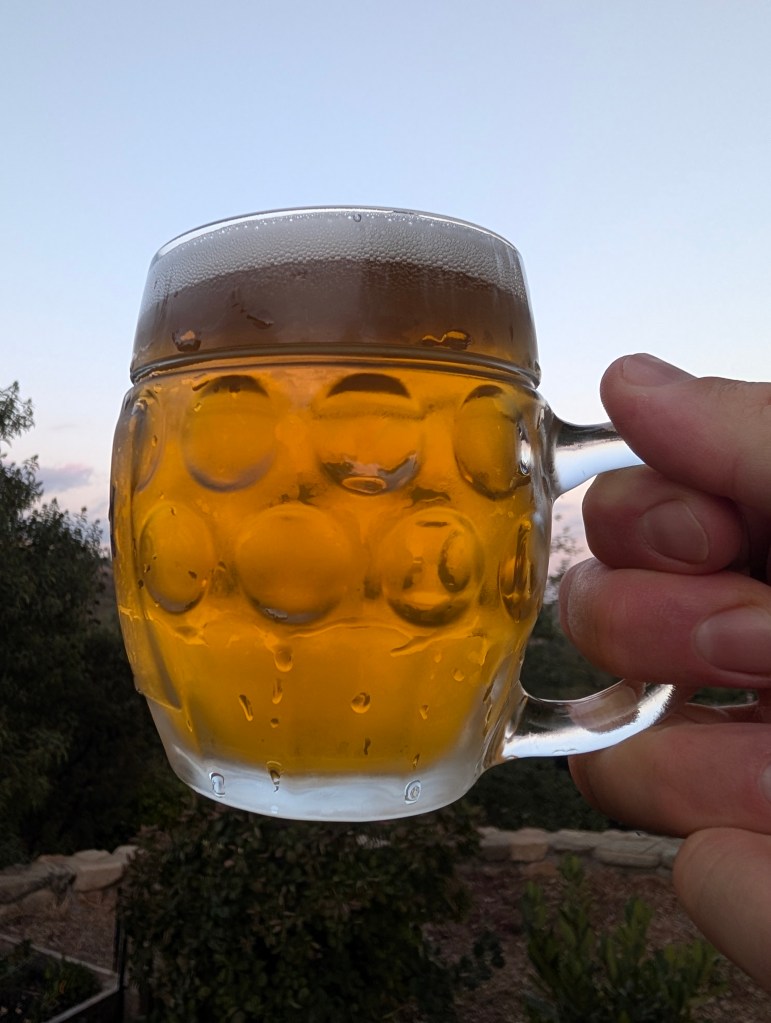
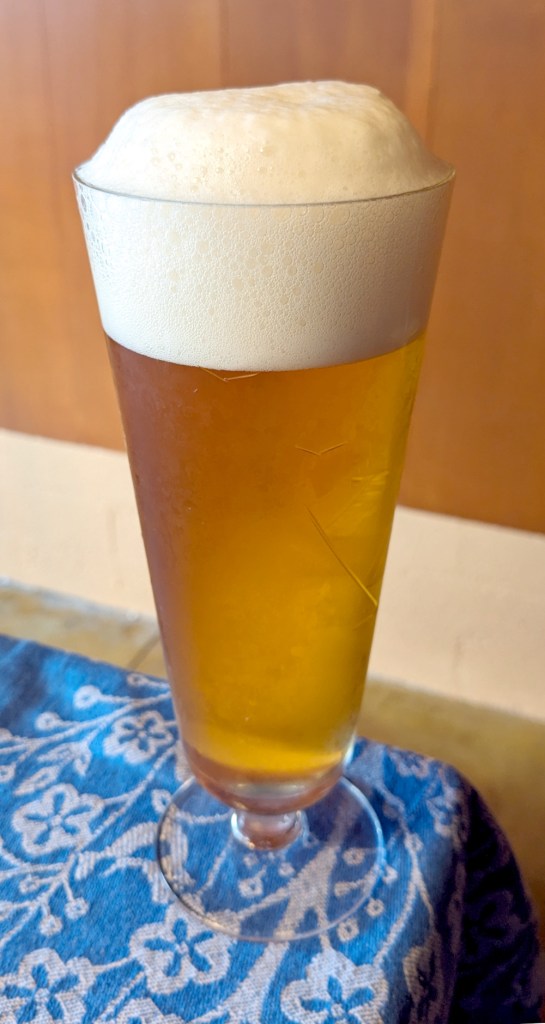
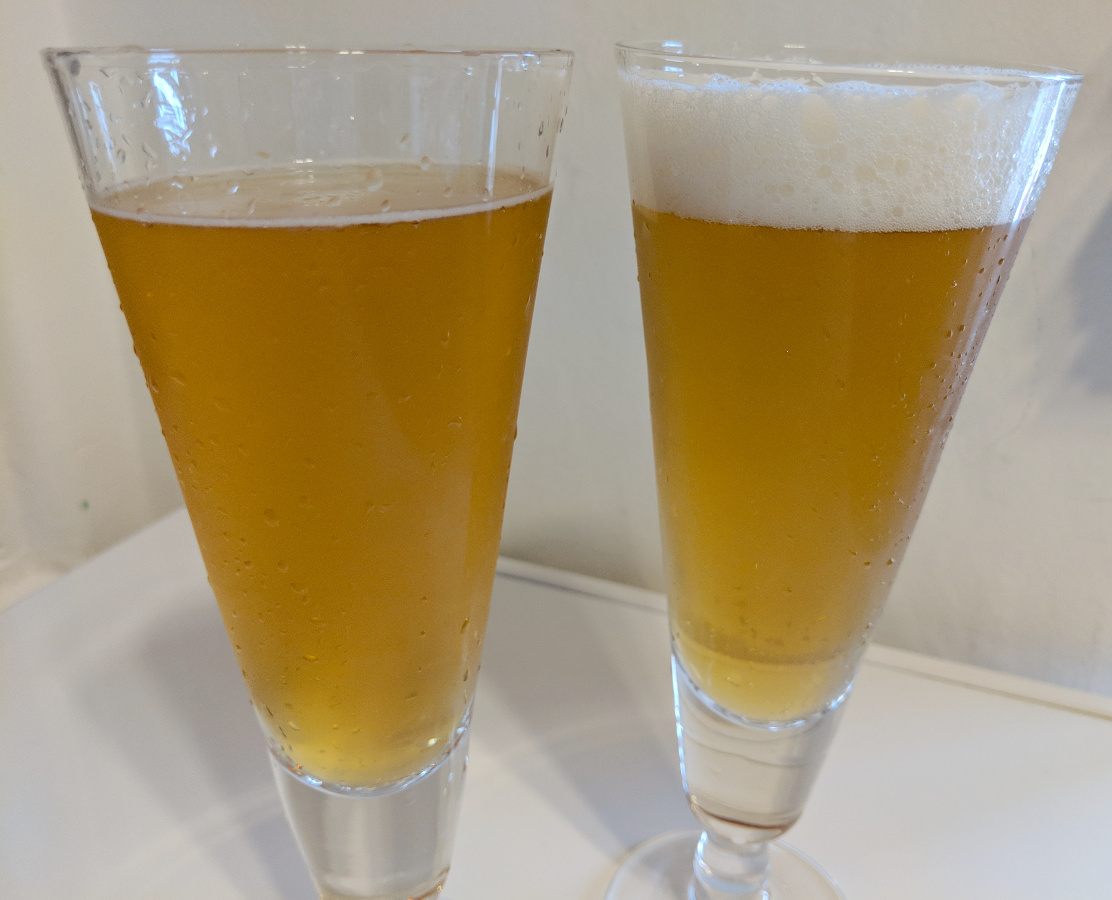
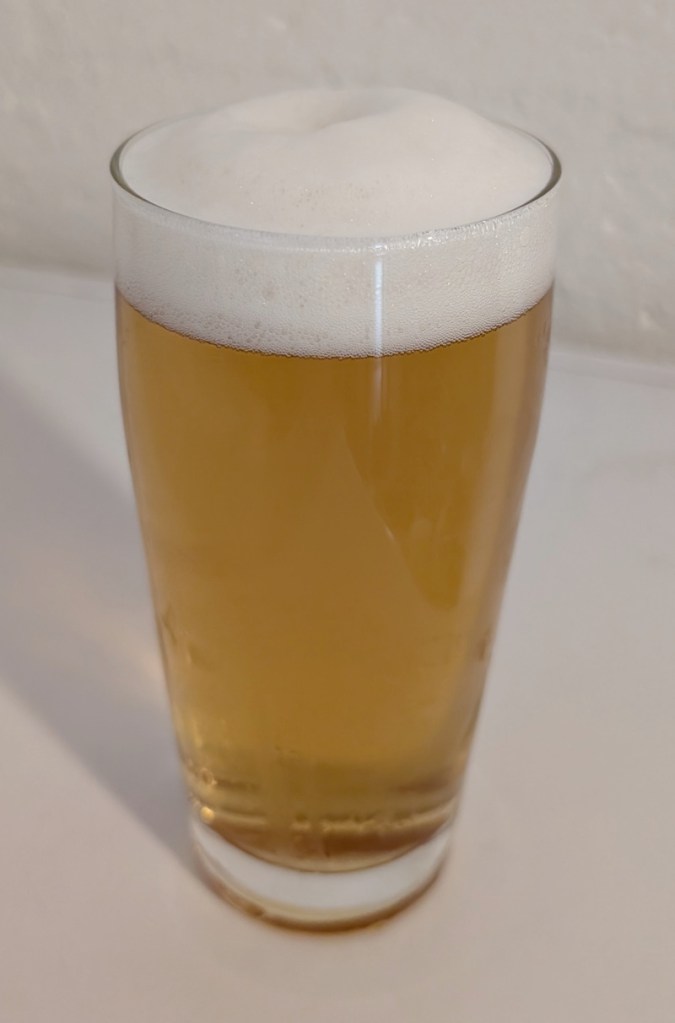
    • Brilliantly clear gold beer with a thick and persistent white head, which has a tall and creamy appearance when well poured.
  • Aroma
    • Medium-high malty aroma, medium low spicy/herbal hops as the beer warms.
  • Flavor
    • Bready maltiness at a medium level, against a bitter yet rounded hop character, with an herbal and slightly spicy quality.
  • Mouthfeel
    • Medium body, medium carbonation, smooth finish.
  • Would I Brew This Again?
    • This might be my best Bohemian pilsner yet. It is incredibly drinkable, and the balance between malt and hops is spot-on. Soft water definitely pays off, with the subtle bitterness that plays well against the malt.
  • Overall
    • 10/10

No. 11 Bohemian Pilsner

According to my records, I have made 18 batches of German pils over the years (starting in 2016), but only five batches of the original pilsner beer, Bohemian (Czech) pils. After a more than four year hiatus, it was time!

Taking lessons learned from previous recipes, I went for very fresh Saaz hops (from Yakima Valley Hops). Furthermore, I built the malt bill to have a touch of melanoidin malt, to avoid messing with a decoction but also not overwhelming with the honey-character that melanoidin brings at higher percentages. I used the Rahr pilsner malt as a base–although it is not “traditional,” I have found it to be an absolutely excellent malt for my tastes.

This isn’t my 11th batch, but I brewed it on 11/11 (Nigel Tufnel Day!), so the name was unavoidable.

No. 11 Bohemian Pilsner

  • 10 lb. pilsner malt (Rahr)
  • 0.5 lb. Carafoam malt (Weyermann)
  • 0.25 lb. melanoidin malt (Weyermann)
  • 0.5 tsp. BrewTanB, added to mash
  • 3.5 oz. Saaz hop pellets (2.4% alpha), 60 minute boil
  • 1.5 oz. Saaz hop pellets (2.4% alpha), 10 minute boil
  • 0.5 tsp. BrewTanB, 10 minute boil
  • 1 Whirlfloc tablet, 5 minute boil
  • 1 oz. Saaz, 5 minute boil
  • 1 tsp. tsp. WLN1000 yeast nutrient, 5 minute boil
  • 2 pkg. Diamond Lager yeast (Lallemand)

Target Parameters

  • 1.049 s.g., 1.014 f.g., 4.7% abv, 37 IBU, 5 SRM
  • Full volume infusion mash, held at 154° for 60 minutes and 168° for 10 minutes
  • RO water built to hit target of 6 ppm Ca, 5 ppm Na, 6 ppm SO4, 6 ppm Cl, 14 ppm HCO3, RA=7 ppm

Procedure

  • To 7.5 gallons of RO water, I added 0.3 g gypsum, 0.3 g calcium chlorie, and 0.5 g baking soda, to hit my water target parameters.
  • I heated the water to 160°, and added the grains to hit a mash target of 154°. I added 4 mL of 88% lactic acid to adjust the mash pH, and recirculated for 60 minutes.
  • Next, I heated the mash to 168° for 10 minutes, before pulling the grains and starting the ramp-up to the boil.
  • In total, I collected 6.75 gallons of runnings with a gravity of 1.042, for 71% mash efficiency.
  • I boiled for 60 minutes, adding hops and finings per the schedule. Finally, I turned off the heat and chilled to 75° before transferring to the fermenter.
  • Once in the fermenter, I chilled the wort to 52° before pitching the yeast.
  • I brewed this beer on 11 November 2023. Starting gravity was 1.049, exactly on target!
  • I held the fermentation temperature at 52° until 2 December 2023, when I moved the beer to ambient (~60°).
  • I kegged the beer on 26 December 2023. Final gravity was 1.014, for 4.7% abv.
  • Because I’ve been a bit slow to finish kegs lately, this beer ended up lagering for a full three months before tasting.

Tasting

  • Appearance
    • Beautiful medium gold color, brilliant clarity, pouring with a long-lasting, creamy white head that leaves nice tracks on the side of the glass.
  • Aroma
    • A whiff of spicy Saaz at the front, at some maltiness (slightly bready) back of that.
  • Flavor
    • Bitterness-forward, which lingers on the tongue, followed by a subtle maltiness. Clean fermentation profile. Tiny bit of caramel. I feel like the melanoidin is perhaps too much in the background–I would like a tiny touch more.
  • Mouthfeel
    • Medium body, medium carbonation, off-dry mouthfeel.
  • Would I brew this again?
    • Yes! It’s probably the best Bohemian pilsner I have made to date! It has a nice mix of malt/hops….It maybe could be a bit deeper gold in color, and I wouldn’t complain with a touch more melanoidin character. It was well worth the (not entirely intentional) extended aging, too.
  • Overall
    • 9/10 (for color)

Czech Pilsner

My homebrew club recently had a competition centered around Bohemian-style pilsners. I’ve done a few iterations, but haven’t quite hit where I want to yet. The primary issue concerns hop aroma–it’s really, really hard to get good Saaz as a homebrewer. Gotta keep trying.

Czech Pilsner

  • 10.5 lbs. Barke Pilsner malt (Weyermann)
  • 2.4 oz. melanoidin malt (Weyermann)
  • 0.3 oz. Carafa Special III malt (Weyermann)
  • 2 oz. Saaz hop pellets (3.0% alpha), 60 minute boil
  • 1 oz. Saaz hop pellets (3.5% alpha), 60 minute boil
  • 1 Whirlfloc tablet, 10 minute boil
  • 1 tsp. Fermax yeast nutrient, 10 minute boil
  • 2 oz. Saaz whole hops (2.8% alpha), 5 minute boil
  • 1 pkg. WLP800 Pilsner Lager yeast, prepared in starter

Target Parameters

  • 1.050 o.g., 1.010 f.g., 5.2% abv, 35 IBU, 5 SRM
  • 60 minute infusion mash, 150°, batch sparge
  • Water built from RO, to hit target of 20 ppm CA, 8 ppm Na, 15 ppm SO4, 35 ppm Cl, -61 ppm RA

Procedure

  • I made a 2L yeast starter a few days in advance, and cold crashed it, followed by decantation of the spent wort.
  • I built up the mash water using 0.6 g baking soda, 0.4 g CaCl, 0.4 g gypsum, added to 8.5 gallons of RO water.
  • I mashed in with 3.5 gallons of water at 161°, to hit a mash temperature of 150.2°. I added 7 mL of 88% lactic acid, to adjust the pH of the mash.
  • After a 60 minute mash, I batch sparged in two steps (first of 1.25 gallons, second of 3.6 gallons). At each step, I let the mash sit for 10 minutes, vorlaufed, and collected the runnings.
  • In total, I collected 6.9 gallons of runnings with a gravity of 1.043, for 75% mash efficiency. Right on target!
  • I boiled for 60 minutes, adding stuff per the recipe, and then chilled after flame-out.
  • I transferred the wort to my fermenter, and put it in the fermentation chamber to drop down to 48°. This took a few hours. Then, I oxygenated for 30 seconds and pitched the yeast.
  • I fermented the brew at 50°. The brew date was 25 May 2019.
  • After three weeks, I raised the temp to 65° for a few days, then cold crashed. After a few more days, I kegged the beer using a semi-closed transfer (CO2-flushed keg, but just air-pushed the beer into the keg). Alas, I neglected to take a final gravity!

Tasting

  • I didn’t get to do a formal tasting before the keg kicked, but did get a few quick observations.
  • The beer flavor was a bit too forward on the melanoidin; I will just ditch that in the future! I am still in search of good hop aroma…overall, the beer is just OK with good clarity, decent head; not quite there yet. Bitterness level is about right. Malt body is about right.
  • Overall, 6/10.

GBP70 – Bohemian Pilsner Recipe & Tasting

In honor of my dad’s 70th birthday (he introduced me to homebrewing, after all!), I brewed a Bohemian-style pilsner. It was pretty tasty, and sadly didn’t last long enough even for me to do a formal tasting. I made the mistake of serving it at a party, and the keg was finished before I could blink!

GBP70 (Greg’s Birthday Pilsner 70)

  • 10.5 lbs. Barke pilsner malt (Weyermann)
  • 2.3 oz. melanoidin malt (Weyermann)
  • 0.3 oz. Carafa Special III malt (Weyermann)
  • 2 oz. Saaz hop pellets (3.0% alpha), 60 minute boil
  • 0.75 oz. Saaz hop pellets (3.5% alpha), 60 minute boil
  • 1 Whirlfloc tablet, 10 minute boil
  • 1 tsp. Fermax yeast nutrient, 10 minute boil
  • 2.25 oz. Saaz hop pellets (3.5% alpha), 5 minute boil
  • 2 pkg. W34/70 Saflager Lager Yeast (Fermentis)

Target Parameters

  • 60 minute infusion mash, 150°, no sparge
  • 1.049 o.g., 1.010 f.g., 5.2% abv, 38 IBU, 5 SRM
  • Water built from RO to hit targets of 7 ppm Ca, 2 ppm Mg, 2 ppm Na, 5 ppm SO4, 5 ppm Cl, 15 ppm HCO3

Procedure

  • To 7.75 gallons of RO water, I added 0.6 g baking soda, 0.4 g CaCl, and 0.3 g gypsum.
  • I heated the mash water to ~160°, added to the mash tun, allowed to cool to 155.4°, and then added the grains along with 10 mL of 88% lactic acid.
  • I hit 150.7° on the mash temperature–not too bad! It was down to 148.7° after 45 minutes.
  • After 60 minutes, I collected 6.5 gallons of wort with a gravity of 1.041. This works out to 67% efficiency. That’s a fair bit lower than my typical efficiency (73 to 75%), but not unexpected given the no-sparge methods. I added 0.25 gallons of RO water to bring up the volume in the kettle.
  • I boiled for 60 minutes, adding hops and other ingredients per the schedule.
  • I chilled the wort to 75° in the kettle, and chilled the rest of the way down to 49° after transferring to the fermenter. I oxygenated for 60 minutes at this point, and then pitched the dry yeast directly into the wort.
  • Starting gravity was 1.046 on 12 January 2019.
  • I raised the brew temperature to 64° on 26 February 2019, and cold crashed on 28 February 2019. I kegged the beer (using a closed-transfer technique, directly into the CO2-purged keg) on 9 March 2019.
  • Final gravity was 1.010, down from 1.046. This equates to 4.9% abv.

IMG_20190327_202833General Tasting Impressions

I didn’t get to do a formal tasting for this one, and it was finished before it really hit its ultimate peak, but overall I’m pretty happy with it. The malt flavor was spot-on, and I think I’ve finally iterated into a good balance of melanoidin malt within my no-decoction Bohemian pilsner recipes. The beer was pretty clear, but would have cleared to brilliant with another week or two in the keg. The head and head retention were fairly good also, but not the best I’ve ever had. Not sure why that was. I’m still chasing a perfect Saaz hop aroma in my Bohemian pilsners; it’s just a matter of finding the right hops with the right freshness. The ones I used in this batch weren’t awful, but they weren’t awfully exceptional, either. Overall, I would give this recipe 8/10, with targeted improvements to mainly chase the best possible hop flavor.

Beer Tasting: Try Again Bohemian Pilsner

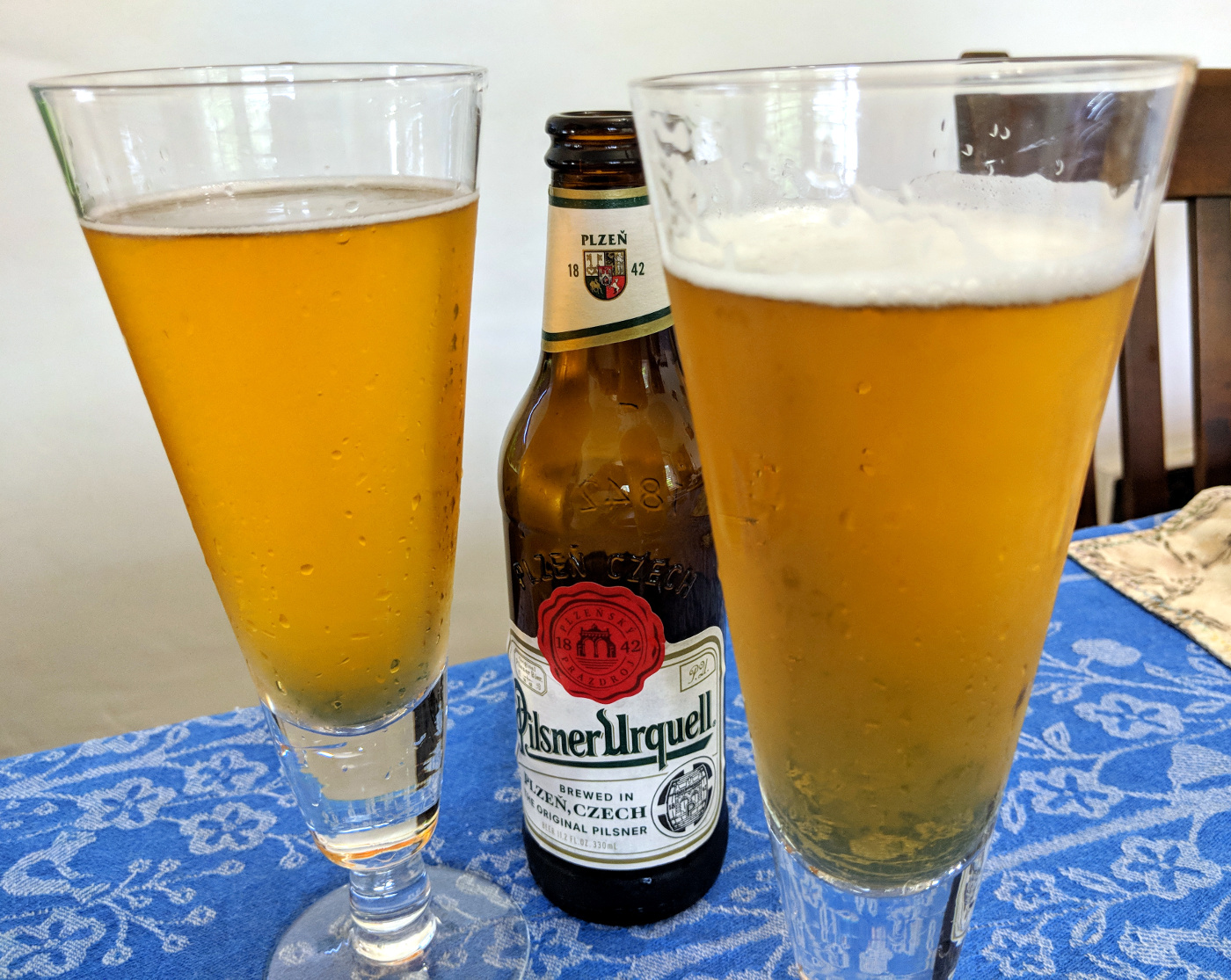
My recent version of a Bohemian pilsner has been on tap for a few weeks, and is at its peak for enjoyment. Today, I did a head-to-head with the classic flagship for the style, Pilsner Urquell.

IMG_20180707_160451

Head-to-head Bohemian pilsners! Pilsner Urquell is in the glass on the left, and my homebrew version is at right.

Try Again Bohemian Pilsner

  • The Basics
    • 1.053 s.g., 1.014 f.g., 4.2% abv, 36 IBU, 5 SRM
  • Appearance
    • Pours with a fine white head with excellent persistance. The beer itself is a golden hue, nearly an exact match for Pilsner Urquell but perhaps just a notch lighter. It is very clear, but not quite brilliant (Urquell has a slight edge here). In terms of appearance, mine is equal in color, better in head (and head retention), and needs slight improvement in clarity.
  • Aroma
    • My beer tips a little bit more towards malt prominence; there is a very slight spice note from the Saaz hops, but that’s still not quite where it should be. Urquell has the hop note perfectly, so I give it a slight edge on this count.
  • Flavor
    • Bitterness levels are not quite evenly matched between Urquell and mine; Urquell comes across as a bit more bitter. Mine has a nice malt character, but this is slightly at the expense of the hops. The malt on my homebrew is rich and bready, and the bitterness stands well against that. The finish is balanced well. Relative to Urquell, it tips more towards the malt than bitterness on the finish, and I prefer the hoppier Urquell version a bit more.
  • Mouthfeel
    • My brew has a medium body and moderate carbonation. Urquell is definitely drier than my beer, with a more extended and more bitter finish. The finish on mine is smoother yet I prefer the Urquell “bite” just a touch.
  • Would I brew this again?
    • Yes, with a few minor modifications! There is lots I like about my beer, such as the appearance and malt character. I do feel like it could be a bit drier and crisper (relative to Urquell), because the hops are just a tiny bit “flabby”. My main adjustment would be to increase the hopping, and mash at a slightly lower temperature to dry out the beer a bit. I might also try halving the melanoidin contribution; I think it might be contributing some unfermentables that keep the beer from being as dry as it might be. The Barke pilsen malt that I used in this recipe has plenty of character on its own, anyhow!
  • Overall
    • 7.5/10

IMG_20180707_155837