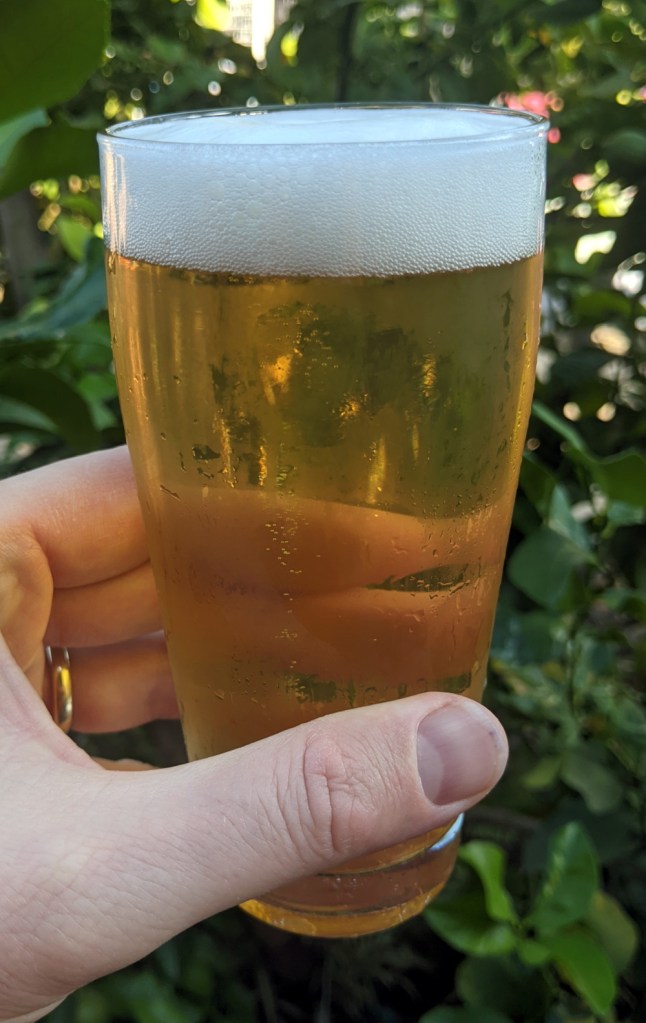
Kveik the Keg Brown Ale

As the days turn towards winter, I’m in a dark [beer] mood. This is the time of year when I really like having a stout, porter, brown ale, or even an amber ale on tap to round out my beer choices.

To kick things off for the fall/winter dark beer season, I brewed up “Kveik the Keg Brown Ale.” It’s a total experiment, pulling together something that’s vaguely an American-style brown ale, with a repitch of the Hornindal kveik culture used in my recent pale ale. The idea was to make a sessionable beer holding ample malt character and a citrus highlight…something like a “chocolate orange” feel. I modified this from the Wasatch Premium Ale recipe in the Brewing Session Beers book by Jennifer Talley, because it looked like it had many of the initial features I was hoping for. For the malt base, I mixed American 2-row and light Munich malt, supplemented by a hefty dose of crystal 75, some chocolate malt, and a touch of Carafa Special III for color. For hops, I used all whole-Cascade hops. The Hornindal culture, which produces a subtle citrus character, would hopefully work alongside the Cascade. As you’ll see in the tasting notes, this was a pretty successful experiment!

Kveik the Keg Brown Ale

  • 6.25 lb. 2-row brewer’s malt (Great Western)
  • 2.5 lb. Munich light malt (Chateau)
  • 1 lb. crystal 75 malt (Great Western)
  • 2.6 oz. Carafa Special III malt (Weyermann)
  • 2.5 oz. chocolate malt (Briess)
  • 1 oz. Cascade whole hops (5.5% alpha), 60 minute boil
  • 0.5 oz. Cascade whole hops (5.5% alpha), 30 minute boil
  • 1.5 oz. Cascade whole hops (5.5% alpha), 10 minute boil
  • 1 tsp. yeast nutrient, 10 minute boil
  • 1 Whirlfloc tablet, 5 minute boil
  • Hornindal Kveik (Omega OYL-091), repitched from previous batch
  • 1 oz. Cascade whole hops (5.5% alpha), dry hop in fermenter

Target Parameters

  • 1.044 s.g., 1.011 f.g., 4.4% abv, 18 SRM, 33 IBU
  • Infusion mash, 156°, batch sparge; 60 minute boil
  • Claremont water, with Campden tablet to remove chloramines.

Procedure

  • I mashed in with 3.4 gallons of water at 166°, to hit my mash target of 156°. After 40 minutes, I added 1.5 gallons of hot water (~175°), to raise the mash temperature to 164°. I let this sit for 10 minutes, vorlaufed, and collected the first runnings.
  • Next, I added 3.75 gallons of hot water, to hit a ~164° mash temperature. I let this sit for 10 more minutes, vorlaufed, and collected the second runnings.
  • In total, I collected 7.3 gallons of runnings at a gravity of 1.038, for 76% mash efficiency.
  • I brought the runnings to a boil, and added hops, nutrients, and finings per the indicated schedule. After 60 minutes, I turned off the heat, chilled the wort down to 89°, and transferred it to the fermenter.
  • I brewed this beer on 19 September 2020. Starting gravity was 1.045, pretty close to my target. I pitched around 8 ounces of yeast slurry (which had been harvested a week prior), and saw signs of fermentation within 90 minutes of pitching the yeast! Within 18 hours, there was vigorous fermentation. What a solid start for this culture! I fermented this at ambient temperatures.
  • On 23 September, I added 1 oz. of dry hops directly to the fermenter.
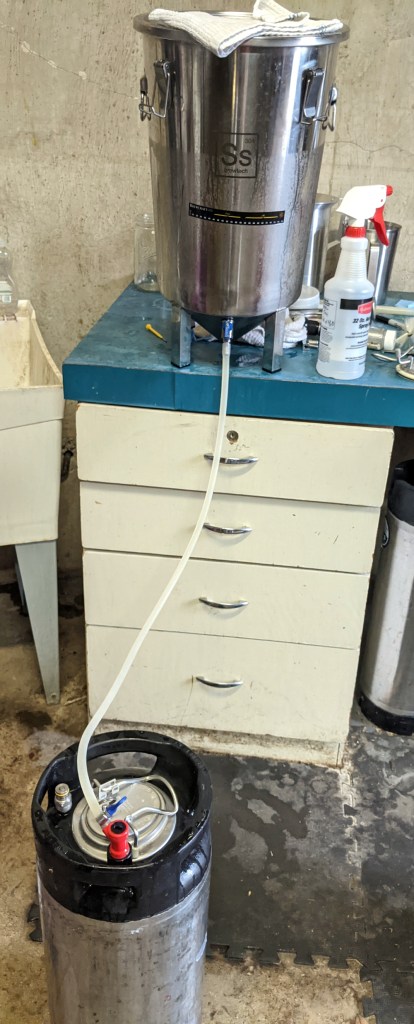
  • I kegged the beer on 3 October 2020, adding 2.8 oz. of corn sugar boiled in 1 cup of water. The keg sat at ambient for ~10 days, before I topped up the pressure using force carbonation.
  • Final gravity was 1.017, down from 1.045, for 3.6% abv.
Kveik the Keg Brown Ale

Tasting

  • Appearance
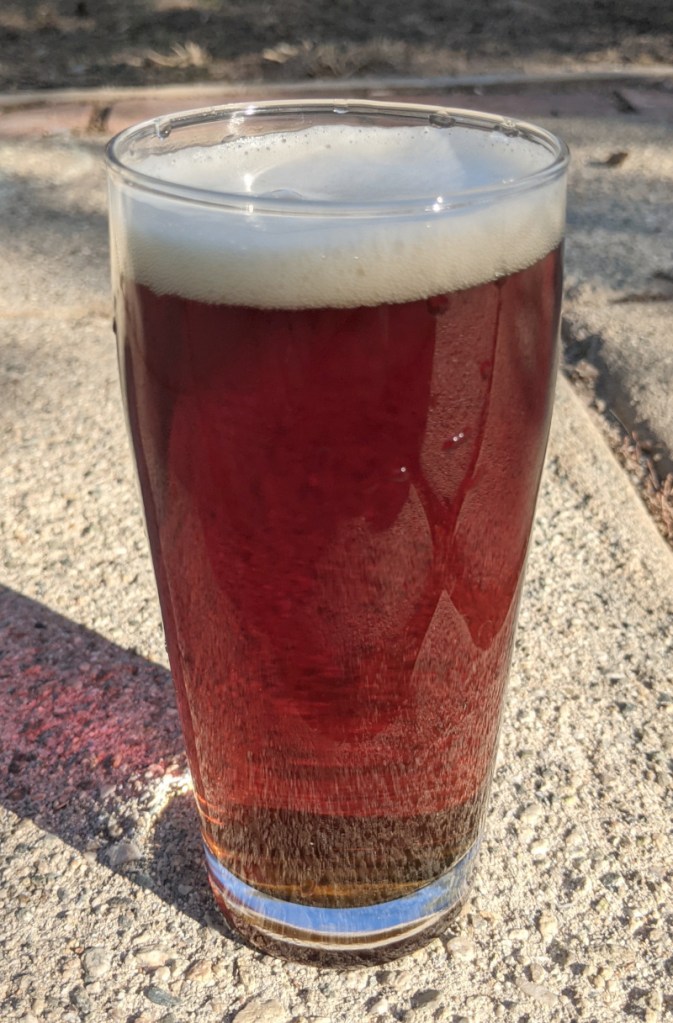
    • Very clear, deep brown beer with a persistent ivory head. It is exceptionally pretty!
  • Aroma
    • Moderate chocolate character to the malt aroma, with a slight citrus character, presumably from the yeast and hops. Very clean!
  • Flavor
    • The beer has a surprisingly rich, bready malt base (must be that Munich malt!), with a dark caramel and chocolate character behind that. Bitterness is at a moderately high level, but not over the top relative to the malt. There is definitely an orangey citrus character in play here.
  • Mouthfeel
    • Moderate carbonation, with a fairly light body and a crisp finish. There is a very slight bit of what might be astringency on the extended finish, but it’s barely noticeable. It’s not harsh at all, but does seem a touch out of balance with the rest of the beer.
  • Would I brew this again?
    • Yes! I might make a few minor modifications, perhaps to dial the bitterness back just a touch and maybe reduce the dry hopping level or dry hopping time. I think the beer would also benefit from swapping out the 2-row base malt with a Vienna or Maris Otter-type malt, to enrich the malt character. All that said, it’s overall a pretty good beer. I really like how the kveik culture worked in this beer, and it’s pretty nice to find something for this yeast that’s not yet another oversaturated IPA. I’ll probably be brewing more beers like this down the road!

Dog Days Pilsner

As the summer reached its peak of heat near the end of August, pilsners were always on my mind. There’s nothing more refreshing than sitting out on the patio at the end of an afternoon, with a Willi Becher of freshly poured pilsner. I find that a good pilsner with some character can also work as a fall beer…basically, a classic German pils is the year-round beer in my world!

So, during the Dog Days of Summer, I crafted this Dog Days Pilsner recipe. I kept the malt bill super simple, with pilsner malt and a touch of CaraPils to round out the mouthfeel. Although I often go for a SMaSH-type strategy for hopping, this time I wanted to build up some layers of hop character. Finally, I wanted a little more yeast character, so went with the White Labs’ Oktoberfest/Marzen recipe, instead of my usual W34/70. Those strategies paid off nicely in the end!

Dog Days Pilsner

  • 9.5 lb. Pilsner malt (Weyermann)
  • 6 oz. Carapils malt (Weyermann)
  • 4 oz. acidulated malt (BestMalz)
  • 1 oz. Sterling hop pellets (7.4% alpha), 60 minute boil
  • 1 oz. Saaz hop pellets (5.3% alpha), 20 minute boil
  • 0.55 oz. Hallertauer Mittelfrueh hop pellets (3.2% alpha), 5 minute boil
  • 1 tsp. Fermax yeast nutrient, 10 minute boil
  • 1 WhirlFloc tablet, 5 minute boil
  • 1 pkg. Octoberfest/Marzen lager yeast (WLP 820), in 1.75L vitality starter

Target Parameters

  • 1.046 s.g., 1.015 f.g., 4.1% abv, 3 SRM, 37 IBU
  • Infusion mash, 155°, batch sparge; 60 minute boil
  • Claremont water, adjusted with lactic acid and gypsum to achieve 66 ppm Ca, 30 ppm Mg, 81 ppm Na, 107 ppm SO4, 90 ppm Cl, est. 30 ppm HCO3; alkalinity 25 ppm, effective hardness 65 ppm, RA -40 ppm

Procedure

  • The morning of my brew day, I spooled up a 1.75L vitality starter for the yeast, and ran it on my stir plate.
  • To prepare my water, I added 9 mL 88% lactic acid to 8.25 gallons of tap water along with a Campden tablet, and then 4g gypsum. This was done to knock out the carbonates and approximate a target of 66 ppm Ca, 30 ppm Mg, 81 ppm Na, 107 ppm SO4, 90 ppm Cl, est. 30 ppm HCO3; alkalinity 25 ppm, effective hardness 65 ppm, RA -40 ppm.
  • I mashed in with 3.5 gallons of water at 162°. Mash temp was a bit low at 151.5°, so I added 3 quarts of water at 178°, to hit 155.5°. I added 0.75 mL of 88% lactic acid to the mash, to lower pH to an estimated target of ~5.45.
  • After 60 minutes, I added 0.75 gallons of water at 185°, let it sit for 10 minutes, vorlaufed and then collected the first runnings. I added the remainder of the sparge water, and collected second runnings.
  • In total, I collected 6.8 gallons of runnings at 1.043, for ~77% efficiency.
  • I brought the runnings to a boil, adding hops and kettle finings per the schedule. After a 60 minute boil, I turned off the heat and chilled down to 85° with my cooling coil. I transferred to the fermenter and cooled the rest of the way (~52°) in the fermentation chamber. This final chill took around six hours.
  • I gave the wort a 30 second blast of pure oxygen, and then pitched the yeast.
  • I brewed the beer on 15 August 2020, and started fermentation at 54°.
  • I raised the temperature to 56° on 31 August, 58° on 2 September, and then 60° on 4 September. I held it at 60° for 12 hours, and then started the downward trend. It was at 57° on 5 September, 50° on 6 September, 45° on 7 September, 40° on 8 September, and 35° on 9 September. The final step was down to 32° on 10 September, and I held it there until kegging on 26 September 2020.
  • The final gravity was 1.011, down from 1.049, for 5.0% abv.

Tasting

  • Appearance
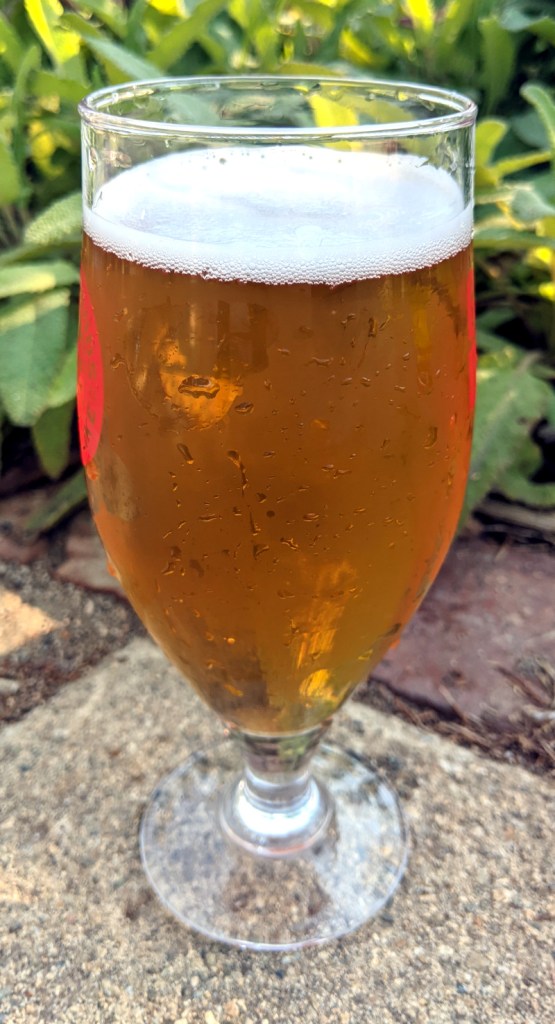
    • Clear, just shy of brilliant. Light gold color, with a fine and persistent white head.
  • Aroma
    • Moderate level of malt aroma comes through, with a grainy sweet character. The hops come across amazingly, with a moderately prominent floral quality.
  • Flavor
    • Moderate grainy-sweet malt character–just gorgeous! The bitterness is moderately high, with a clean and slightly herbal character.
  • Mouthfeel
    • Moderately light body, with a crisp and slightly dry finish and moderate carbonation.
  • Would I brew this again?
    • This is a really nice pilsner. The aroma and malt character are perfect. I can’t think of much I would change with this one, other than letting it lager a touch more before it goes on tap. In the last part of the keg that I’m on right now, it’s looking really nice!
    • My typical German pils recipes are on the upper end of bitterness for the style (37 IBU here, versus 40 max in the BJCP guidelines). At some point, I should probably play around with recipes at the lower end of the IBU spectrum…
  • Overall
    • 9.5 / 10 (slight ding for initial clarity)

Kveik Pale Ale

It happened…I’ve given in to a brewing trend, and am trying a recipe with kveik. As you’ll see in some upcoming posts, I’ve in fact tried a few kveik recipes at this point. This is my first one, and admittedly not my favorite.

red package of yeast from Omega Yeast, Hornindal Kveik strain, with cartoon of cat on front
Kveik culture from Omega

For those not familiar with it, kveik is essentially a Norwegian farmhouse ale culture, with a rich cultural history that has likely been over-analyzed by those outside of the original neighborhoods where the yeast originated. I’ve been intrigued by their stated qualities of fermenting cleanly in excess of 90°, which almost sounds too good to be true. It wasn’t, in the end!

The recipe is inspired by a kit recipe from Atlantic Brew Supply, with major adjustments to pretty much everything. Many of the kveik-centered recipes out there are super-high alcohol, and that just doesn’t interest me. Session ales forever! I looked around at a few different kveik strains, and Hornindal from Omega seemed to hit the balance of a citrusy character that I wanted. I went with my usual session pale ale strategy of Vienna plus some Munich and a little crystal malt. For the hops, I grabbed a South African experimental variety, U1/108, from my local homebrew shop.

Kveik Pale Ale

  • 8 lb. Vienna malt (Weyermann)
  • 1 lb. Munich light malt (Chateau)
  • 0.5 lb. Crystal 40 malt (Great Western)
  • 0.75 oz. Magnum hop pellets (13.2% alpha), 30 minute boil
  • 1 tsp. Fermax yeast nutrient, 10 minute boil
  • 1 Whirlfloc tablet
  • 1 oz. African Experimental U1/108 hop pellets (15.0% alpha), 5 minute boil
  • 1 oz. African Experimental U1/108 hop pellets (15.0% alpha), 15 minute whirlpool
  • 3 oz. African Experimental U1/108 hop pellets (15.0% alpha), dry hop in keg
  • 1 pkg. Hornindal Kveik (Omega OYL-091)

Target Parameters

  • 1.043 s.g., 1.011 f.g., 4.3% abv, 6 SRM, 41 IBU
  • Infusion mash, 156°, batch sparge; 45 minute boil
  • Claremont water, with Campden tablet to remove chloramines and 2 g of gypsum added to boil kettle.

Procedure

  • I mashed in with 3.25 gallons at 168°, to hit a 158° mash temperature. I also added 4 mL of 88% lactic acid to the mash, to adjust pH.
  • The mash temperature was down to 156° after 45 minutes. At this point, I added 1.5 gallons for the first sparge, which raised the temperature to 162°. After 10 minutes, vorlaufed and collected the first runnings. Next, I added 3.6 gallons for the second sparge, with a vorlauf after 10 minutes.
  • In total, I collected 7 gallons with a gravity of 1.039, for 77% mash efficiency.
  • In the kettle, I added 2 g gypsum, and the broil everything to a boil. I boiled for 45 minutes, adding hops and other items per the schedule.
  • After flame-out, I chilled the wort to below 185° and then added 1 oz. of whirlpool hops. Hops were between 175° and 180° for 10 minutes. Then, I continued chilling.
  • After I chilled the wort down to 90°, I let it settle for 1 hour and then transferred to the fermenter and pitched the kveik.
  • The fermenter showed minor activity within 6 hours, and vigorous bubbling within 18 hours. At this point, I measured ~85° degrees for fermenter temperature, with 80° degrees ambient in the garage. I started fermentation on September 5, and fermentation seemingly was done by 9 Sept 2020.
  • I kegged the beer on 13 September 2020, adding dry hops in a baggie at that time. As has been my usual practice lately, I did a mixture of keg priming and force carbonation, targeting 2.7 volumes of CO2. I added 2.8 oz of corn sugar dissolved in one cup water for this first stage, and after a week topped up the CO2 using my cylinder.
  • Final gravity is 1.017, for 3.6% abv.

Tasting

  • Appearance
    • A hazy gold beer, with a pillowy, fine, and very persistent white head
  • Aroma
    • Aroma is malt-centered, very bready and showing a bit of caramel. Hop aroma is surprisingly low.
  • Flavor
    • Very hoppy, with a slightly rough bitterness. The malt in the background has a bready and toasty quality.
  • Mouthfeel
    • Light bodied, slightly astringent finish, probably from the dry hops. Moderately high carbonation.
  • Would I brew this again?
    • Not with this particular hopping regimen. The malt character is fine, and the yeast character is fantastically clean for having been fermented at high temperature, but the hops just don’t do it for me. I wonder if it’s a combination of the hop variety with the low starting gravity, so that the hops aren’t balanced more by the malt. I also think I overhopped on the dry-hopping, so I can’t blame it all on the hop variety. Honestly, the beer was far better before I added the dry hops! That said, I’m super impressed by the yeast, and harvested a ton for use in some upcoming batches.
  • Overall
    • 4/10

What’s Brewing? October 2020 Edition

The past month has been a quiet one for the blog, but not necessarily a quiet one for brewing. I’ve gotten a few batches started, got some awesome new equipment, and enjoyed some of the fruits of my labors. Admittedly, I am not turning over kegs as often as I would like, if only because I’m not having people over. I make up the gap a little bit by doing growler swaps!

The Anvil Foundry, my new brewing toy.

Beer Batch Updates

  • My first kveik-fermented beer is now history. It was a super interesting beer, and pretty drinkable, although the dry hopping unfortunately ended up a little harsh. At ~3.5% abv, it was also possible to have a few without getting woozy-headed. The keg just kicked last night!
  • I repitched the kveik culture from my pale ale, to do a sessionable brown ale. It came in around 3.6% abv, a bit lower than expected. I’m somewhat surprised by the fairly low attenuation on the Hornindal strain, with ~61% attenuation on both batches so far. This is probably due to the intentionally high mash temperatures I’m using, at around 156° for each. The beer is now on tap,
  • I’ve been brewing a sequence of lagers, as mentioned last month. The German pils is now on tap, and a Vienna lager just went on tap also. I just did a rebrew of my Stygimoloch Bock, repitching the yeast from the German pils. Finally, I’ve done another German pils, using the Pfriem Pilsner from Dave Carpenter’s lager book.
  • Finally, I made a small (3 gallon) batch of a spiced Christmas beer. It uses Vienna, Munich II, and honey malt, along with a smattering of crystal and chocolate malts as well as some honey. A mixture of “holiday spices” went in, with cinnamon, nutmeg, allspice, vanilla, and coriander. It’s fermenting with another repitch of the kveik (probably the last pitch for this one

What’s On Tap?

  • Dog Days Pilsner has been drinking exceptionally well. It’s just a great German pils–I feel like I have finally mastered this style!
  • I just put a Vienna lager on tap, after about a month of lagering. It’s a super-simple SMaSH beer, with just Vienna malt (Weyermann) and Saaz. Vienna is still one of my favorite malts, and this recipe is no exception!
  • Finally, I have a session brown ale fermented with kveik. “Kveik the Keg Brown Ale” is a super interesting and super drinkable beer, clocking in at only 3.6% abv. It has a really delightful chocolate and citrus character. I’m in love with this beer!

What’s Coming Up?

  • I’m thinking a stout of some sort is in order…not sure what yet, but probably a recipe that has a fairly dry, sharp character at a sessionable alcohol level.
  • It’s always lager time! I might do a “winter lager” of some sort, emphasizing a mix of Vienna and Munich malt.

Equipment Notes

  • I recently purchased the Anvil Foundry 10.5 gallon electric brewing system, and am loving it so far. Given the pandemic, I’m trying to avoid unnecessary trips out for propane, and it seemed like a good time to look at moving to electric. The Foundry system hit all of my interest points, with solid reviews, reliable reputation, and simple operation. To date, I’ve brewed a German pils as well as the holiday ale.

Commercial Beer Notes

  • I’ve been cutting back my alcohol consumption some, and so have been exploring non-alcoholic options with interest. I recently tried Partake Brewing’s line of 0% alcohol beers. Unfortunately, they were a bit disappointing. There were things I liked about each, but the character was just way too thin, and they all had a bit of a “twang” reminiscent of some of my early extract brews. I’ll continue to try some other brands, but probably not this one again.

Summer RyePA

My latest session IPA was a bit of a kitchen sink beer, but also one where I wanted to create a slightly more “traditional” northwest IPA. That means citrus and pine for the hops, and no fear of the crystal malt. To ground my malt character, I used Vienna malt as the base, with a healthy dose of rye malt on top of that. I used about 7% crystal malt to add some body and depth. The overall results were pretty fantastic!

Summer RyePA

  • 8 lb. Vienna malt (Weyermann)
  • 1.5 lb. rye malt (Viking)
  • 0.5 lb. crystal 40 (Great Western)
  • 0.25 lb. crystal 60 (Great Western)
  • 2 oz. rice hulls
  • 0.5 oz. Warrior hop pellets (15.8% alph), 60 minute boil
  • 0.4 oz. Chinook hop pellets (13.0% alpha), 60 minute boil
  • 1 oz. Cascade whole hops (5.5% alpha), 3 minute boil
  • 1 tsp. Fermax yeast nutrient, 10 minute boil
  • 1 Whirlfloc tablet, 5 minute boil
  • 1 pkg. American West Coast Ale yeast (BRY-97)
  • 1 oz. Amarillo hop pellets (9.2% alpha), dry hop in keg
  • 0.5 oz. Cryo-Cascade hop pellets (12.0% alpha), dry hop in keg
  • 0.4 oz. Columbus/Tomahawk/Zeus (CTZ) hop pellets (15.5% alpha), dry hop in keg

Target Parameters

  • 1.047 s.g., 1.012 f.g., 4.5% abv, 7 SRM, 46 IBU
  • Infusion mash, 156°, batch sparge; 60 minute boil
  • Claremont water, with 3 g gypsum and 5 g epsom salts added to kettle during chilling, to hit approximate mixture of 51 ppm Ca, 32 ppm Mg, 71 ppm Na, 156 ppm SO4, 75 ppm Cl, ~100 ppm HCO3

Procedure

  • I mashed in with 3.75 gallons of water, heated to 167°. Once it had cooled down to 163°, I added the grains, and hit a mash temperature of 153°. I added ~2 mL of 88% lactic acid to bring the mash pH down a touch.
  • Around 30 minutes in, I added 2 gallons of water at 175°, to raise the mash temperature to 157°.
  • After 60 minutes of mashing, I collected the first runnings. Then, I added 3 gallons of water with 2.5 mL of 88% lactic acid, to neutralize carbonates. This should result in around ~100 ppm HCO3.
  • I brought the kettle to a boil, adding hops and such per the recipe.
  • After 60 minutes, I began the chilling process. At this point, I realized that I had forgotten to add the gypsum and epsom salts I had intended to add earlier, so boiled them in a cup of water and put this into the wort.
  • Once I had chilled a bit, I transferred to the fermenter and then chilled the rest of the way, down to 68°, in my fermentation chamber.
  • I brewed this beer on 8 August 2020, and fermented at 66°. Starting gravity was 1.048.
  • I brought the beer up to ambient garage temperature (78° to 80°) on 15 August 2020, to finish out fermentation.
  • I kegged the beer on 21 August 2020, adding 2.85 oz. of corn sugar for natural carbonation along with the dry hops in a bag. I let it sit at ambient for about a week, before chilling and finishing carbonation via forced CO2.

Tasting

  • Appearance
    • Deep gold in color, with an orange tinge, and only a slight haze. This beer dropped surprisingly clear after ~2 weeks in the keezer! A persistent off-white head holds modest lacing along the side of the glass.
  • Aroma
    • Hop forward, with citrus/orange at the front, and a bit of earthiness behind that. Yeast character is clean, and not much in the way of malt is noticeable.
  • Flavor
    • Bitterness level is moderately high, with an orange/citrusy character. It’s distinctly tilted towards the hops, with the malt in the background in terms of balance. Malt character is grainy with only a hint of caramel notes, and avoiding any perception of sweetness. I get a touch of rye spice as the beer warms up, but I’m surprised the rye doesn’t come through more prominently. That’s probably an okay thing, though, in that it doesn’t overwhelm the beer. As I finish more of the glass, the pine character of the hops starts to shine through.
  • Mouthfeel
    • Medium-light bodied, with an extended dry finish and a lingering bitterness. Moderate carbonation.
  • Would I brew this again?
    • This is one of the better session IPAs I’ve done over the years. It’s got sufficient character to be interesting, and enough body to keep it from seeming thin. The citrus character is very nice, and I think the blend of hops is spot-on for this kind of beer. It’s squarely in the northwest IPA tradition, with plenty of citrus and not much of the tropical fruit character so common in IPAs nowadays. It’s interesting that the pine character manifests a bit late as I drink the beer, and same for the rye notes. That’s okay by me, though. I could certainly play with the hops more, but the grain bill is pretty close to perfect.
  • Overall
    • 9/10