Beer Tasting: Transatlantic IPA 1.1

TIPAI kicked the keg for this batch a few weeks back, but luckily did a tasting before that happened. Results are below.

  • The Basics
    • Original gravity = 1.060; final gravity = 1.015; abv = 5.9%; estimated IBU = 60
  • Aroma
    • Light fruity background, with the hint of peach that I would expect for Conan. Slightly citrusy with minor floral hint, too. Very nice aroma, but not overpowering.
  • Appearance
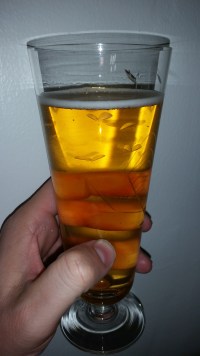
    • A decent but not overwhelming haze to the beer; this has definitely cleared up over the past few weeks, from the initially murky impression. The head pours fairly high and fine, but settles down to a moderate but uniform, ivory-colored blanket across the top of the beer. The beer is a medium-amber in color.
  • Flavor
    • This is hops-dominated, with a notable bitterness at the forefront of each sip. This persists on the finish. The hops character is fairly piney, with a bit of citrus and faint earthiness behind that. The malt character has a slight breadiness to it, but is definitely at the background (which is fine for this beer).
  • Mouthfeel
    • The beer has medium-light body and a dry finish, with moderate carbonation as appropriate for the style. The bitter finish carries through smoothly. It is maybe a touch thinner than I like, but that’s fairly minor.
  • How does it compare to version 1.0?
    • This is a pretty good beer, but I think I liked the first version just a bit better in terms of its hops character. The main difference, to me, is probably the swapping out of Simcoe and Columbus for Falconer’s Flight 7C’s and Fuggle. It’s not flawed by any means, but I think my preference tips towwards the initial combination. Simcoe just does a bit better here, for what I have envisioned in my head. Once again, the Vermont Ale yeast rocks out. I do like this strain! I can fairly safely say this recipe is a solid one. I sampled it first when it was very young–within a week or two of kegging–and can say that a few extra weeks in the keg have been a good thing. The beer is at its peak!
  • Overall rating
    • 8.5 / 10

Beer Tasting: Claremonter Weisse (Me vs. BJCP)

berliner_weisseThis Berliner Weisse was my first award-winning brew! So, I wanted to do my own tasting to see how it compares with the judges’ assessment. It seems like an interesting exercise to calibrate my taste buds, and reflect on how my tasting skills are developing.

  • The Basics
    • Starting gravity = 1.032; final gravity = 1.010; abv = 2.9%; IBU = 5
  • Aroma
    • Low malt, mostly dominated by a tart pear aroma.
    • BJCP Judges
      • “slightly sweet, tart, honey, bready”
      • “Aroma is low lactic, low hop (grassy), lemon, dough (medium), grainy”
  • Appearance
    • Brilliantly clear and pale straw color, with a low white head that thins fairly quickly.
    • BJCP Judges
      • “pale golden, very clear”
      • “Pale yellow, brilliant clear, medium head with medium head retention and medium lacing. Head is white and creamy.”
  • Flavor
    • Pleasantly tart, with a gentle bready character at the back end.
    • BJCP Judges
      • “lemony, tart, wheat, buttery aftertaste, lemon zest, slight diacetyl, clean”
      • “Malt is fresh bread, dough, grainy, lemon tart, all in medium intensity. Nice and clean lactic soureness balanced by malt. Low bitterness. Finish is dry with lingering malt and lactic flavors.”
  • Mouthfeel
    • A fairly thin body and effervescent carbonation, with a dry and crisp finish.
    • BJCP Judges
      • “good mouthfeel, creamy, decent carbonation, could take more”
      • “Light body, medium-high carbonation, light astringency.”
  • Would I brew this again?
    • This is a very nice beer! I’ve noticed that some of the “barnyard” character from initial samplings has receded a bit with age and under cold storage, which isn’t necessarily a bad thing. I can’t say that Berliner Weisse is a style I would always drink, but this has been a tasty experiment that bears repeating.
    • BJCP Judges Overall Impressions
      • “Great beer, could have more aroma, but it’s very pleasant; could lower acidity.”
      • “I enjoyed this beer! It’s highly drinkable, refreshing, still supported by nice malt and lactic sourness that balance with each other. Great example!”
  • Overall
    • 10/10
    • BJCP Judges
      • 39/50
      • 44/50

What Did I Learn?

It’s interesting to compare tastings by various people; on looking them over, I have a few immediate reactions.

First, the overall characters of our assessments overlap pretty broadly. The judges think it’s a good beer, and I think it’s a good beer. The overall style characters–tartness, etc.–are also on everyone’s palates.

For areas of difference, I suspect a few things are going on. First, I wasn’t tasting in the context of a BJCP competition, nor was I tasting in the midst of a flight. I also would bet my beer vocabulary is less developed–or developed in different ways–than the people who judged the entries. For instance, the differences between “doughy” and “bready” are still a bit mysterious to me. A lot of that is perception, of course, and maybe some of it is a bit of over-analysis. In any case, I can certainly do more to refine my vocabulary.

One thing that puzzles me is the judge who saw the entry as slightly undercarbonated–I would suspect that just is from where they saw it in the flight, or maybe pouring technique by whoever was pouring. It is comforting to know that the other judge saw it as well-carbonated, which matches my own perception.

This has been a worthwhile exercise all around. My tastebuds aren’t horribly out of alignment, I can do a little more to develop my vocabulary, and my first attempt at a sour was a success. Time to brew some more!

Beer Tasting: Jarrylo Session IPA

I brewed this one waaay back, and haven’t gotten around to posting my tasting (completed in early March). Here it is!

  • The Basics
    • Original gravity = 1.047; final gravity = 1.017; abv = 3.9%; estimated IBU = 53.
  • Appearance
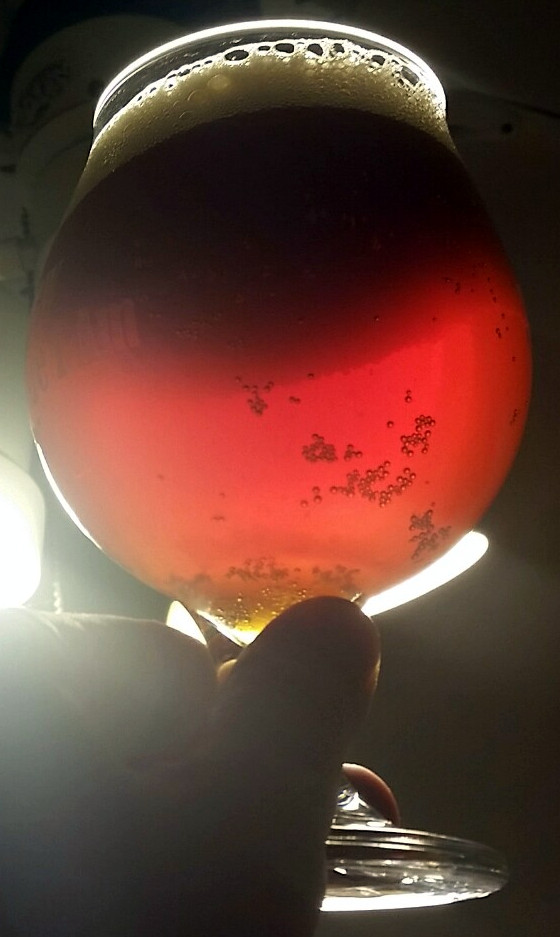
    • Very fine and persistent off-white heady with a creamy character; the beer itself is a medium copper color with a mild haze.
  • Aroma
    • The aroma is hop-centered but fairly mild, with notes of tropical fruit, pear, and perhaps a hint of pepper.
  • Flavor
    • The flavor is quite clean, with a subdued and smooth hop bitterness. The bitterness is way lower than I was expecting though, and probably pushes this more into pale ale than IPA territory. The hops themselves come across as citrusy and slightly floral. There is a very slight maltiness at the back end of this one.
  • Mouthfeel
    • The body is fairly thin, unfortunately, and the beer comes across as a bit watery. The finish is relatively dry.
  • Would I brew this again?
    • I was, unfortunately, rather disappointed with how this beer turned out. Even though it is intended as a session IPA, the bitterness and body miss the mark. I think the hops I used just aren’t suited for the style, and the initial wort was thinner than desirable too. Jarrylo seems like a nice hops variety, but probably better suited for less “hefty” styles, such as a blonde ale or even a pale ale. In fact, I’ve taken to thinking of this beer as a pale ale rather than an IPA, and that helps a bit with my perception of it.
  • Overall rating
    • 4/10

Beer Tasting: Pumpkin Ale 2015

My latest pumpkin ale is nearing the end of its run this year, so I wanted to do a tasting before the keg was kicked. I’ve served this beer to a number of friends, to rave reviews (well, except for one person who doesn’t like any pumpkin beer, period, but I accept that the style isn’t for everyone!). It has done a good job of satisfying my pumpkin beer cravings for another year.

  • The Basics
    • Original gravity = 1.064; final gravity = 1.017; abv = 6.2%; estimated IBU = 13
  • Appearance
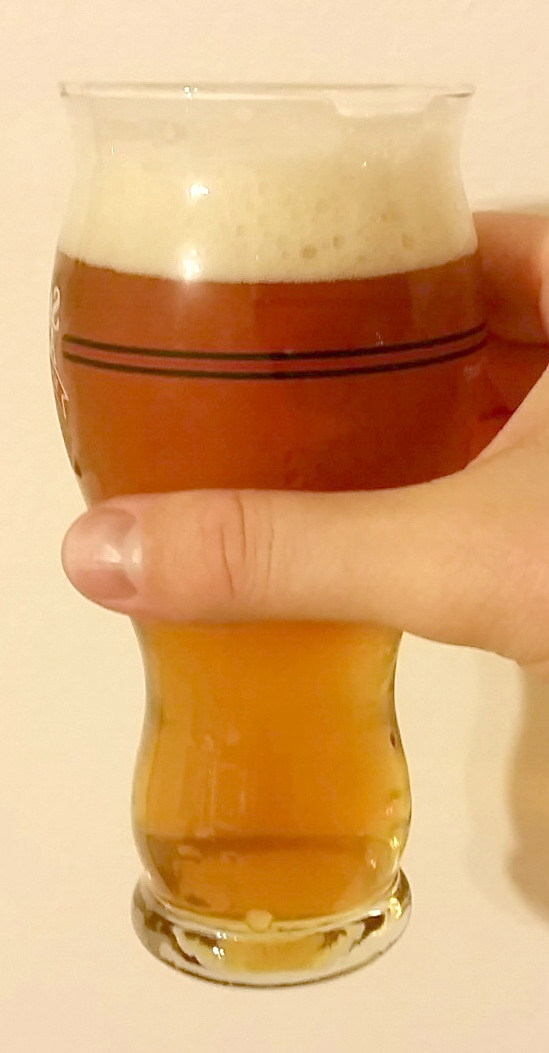
    • The beige head is of a medium consistency on the bubbles, moderate in size, and quite persistent. The beer itself is clear and medium amber in color, with no evident haze.
  • Aroma
    • This beer smells just like pumpkin pie with whipped cream on top! I pick up vanilla and nutmeg fairly prominently, with a faint vegetal/pumpkin background. Somewhat surprisingly, I don’t get any cinnamon immediately on the aroma, but I think that’s my nose. A freshly poured glass sampled later had a very prominent cinnamon aroma. I detect no distinct malt or hops aroma.
  • Flavor
    • The flavor is moderately malty, with a light caramel character. Bitterness is moderate too, and evenly balanced against the malts. I don’t really pick up much spicing, if any, in the flavor itself, except perhaps a hint of cinnamon at the finish.
  • Mouthfeel
    • The body is moderate, with good carbonation as I would like in a beer like this. It has a slightly sweet finish, which pleasantly lingers.
  • Would I brew this again?
    • Yes! Overall, this beer drinks quite smoothly and has the spices very well balanced (to my palate), so it’s more than the typical pumpkin ale which is just a lager with some cinnamon and nutmeg. This is a very solid recipe, and the beer was well-received by most people who have sampled it. My only minor change might be to dial back the cinnamon a touch next time, but that’s an easy fix.
  • Overall
    • 8.5/10

Beer Tasting: Clonal Common

With a little over a month in the keg, it’s time to test out the Clonal Common! The recipe is intended as a clone of Anchor Steam, in the California Common (steam beer) style. For the sake of comparison, we also picked up a 6-pack of commercial Anchor Steam beer.

Clonal Common

  • The Basics
    • Original gravity = 1.049; final gravity = 1.012; abv = 4.8%; estimated IBU = 35
  • Aroma
    • A sharp woody/minty aroma is prominent (I can only assume this is from the Northern Brewer hops), but not overwhelming. I also pick up a caramel malt aroma in the background. Overall, a clean and pleasant aroma.
  • Appearance
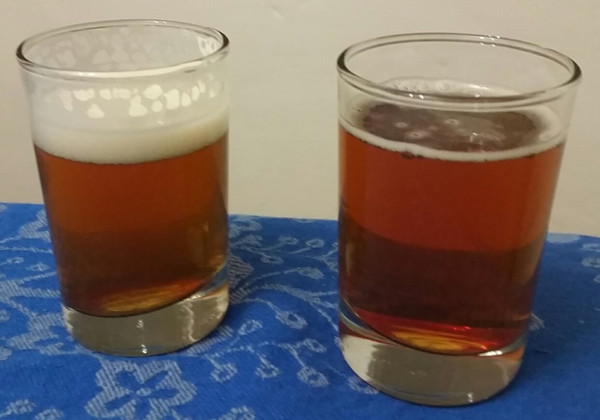
    • Very clear, but not quite bright, with a medium-gold color. The off-white head is moderately fine and prominent when poured, and sticks around for awhile.
  • Flavor
    • The flavor is nicely balanced between the hops and malt–both have a light and pleasant touch. The bitterness is there, but not over the top. The malt character is a combination of caramel with a bit of toastiness faintly at the rear. There is a very light apple/pear fruitiness on the finish, which is pretty pleasant.
  • Mouthfeel
    • This is a beer with medium-light body, moderate carbonation, and a medium-dry finish.
  • Would I brew this again?
    • As this beer has matured, it has turned into a very quaffable drink. I wouldn’t say this is my favorite style of all time, but it definitely is a very solid recipe and one that I’ll brew again. There’s not much I’d really change on this.
  • Overall score: 7 / 10


Beer vs. Beer (homebrew on left, commercial version on right)

Anchor Steam

  • The Basics
    • abv = 4.9%; additional data not available
  • Aroma
    • Malty with a caramel-forward note; some fruity esters in the background. No noticeable hops to my nose.
  • Appearance
    • The head is low and moderately-fine, with an off-white color. Head retention is reasonably good. The beer itself is a light amber or medium gold color.
  • Flavor
    • Prominent caramel malt flavor, almost butterscotch-like. The bitterness is subdued and most evident on the finish, rather than being hops-forward. The hops finish is slightly woody.
  • Mouthfeel
    • Medium-light body, with moderately high carbonation. Moderately dry finish.
  • General comments
    • A good beer, and I suppose the epitome of the California Common style, but I like mine a bit better, in terms of its more subdued malt. Both my wife and I agreed that my homebrewed version was more to our tastes. The commercial version was just a little too fruity and cloying.
  • Overall score
    • 6 / 10
Overall Comparisons
The commercial Anchor Steam has a far more prominent caramel aroma and flavor than my homebrew version, which is slightly more prominent in the hops and toastiness of the malt. Anchor Steam itself is slightly more carbonated, too. However, the body, color, and abv match up quite closely. In all, I like my clone quite a bit (and actually prefer it), even if it’s very definitely a different beer from the commercial product. I suspect the differences come down to process and ingredients. This has been a fun exploration of a beer style–I’ll have to try one of these side-by-side comparisons again with another style!