Mosaic SMaSH Session Pale Ale

I wanted a quick-and-easy hoppy beer in the sessionable zone, so I threw together a SMaSH recipe with mostly on-hand ingredients. Maris Otter served as the base, for something a little more flavorful than average 2-row. I have a pound of Mosaic on-hand; I haven’t brewed with that variety in forever, and it’s interesting enough to stand on its own. Finally, I needed a yeast decision. This one required a quick turn-around to go on tap, so kveik was an obvious choice. My fantastic LHBS (Pacific Brewing Supplies in San Dimas) had a new brand in stock, a company called Kveik Yeastery. Looking through their products, a variety called Stalljen seemed perfect–it promised tropical fruit, mango, and pineapple, with citrus behind that. Reading a bit more about the yeast, I’m not sure if there are other commercial versions sold; if anyone knows differently, I’m happy to learn more. As a final note, this beer was set up as a “short and shoddy” style mash and boil, with 30 minutes on each.

Mosaic SMaSH Session Pale Ale

  • 10.5 lb. Maris Otter pale ale malt (Thomas Fawcett)
  • 0.5 tsp. BrewTanB (mash)
  • 1.25 oz. Mosaic hop pellets (10.7% alpha), 20 minute boil
  • 0.5 tsp. BrewTanB, 10 minute boil
  • 1 Kick Carrageenan tablet, 5 minute boil
  • 1.75 oz. Mosaic hop pellets (10.7% alpha), 10 minute whirlpool
  • 1 pkg. Stalljen kveik (Kveik Yeastery #K.22)
  • 3 oz. Mosaic hop pellets (10.7% alpha), dry hop

    Target Parameters

    • 30 minute infusion mash, 152°, full volume mash
    • 1.049 o.g., 1.012 f.g., 4.8% abv, 41 IBU, 5 SRM
    • Claremont tap water adjusted to hit 75 ppm Ca, 26 ppm Mg, 102 ppm Na, 164 ppm SO4, 130 ppm Cl, 10 ppm bicarbonate, RA=-60

    Procedure

    • Starting with 7 gallons of water, I added 7.2 mL of 88% lactic acid, 4 g of gypsum, and 2 g of epsom salts, in order to hit my water targets.
    • I heated the mash water to 157°, added the grains, and mashed at 152° with recirculation for 30 minutes. I then raised the mash to 168° for a 10 minute mash-out, before removing the grains.
    • My post-mash gravity was a bit underwhelming at 1.035 — that’s only 56% mash efficiency, well below my norm. Based on past results with the Fawcett Maris Otter, I’m thinking this is a malt that needs a full 60 minute mash at least; it certainly hasn’t overwhelmed me with its efficiency. Although I hadn’t planned a session ale, this is where I kicked things into session ale territory. I double-checked my mill gap, and all was OK there, so I can’t blame the mill.
    • I brought the runnings to a boil, but I upped the boil vigor a bit (85% power on the Foundry) and extended the boil to 60 minutes (instead of the planned 30 minutes).
    • After the boil, I added the last bit of hops and then chilled down to 93°. I transferred to the fermenter, pitched the yeast, and fermented at ambient.
    • I brewed this beer on 16 August 2025. Starting gravity was 1.043.
    • Vigorous fermentation kicked off within four hours of adding the yeast; the fermenter temperature was down to 68° by the next morning.
    • I added the dry hops on 21 August 2025, and cold crashed the beer on 24 August 2025.
    • I kegged the beer using a closed transfer on 30 August 2025. Final gravity was 1.012, for 4.1% abv.

    Tasting

    • Appearance
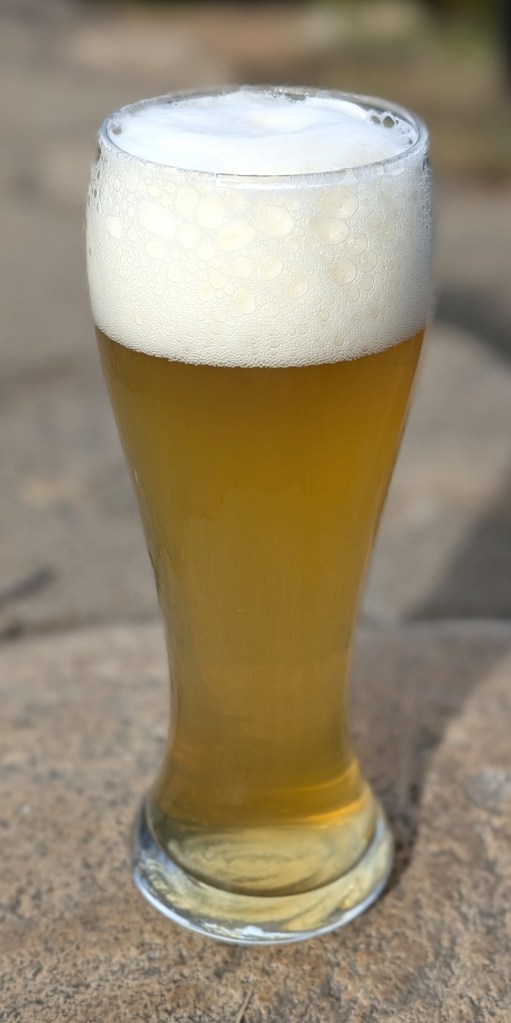
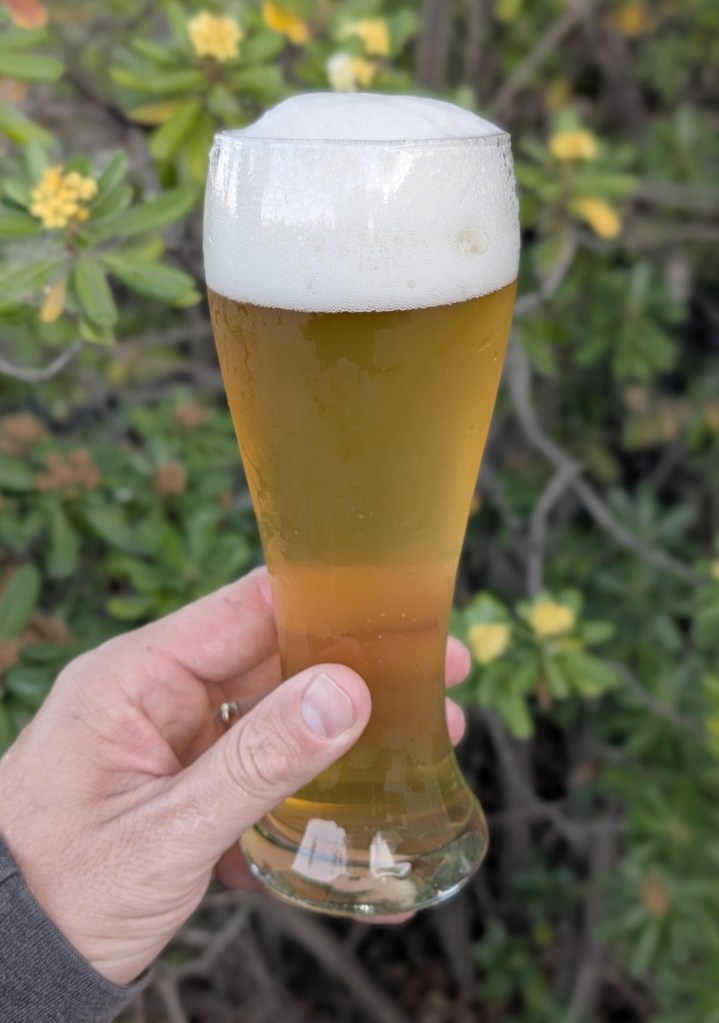
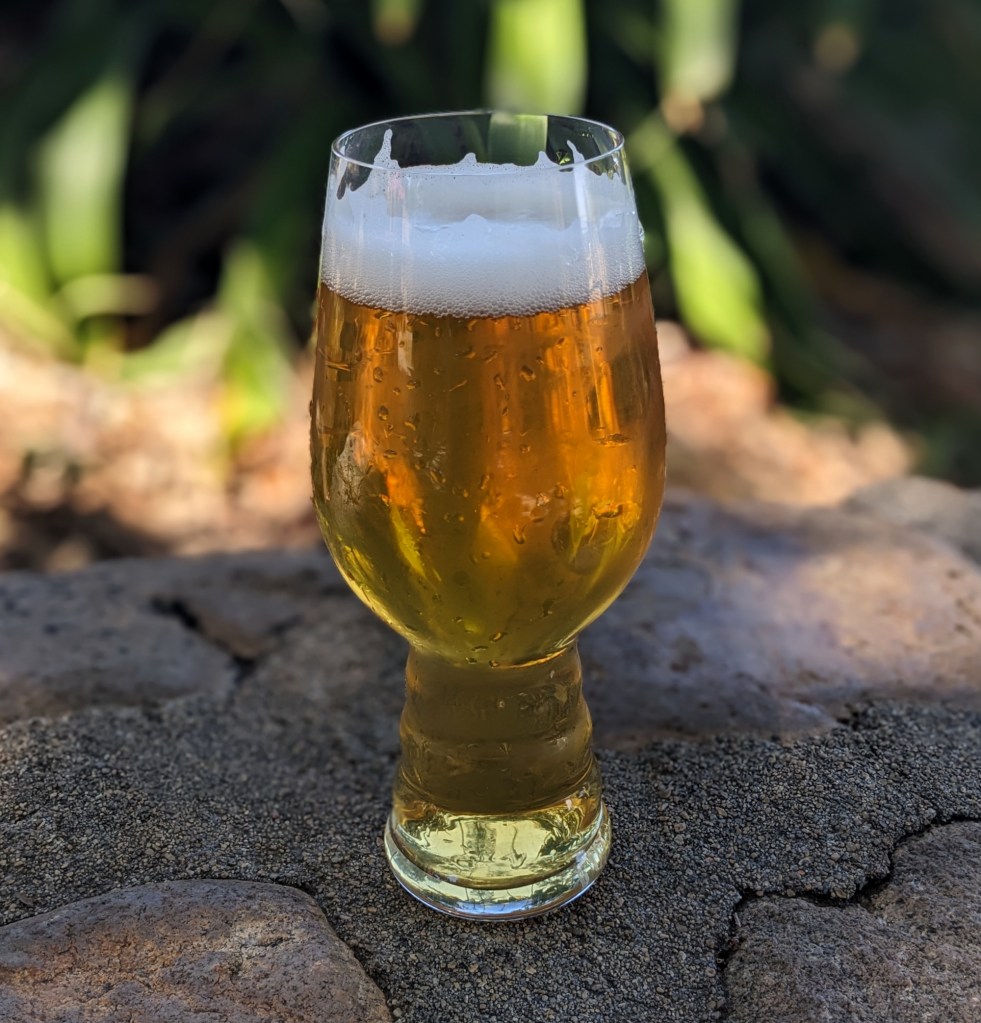
      • This is a hazy, light yellow beer that pours with a fluffy and persistent white head. The lacing is gorgeous!
    • Aroma
      • Aroma is dominated by a fresh citrus and blueberry hop character at a medium-high level. There is minimal malt or yeast character that I can pick up.
    • Flavor
      • Bitterness is at a high level, with slight astringency and hop bite. There is a medium-low level of malt flavor, with a grainy/malty-sweet character. The hops have a citrus and pine quality, with slight mango; it’s backed up by the citrusy notes presumably from the yeast.
    • Mouthfeel
      • Medium level of carbonation; light body and a dry finish with slight astringency.
    • Would I Brew This Again?
      • The core concept of this beer is great, but it definitely suffered from the low starting gravity. The astringency is annoying, but otherwise it’s a pretty decent beer. I would definitely do a version of this recipe again, with a higher gravity. Stalljen is a fantastic kveik strain; it’s unobtrusive and works well with Mosaic. I didn’t pick up the slight “twang” or tartness I get with Lutra (my other favorite strain), and I wouldn’t necessarily know this is a kveik otherwise. The persistent haze might be a negative in some recipes, but it’s so beautiful in this particular beer. Thinking ahead, I might aim for the same level of hops in a future version, with a starting gravity around 1.054. That would take a greater amount of malt as well as a longer mash.
    • Overall
      • 6/10

    Salty One Gose

    I’ve never made a gose before! This confession is probably not terribly surprising for those who know my brewing preferences, because I find most sour beers a little too annoying to deal with. Kettle sours take time, and other sour processes are prone to contamination of subsequent batches in the same equipment. Plus, I find many sours just a little too sour to be drinkable beyond a half glass. That said, gose is only lightly tart and lower alcohol, which puts it into the space of beers I enjoy. I think the main thing deterring me from the style in the past was the annoyance of having to dial in the sourness without overshooting (undershooting?) the pH.

    Then, I spotted a neat recipe in the January 2025 Zymurgy magazine–a brew called “Salty One Gose” that won gold in the European Sour Ale category at NHC 2024. Crafted by Jonathan Hernandez of Waterville, Maine, the beer drew my interest because it used kettle soured sauergut added to the main kettle in order to hit the perfect level of sourness. So, you’re essentially blending wort for a desired result.

    I modified this beer only slightly from the original recipe. The published version was 6 gallons, so I reduced it towards a 5.25 gallon batch. I also adjusted the amount of pilsner malt required downwards, anticipating high efficiency (as is typical of my batches with minimal grain volumes). I used a mix of Viking and MCM malt, because I had a pound of the latter on-hand to use up. Finally, I used whole Saaz hop cones from South Dakota; hops are a minor consideration for this style, so I wasn’t too concerned about alpha level, aroma, or flavor.

    Coriander choice took some thought–although I have it on-hand for cooking, it had been in the pantry for a few years, and I was worried about freshness. So, I ordered a small quantity online; the package didn’t document origin of the spice, but when I smelled the crushed seeds they had the fresh lemon quality I was looking for.

    Recipe Name

    • 1 gallon sauergut (added to kettle at boil)
      • 1 lb. pilsen light DME (Briess)
      • 1 pkg. Wildbrew Sour Pitch (Lallemand)
    • 3.5 lb. white wheat malt (Briess)
    • 2.5 lb. pilsner zero malt (Viking)
    • 1 lb. pilsner malt (Montana Craft Malting)
    • 2 oz. rice hulls
    • 0.5 tsp. BrewTanB, added to mash
    • 1 oz. Saaz whole hops (est. 1.5% alpha), 60 minute boil
    • 0.5 tsp. BrewTanB, 10 minute boil
    • 8 g. coriander seed, crushed, 10 minute boil
    • 13.1 g kosher salt, added at end of boil
    • 1 pkg. Köln Kölsch-style yeast (Lallemand)

    Target Parameters

    • Full volume mash with 5 minute rest at 131°, 40 minute rest at 147°, 30 minute rest at 161°, and 10 minute rest at 168°
    • 1.042 o.g., 1.007 f.g., 4.6% abv, 5 IBU, 3 SRM
    • Mash water adjusted to 37 ppm Ca, 20 ppm SO4, and 51 ppm Cl.

    Procedure

    • Two days before the primary brew day (April 3), I measured out 1.1 gallons of RO water (4.164 kg), added 1 lb. of Briess pilsen light dry malt extract, 1.5 tsp. (7.5 mL) of 88% lactic acid, and then boiled this for 4 minutes. Next, I chilled the wort to 90°, before pitching the entire packet of the lacto culture.
    • I started the initial culture on the evening of 3 April 2025, kept a heating pad under it, and wrapped it in a blanket, to hold temperature at 85° to 90°.
    • By April 5, the pH looked to be around 3.2 or 3.3 as measured by pH strips. This was brew day!
    • I mashed in with 6.5 gallons of RO water and mineral adjustments, with 0.9 g gypsum and 2.6 g calcium chloride. I heated the strike water to 134°; once the grains were added, I held the temperature at 131° for 5 minutes, before heating to 147° for 40 minutes, raising to 161° for 30 minutes, and then mashing out at 168° for 10 minutes.
    • Because I had such a low volume of grains, I had exceptional mash efficiency at 1.034 with 6.9 gallons, for 89% mash efficiency.
    • As the main runnings were coming to a boil, I boiled the saurgut prepared earlier and added it to the kettle, getting a pre-boil gravity of 1.035.
    • I brought the kettle to a boil, adding hops, BrewTanB, coriander, and salt per the recipe. After a full 90 minute boil, I turned off the heat and chilled to 72° before transferring to the fermenter.
    • I chilled the wort to 64° in the fermenter, holding it at that temperature for initial fermentation.
    • I brewed the beer on 5 April 2025, and had a starting gravity of 1.043.
    • I kegged the beer on 18 May 2025, with closed transfer. Final gravity was 1.009, for 4.5% abv.
    • My tasting at the time of kegging showed it to be an exceptional beer–the coriander flavor and aroma were perfect, as was the salt balance. After the initial carbonation and tastes, I decided to up the carbonation to about 3.2 volumes.

    Tasting

    • Appearance
      • A light yellow, moderately hazy beer, pouring with a fluffy white head of excellent persistence; the head leaves lacing down the side of the glass.
    • Aroma
      • Bright, medium-light aroma of coriander and fresh sea breeze; a light bread dough aroma behind that
    • Flavor
      • Lightly and pleasantly tart; a light lemony coriander flavor alongside fresh sea breeze from the salt. “Doughy” malt flavor of medium intensity. Low bitterness, with no hop character to speak of.
    • Mouthfeel
      • Rounded mouthfeel, high level of carbonation, dry mouthfeel on the finish, medium-light body. Very drinkable and very refreshing!
    • Would I Brew This Again?
      • Yes! This is an amazing beer and a solid first attempt at a gose. I had to adjust the carbonation upwards a bit, because it was a bit flabby on my first few pours, but once that was dialed in it notched the beer to perfection. The coriander and salt balance are spot-on, as is the level of tartness. I might use K-97 next time around, to retain the haze at a slightly higher level for longer, but this is just an awesome beer as is. I especially like the partial kettle sour method, so that I was able to hit a low level of acidity with minimal fuss.
    • Overall
      • 10/10

    Patersbier 2025

    I love the concept of a patersbier (“Father’s Beer”), as a relatively light and low alcohol yet flavorful take on a Belgian ale. As with many Belgian ales that were associated with the monastic traditions, there is plenty of romance and a good dollop of fantasy around these brews. I’m not particularly interested into delving into historicity–I’m more interested in making a beer that I want to drink!

    This particular version is a bit of a kitchen sink beer, intended to sweep out odds and ends from my brewing supply. Even so, I aimed to have a sturdy malt backbone. Hops were chosen, again, to use up a few varieties. I knew a Belgian yeast was in order, so Lallemand’s Abbaye Belgian fit the bill. It’s very different from the previous patersbier I made, which was a SMaSH with pilsner malt and Cascade hops.

    Along the lines of my Brew Year’s Resolution to make more small batches, this was a 3 gallon batch. I also did a quick brew day, with 30 minute mash and 30 minute boil.

    Patersbier 2025

    • 2.75 lb. Vienna malt (Weyermann)
    • 2 lb. 2-row malt (Great Western)
    • 0.5 lb. Caramel Munich 60L malt (Briess)
    • 0.5 lb. Munich II malt (Weyermann)
    • 0.25 lb. Caramel Malt 120L (Briess)
    • 0.25 tsp. BrewTanB, added to mash
    • 1 oz. Styrian Goldings hop pellets (3.2% alpha), 30 minute boil
    • 0.5 oz. Crystal hop pellets (4.5% alpha), 30 minute boil
    • 1 pkg. Abbaye Belgian ale yeast

    Target Parameters

    • 1.045 o.g., 1.015 f.g., 3.9% abv, 13 SRM, 26 IBU
    • Full volume mash at 158° for 60 minutes
    • Claremont tap water, no adjustment

    Procedure

    • I heated the mash water to 164°, added the grains, and held at 158° with recirculation for 30 minutes. Then, I raised the mash to 168° for 10 minutes before pulling the grains.
    • In total, I collected 4 gallons of runnings with a gravity of 1.037, for 66% mash efficiency.
    • I brought the kettle to a boil and added hops per the recipe. After 30 minutes, I turned off the heat and chilled the wort to 68° before transferring to the fermenter.
    • Starting gravity was 1.044. Once I pitched the yeast, I let it ferment at ambient. I brewed the beer on 12 March 2025.
    • I kegged the beer on 24 March 2025. Final gravity was 1.013, for 4.1% abv. I added 1.5 oz. of corn sugar dissolved in ~0.5 cup of water and boiled, in order to do natural carbonation. I finished off the carbonation with forced CO2. At the time of kegging, a pleasant and spicy yeast character was evident.

    Tasting

    • Appearance
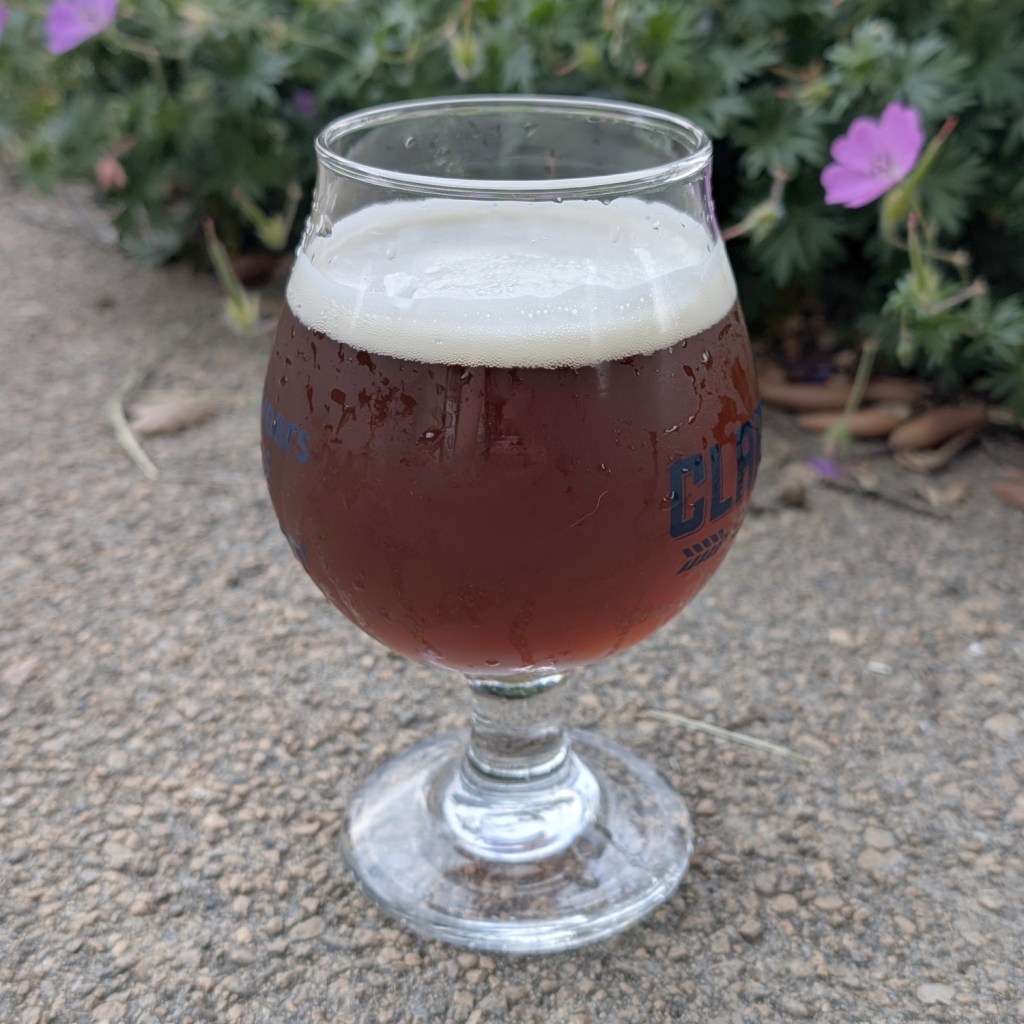
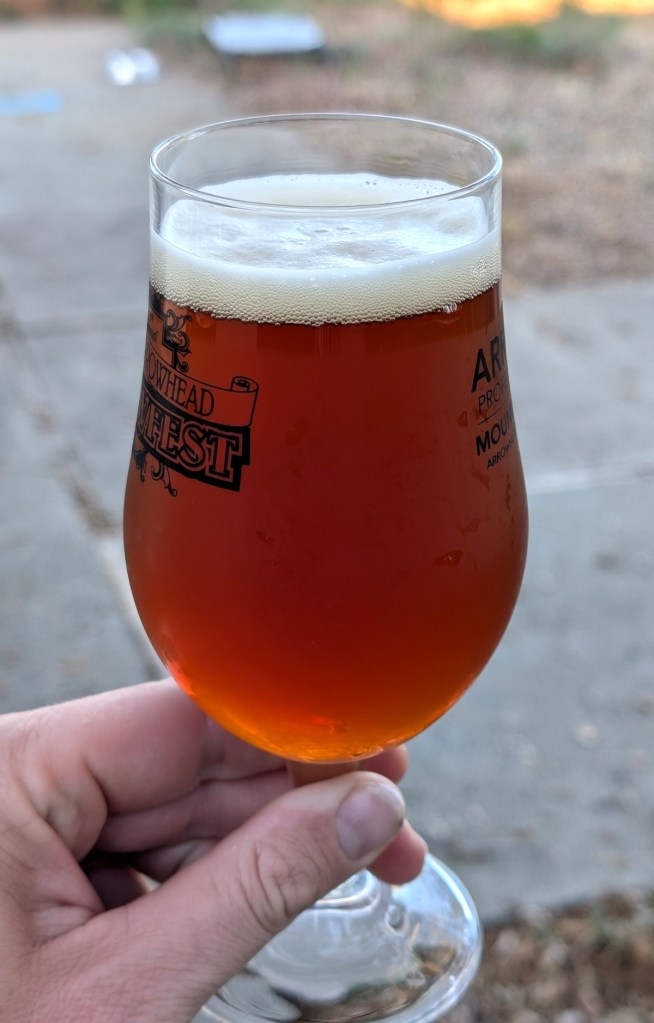
      • Medium amber beer, clear, ivory head with good persistence.
    • Aroma
      • Moderately high yeast aroma with good phenolic character; spicy notes, some red apple. Some bready and caramel notes come through as the beer warms up.
    • Flavor
      • Spicy yeast character at the forefront; medium level of malt character with a malty, bread crust quality. Medium-low level of hops.
    • Mouthfeel
      • Light body, medium level of carbonation, dry finish.
    • Would I Brew This Again?
      • This is good for what it is–easy drinking and lots of yeast character. It’s a bit thin on the body, so might benefit from a touch more crystal malt. The yeast character is perfect! As compared with my previous patersbier, I like the 2025 recipe much better.
    • Overall
      • 7/10

    Levitation Ale Homage

    I like my session beers, and I’m always looking for something creative and interesting. This is the core philosophy of Stone Brewing, so I was excited to see a recipe for their Levitation Ale. I’m not sure I’ve ever sampled it “in the wild,” but a session amber ale sounded pretty neat.

    A few versions of Levitation Ale are floating around, and I used a version from Jennifer Talley’s Brewing Session Beers book. My version is a parallel rather than a clone, with some different hops and malts. The original recipe called for crystal 75, so I mixed crystal 60 and crystal 80, tilting towards the former because I was running low on the latter. I also adjusted the hops, so that I had Mt. Hood and Mandarina Bavaria, rather than Simcoe and Crystal. I also dropped the black malt, because it made the beer too dark. Finally, I used WLP001 versus an English ale yeast. With all of those changes, I should definitely deem this an homage (a la Denny Conn) rather than a clone. Either way, it was an interesting beer.

    Levitation Ale Homage

    • 8.5 lb. 2-row malt (Briess)
    • 12.5 oz. caramel malt 60L (Briess)
    • 12 oz. caramel malt 120L (Briess)
    • 1.4 oz. caramel malt 80L (Briess)
    • 0.5 tsp. BrewTanB (mash)
    • 0.7 oz. Magnum hop pellets (12.6% alpha), 60 minute boil
    • 0.5 oz. Amarillo hop pelletrs (10.4% alpha), 10 minute boil
    • 0.5 tsp. BrewTanB, 10 minute boil
    • 1 Whirlfloc tablet, 5 minute boil
    • 1 oz. Mandarina Bavaria hop pellets (6.7% alpha), 10 minute whirlpool
    • 1 oz. Mt Hood hop pellets (4.0% alpha), 10 minute whirlpool
    • 1 pkg. American West Coast Ale Yeast (Lallemand BRY-97)
    • 1.5 oz. Amarillo hop pellets (10.4% alpha), dry hop in keg

    Target Parameters

    • 1.046 s.g., 1.011 f.g., 4.5% abv, 48 IBU, 15 SRM
    • Full volume infusion mash, held at 154° for 60 minutes and 165° for 10 minutes
    • Claremont tap water adjusted to hit 72 ppm Ca, 12 ppm Mg, 87 ppm Na, 127 ppm SO4, 110 ppm Cl, 156 ppm bicarbonate, RA=69

    Procedure

    • I started with 7.75 gallons of water, treated with a Campden tablet and 4 g gypsum, heated to 159° before mash-in. I added the BrewTanB just before adding the grains, and then added 6 mL of 88% lactic acid to adjust the mash pH.
    • I held the mash at 154° for 60 minutes, with recirculation, before raising to 165° for a 10 minute mash-out. Then, I pulled the grains and brought the runnings to a boil.
    • I collected 6.9 gallons of runnings with a gravity of 1.039, for 72% mash efficiency.
    • I brought the runnings to a boil, adding hops and other finings per the schedule. The boil was 90 minutes long total, so the first hop addition wasn’t until 30 minutes in.
    • After the full 90 minute boil, I turned off the heat and added the whirlpool hops, whirlpooling for 10 minutes at just below boiling. Of course, it chilled down into the 180s relatively quickly.
    • After the whirlpool finished, I removed the hops and continued chilling.
    • I transferred the wort to the fermenter, chilled down to 68°, and pitched the yeast.
    • Starting gravity was 1.050. I brewed the beer on 24 August 2024.
    • I kegged the beer on 4 September 2024, with a final gravity of 1.014 for 4.8% abv. I added the dry hops in a bag, intending to remove them after a few days and add gelatin. Unfortunately, I forgot that they would sink, and so I couldn’t recover them. Ah well.

    Tasting

    • Appearance
      • Deep amber beer with moderate haze; persistent but thin ivory head
    • Aroma
      • Light caramel malt notes with a good dose of citrus. a touch of pine
    • Flavor
      • Medium caramel malt flavor, against a strong orange/citrus and moderate pin character from the hops. Delicious! Medium-high bitterness.
    • Mouthfeel
      • Medium-light body, moderate carbonation, slightly dry, somewhat thin finish.
    • Would I Brew This Again?
      • This is a wonderful session amber ale, bursting with hop flavor and aroma. The haze is a minor flaw, but the flavor and aroma totally make up for it. I would love to try this with the original malt and hop combos, to see how it is. I might also add the black patent back in, to darken the beer. The malt body comes across as a little thin, so for a future version I might try Vienna or Maris Otter instead of plain 2-row, and/or mash at a higher temperature. Overall, this is a very drinkable beer!
    • Overall
      • 8/10

    Summer Session IPA 2024

    I’ve been making a session IPA at least annually for awhile now, because it’s a good way to balance the needs of my palate with the needs of my liver. These recipes usually go with a lighter grain bill that leans on flavorful base malts, alongside a high mash temperature to boost body and reduce attenuation. Kveik strains are part of my usual recipe in these, also, because I am often brewing these last-minute and so want a quick fermenting, temperature tolerant variety of yeast.

    The 2024 iteration of my session IPA is in the same mold as previous years–I used a 2-row base malt, but beefed things up with a generous helping of Vienna and some Crystal 40. The hops aren’t too dramatic, but are old favorites for this style of beer.

    Summer Session IPA 2024

    • 8 lb. 2-row malt (Briess)
    • 1.25 lb. Vienna malt (Weyermann)
    • 0.5 lb. Crystal 40 malt (Great Western)
    • 0.5 tsp. BrewTanB, in mash
    • 2 oz. Citra hop pellets (12.8% alpha), 15 minute boil
    • 1 tsp. BrewTanB, 10 minute boil
    • 1 Whirlfloc tablet, 5 minute boil
    • 1 pkg. Lutra kveik (Omega #OYL-071, dry)
    • 2 oz. Ella hop pellets (17.6% alpha), dry hop in keg
    • 2 oz. Galaxy hop pellets (15.3% alpha), dry hop in keg

    Target Parameters

    • 1.044 s.g., 1.011 f.g., 4.4% abv, 48 IBU, 6 SRM
    • Full volume infusion mash to hit target of 156°, 60 minutes, no sparge
    • Claremont tap water, neutralized with lactic acid to reduce carbonates, target parameter of 60 ppm CA, 22 ppm Mg, 136 ppm Na, 175 ppm SO4, 150 ppm Cl, 10 ppm HCO3, RA=-48 ppm

    Procedure

    • Prior to the mash, I added 6.5 mL of 88% lactic acid to the 7.25 gallons of tap water (along with a Campden tablet), to drop out the carbonates. Then, I heated the water to 161°, before adding the grains and 1 mL of 88% lactic acid to adjust the mash pH. I held the mash at 156° for 60 minutes, with recirculation, before raising to 168° for 10 minutes.
    • After the mash was done, I pulled the grains and brought the runnings to a boil. In total, I collected 6.5 gallons of runnings with a gravity of 1.039, for 70% mash efficiency.
    • Once the runnings were at a boil, I added hops and finings per the recipe. Following the 60 minute boil, I turned off the heat and chilled to 78° before transferring to the fermenter and pitching the yeast.
    • Starting gravity was 1.045. I brewed this beer on 28 April 2024 and fermented it at ambient.
    • I kegged the beer on 20 May 2024, adding the dry hops in a baggie at this time. FInal gravity was 1.012, for 4.3% abv.

    Tasting

    • Appearance
      • Clear, light gold beer, pouring with a persistent white head. Very pretty!
    • Aroma
      • Mandarin orange aroma, with a hint of tropical fruit. Hop aroma moderately high. The malt is in the background, and I don’t get much for yeast.
    • Flavor
      • Hop-forward, with a strong bitterness against a fairly light malt backbone. Very quaffable! Hop flavor has elements of orange and citrus pith. There might be a little peach, but that is more by suggestion (due to the characters of the variety) than something that is easily perceived.
    • Mouthfeel
      • Medium-light body, moderate level of carbonation, crisp and dry finish.
    • Would I brew this again?
      • This is a delightful session IPA, which has matured nicely. It doesn’t taste watery at all, and the hop elements are just what I would want in a modern West Coast IPA, I am quite happy with this one! I might go for a little more hop complexity – but it’s an easy fix with different varieties of hops.
    • Overall
      • 9/10