Mosaic SMaSH Session Pale Ale

I wanted a quick-and-easy hoppy beer in the sessionable zone, so I threw together a SMaSH recipe with mostly on-hand ingredients. Maris Otter served as the base, for something a little more flavorful than average 2-row. I have a pound of Mosaic on-hand; I haven’t brewed with that variety in forever, and it’s interesting enough to stand on its own. Finally, I needed a yeast decision. This one required a quick turn-around to go on tap, so kveik was an obvious choice. My fantastic LHBS (Pacific Brewing Supplies in San Dimas) had a new brand in stock, a company called Kveik Yeastery. Looking through their products, a variety called Stalljen seemed perfect–it promised tropical fruit, mango, and pineapple, with citrus behind that. Reading a bit more about the yeast, I’m not sure if there are other commercial versions sold; if anyone knows differently, I’m happy to learn more. As a final note, this beer was set up as a “short and shoddy” style mash and boil, with 30 minutes on each.

Mosaic SMaSH Session Pale Ale

  • 10.5 lb. Maris Otter pale ale malt (Thomas Fawcett)
  • 0.5 tsp. BrewTanB (mash)
  • 1.25 oz. Mosaic hop pellets (10.7% alpha), 20 minute boil
  • 0.5 tsp. BrewTanB, 10 minute boil
  • 1 Kick Carrageenan tablet, 5 minute boil
  • 1.75 oz. Mosaic hop pellets (10.7% alpha), 10 minute whirlpool
  • 1 pkg. Stalljen kveik (Kveik Yeastery #K.22)
  • 3 oz. Mosaic hop pellets (10.7% alpha), dry hop

    Target Parameters

    • 30 minute infusion mash, 152°, full volume mash
    • 1.049 o.g., 1.012 f.g., 4.8% abv, 41 IBU, 5 SRM
    • Claremont tap water adjusted to hit 75 ppm Ca, 26 ppm Mg, 102 ppm Na, 164 ppm SO4, 130 ppm Cl, 10 ppm bicarbonate, RA=-60

    Procedure

    • Starting with 7 gallons of water, I added 7.2 mL of 88% lactic acid, 4 g of gypsum, and 2 g of epsom salts, in order to hit my water targets.
    • I heated the mash water to 157°, added the grains, and mashed at 152° with recirculation for 30 minutes. I then raised the mash to 168° for a 10 minute mash-out, before removing the grains.
    • My post-mash gravity was a bit underwhelming at 1.035 — that’s only 56% mash efficiency, well below my norm. Based on past results with the Fawcett Maris Otter, I’m thinking this is a malt that needs a full 60 minute mash at least; it certainly hasn’t overwhelmed me with its efficiency. Although I hadn’t planned a session ale, this is where I kicked things into session ale territory. I double-checked my mill gap, and all was OK there, so I can’t blame the mill.
    • I brought the runnings to a boil, but I upped the boil vigor a bit (85% power on the Foundry) and extended the boil to 60 minutes (instead of the planned 30 minutes).
    • After the boil, I added the last bit of hops and then chilled down to 93°. I transferred to the fermenter, pitched the yeast, and fermented at ambient.
    • I brewed this beer on 16 August 2025. Starting gravity was 1.043.
    • Vigorous fermentation kicked off within four hours of adding the yeast; the fermenter temperature was down to 68° by the next morning.
    • I added the dry hops on 21 August 2025, and cold crashed the beer on 24 August 2025.
    • I kegged the beer using a closed transfer on 30 August 2025. Final gravity was 1.012, for 4.1% abv.

    Tasting

    • Appearance
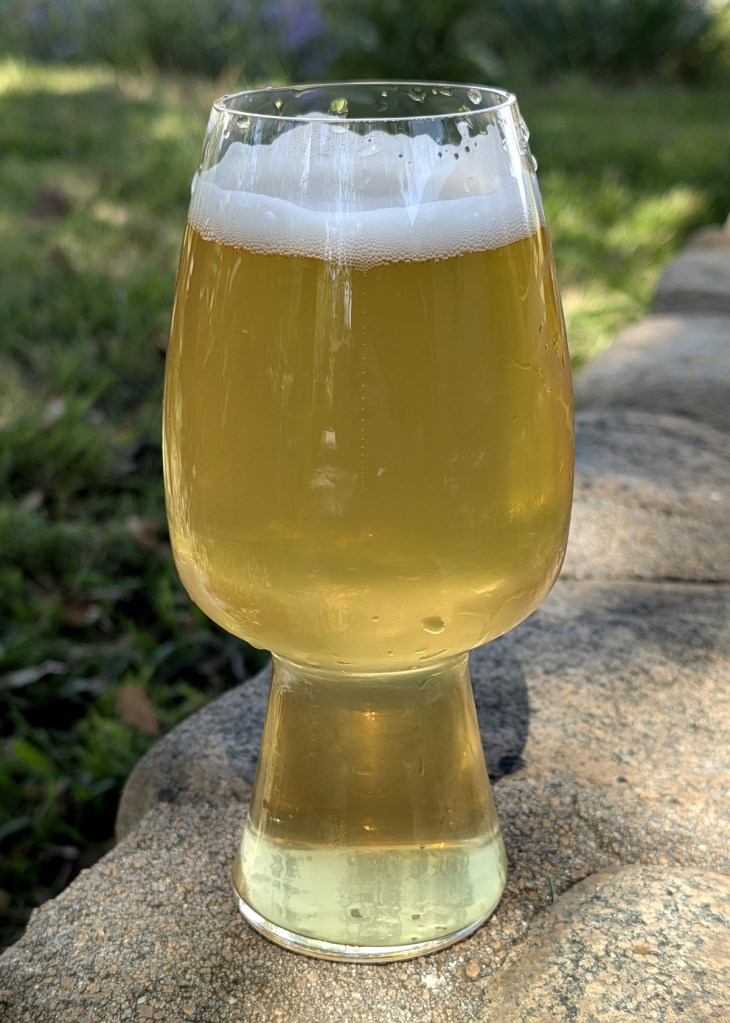
      • This is a hazy, light yellow beer that pours with a fluffy and persistent white head. The lacing is gorgeous!
    • Aroma
      • Aroma is dominated by a fresh citrus and blueberry hop character at a medium-high level. There is minimal malt or yeast character that I can pick up.
    • Flavor
      • Bitterness is at a high level, with slight astringency and hop bite. There is a medium-low level of malt flavor, with a grainy/malty-sweet character. The hops have a citrus and pine quality, with slight mango; it’s backed up by the citrusy notes presumably from the yeast.
    • Mouthfeel
      • Medium level of carbonation; light body and a dry finish with slight astringency.
    • Would I Brew This Again?
      • The core concept of this beer is great, but it definitely suffered from the low starting gravity. The astringency is annoying, but otherwise it’s a pretty decent beer. I would definitely do a version of this recipe again, with a higher gravity. Stalljen is a fantastic kveik strain; it’s unobtrusive and works well with Mosaic. I didn’t pick up the slight “twang” or tartness I get with Lutra (my other favorite strain), and I wouldn’t necessarily know this is a kveik otherwise. The persistent haze might be a negative in some recipes, but it’s so beautiful in this particular beer. Thinking ahead, I might aim for the same level of hops in a future version, with a starting gravity around 1.054. That would take a greater amount of malt as well as a longer mash.
    • Overall
      • 6/10

    Otter-Squatch Wheat Ale

    A light wheat ale is an American homebrew classic, but it has been awhile since I last made this style. I threw together a simple recipe, which is upside-down from my usual blend of 60/40 wheat/2-row. There was no particular reason for this, other than it just seemed like the thing to do. I had a hop variety on-hand called Sasquatch, and decided to use those up here. My preference on American wheat ales is a little fruity/citrusy yeast character, rather than super clean or super phenolic. Lutra kveik seemed like a perfect yeast choice along those lines; clean-ish, but not overly clean, and potential for some interesting flavors. “Lutra” is also the scientific name for a genus of otters; along with Sasquatch hops, I ended up calling this batch “Otter-Squatch Wheat Ale.”

    Otter-Squatch Wheat Ale

    • 6 lb. 2-row malt (Great Western)
    • 4 lb. white wheat malt (Briess)
    • 4 oz. rice hulls
    • 0.5 tsp. BrewTanB, added to mash
    • 1 oz. Sasquatch hop pellets (7.5% alpha), 20 minute boil
    • 0.5 tsp. BrewTanB, 10 minute boil
    • 1 oz. Sasquatch hop pellets (7.5% alpha), 5 minute boil
    • 1 pkg. Lutra kveik (Omega OYL-071), dry

    Target Parameters

    • 1.046 s.g., 1.009 f.g., 23 IBU, 4 SRM, 4.9% abv
    • Full volume mash, 60 minute mash at 152°, 10 minute mash-out at 168°
    • RO water with added minerals to hit target of 78 ppm Ca, 86 ppm SO4, 74 ppm Cl, -55 ppm RA

    Procedure

    • I started with 7.3 gallons of RO water, adding 4.25 g of calcium chloride and 4.25 g of gypsum to hit my target water profile. Then, I heated the water to 157° before adding the grains, to hit a mash temperature of 152°.
    • I held the mash with recirculation at 152° for 60 minutes, before raising the mash to 168° for 10 minutes.
    • At the end of the mash, I removed the grains and heated to a boil. In total, I collected 6.6 gallons of runnings with a gravity of 1.039, for 69% mash efficiency.
    • I heated the runnings to a boil, boiling for 60 minutes and adding hops per the recipe. After 60 minutes, I turned off the heat and chilled 85° before transferring the beer to the fermenter and pitching the yeast.
    • Starting gravity was 1.044, and I brewed the beer on 28 February 2025. I fermented the beer at room temperature ambient, between 60 and 65°.
    • I kegged the beer on 24 March 2025. Final gravity was 1.009, for 4.6% abv. I added 3.25 oz. of corn sugar to get some natural carbonation and scrub any oxygen from the transfer process. At the time of kegging, the beer had a very mild flavor and was quite drinkable! I finished up things with a bit of force carbonation, after the beer sat for a few weeks.

    Tasting

    • Appearance
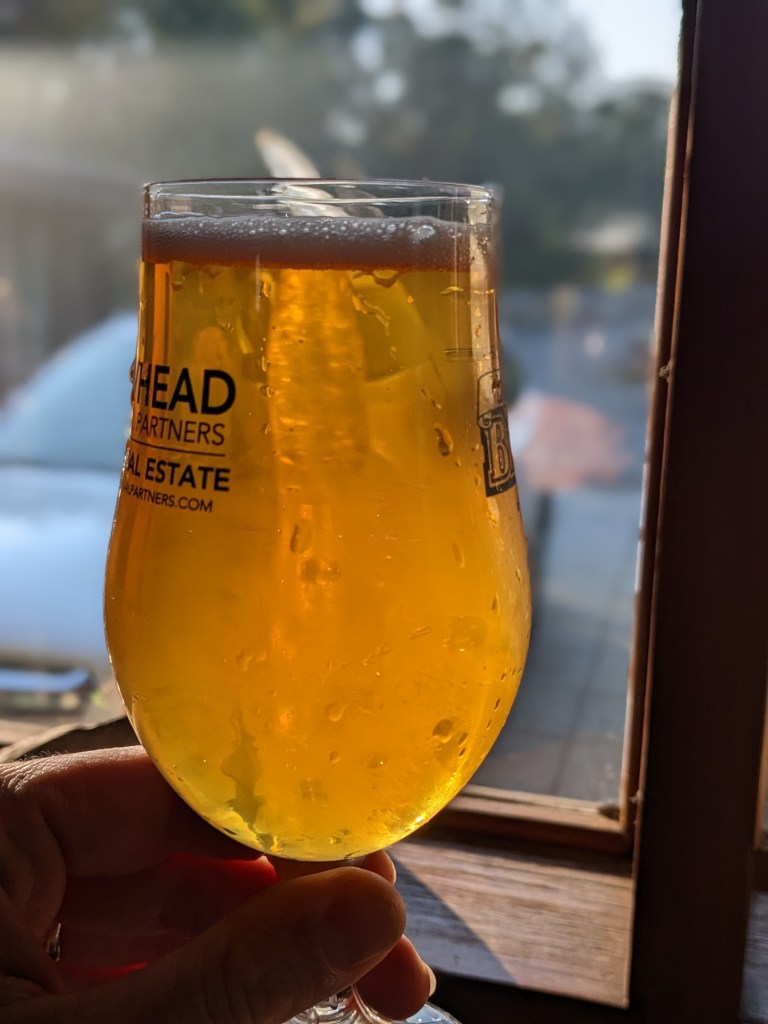
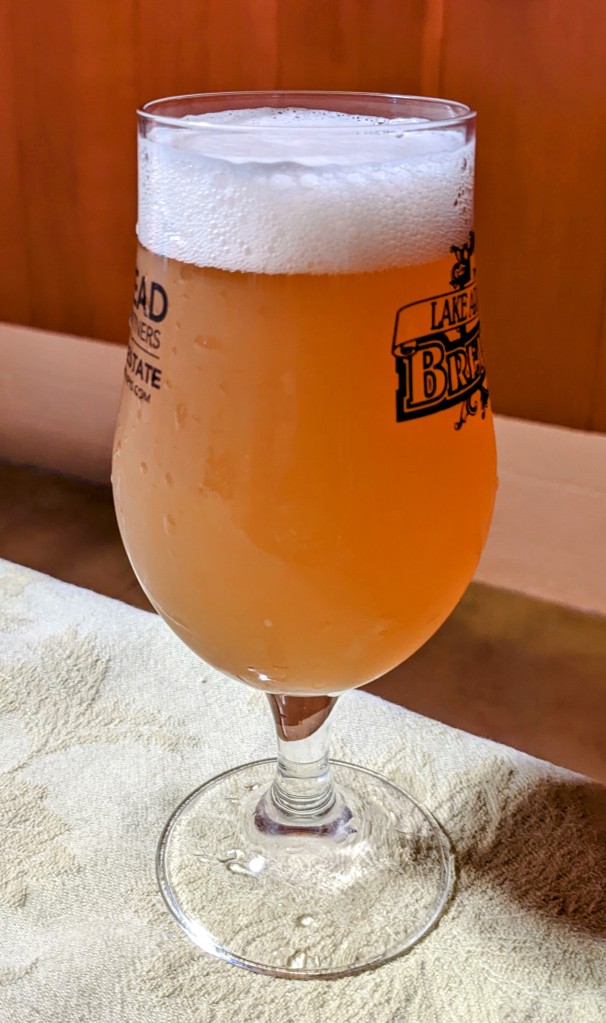
      • Lightly hazy, light yellow beer, which pours with a creamy and long-lasting white head.
    • Aroma
      • Doughy and tart, lemony aroma, at a moderate level of each.
    • Flavor
      • Moderate doughy malt character, light tartness to yeast and a very slight phenolic note (peppery, perhaps?). The latter is almost imperceptible; I can’t quite describe it. Medium-low bitterness.
    • Mouthfeel
      • Light bodied, moderately high carbonation, slightly dry finish. Crisp!
    • Would I Brew This Again?
      • This is a tasty beer! It defies styles a little bit; it’s probably closest to an American wheat ale, but not quite on target. It’s very drinkable! The kveik flavors probably aren’t for everyone, but work well in this particular batch.
    • Overall
      • 9/10

    Tropical Dream IPA

    I crafted this recipe to be very tropical hop-forward, with Voss kveik to accentuate any citrus qualities. The kveik choice also let me not be so fussy about temperature; in the end, I’m not sure I’m 100% happy with that decision, but even so the beer is pretty darned good. The hops are amazing!

    Tropical Dream IPA

    • 12 lb. 2-row malt (Rahr)
    • 0.5 lb. biscuit malt (Dingemans)
    • 5 oz. crystal 15 malt (Great Western)
    • 5 oz. corn sugar, added to boil
    • 1.15 oz. Magnum hop pellets (10.1% alpha), 60 minute boil
    • 1 tsp. BruTanB, 10 minute boil
    • Whirlfloc tablet, 5 minute boil
    • 1 oz. Enigma hop pellets (19.2% alpha), 10 minute whirlpool
    • 1 oz. HBC 586 hop pellets (11.5% alpha), 10 minute whirlpool
    • 1 oz. Vic Secret hop pellets (18.4% alpha), 10 minute whirlpool
    • 1 pkg. Voss Kveik Ale Yeast (Lallemand)
    • 1 oz. Enigma hop pellets (19.2% alpha), dry hop in keg
    • 1 oz. HBC 586 hop pellets (11.5% alpha), dry hop in keg
    • 1 oz. Vic Secret hop pellets (18.4% alpha), dry hop in keg

    Target Parameters

    • 1.060 s.g., 1.010 f.g., 6.6% abv, 67 IBU, 6 SRM
    • Full volume mash at 149° for 60 minutes and 10 minute mash-out at 168°
    • Claremont tap water with Campden tablet, adjusted to hit 113 Ca, 7 ppm Mg, 92 ppm Na, 194 ppm SO4, 110 ppm Cl, 156 ppm HCO3.

    Procedure

    • I heated 7.25 gallons of water to 155°, and added the grains along with 8 mL of 88% lactic acid for pH adjustment. I maintained the mash at 149° for 60 minutes, with recirculation, and then raised the mash to 168° for 10 minutes.
    • In total, I collected 6.25 gallons of runnings with a gravity of 1.045, for only 60% mash efficiency. Awful! I’ve had major issues with my grain mill lately, and this was pretty much the last straw. I added a bit of DME to adjust things.
    • I added 7 g of gypsum to the boil, to hit my water target.
    • I brought the wort to a boil, adding the hops and finings per the recipe.
    • After a 60 minute boil, I chilled the wort slightly (down to around 195°), did the whirlpool, and then did the initial chilling of the wort. I finished the chill overnight at ambient, letting things settle down to around 68°.
    • I brewed this beer on 26 November 2022, pitched the yeast on 27 November 2022, and let the beer ferment at ambient. Starting gravity was 1.055.
    • I kegged the beer on 29 December 2022. Final gravity was 1.012, for 5.6% abv.

    Tasting

    • Appearance
      • The beer pours relatively clear, with a light-gold appearance and a persistent white head. Overall, it’s a very pretty brew!
    • Aroma
    • Lots of hop aroma–guava, honeydew, and orange; very nice!
    • Flavor
      • The beer has a prominent pithy bitterness, with guava, melon, and bright citrus character. The malt is light, clean, and malty sweet. The yeast quality has a very slight bit of ester character; it’s not bad, but gives some kind of Belgian character to the brew. The yeast holds fairly well against the hops, but as an American IPA it would be better without the kveik.
    • Mouthfeel
      • Medium-light body, medium carbonation, dry finish with lingering bitterness.
    • Would I Brew This Again?
      • Yes, but I would likely do it without the kveik; perhaps swap in some American ale yeast instead? There is some type of ester in the background that keeps it from being truly clean. There are no off-flavors; just…something…that clashes a bit. The hop combination is fantastic, though!
    • Overall
      • 7/10

    Citrosaic Session IPA

    This summer was incredibly hectic–both in expected and unexpected ways–and thus it was hard to fit in as much brewing as I would like. One of my precious brewdays was set aside for a session IPA…and because things were topsy-turvy, I decided to run with kveik.

    The recipe itself isn’t based on anything in particular, beyond past experience. I wanted a beer that was flavorful in hops, highly crushable, and not too over-the-top in alcohol. Thanks to my regular HOPBOX deliveries, I had no shortage of IPA-worthy hops.

    I built the recipe with a base of Golden Promise malt, and a touch of light crystal malt to keep things from being too dry or too thin. As I often do with my session beers, I mashed high. Instead of a massive whirlpool addition, I tilted the hops towards the final five minutes of the boil, and loaded in a few ounces of dry hops in the keg. Citra, Mosaic, and Eclipse were a natural combination. I hadn’t brewed with Eclipse before, but the description suggested it would meld well with the other two. As for yeast, Voss Kveik seemed like a good fit. I’ve brewed with it a few times before, and the citrus notes hopefully wouldn’t clash. Plus, I liked the idea of a yeast that I didn’t have to baby too much during summer weather.

    Citrosaic Session Ale

    • 10 lb. Golden Promise Finest Pale Ale malt (Simpsons)
    • 0.25 lb. Cara 20 (Dingemans)
    • 0.25 lb. Carahell (Weyermann)
    • 1 oz. Citra hop pellets (12.8% alpha), 30 minute boil
    • 1 Whirlfloc tablet, 5 minute boil
    • 1 oz. Citra hop pellets (13.6% alpha), 5 minute boil
    • 1 oz. Eclipse hop pellets (16.8% alpha), 5 minute boil
    • 1 oz. Mosaic hop pellets (11.6% alpha), 5 minute boil
    • Voss kveik (Lallemand), 1 pkg. dry yeast
    • 1 oz. Citra hop pellets (13.6% alpha), dry hop in keg
    • 1 oz. Eclipse hop pellets (16.8% alpha), dry hop in keg
    • 1 oz. Mosaic hop pellets (11.6% alpha), dry hop in keg

    Target Parameters

    • 1.046 s.g., 1.013 s.g., 4.4% abv, 66 IBU, 5 SRM
    • Claremont tap water, no adjustments
    • Full-volume mash, no sparge, at 156°

    Procedure

    • I mashed in with 7 gallons of water at 162°, to hit a mash temperature of 156°. I held it here with recirculation for 10 minutes. I added ~7 mL of 88% lactic acid at the start of the mash, to adjust pH.
    • After 60 minutes, I raised the mash temperature to 168°, held it here for 10 minutes, and then removed the grains.
    • In total, I collected 6.1 gallons of runnings with a gravity of 1.043, for 69% mash efficiency.
    • I brought the mash to a boil, adding hops and finings per the recipe. After 60 minutes, I turned off the heat and chilled down to around 90°.
    • I brewed this beer on 11 July 2022. Starting gravity was 1.048.
    • I transferred the wort to my fermenter, pitched the yest, and let things roll at ambient temperature. Everything was rocking within 6 hours, and had slowed down within 18 hours.
    • Although I planned to keg this within a week or so, life got in the way (thanks, COVID), and it wasn’t until 13 August 2022 that I managed to get things transferred. I was a bit worried about flavor damage or oxidation, but it didn’t seem too awful.
    • I added the hops in a bag, at the time of kegging. Final gravity was 1.022, for 3.4% abv.

    Tasting

    • Appearance
      • Medium-gold, fairly hazy, pours with a creamy and persistent white head.
    • Aroma
      • Fresh tangerine is prominent in the hop aroma, with a bit of passion fruit and other tropical notes; there is a touch of dankness as the beer warms up. And of course I get the class blueberry. Fermentation aroma is clean.
    • Flavor
      • Very bitter, with a slight hop “bite” and citrus pithiness. The very prominent hop flavor includes orange/tangerine, grapefruit, and a bit of blueberry. It tastes quite “juicy”! Malt is clean, with a slight hint of light caramel sweetness and graininess.
    • Mouthfeel
      • Medium dry, with a dry finish. Moderate carbonation.
    • Would I Brew This Again?
      • Yes! This is just a nice summer IPA, in the tropical/citrus tradition. I don’t want these flavors all the time, but I really liked this particular recipe. The kveik meshes well with the hops, and has a surprisingly clean profile. It just stays out of the way. I wouldn’t mind if the clarity was better (hence my lower rating), but in the end this is a highly crushable IPA, exactly what I wanted.
    • Overall
      • 8/10

    Amber Rye Ale

    I firmly believe that amber ales deserve more love than they get nowadays. A well crafted amber ale is one of my favorite beers, but ambers are often hard to find relative to their zenith around 20 years ago. I make them semi-regularly, but wanted to take things in a slightly different direction this time around. So…why not add some rye?

    With this particular batch, I wanted a beer that had the caramel quality and dry hop character of my favorite ambers, while adding a bit of rye spice to help it stand out. The recipe was loosely based on one by Charlie Papazian, “Choco Red Rye Wedding Ale.” I got a bit of feedback via the AHA forum, which was helpful in further refining my plans. For something a little different, I used Lutra kveik — it is supposed to ferment fairly clean at lower temperatures, so I thought it would be an interesting experiment.

    I served the beer at the Lake Arrowhead Brewfest this past weekend, and it was pretty well received. I maybe have a gallon left, and will be savoring that.

    Amber Rye Ale

    • 8 lb. 2-row malt (Rahr)
    • 2 lb. rye malt (Weyermann)
    • 10 oz. crystal 60 (Great Western)
    • 8 oz. caramel/crystal malt 135/165L (Bairds)
    • 2 oz. chocolate wheat malt (Weyermann)
    • 6 oz. rice hulls
    • 1 oz. Cascade whole hops (5.5% alpha), 60 minute boil
    • 1 oz. Cascade whole hops (5.5% alpha), 15 minute boil
    • 1 Whirlfloc tablet, 5 minute boil
    • 1 oz. Cascade whole hops (5.5% alpha), 5 minute boil
    • 1 pkg. Lutra kveik (Omega OYL-071) dry yeast
    • 1 oz. Cascade whole hops (5.5% alpha), dry hop in keg

    Target Parameters

    • 1.048 s.g., 1.012 f.g., 4.8% abv, 31 IBU, 17 SRM
    • Full-volume mash, no sparge, at 156°
    • Claremont tap water, treated with Campden tablet

    Procedure

    • I heated the strike water to 162° (with Campden tablet), and mashed in to hit a mash temperature of 156. I added 5.6 mL of 88% lactic acid to adjust the pH.
    • After 60 minutes of mash with recirculation, I raised the temperature to 168° for a 10 minute mash out. Then, I pulled the grains. In total, I collected 5.9 gallons of runnings with a gravity of 1.045, for 67% mash efficiency.
    • I brought the kettle to a boil, adding hops and finings per the recipe.
    • After a 60 minute boil, I chilled the wort to 85°, transferred to the fermenter, and pitched the yeast. I let it ferment at ambient in the garage, which was around 66° for most of the time. Vigorous fermentation took off in under 12 hours.
    • I brewed this beer on 25 May 2022, and kegged it on 9 June 2022. I added the dry hops to the keg in a bag.
    • Starting gravity was 1.052. Final gravity was 1.017, for 4.6% abv.

    Tasting

    • Appearance
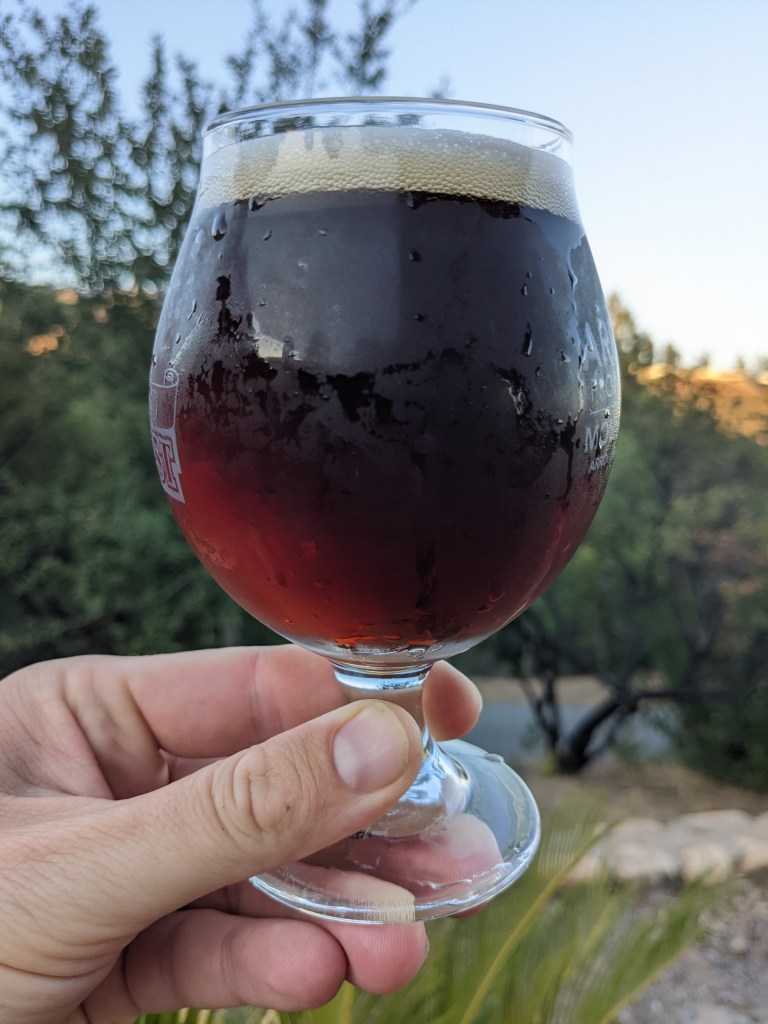
      • This beer pours with a creamy, tall, and persistent ivory head. The beer itself is deep amber and brilliantly clear. It is beautiful in the glass!
    • Aroma
      • There is plenty of rye “zing.” I pick up a little dried stonefruit, and some fresh hay from the hops. The fermentation profile is surprisingly clean.
    • Flavor
      • Rye and rich malt, with a touch of dark caramel behind that. The bitterness is moderate and clean. Just like with the aroma, I don’t get anything really for yeast.
    • Mouthfeel
      • Medium body, moderate carbonation. Smooth finish.
    • Would I brew this again?
      • YES! This is a fantastic and interesting beer from start to finish. The end product was exactly what I envisioned. Fermentation profile is wonderfully clean (or at least playing well with the malts and hops). I can’t think of anything to change.
    • Overall
      • 10/10