Deep Space Imperial Stout

The dark depths of winter are a perfect time for dark, deep beers. It’s really hard to go wrong with an imperial stout. I most frequently have them in barrel-aged form, though, which I think distracts from the fact that the “regular” form can have a ton going on as it is.

As I often do, I used a recipe from Gordon Strong’s Modern Homebrew Recipes as my starting point. His “Katherine the Strong” hit everything I was looking for, although I made my usual modifications for ingredients on-hand. In particular, I used US 2-row for my base malt instead of Maris Otter, swapped in some American hops here and there as relevant, and stuck with an American ale yeast. The end result is something that is perhaps more American in character than British, but nonetheless hopefully quite good.

Because I don’t normally make big batches of big beers, both for my own health as well as due to equipment limitations, I aimed for a 3 gallon batch. This makes for a challenging brew, but a rewarding one.

Deep Space Imperial Stout

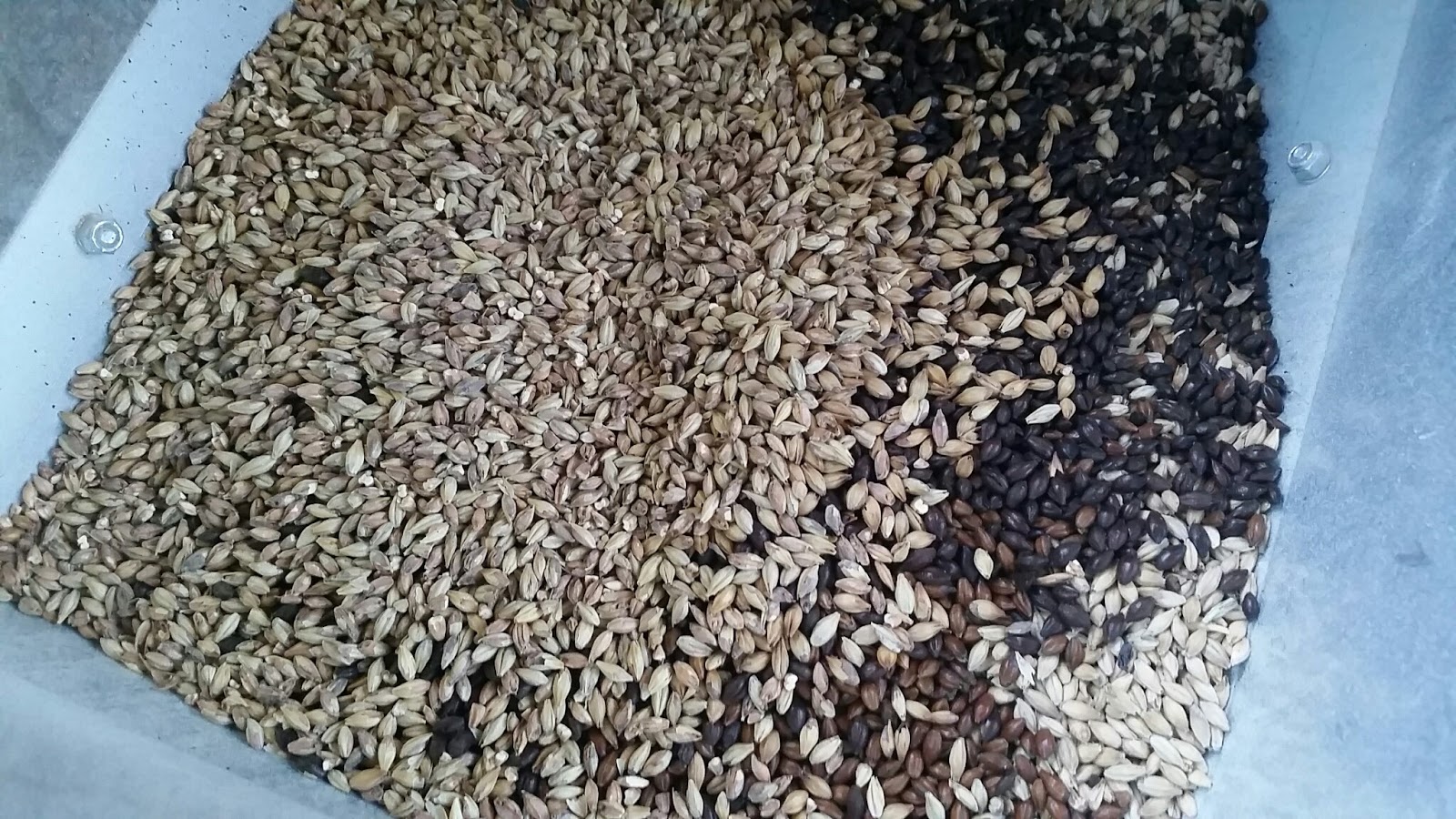
  • 4.75 lb. Lamonta Pale American Barley Malt (Mecca Grade)
  • 3.5 lb. 2-row malt (Briess)
  • 13 oz. roasted barley (Bairds)
  • 12 oz. caramel 60L (Briess)
  • 8.5 oz. chocolate malt (Bairds)
  • 6 oz. flaked barley
  • 6 oz. black malt (Briess)
  • 6 oz. caramel 80L (Briess)
  • 6 oz. special roast (Briess)
  • 3 oz. caramel 120L (Briess)
  • 0.55 oz. Magnum hop pellets (16.5% alpha), 60 minute boil
  • 1 oz. Chinook hop pellets (11.9% alpha), 10 minute boil
  • 1 Whirlfloc tablet, 5 minute boil
  • 0.5 oz. Crystal hop pellets (4.5% alpha), 5 minute boil
  • 2 pkg. BRY-97 American West Coast Ale yeast (Lallemand)
  • 1 oz. Chinook (11.9% alpha), dry hop in keg

Target Parameters

  • 1.087 s.g., 1.019 f.g., 9.1% abv, 69 IBU, 79 SRM
  • Infusion mash, held at 152° for 60 minutes and 168° for 10 minutes, with sparge
  • Claremont tap water, with Campden tablet
Procedure

  • I mashed in with 6 gallons of water at 160°, to hit 152°. I recirculated at this temperature for 60 minutes, before raising the mash temperature to 168°. I held it here for 10 minutes, before pulling the grains. I sparged with ~0.75 gallons of hot water.
  • In total, I collected 5.35 gallons of runnings with a gravity of 1.055, for 69% mash efficiency. This was well below my target gravity, so I knew I would need to boil for awhile longer than expected.
  • I brought the runnings to a boil, boiling for 75 minutes before adding the first round of hops. I then boiled another 60 minutes with hops and finings added per the recipe, for a total of 125 minutes boiling time.
  • I chilled the wort to 75°, transferred it into the fermenter, and then chilled to 67° in the fermentation chamber before pitching the yeast.
  • I brewed the beer on 7 October 2023, and it had a starting gravity of 1.082. This is slightly below the target but not awfully so.
  • I set the fermentation temperature for 66°, and pulled the beer to ambient on 28 October 2023. On 29 October, I agitated the fermenter to rouse the yeast and ensure that the beer fermented out fully.
  • I kegged the beer on 4 November 2023. Final gravity was ~1.023, for 7.9% abv.
  • I bagged and added the dry hops to the keg on 14 November 2023 and removed the hops on 27 November 2024.

Tasting

  • Appearance
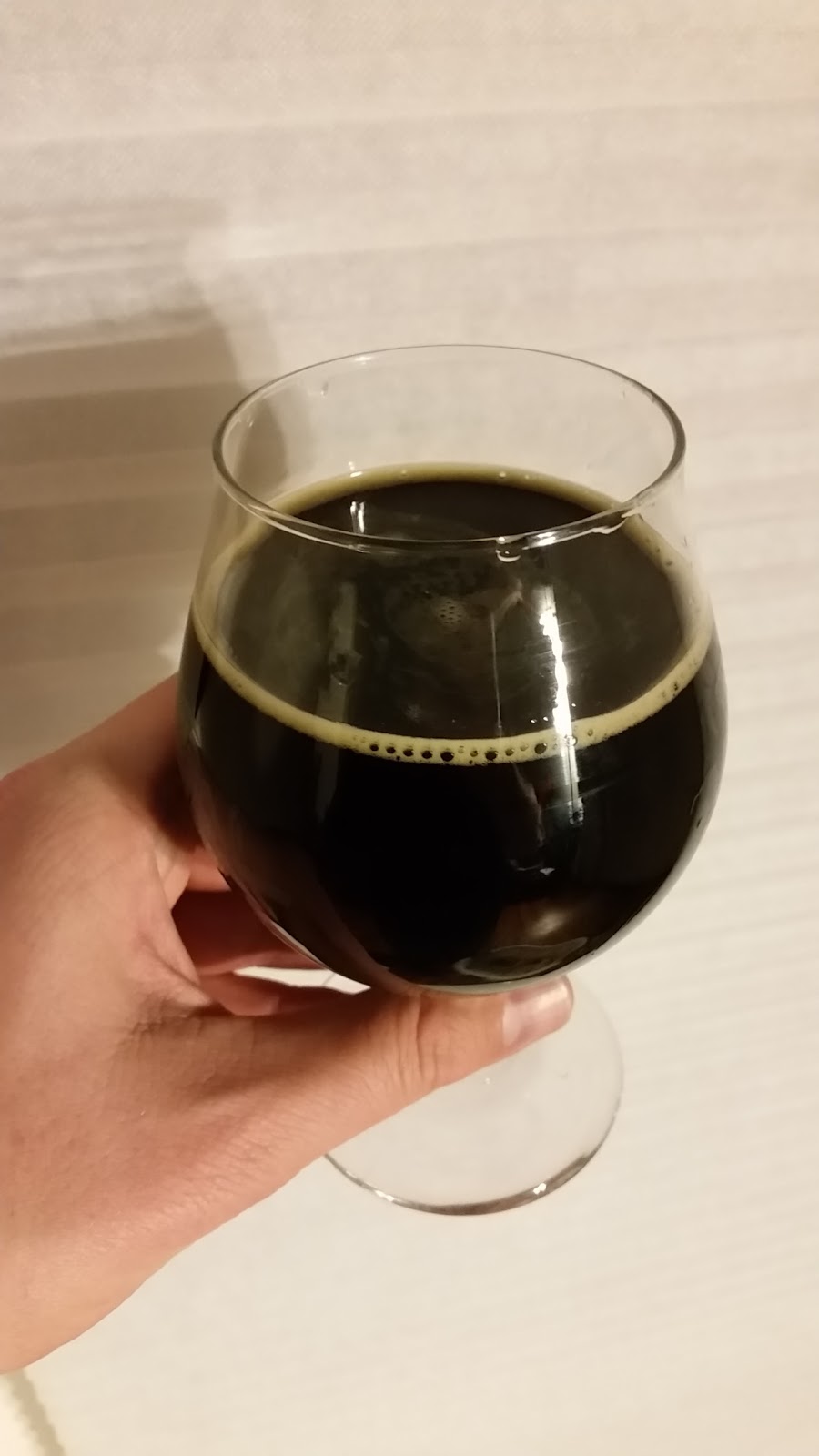
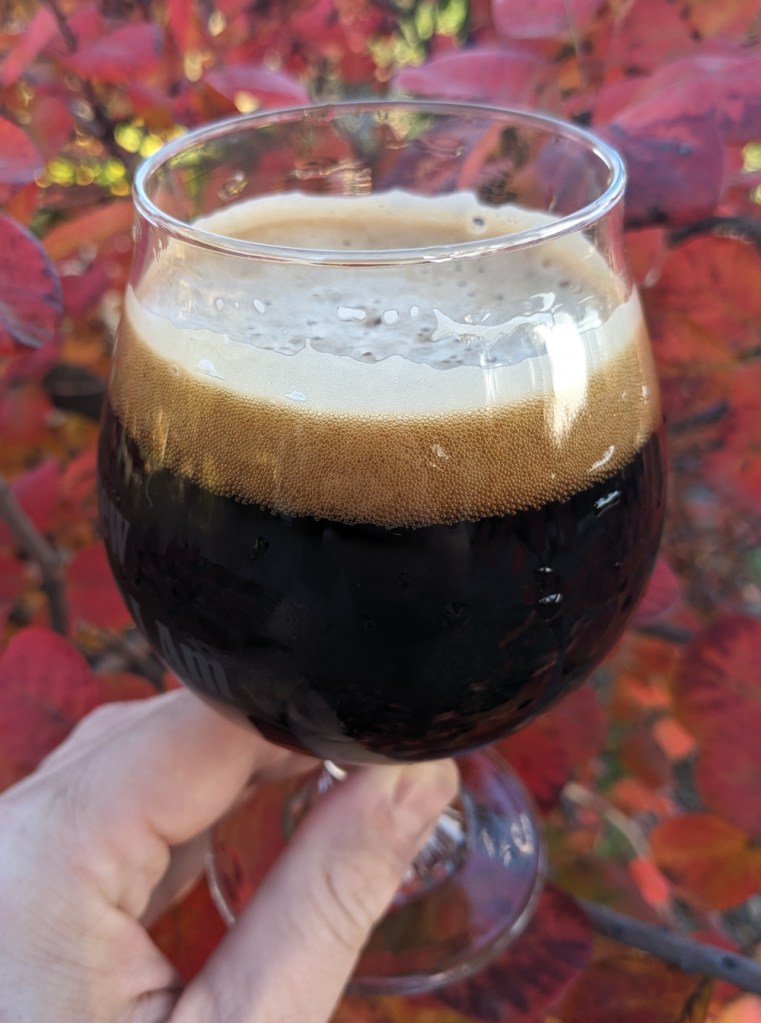
    • The beer pours with a rich and creamy deep brown head, which leaves gorgeous lacing down the side of the glass over time. The stout is a deep, deep brown beer, almost jet black in appearance in the glass. Amazing!
  • Aroma
    • Cocoa and roasty notes dominate, along with dark roast coffee as the beer warms. At this later point in the glass, there is a very subtle hint of alcohol, but it’s not at all unpleasant.
  • Flavor
    • Deep roasty cocoa and coffee flavors predominate, with a dark chocolate aspect too. Bitterness is high, manifesting on the finish in particular, which keeps the beer from being overly cloying and sweet. The hop character is slightly resiny.
  • Mouthfeel
    • Medium-low carbonation, rich and full-bodied, with an off-dry finish due to the intense hopping.
  • Would I Brew This Again?
    • YES! This is exactly what I had envisioned as an imperial stout–big and complex flavors, rich, and paradoxically drinkable. The beer definitely tilts towards the roasty and chocolatey, rather than fruity, character as a stout. So, I would say it’s more American than British in overall character.
  • Overall
    • 10/10

Pumpkin Patch Imperial Stout

I have a more-or-less annual tradition of making a pumpkin beer, and I was looking for something a bit different this time around. Although to be honest, I’m always looking for something different on pumpkin beers! Each brewing year brings something unique–for 2017, I’m doing a pumpkin imperial stout!

The recipe is patterned after a BYO clone recipe for Southern Tier’s Warlock Imperial Stout, in the September 2017 issue. I scaled it down from 5 gallons to 3 gallons, because I didn’t really want a massive quantity of a ~10% abv beer. To up the malt complexity, I subbed in Vienna malt for the recipe’s 2-row, and subbed Warrior in for Chinook hops. Because this is such a high gravity beer, I assumed 70% mash efficiency (which turned out to still be a bit high). My local shop didn’t have WLP022 (Essex Ale yeast) in stock, so I opted for Mangrove Jack’s M15 (Empire Ale).

Pumpkin Patch Imperial Stout

  • 6.25 lbs. Vienna malt (Great Western)
  • 5 lbs. 2-row pale malt (Rahr)
  • 0.6 lb. flaked barley
  • 0.5 lb. de-bittered black malt (Dingemans)
  • 0.3 lb. caramel malt 60L (Briess)
  • 0.25 lb. Munich II malt (Weyermann)
  • 0.19 lb. chocolate malt (Briess)
  • 0.15 lb. rice hulls
  • 0.6 lb. pumpkin puree (homemade)
  • 1 oz. Warrior hops (15.8% alpha), 60 minute boil
  • 1 Whirlfloc tablet, 10 minute boil
  • 1 tsp. Fermax yeast nutrient, 10 minute boil
  • 1 pkg. Empire ale yeast (Mangrove Jack’s M15)
  • Cinnamon, vanilla, nutmeg, and ginger extracts to taste (3:1 ratio of cinnamon to others)

Target Parameters

  • Infusion mash to hit target of 150°, 60 minutes. Batch sparge.
  • Claremont tap water, with Campden tablet.
  • 1.095 o.g., 1.022 f.g., 9.7% abv, 70.5 IBU, 38 SRM, 3 gallons into fermenter

Procedure

  • I mashed in with 4.4 gallons of water at 162°, to hit a mash temperature of 151.4°. Given the big bulk of grain, the mash temperature held pretty well for the full 60 minutes.
  • After 60 minutes, I vorlaufed and collected the first runnings. I had a very slow run-off for this step.
  • I then added 2.45 gallons of sparge water at 185°, let it sit for 10 minutes, and vorlaufed again. I did a gentler (slower) vorlauf, which seemed to help with the sparging issue.
  • In total, I collected 4.9 gallons of water with a gravity of 1.065, for 67% mash efficiency. Given the high target gravity versus the volume of water, I’m not incredibly surprised. Nonetheless, I’ll want to remember to adjust efficiency accordingly for my next high gravity recipe.
  • I brought the wort to a boil and added the various hops, etc., at the designated time. After 60 minutes, I turned off the heat and chilled the wort to around 80°. I transferred while aerating, and then pitched the yeast directly.
  • Starting gravity was 1.085. I’ll be starting fermentation at 66°. I brewed the beer on 19 August 2017, and had visible yeast activity within 9 hours after pitching.
  • After around two weeks, I’ll add the appropriate spice extracts. I plan to make these myself, using a vodka infusion. Although the original recipe calls for clove extract, I am going to leave that out, because (as I read once from Gordon Strong) clove is too often an off flavor and might detract from the overall taste on the final product.

20170820_104709

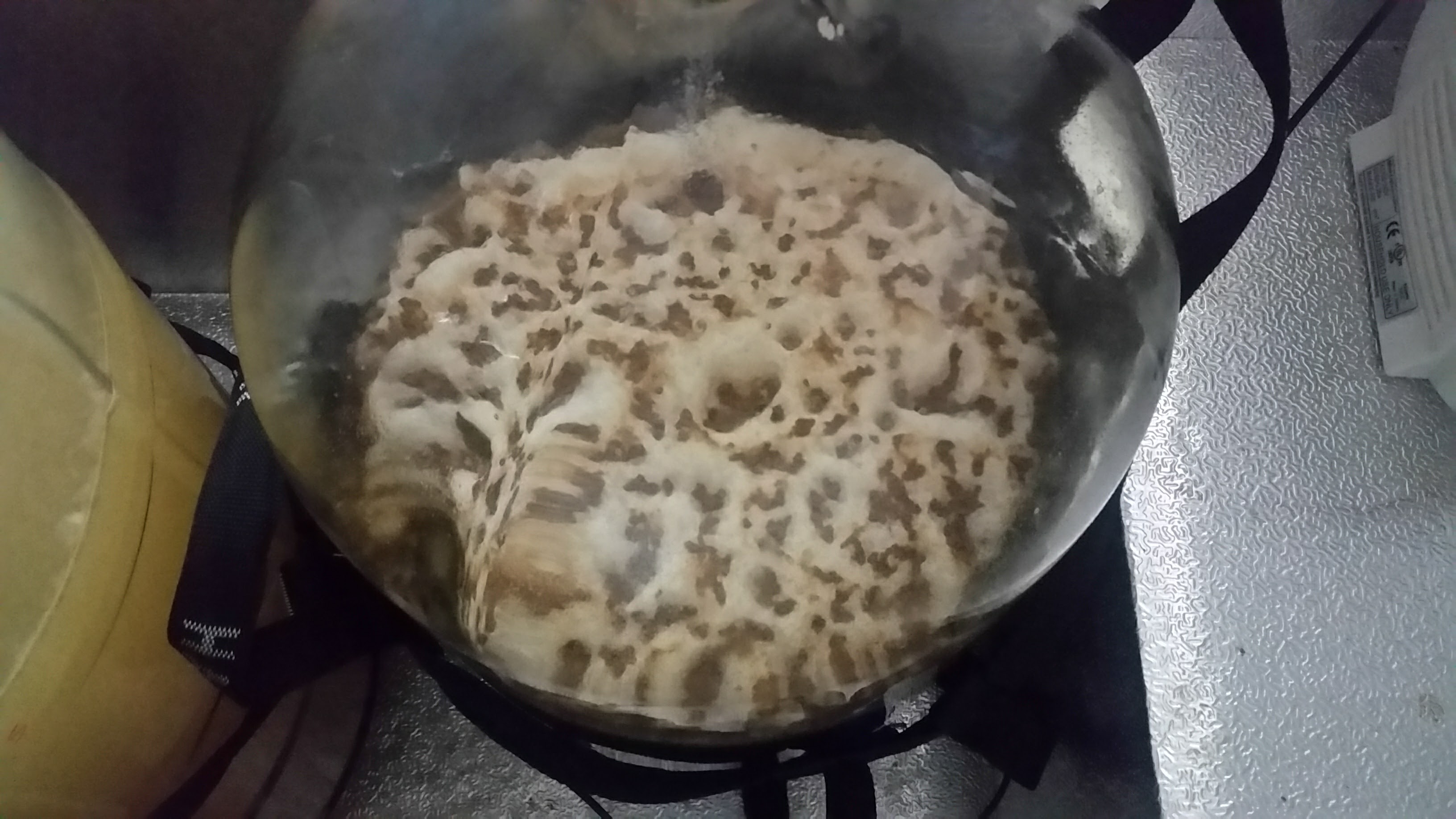
Fermenting happily, ~12 hours after yeast pitching

Beer Tasting: Red Star Imperial Stout

More than two months after brewing and about 5 weeks after kegging, I wanted to do a taste-test of my imperial stout. This tasting was done prior to our club competition, so as to not bias my opinion on it one way or another. In the competition itself, it was at the top for the homebrewed entries, although just barely! A two year old entry from another club member was just behind mine in the overall scoring.

  • The Basics
    • Original gravity = 1.098; final gravity = 1.031; abv = 9.1%; estimated IBU = 66.5.
  • Aroma
    • Aroma is rich and moderately roasty, with a faint earthy note and a very slight alcohol tinge in the background. As the beer warms up, the booziness comes a little more to the forefront, but is not overwhelming. The aroma is rich enough that it blows out the smell receptors pretty quickly. I don’t pick up any level of fruitiness.
  • Appearance
    • This beer is black, or a rich chocolate brown when viewed at an angle. The head is low, thin, and brown, which rapidly subsides to a ring around the edge of the glass. This bit of head is pretty persistent, though.
  • Flavor
    • Flavor-wise, this beer has a prominent malt character that is distinctly roasty (coffee-like) and a tad burnt on the finish. As the beer warms up, I get some chocolate notes, too. There is a tinge of alcohol heat, but that is definitely in the background. This is balanced against a hefty dose of bitterness.
  • Mouthfeel
    • This beer has really great body, and a slightly creamy feel on the tongue. The finish is medium-dry, with a lingering roasty finish. It has maybe a touch more bitterness on the extended finish than I care for, but this is fairly minor in the overall beer. Carbonation is moderate and seems appropriate for the style.
  • Would I brew this again?
    • This beer turned out pretty well, particularly for a “big” style that I haven’t attempted previously. For what it is (imperial stout), it’s a pretty good beer. I’m missing out on a bit of the malt complexity in the flavor (I think), but that also could be my unrefined palate. Attenuation seems spot on–I was worried this might have underattenuated or ended up a bit cloying, but that is definitely not the case. So would I brew this again? Sure, I think it’s a pretty good recipe, although not so exceptional that I wouldn’t try others, too. I’ll be curious to see how that assessment changes as the beer ages. I also should say I don’t see myself making imperial stouts that often–I just don’t care for “big” beers, and it’s a lot of effort for a beer that I’m only moderately interested in (even if I think it tastes pretty decent).
  • Overall score: 7/10

Red Star Imperial Stout

My homebrew club occasionally does style competitions, where we each make our own interpretation of a particular target style. I have found it to be a really fun way to stretch my brewing legs and play with styles or techniques that I don’t normally do. Our February competition focuses on imperial stouts–definitely a new style for me.

I usually like the commercial imperial stouts that I sample, but when I homebrew I prefer recipes that are lower in alcohol. Five gallons of kegged imperial stout would just sit around forever. So, I elected to make a 2.5 gallon batch and bottle it. The recipe for this batch is based loosely on the Katherine the Strong Imperial Stout recipe from Gordon Strong’s Modern Homebrew Recipes book. I modified it a fair bit, to account for ingredients on-hand. Because of the small batch size, I decided to do Brew-In-A-Bag for the mash. With the high target gravity, this resulted in a fairly low efficiency (~67%). So, I added half a pound of DME to bring things up to par.

In a new technique for me, I decided to try overbuilding my yeast starter. This recipe calls for WLP001, which I use fairly frequently in-house. In fact, some of my upcoming batches will us it too, so I figured that I would harvest enough to save on buying more yeast later. Using the BrewUnited yeast starter calculator for guidance, I made a 2L starter with 202 grams of light DME and ~1/8 tsp. of yeast nutrient. After two days on the stir plate, I poured 1L (~170 billion cells) into a mason jar (December 3, 2015) for later use.

Red Star Imperial Stout

  • 8 lbs. Maris Otter malt (Thomas Fawcett)
  • 0.5 lb. golden light DME (Briess)
  • 0.5 lb. flaked barley
  • 0.5 lb. pale chocolate malt
  • 0.25 lb. British crystal 70/80 malt (Bairds)
  • 0.25 lb. roasted barley
  • 0.25 lb. Victory (biscuit) malt
  • 1 oz. Bravo hops pellets (13.2% alpha acid), 60 minute boil
  • 0.5 tbsp. pH 5.2 stabilizer (in mash)
  • 0.5 tsp. Irish moss (10 minute boil)
  • 0.25 tsp. yeast nutrient (5 minute boil)
  • 1 pkg. California Ale yeast (White Labs, WLP001), prepared in 1L starter
Procedure
  • I added the grains to 4.85 gallons of water and kept the mash at 154° to 156° for 60 minutes. I raised the temperature to 165° for a 10 minute mash-out.
  • I removed the grains and drained them. I had approximately 3.75 gallons of wort with a gravity of 1.066, for an extract efficiency of 67%. So, I added 0.5 lb. DME (as mentioned above).
  • Once the wort was at a boil, I added the hops and boiled for 60 minutes. I added the Irish moss and yeast nutrients at the appropriate times.
  • After the boil, I chilled the wort, transferred to the fermenter, and shook to aerate it.
  • The starting gravity was approximately 1.093, with 2.5 gallons into the fermenter. I pitched the yeast and set the fermentation chamber for a temperature of 68°. It was fermenting vigorously when I checked on it 12 hours later.