Beer Updates: El Dorado Amber Ale, Rodinia IPA

Mopping up some loose ends from the brewing season…

El Dorado Amber Ale

  • After 20 days of dry-hopping, I bottled this on April 27.
  • Final gravity was 1.010 at 60 degrees; down from 1.053 original gravity, this works out to 5.6% abv.
  • Total yield was 2 mini-kegs (5 L), 15 12-oz. bottles, and 2 22-oz. bottles. The former was carbonated with 1.5 tbs. of corn sugar each; the latter with carbonation drops.

Rodinia IPA

  • It took almost 2 days before I saw activity in the primary fermenter. I suspect this was a combination of high gravity and a slow start typical for the BRY-97 yeast strain.
  • After 15 days in the primary fermenter, I transferred this to the secondary fermenter on 27 April 2014. Gravity at this point was 1.022, down from 1.076.
  • I let the beer sit in the primary for around 3 weeks, and added 1 oz. of Nelson Sauvin hops on Sunday, May 18, for dry-hopping.
  • Bottling day was June 5, so I had a total of 18 days dry-hopping. Gravity at this point was 1.013 at 60 degrees, working out to a final abv of 8.3%.
  • I ended up with 3.5 gallons of beer. This was primed with 3 oz. of corn sugar dissolved in 2 cups of water, to reach a target of 2.5 volumes CO2.
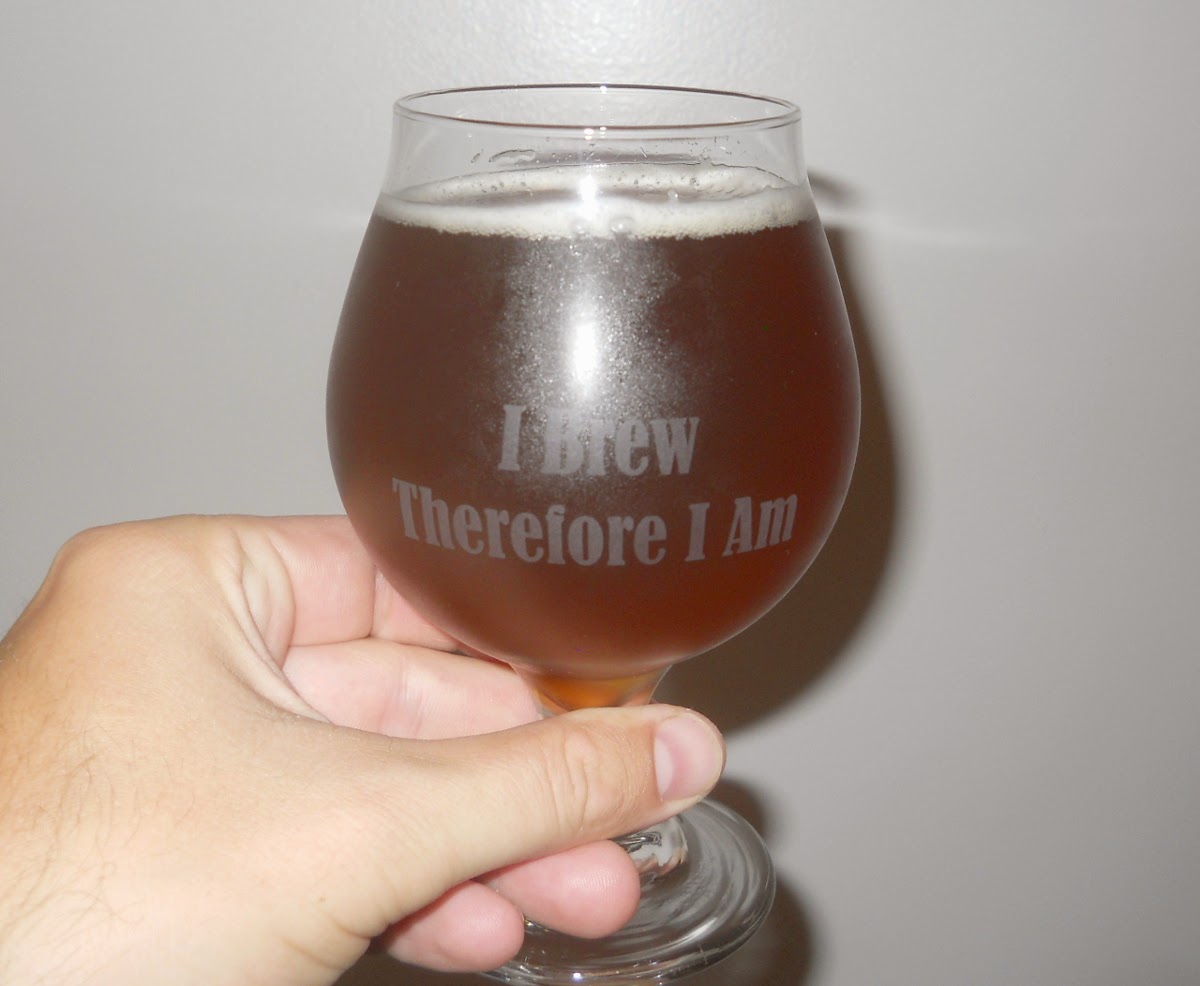
  • I sampled a bottle after a week; it is shaping up quite nicely. The aroma is sweet and quite reminiscent of the white wine aroma I expected for Nelson Sauvin hops. Taste so far is pleasantly bitter with just a touch of sweetness (the hops again, I think).

Beer Updates: El Dorado Amber Ale, California Vanilla Porter, Gondwana IPA

Over the past two weeks, there has been some action on various batches. This is all summarized below.

  • On April 7, one week after brewing, I transferred the El Dorado Amber Ale over to the secondary fermenter. Gravity at this point was 1.014, down from 1.053; this equals 6.5% abv and 72.6% apparent attenuation.
  • I added 0.5 oz. of El Dorado hops pellets, aiming for two weeks of dry hopping prior to bottling
  • After seven days of vanilla beans in the secondary fermenter, this beer was ready to bottle. I recently got a second-hand set of “PhilTap” minikegs (thanks, Dad!), and this was the first batch to get the PhilTap treatment, along with the Gondwana IPA.
  • At bottling, gravity was 1.014, down from 1.064. This indicates 6.6% abv and 77.0% apparent attenuation.
  • The kegs were each carbonated with 1.5 tbs of corn sugar. The remaining 1.9 gallons were carbonated with 1.65 oz. of corn sugar boiled in 0.5 cup of water (target carbonation=2.6 volumes).
  • The total yield for this batch was: 2 5-L mini-kegs, 11 12-oz bottles, 3 22-oz. bottles, and 1 16-oz. grolsch bottle.
  • After 17 days of dry hopping with 2 oz. of Citra hops pellets, this beer was ready to package. As I was transferring it out, I was hit with a fantastic hops aroma – a fantastic bouquet of passionfruit with a little citrus. These also held up in the tasting.
  • At bottling, gravity was 1.008, down from 1.047. This equals 5.1% abv, and an apparent attenuation of 82.3%.
  • The kegs were carbonated with 1.5 tbs of corn sugar. The remaining 1.5 gallons was primed with 1.45 oz. of corn sugar boiled in 0.5 cup water.
  • The total yield for this batch was 2 5-L mini-kegs, 8 12-oz bottles, 2 22-oz. bottles, and 1 16-oz. Grolsch bottle.
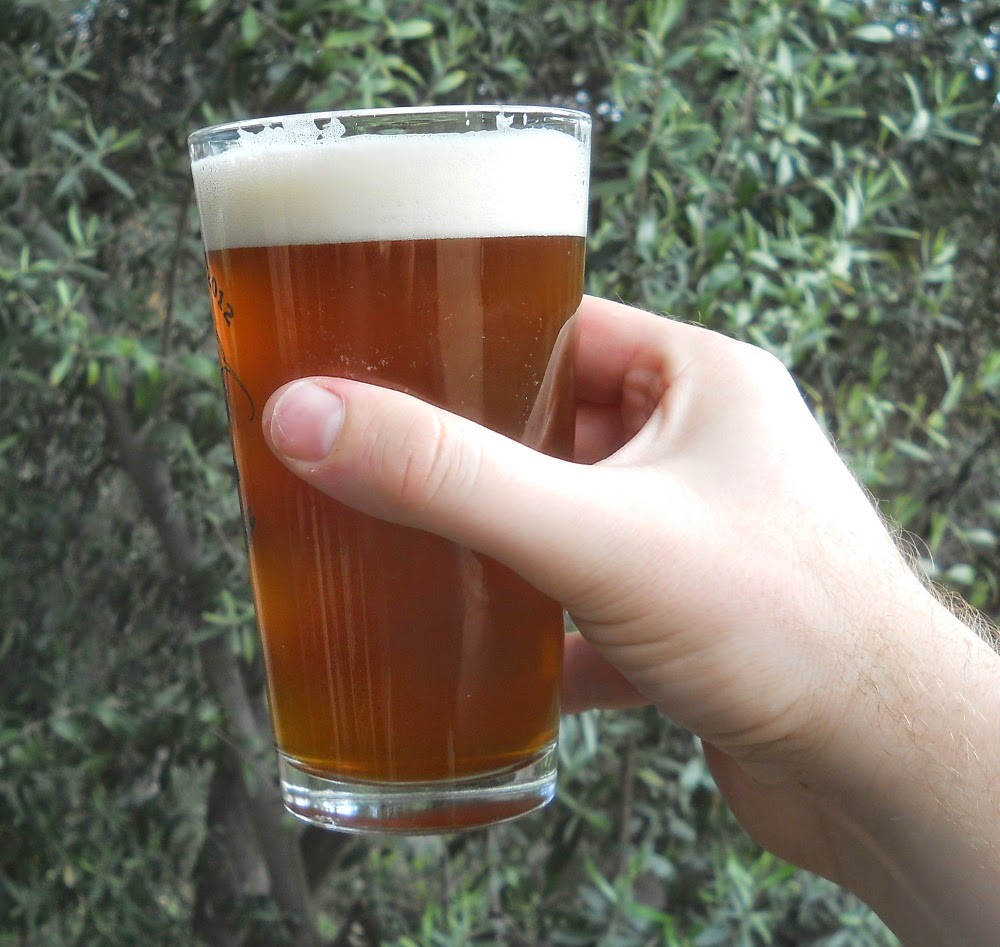
  • After a week, I tapped one of the mini-kegs. The result is beautiful! The hops aroma is still fantastic, although the beer doesn’t have a lot of body (not surprising given the high fermentability). Even so, the flavor is quite clean, which is nice after my early worries.
Gondwana IPA, first pour from the mini-keg

El Dorado Amber Ale

Now having an all-grain amber ale, IPA, and porter under my belt, I decided to try another all-grain amber ale. I based this recipe off of Amarillo Amber Ale from BYO magazine. I made some small substitutions for what was available at my local (and awesome) homebrew store, primarily in switching up the Weyermann malts with approximate equivalents. I also ended up using El Dorado and Nugget for the hops (they had just run out of Amarillo!). As I designed this recipe in BeerSmith, I was super excited to try a whole bunch of new grains and hops.; this sort of beer geekery is why I got into homebrewing! And even better, this was my most successful all-grain brewing session. I scored 75% efficiency, my best to date.

El Dorado Amber Ale

  • 9.3 lbs. Best Malz Pilsen malt
  • 0.25 lbs. aromatic malt
  • 0.25 lbs. 40° crystal malt
  • 0.25 lbs. carastan malt
  • 0.25 lbs. caravienne malt
  • 0.1875 lbs. chocolate malt
  • 1 tbs. 5.2 pH stabilizer
  • 0.5 oz. Nugget hops pellets (14.4% alpha acid) – 30 minutes boil
  • 0.5 oz. El Dorado hops pellets (15% alpha acid) – 10 minutes boil
  • 0.5 oz. El Dorado hops pellets (15% alpha acid) – 5 minutes boil
  • 0.5 oz. El Dorado hops pellets (15% alpha acid) – 14 days dry hop
  • 1/2 tsp. Irish moss
  • 1 pkg. SafAle English Ale Yeast S04

Steps

  • Add 1 tbs. of 5.2 pH stabilizer to grist
  • Add 13.5 quarts of water at 170° to grist in mash tun, for target temperature of 152°. The temperature stabilized here within 5 minutes, and only dropped 1 degree over the entire 60 minutes of mashing.
  • Mash for 60 minutes, add 1 gallon of water at 170°. I collected 3.5 gallons of runnings.
  • Next, I added 3.1 gallons of water at 170°. The temperature settled at 160°. I let the mash tun sit for 10 minutes, and then I collected 3.4 gallons of runnings. This totaled 6.9 gallons of wort collected; with a gravity of 1.042, I calculate 75% efficiency for my mash.
  • Because I had collected such a volume of wort, I elected to boil for a total of 90 minutes. Once I had the wort to a boil, it boiled for 60 minutes before the first hop addition.
  • At 60 minutes, I added 0.5 oz. Nugget hops pellets.
  • At 75 minutes, I added the Irish moss.
  • At 80 minutes, I added 0.5 oz. of El Dorado hops pellets.
  • At 85 minutes, I added 0.5 oz. of El Dorado hops pellets.
  • At 90 minutes, I removed the pot from the heat, and began cooling it with my wort chiller.
  • It took around 30 minutes to cool the wort to 75°. From here, I transferred the wort to my primary fermenter.
  • I proofed the yeast in 1 cup of 85° degree water, and pitched it. The space where I am fermenting is about 65° ambient temperature–perfect for this yeast strain.
  • I collected 5 gallons of wort, with a starting gravity of 1.053 (at 60°). Once I had adjusted the mash efficiency in BeerSmith for my system, I was exactly on the nose for o.g. This will potentially yield ~5.2% abv.

Beer Updates: California Vanilla Porter, Gondwana IPA, Fake Tire 3.0

I haven’t done a brewing session in two weeks (life has been busy!), but I have been dabbling in a few other beer-related activities. These are outlined below.

Fake Tire Amber Ale
The Fake Tire 3.0 Amber Ale was bottled on March 23. Final gravity was 1.008; with a starting gravity of 1.045, this means I have 4.8% abv. I added 3.5 oz. of corn sugar dissolved in 2 cups of water. The total yield was 11 12-oz bottles, 7 22-oz bottles, and 8 16-oz bottles (grolsch).

Gondwana IPA
As noted before, this beer has had a bit of a roller coaster of flavors that has finally evened out on the positive side. On March 19, I added 2 oz. of Citra pellet hops for dry hopping. After these have had a full two weeks in the fermenter, I will bottle.

California Vanilla Porter
In order to achieve the eponymous vanilla flavor for this porter, I cut up and scraped 4 Madagascar vanilla beans and then soaked all of them in 2 oz. of vodka. They soaked for 10 days, and generated a really tasty and nice-smelling extract. Today, I finally got to transferring the porter from the primary fermenter into the secondary (after 15 days–the beer was brewed on March 15, and transferred on March 30). The beer is quite tasty, and weighs in at 1.014. Down from 1.064, that means the beer weighs in at 6.4% abv. Right before I sealed up the secondary, I tossed in the vanilla extract (plus pods). I figure I will bottle this in about a week.

Fake Tire 3.0 and Laurasia IPA updates

On Thursday, February 27, I transferred the Fake Tire 3.0 (my first all-grain batch) over to the secondary fermenter. The gravity was down to 1.006, which works out to 5.1% abv. This is certainly the most I’ve ever had a beer ferment out, and I suspect this was due to the unintentionally low mash temperature.

On Saturday, March 1, I added 2 oz. of Simcoe hops pellets to the Laurasia IPA, for dry hopping.