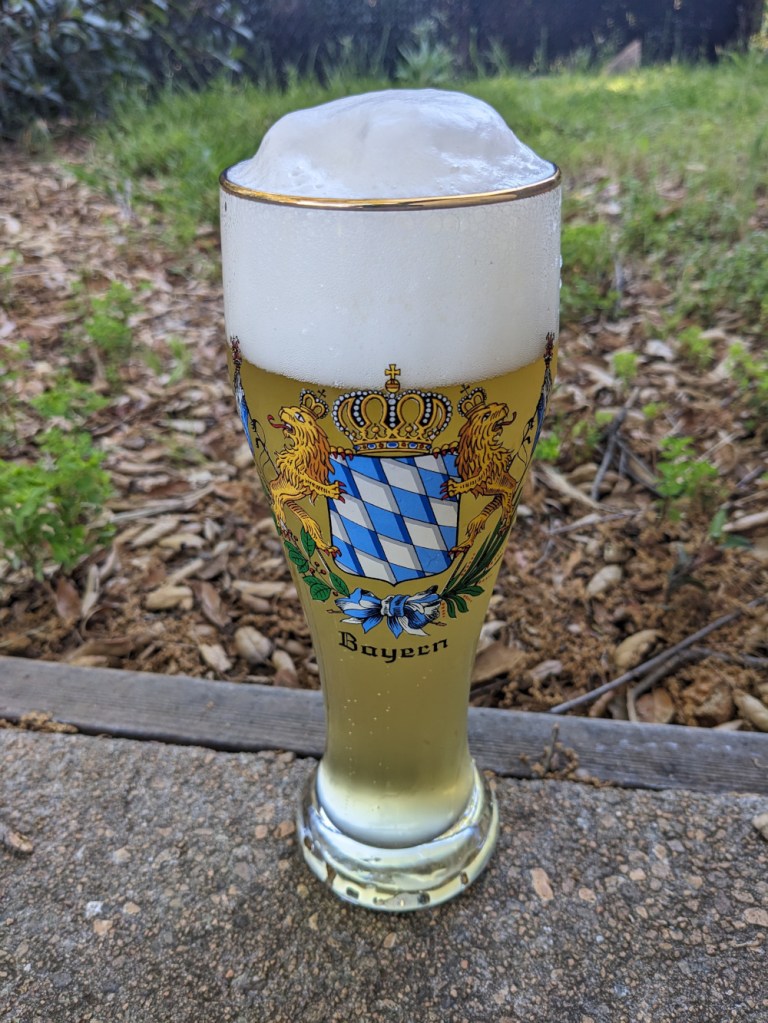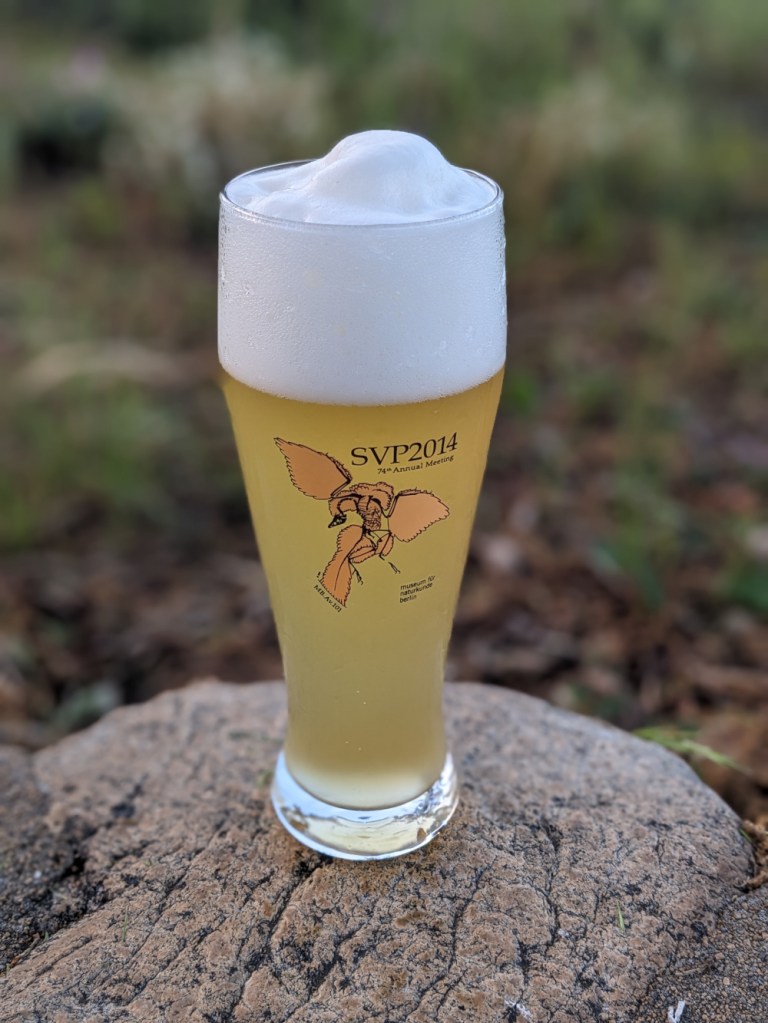
Otter-Squatch Wheat Ale

A light wheat ale is an American homebrew classic, but it has been awhile since I last made this style. I threw together a simple recipe, which is upside-down from my usual blend of 60/40 wheat/2-row. There was no particular reason for this, other than it just seemed like the thing to do. I had a hop variety on-hand called Sasquatch, and decided to use those up here. My preference on American wheat ales is a little fruity/citrusy yeast character, rather than super clean or super phenolic. Lutra kveik seemed like a perfect yeast choice along those lines; clean-ish, but not overly clean, and potential for some interesting flavors. “Lutra” is also the scientific name for a genus of otters; along with Sasquatch hops, I ended up calling this batch “Otter-Squatch Wheat Ale.”
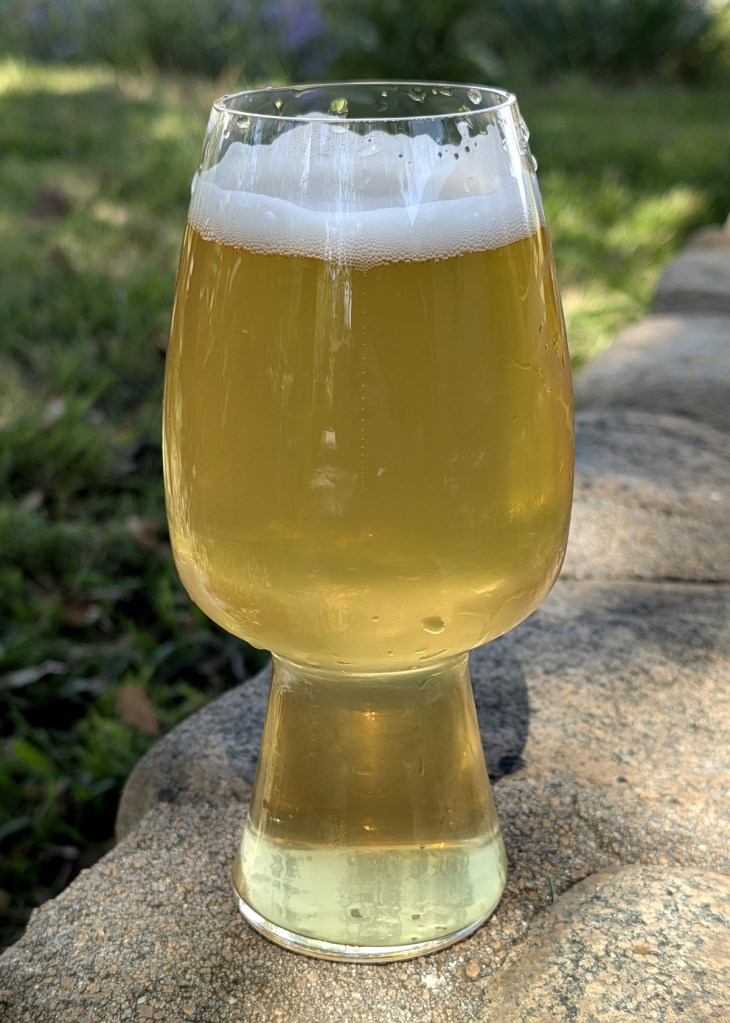
Otter-Squatch Wheat Ale

  • 6 lb. 2-row malt (Great Western)
  • 4 lb. white wheat malt (Briess)
  • 4 oz. rice hulls
  • 0.5 tsp. BrewTanB, added to mash
  • 1 oz. Sasquatch hop pellets (7.5% alpha), 20 minute boil
  • 0.5 tsp. BrewTanB, 10 minute boil
  • 1 oz. Sasquatch hop pellets (7.5% alpha), 5 minute boil
  • 1 pkg. Lutra kveik (Omega OYL-071), dry

Target Parameters

  • 1.046 s.g., 1.009 f.g., 23 IBU, 4 SRM, 4.9% abv
  • Full volume mash, 60 minute mash at 152°, 10 minute mash-out at 168°
  • RO water with added minerals to hit target of 78 ppm Ca, 86 ppm SO4, 74 ppm Cl, -55 ppm RA

Procedure

  • I started with 7.3 gallons of RO water, adding 4.25 g of calcium chloride and 4.25 g of gypsum to hit my target water profile. Then, I heated the water to 157° before adding the grains, to hit a mash temperature of 152°.
  • I held the mash with recirculation at 152° for 60 minutes, before raising the mash to 168° for 10 minutes.
  • At the end of the mash, I removed the grains and heated to a boil. In total, I collected 6.6 gallons of runnings with a gravity of 1.039, for 69% mash efficiency.
  • I heated the runnings to a boil, boiling for 60 minutes and adding hops per the recipe. After 60 minutes, I turned off the heat and chilled 85° before transferring the beer to the fermenter and pitching the yeast.
  • Starting gravity was 1.044, and I brewed the beer on 28 February 2025. I fermented the beer at room temperature ambient, between 60 and 65°.
  • I kegged the beer on 24 March 2025. Final gravity was 1.009, for 4.6% abv. I added 3.25 oz. of corn sugar to get some natural carbonation and scrub any oxygen from the transfer process. At the time of kegging, the beer had a very mild flavor and was quite drinkable! I finished up things with a bit of force carbonation, after the beer sat for a few weeks.

Tasting

  • Appearance
    • Lightly hazy, light yellow beer, which pours with a creamy and long-lasting white head.
  • Aroma
    • Doughy and tart, lemony aroma, at a moderate level of each.
  • Flavor
    • Moderate doughy malt character, light tartness to yeast and a very slight phenolic note (peppery, perhaps?). The latter is almost imperceptible; I can’t quite describe it. Medium-low bitterness.
  • Mouthfeel
    • Light bodied, moderately high carbonation, slightly dry finish. Crisp!
  • Would I Brew This Again?
    • This is a tasty beer! It defies styles a little bit; it’s probably closest to an American wheat ale, but not quite on target. It’s very drinkable! The kveik flavors probably aren’t for everyone, but work well in this particular batch.
  • Overall
    • 9/10

Humboldt’s Hefeweizen 2024

I have made weissbiers (hefeweizens) a few times previously, with decent but not consistent results. This is a style that can be quite enjoyable or quite awful, so I invested some time into learning more of the underlying ingredients and techniques for a tasty, traditional recipe. An article at brau!magazine was incredibly useful, with lots of detailed suggestions. I reformulated my previous Humboldt’s Hefeweizen (because I like the name) for this batch.

My first big decision–perhaps the most important–was yeast choice and fermentation control. Without a good yeast character, you don’t have a good hefeweizen (in my opinion). I am fairly committed to using dry yeast whenever possible because the convenience can’t be beat, and I wanted to give Lallemand’s Munich Classic another chance. My previous attempt was okay, but had little of the yeast character I wanted. That batch was fermented cool (~65°), and I knew I should up the temperature a bit to get more “oomph” to the yeast. So, I aimed for 67°. Working backwards, I decided a ferrulic acid rest would be critical–my previous batch didn’t use that, and I think that factor also set back beer quality.

My second decision concerned the grist. Past beers were ~45 to 55 percent wheat, and I wanted to increase that. This time around, I aimed for over 60 percent wheat, in hopes that it would 1) be more true to style; and 2) tilt the head quality in a positive direction.

I had fun formulating the batch and figuring out what would give the best results. The end product was definitely worth it!

Humboldt’s Hefeweizen 2024

  • 6.75 lb. red wheat malt (Briess)
  • 4 lb. pilsner malt (Rahr)
  • 0.5 lb. rice hulls
  • 0.5 tsp. BrewTanB (mash)
  • 1 oz. Sterling whole hops (4.5% alpha estimated), 45 minute boil
  • 0.5 tsp. BrewTanB, 10 minute boil
  • 1 tsp. yeast nutrient (White Labs WLN1000)
  • 1 pkg. Munich Classic Wheat Beer yeast (Lallemand)

Target Parameters

  • 1.049 o.g., 1.010 f.g., 5.2% abv, 14 IBU, 5 SRM
  • Full volume mash, no sparge, 113° mash for 20 minutes, 145° mash for 45 minutes, 162° mash for 30 minutes
  • RO and Claremont tap water, mixed to hit 10 ppm Ca, 4 ppm Mg, 18 ppm Na, 16 ppm SO4, 19 ppm Cl, 3 ppm CaCO3, RA=-7, effective hardness=10 ppm.

Procedure

  • I collected 2.5 gallons of Claremont tap water and neutralized it with 1.76 mL of 88% lactic acid and a small bit of Campden tablet. Then, I added 5 gallons of RO water, to hit my mash water profile.
  • I started the mash at 113° for 20 minutes, to enable a ferulic acid rest. Then, I raised the mash to 145° for 45 minutes, and finally ended at 162° for 30 minutes. Once the mash was done, I pulled the grains and heated the runnings to a boil.
  • The kettle had 6.6 gallons of runnings with a gravity of 1.040, for 65% mash efficiency. This was a touch lower than I anticipated, but that may be due to the high amount of wheat.
  • Once the kettle was boiling, I added finings per the schedule and then turned off the heat after 60 minutes. A slightly greater boil vigor was used to increase gravity. I chilled the wort to 66° and then transferred to the fermenter.
  • I brewed this beer on 14 April 2024. Starting gravity was 1.048, nearly exactly to target.
  • After pitching the yeast, I started fermentation at ambient for a few hours, and then transferred the fermenter into my fermentation chamber set for 67°. Fermentation seemed to take off pretty quickly!
  • I kegged the beer on 24 April 2024. The beer had an amazing aroma–a decent amount of spicy phenol and a hint of banana; exactly what I was looking for! I carbonted to a higher level, around 3.5 volumes of CO2.
  • Final gravity was 1.014, for 4.4% abv.

Tasting

  • Appearance
    • Pours with a merangue-like, tall, gorgeous white head that sticks around for ages and leaves gorgeous lacing on the glass. The beer itself is straw yellow and hazy beer. It’s exactly as a fresh hefeweizen should be!
  • Aroma
    • Yeast at the forefront, with a medium-high level of yeast character–primarily clove plus a touch of banana.
  • Flavor
    • Even balance of clove and banana, and a light dough malt character behind that. Low level of bitterness.
  • Mouthfeel
    • Light body. medium-high carbonation, smooth, lightly dry finish (from the hops?).
  • Would I brew this again?
    • This is the best hefeweizen I have made. Everything ran perfectly, and I wouldn’t change a thing. The yeast quality is perfect, head is perfect, all is amazing. It had a sulphur aroma and flavor early on; this faded in a few days.
    • Overall
      • 10/10

2022 Orange Summer Wheat Ale

This was a quick brew to serve at a homebrew festival…I roughly followed past recipes, and used zest from 5 Valencia oranges soaked in 4 oz. of vodka for the orange flavoring (added at kegging). It was my first brew back on my batch sparge system (while my Anvil Foundry was temporarily down). I had some major efficiency issues–I suspect maybe a poor crush for the grains–and thus had to improvise heavily with extract. The brew definitely didn’t go as planned, but at least it got done. My subsequent brews in the old mash tun went much better, thank goodness, and now I’m back on the Foundry!

2022 Orange Summer Wheat Ale

  • 6.5 lb. red wheat malt
  • 3.25 lb. 2-row pale malt
  • 6 oz. Viking dextrin malt
  • 8 oz. rice hulls
  • 0.8 oz. Sterling hop pellets (7.5% alpha), 60 minute boil
  • 1 tsp. WLN1000 yeast nutrient (White Labs)
  • 1 pkg. German Ale Yeast (SafAle K97)

Target Parameters

  • 1.043 s.g., 1.011 f.g., 4.3% abv, 21 IBU, 4 SRM
  • Full volume mash, no sparge, 152°
  • Claremont tap water, Campden tablet added to remove chloramines

Procedure

  • I added 8 gallons of water to the mash tun, letting it settle to 157° before adding the grains and 8 mL of 88% lactic acid to adjust pH. The mash settled around 152° initially, and I let it sit for 75 minutes before vorlaufing and collecting the runnings.
  • In total, I collected 6.3 gallons of runnings with a gravity of 1.027, for barely 45% mash efficiency. This is some of the worst efficiency I have ever had, and I’m not sure why. I suspect either I had a poor crush with the high volume of wheat malt, or perhaps the wheat malt didn’t have the enzyme potential expected (which doesn’t make complete sense to me), or some other factor. In any case, I had to improvise major-time and add 1.5 lb. of extra light Briess DME to bring the gravity into a tolerable range.
  • I brought the runnings to a boil, boiling for 60 minutes and adding hops and finings per the recipe. After 60 minutes, I turned off the flame and chilled down to ~70° before transferring to the fermenter.
  • I brewed this beer on 10 April 2022. Starting gravity was 1.044. Once I pitched the yeast, I fermented at ~65°.
  • Prior to brew day, I zested 5 fresh-picked Valencia oranges and put the rind into a 4 oz. bottle topped up with vodka. On kegging day, I strained out the zest.
  • I kegged the beer on 23 April 2022, and added the orange tincture at that point.
  • Final gravity was 1.010, for 4.5% abv.
  • I force carbonated, and it was served at a beer festival on April 30. I couldn’t attend, and got the keg back. Two weeks later, I transferred to a pinlock keg for serving. I didn’t have my usual ball lock quick disconnect handy, so I had to do the less-than-desirable task of transferring directly into the keg and then purging it with CO2 via the pressure relief valve.

Tasting

  • Appearance
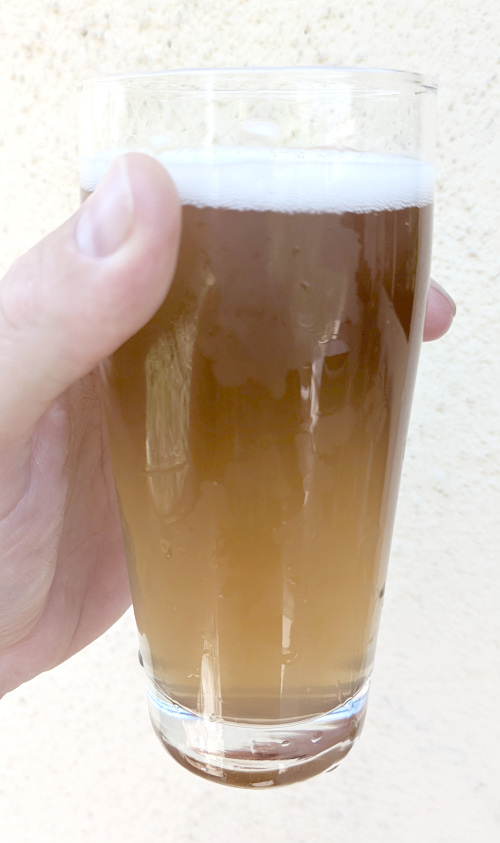
    • The beer is cloudy and a sort of muddy reddish orange color. The head is white and persistent.
  • Aroma
    • A fairly pleasant orange and orange blossom aroma is prominent, but not much else.
  • Flavor
    • Orange and doughy malt flavors, with a moderate level of bitterness.
  • Mouthfeel
    • Light body, moderate carbonation, dry finish. There is a somewhat unpleasant astringency on the finish.
  • Would I Brew This Again?
    • This was a very disappointing version of my normally likable orange wheat ale. The orange character is nice, and K97 is an awesome American wheat ale yeast, but the astringency and muddy coloration keep this from being a winner. So many things went sideways on this brew that I have no doubt my next iteration will be far superior. All blame goes to technique flaws, not the recipe itself. This batch is not a complete dumper, but it comes very close.
  • Overall
    • 3/10