What’s Brewing? November 2020 Edition

November continues my steady stream of brewing (and enjoying) beer, as I settle in to my new electric brewing rig. With temperatures cooling down, I have a little more flexibility in ale fermentations, and I can utilize space outside the fermentation chamber more readily. It’s pretty great!
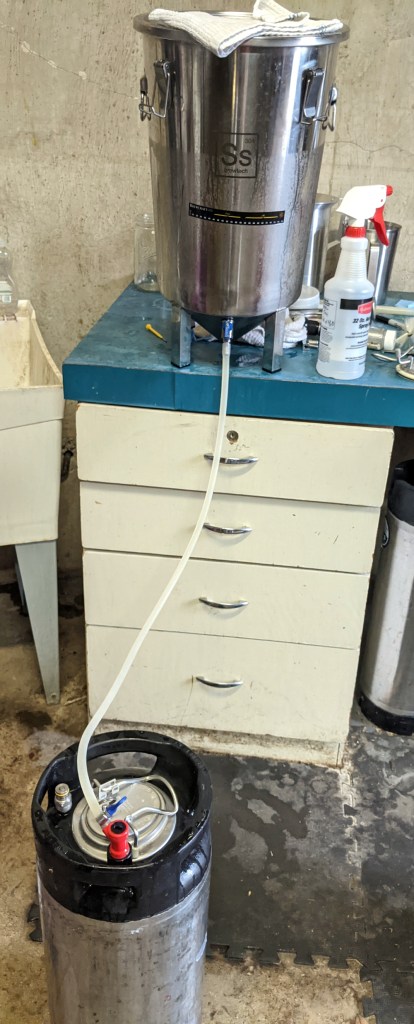
Kegging a German pils

Beer Batch Updates

  • The spiced Christmas ale is now kegged and carbonated, and just conditioning a bit before it goes on tap in about a month. It clocks in at about 5.8% abv, and has a really nice flavor.
  • My Stygimoloch Bock is now kegged and lagering. The goal is to have it lager for at least a month before serving, and have it online for the Christmas holiday. As a malty, flavorful beer, I’m looking forward to enjoying it!
  • I kegged a German pils yesterday, aiming for the requisite stretch of conditioning before it goes on tap.
  • I brewed a session stout about 10 days ago, and will keg it within the next few days. It’s basically a dry Irish stout with a twist, using Vienna malt and flaked oats instead of Maris Otter and flaked barley. It has a starting gravity of 1.038, so will be truly sessionable!
  • Last weekend, I started a “classic” northwestern IPA, using Cascade, Chinook, and Centennial as the hop core. It’s a slightly modified rebrew of Wildfire IPA, which I really enjoyed the first time around.
  • I just rebrewed my Tremonia Lager, because it was so enjoyable the first time around. I’ve adapted the recipe a little bit for the methods and efficiencies of the Anvil Forge, but it’s pretty much the same beer.

What’s On Tap?

  • I’m on the home stretch of Dog Days Pilsner, which is a truly fine beer. I feel like I’ve finally mastered German pils as a style (he said modestly), and it’s probably up there as one of my very, very favorite.
  • Kveik the Keg Brown Ale is on my center tap, providing a highly drinkable session beer when I want something in the sub-4% abv range.
  • Historical(ish) Vienna Lager rounds out my tap list, and has been my go-to autumn transitional beer. I still have slightly mixed feelings about it (the hop rate is too high for my tastes), but the beer has grown on me quite a bit. Weyerman Vienna Malt is such a solid backbone for this beer!

What’s Coming Up?

  • I’m going to brew…something…this week over the Thanksgiving holiday, but I’m not sure just what. Maybe a red ale? As I type this, I’m enjoying a red ale brewed by a friend (passed along via socially distanced growler swap), and it seems like the right beer for this moment!

Other Notes

  • I’m still dialing in my mash parameters for my Anvil Foundry system as well as streamlining my work flow with it. I hit mash efficiencies in the mid-60s for my first few batches, and feel like I can notch that up just a touch. For my most recent batch, I milled just a little finer (changing the gap to 0.037″ from 0.041″). I was able to get my efficiency up to 69%, and am pretty happy with that.
  • My latest batch of Weyerman Pilsner Malt just ran out, so I am replacing that with Viking Pilsner Malt. I’ve really liked their other malts, so can’t wait to give this a try.

What’s Brewing? October 2020 Edition

The past month has been a quiet one for the blog, but not necessarily a quiet one for brewing. I’ve gotten a few batches started, got some awesome new equipment, and enjoyed some of the fruits of my labors. Admittedly, I am not turning over kegs as often as I would like, if only because I’m not having people over. I make up the gap a little bit by doing growler swaps!

The Anvil Foundry, my new brewing toy.

Beer Batch Updates

  • My first kveik-fermented beer is now history. It was a super interesting beer, and pretty drinkable, although the dry hopping unfortunately ended up a little harsh. At ~3.5% abv, it was also possible to have a few without getting woozy-headed. The keg just kicked last night!
  • I repitched the kveik culture from my pale ale, to do a sessionable brown ale. It came in around 3.6% abv, a bit lower than expected. I’m somewhat surprised by the fairly low attenuation on the Hornindal strain, with ~61% attenuation on both batches so far. This is probably due to the intentionally high mash temperatures I’m using, at around 156° for each. The beer is now on tap,
  • I’ve been brewing a sequence of lagers, as mentioned last month. The German pils is now on tap, and a Vienna lager just went on tap also. I just did a rebrew of my Stygimoloch Bock, repitching the yeast from the German pils. Finally, I’ve done another German pils, using the Pfriem Pilsner from Dave Carpenter’s lager book.
  • Finally, I made a small (3 gallon) batch of a spiced Christmas beer. It uses Vienna, Munich II, and honey malt, along with a smattering of crystal and chocolate malts as well as some honey. A mixture of “holiday spices” went in, with cinnamon, nutmeg, allspice, vanilla, and coriander. It’s fermenting with another repitch of the kveik (probably the last pitch for this one

What’s On Tap?

  • Dog Days Pilsner has been drinking exceptionally well. It’s just a great German pils–I feel like I have finally mastered this style!
  • I just put a Vienna lager on tap, after about a month of lagering. It’s a super-simple SMaSH beer, with just Vienna malt (Weyermann) and Saaz. Vienna is still one of my favorite malts, and this recipe is no exception!
  • Finally, I have a session brown ale fermented with kveik. “Kveik the Keg Brown Ale” is a super interesting and super drinkable beer, clocking in at only 3.6% abv. It has a really delightful chocolate and citrus character. I’m in love with this beer!

What’s Coming Up?

  • I’m thinking a stout of some sort is in order…not sure what yet, but probably a recipe that has a fairly dry, sharp character at a sessionable alcohol level.
  • It’s always lager time! I might do a “winter lager” of some sort, emphasizing a mix of Vienna and Munich malt.

Equipment Notes

  • I recently purchased the Anvil Foundry 10.5 gallon electric brewing system, and am loving it so far. Given the pandemic, I’m trying to avoid unnecessary trips out for propane, and it seemed like a good time to look at moving to electric. The Foundry system hit all of my interest points, with solid reviews, reliable reputation, and simple operation. To date, I’ve brewed a German pils as well as the holiday ale.

Commercial Beer Notes

  • I’ve been cutting back my alcohol consumption some, and so have been exploring non-alcoholic options with interest. I recently tried Partake Brewing’s line of 0% alcohol beers. Unfortunately, they were a bit disappointing. There were things I liked about each, but the character was just way too thin, and they all had a bit of a “twang” reminiscent of some of my early extract brews. I’ll continue to try some other brands, but probably not this one again.

What’s Brewing? September 2020 Edition

The past month of brewing has been a bit scattershot, with various styles in progress and various styles on tap. I’ve not been bored, though!

Beer Batch Updates

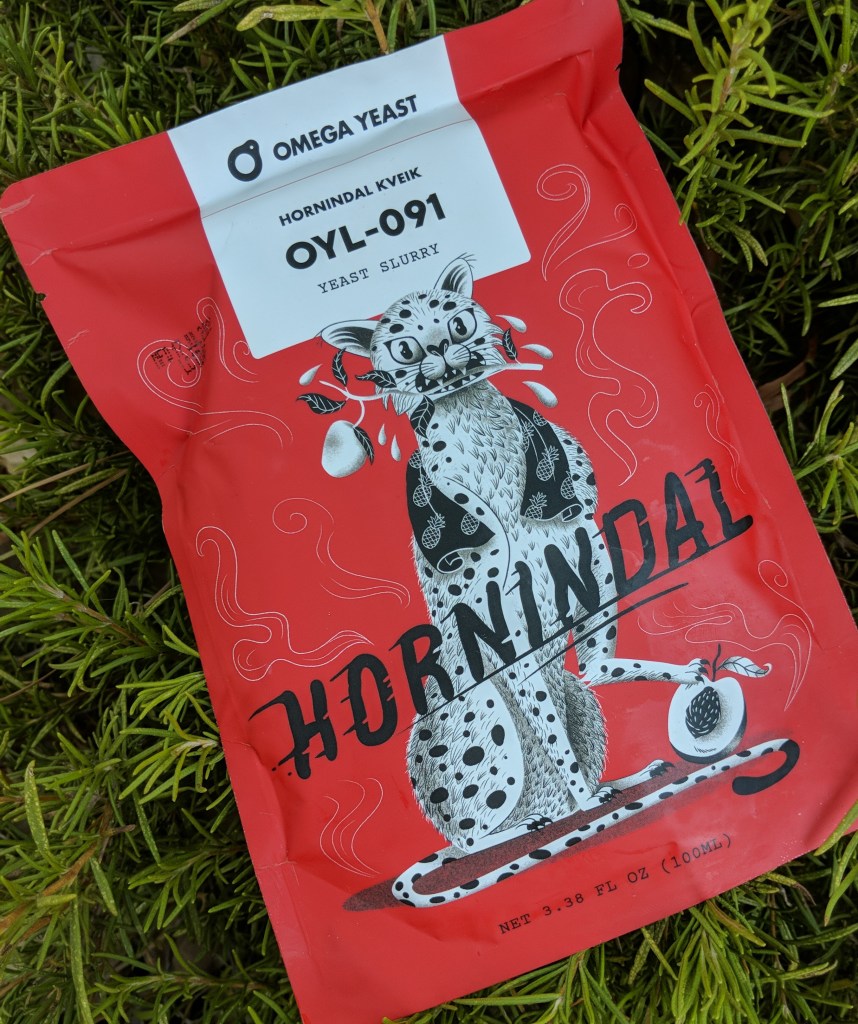
  • Last weekend (September 5), I took the leap and fermented a batch with kveik. This yeast culture of Norwegian origin has been all the rage lately, but I’ve been a bit hesitant to dip my toes into the water. Nearly all of the recipes I’ve found have been in the 7 to 10% range of abv, which just doesn’t interest me that much, at least in keg-sized quantities. Also, I have a love/hate relationship with many very “character-rich” yeasts (e.g., some Belgian strains). Eventually, I found a pale ale recipe that was ~5%, which I modified further for hops and gravity. In the end, I am making a session-strength American pale ale using experimental African hops. I brewed on 5 September 2020, right in the midst of a major heatwave. It was over 110° on brew day, so a natural fit for kveik. The yeast packet (an Omega Yeast strain, Hornendal) had a really intriguing citrus aroma–this bodes well! I pitched at 90°, and the blow-off tube showed slow activity within 8 hours, and it was vigorously bubbling along less than 18 hours later. Visible fermentation activity had ceased within about 5 days, and I pulled a sample yesterday. It seems to be dropping surprisingly clear already! The yeast character is less strong than I expected, too, with not much in the way of esters. I’ll probably keg it either this weekend or in the next few days.
  • I’ve got two lagers in progress at the moment, the German-style pilsner mentioned last time as well as a Vienna lager. The Vienna lager is a historical-type recipe, using strictly Vienna malt and Saaz hops. It will be a bit lighter than what is usually sold as Vienna lager, but I’m honestly okay with that. The German pilsner had around 18 days at fermentation temperatures around 54°, and the Vienna lager had about 10 days at those temperatures. I raised the fermenters to 60° over a multi-day period, with a 12 hour rest at 60° before cycling back down with ambient temperature drops of ~5° per day. Right now, they’re both sitting at around 33°, and will be kegged fairly soon.
red package of yeast from Omega Yeast, Hornindal Kveik strain, with cartoon of cat on front
Omega Yeast’s packaging is gorgeous!

What’s On Tap?

  • The session RyePA just went on tap (I finally kicked the amber ale keg!)…it had about two weeks of cold conditioning, and initial samples taste really good. If I didn’t know, I would have expected the beer was much richer than the 4.5% abv that it clocked in at. Expect a full tasting on this one soon.
  • My Berliner weisse is drinking really well on summer afternoons. I’ll be a bit sad when this keg is gone, but I think I’m also just as glad I don’t have five gallons of the stuff, no matter how tasty it is. A small 6 to 10 ounce pour is usually plenty for me or my wife at any one time, so we’re definitely savoring the beer as we go along. Perhaps it will become an annually brewed recipe!
  • The Munich helles has cleared up absolutely perfectly, and is such a delicious lager. Two weeks after my post on this, the beer is definitively brilliant in appearance. It really was worth the extra lagering time!

What’s Coming Up?

  • I’m….not sure what I want to do next. I should probably do an ale or something relatively quick turn-around before going back to a sequence of lagers. I’ll be looking through my recipe books to see what’s good! At the moment, I’m leaning towards a brown ale, but we’ll see.
  • I’ll be repitching the yeast from my German pils (WLP820) once the beer is kegged. I’m thinking a Munich malt-dominated lager, and/or a rebrew of Stygimoloch Bock.

Other Than Beer

  • I’ve been experimenting with some of the non-alcoholic spirits and mixers out there, to have flavorful alternatives for mixed drinks. Here are some quick reviews:
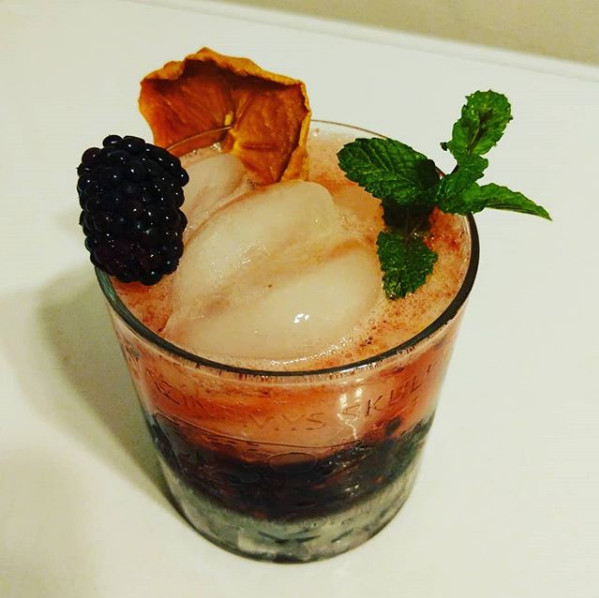
    • Monday Non-Alcoholic Gin is pricey, but one of the better ones I’ve tried. It’s not a perfect gin substitute, but it is interesting in many of recipes. I find it doesn’t work well in a martini, because it just seems a little thin (I used real vermouth in that attempt). Straight-up on ice, it gets watered down pretty quickly, too. But…as a G&T, it’s quite good (esp. with my homemade tonic), and it did well in a Bee Sting as well as a blackberry-balanced drink (see the picture below). So, the short assessment is that if you have other interesting ingredients, the Monday N-A gin does well; on its own it’s just not quite the same.
    • Ritual is one of the more affordable (i.e., cheaper) lines of non-alcoholic spirits, and also pretty variable.
      • The whiskey equivalent is…not terribly great. It’s just a little too cloying, and the wood flavor needs to be very carefully balanced to avoid too intense of a peat flavor. The consistency is almost (but not quite) syrupy, which is a bit disconcerting on the tongue.
      • The gin is the better of the ones I’ve sampled. Cucumber is the dominant note on this one, and like the Monday “gin” it really needs to be mixed with other stuff rather than enjoyed on its own. It makes for a nice variant on gin and tonic.
      • I have a bottle of the tequila substitute, but haven’t used it in any drinks yet. The taste and aroma are in the ballpark, I suppose.
  • My go-to mid-afternoon refresher is a bit of Amoretti craft puree in some carbonated water. I’ve got both the blood orange and peach flavors on hand right now…the blood orange one is my favorite of the two!
    • The cost per bottle of puree is somewhat pricey (~$29), but assuming you get about 90 12-oz. servings of sparkling water, it’s far cheaper than the flavored waters at the store. I figure it’s around 24 cents of ingredients per 12-oz. serving of flavored water made at home (12 cents puree, 12 cents carbonated water made by Soda Stream), versus between 37 and 72 cents to buy flavored sparkling water, depending on brand. So, it’s cheaper and generates far less waste!
Non-alcoholic gin mocktail, with a heavy dose of blackberries! It was really tasty.

What’s Brewing? August 2020 Edition

The past month has been a fun one for brewing, with some kettle souring experiments and a bit of kegging. Pacing hasn’t been too frantic, and I’ve had some enjoyable warm evenings to slowly savor a glass on the patio.

creamy white beer head, in a glass atop a pale yellow lager beer
Mow the Damn Lawn, Farke” — this beer pours beautifully!

Beer Batch Updates

  • On August 8, I brewed a session “ryePA”, aiming for a nice drinkable West Coast-style beer with a relatively traditional hop profile. The recipe is 77% Vienna malt, 15% rye malt, 5% crystal 40, and 3% crystal 60. Warrior and Chinook hops make up the bittering additions, with a late hop addition of whole cone Cascade and BRY-97 for the yeast. Once it is fermented out, I will be dry hopping with Amarillo, CTZ, and Cryo-Cascade. Brewing targets are for ~4.5% abv and ~45 IBU.
  • My Munich helles-style lager has been lagering for nearly a month now, and it’s super tasty. It clocks in at 5.2% abv, with a starting gravity of 1.047 and a final gravity of 1.008. I’m glad that I stacked up a few back-to-back lager brewing sessions, so that at least a few of them will get some proper lagering time before they go on tap. I expect this helles should have at least another week before I’ll have it on the main set of taps in the house.
  • For my first kettle souring project of the summer, I did a rebrew of my Raspberry Belgian sour. I’ve made it a few times in the past, and it’s one of my favorite recipes (and my wife’s too!). Because it’s so quick on turn-around, it was ready just as my one of my taps opened up. I soured the batch on 18 July, boiled and pitched the main Belgian wit yeast on 19 July, added the raspberry puree on 23 July, and then kegged on 1 August 2020. It went on tap on 8 August, so just under three weeks from grain to glass.
  • My second kettle sour of the month was a Berliner weisse-style beer. I did a small batch of ~3 gallons, using a 50/50 mix of 2-row malt and wheat malt. I kettle soured with Lallemand’s Wildbrew Sour Pitch, for a total of two days. I was a bit surprised that it didn’t become as puckeringly sour as I expected–a quick check of the fermented showed it at around a pH of 3.8. The sample I drew from the fermenter yesterday has an absolutely delightful floral and citrus aroma, and I think this will be a superb beer when I get it on tap. I soured starting on 24 July, and boiled/pitched the main yeast on 26 July 2020. This one got kegged on 13 August, with 3% abv.
  • My kolsch-style ale cycled on tap and got kicked over just a few weeks…we were drinking it pretty steadily, because it made such a nice beer at the end of a warm day, and I did some growler swaps with it too. I was really pleased with how the beer stayed super fresh and drinkable through the entire run of the keg, with no real signs of oxidation that I could detect. The aroma and flavor were just as great on Day 1 as they were on the final glass!
  • Last weekend, I brewed a German-style pilsner, with the hope that it will age for awhile before going on tap. I’m aiming to have it be in the <4.5% abv range, but we’ll see how it turns out overall!

What’s On Tap?

  • Raspberry Provincial 2020
    • As described at the linked post, this beer is everything I had hoped for–refreshing, nicely balanced raspberry aroma and flavor, beautiful purplish color, and spritzy carbonation.
  • Melange Amber Ale
    • This beer is good, but a bit on the heavy/sweet side for summertime. Someone suggested mixing it with another beer (maybe Mow the Damn Lawn?), and that seems like a fine idea.
  • Mow the Damn Lawn
    • I’ve been wanting to try this recipe for some time, and am pretty pleased with the results. I’ve done a few pilsner-style beers with 2-row now, and I’m continually interested to note that you can definitely taste the difference in malt character versus pilsner malt. 2-row is just a little richer and more “malty,” and can help jazz up the flavors on a beer that’s otherwise intended to be otherwise inoffensive.

What’s Coming Up?

  • Tomorrow I’m brewing some sort of lager. Not sure what yet. All I know is it will use W34/70, because that’s what I’ve got for dry yeast.

What’s Brewing? July 2020 Edition

After a flurry of brewing in June, I took a few weeks off to let some batches ferment, condition, and carbonate. My lagers are often a little rushed to the tap, so my hope is to build in more wiggle room in my schedule so that the beers get more time to…well, lager. Even so, the fermenters and kegs are pretty full right now!

Beer Batch Updates

  • I kegged my amber ale on 23 June 2020, after 10 days in the fermenter. As is usual for ales these days, I’m carbonating with corn sugar, and topping that off with a bit of CO2 from my cylinder. I ended up with 5.0% abv, pretty much exactly along calculations for his recipe! I threw the beer into the lagering chamber on 7 July 2020, after two weeks of carbonating at ambient temperature.
  • My kölsch-style ale is carbonating and conditioning. In this case, I’m force carbonating at 33°, to help keep the delicate flavors more intact (versus letting it sit at roughly room temperature to carbonate), and also to get a jump start on dropping out the yeast. I used K-97 on the batch, which experience shows tends to flocculate pretty slowly. This beer started at 1.048 and ended at 1.009, for 5.1% abv. Initial tastes are pretty good–it’s still super hazy, but the flavor is really nice.
  • I brewed a light (lite) American lager on 20 June 2020, the famous “Mow the Damn Lawn” recipe from Annie Johnson. It’s a wonderfully simple beer, with just 2-row and flaked rice, clocking in at 1.045 o.g. I repitched a jar of Que Bueno yeast (Imperial) from my Mexican-style lager, and the little yeasties took off! Even though I was fermenting at 49°, I got pretty steady bubbling out of the blowoff tube within 12 hours. I’m going to let this beer get a good long fermentation, and hopefully a good long conditioning phase.
  • A few days after my light lager (24 June), I set in for a Munich helles-style lager. I patterned the recipe after one from Gordon Strong, with a bulk of pilsner malt supplemented by light Munich and touches of Carahell and Carapils. I’m also hoping to have a long conditioning phase with this one.
  • For both of the above lagers, they ran at 50° from 24 June to 1 July. I let them free-rise to 54° on the evening of 1 July, up to 58° on 3 July, up to 60° on 4 July, and then started a slow drop to 55° on 5 July. I ratched it down to 50° on 6 July. Over the course of the day on 7 July, I dropped to 45° and then 40°. On 8 July, I dropped to 35°, before a final drop to 33° on 9 July 2020 (today).

What’s On Tap?

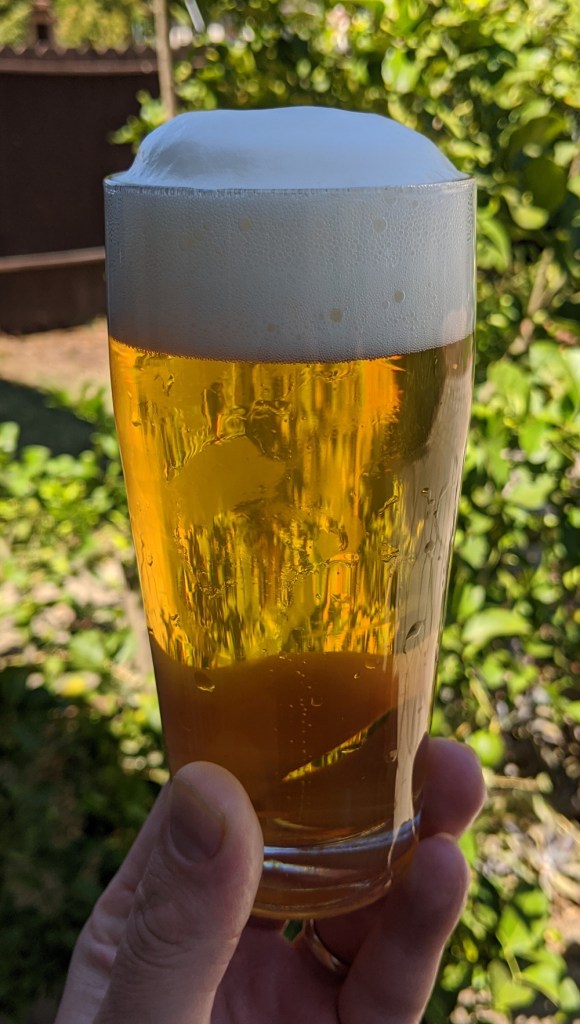
golden lager with frothy white head, held aloft in clear Willi Becher glass against green sunlit yard
Tremonia Lager, in a Willi Becher Glass
  • Adalatherium Pale Ale
    • I put this beer on tap just a few days before the June “What’s Brewing?” update, and now it’s really at peak drinkability, and pretty nice clarity too. As described in the tasting notes, the yeast/hop combo doesn’t quite work, but it’s not a dumper, either. How’s that for a ringing endorsement? It’s definitely gotten better as it sits in the keg.
  • Tremonia Lager
    • My first-ever Dortmunder Export is pretty delightful, and makes a nice pale lager for afternoon sipping. It continues to drink nicely, although I expect I’ll probably finish up the keg soon.
  • Alstadt Alt
    • After a month of kegging and conditioning, the beer is finally dropped clear. It’s super enjoyable!

What’s Coming Up?

  • I need/want to do another IPA soon, and am thinking about a session rye IPA (RyePA?). The idea is to do something in the classic northwest IPA tradition, with old-school citrus/piney hops.
  • It’s been years since I did a Berliner-weisse style beer, and with the warm summer months, there’s no better time. I’m going to give it a try sometime soon, probably with a smallish (3 gallon) batch and a yogurt-based culture.
  • Also along the lines of lightly soured beers, I plan to do the Raspberry Belgian.

Other Than Beer

  • I snagged some Willi Becher glasses, to upgrade my drinkware. I used to love my lonely single Willi Becher, but it broke. Searching online, it was easy to find these glasses in the 16 oz. and 20 oz. sizes, but I honestly don’t want (or need) to pour that amount of beer most of the time! I settled on 0.375 L / ~12 oz. glasses, but wow, they were hard to find at a decent price. I eventually got success, and am really happy with them (see the above photo). In a good slow pour, the head piles up so nicely!