Old Speckled Hen Homage

As a semi-mass-market English ale, Old Speckled Hen is one of my favorites. I think it’s mainly due to the name and associated nostalgia of my early days of better beer exploration, but in any case it’s something I come back to from time to time. A decade ago, I attempted a clone, which turned out okay but not great. This beer has been kicking around in my head ever since, and I even buy a bottle (or can) from time to time. It’s a legitimately enjoyable beer! Given that continued fascination, it was time for another attempt.
My new version is based on two recipes posted online, somewhat different from the previous template I used. The current edition leans into a more complex malt bill, reducing the previous substantial addition of crystal 120 and adding a major addition of crystal 40. I also used this as a chance to try out a dry version of WLP066 (London Fog Ale Yeast), which seemed to target much of what I was looking for in yeast character. A constant is the use of Maris Otter as the base malt, along with Lyle’s Golden Syrup to provide another flavorful fermentable.

Old Speckled Hen Homage

  • 9.5 lb. Maris Otter pale ale malt (Thomas Fawcett)
  • 1 lb. crystal 40 malt (Great Western)
  • 3 oz. caramel 120 malt (Briess)
  • 11.4 oz. Lyle’s Golden Syrup (added to boil)
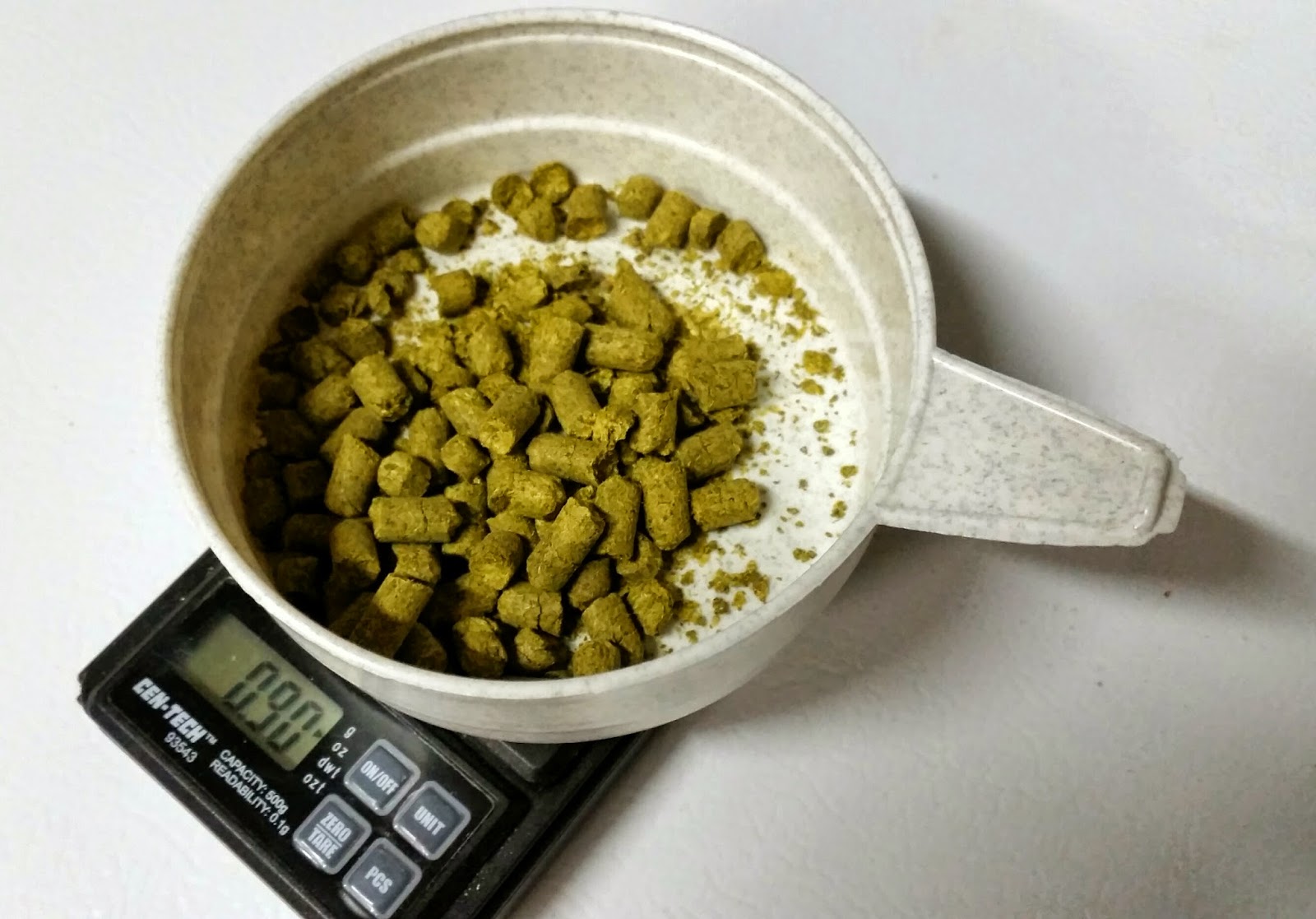
  • 1 oz. Challenger hop pellets (5.6% alpha), 60 minute boil
  • 1 oz. East Kent Goldings hop pellets (5.4% alpha), 20 minute boil
  • 1 Whirlfloc tablet, 5 minute boil
  • 1 oz. East Kent Goldings hop pellets (5.4% alpha), 5 minute boil
  • 1 pkg. London Fog ale dry yeast (WLP066)

Target Parameters

  • 1.054 s.g., 1.013 f.g., 35 IBU, 10 SRM, 5.3% abv
  • Full volume mash with 60 minutes at 156° and 10 minutes at 168°; 60 minute boil
  • Claremont tap water, with Campden tablet added

Procedure

  • I heated 7.35 gallons of water to 162°, adding a Campden tablet to remove chloramines. I added the grains with 5.5 mL of 88% lactic acid, and let them mash at 156° for 60 minutes. Next, I raised the mash temperature to 168° for 10 minutes and then pulled the grains.
  • In total, I collected 6.25 gallons of runnings with a gravity of 1.046, for 73% mash efficiency.
  • I brought the mash to a boil, adding hops and finings per the recipe. After a 60 minute boil, I turned off the heat and chilled to 70° before transferring to the fermenter.
  • I brewed this beer on 24 December 2025. Starting gravity was 1.052; I am fermenting at ambient, around 65°.
  • I kegged the beer on 7 February 2025, adding 2.5 oz. of corn sugar to the keg dissolved in 0.5 cup of boiling water.
  • I let the keg sit for around 2 weeks before chilling down to ~35° until a free space opened up on my keezer.
  • Final gravity was fairly high, at 1.019, for 4.4% abv.

Tasting

  • Appearance
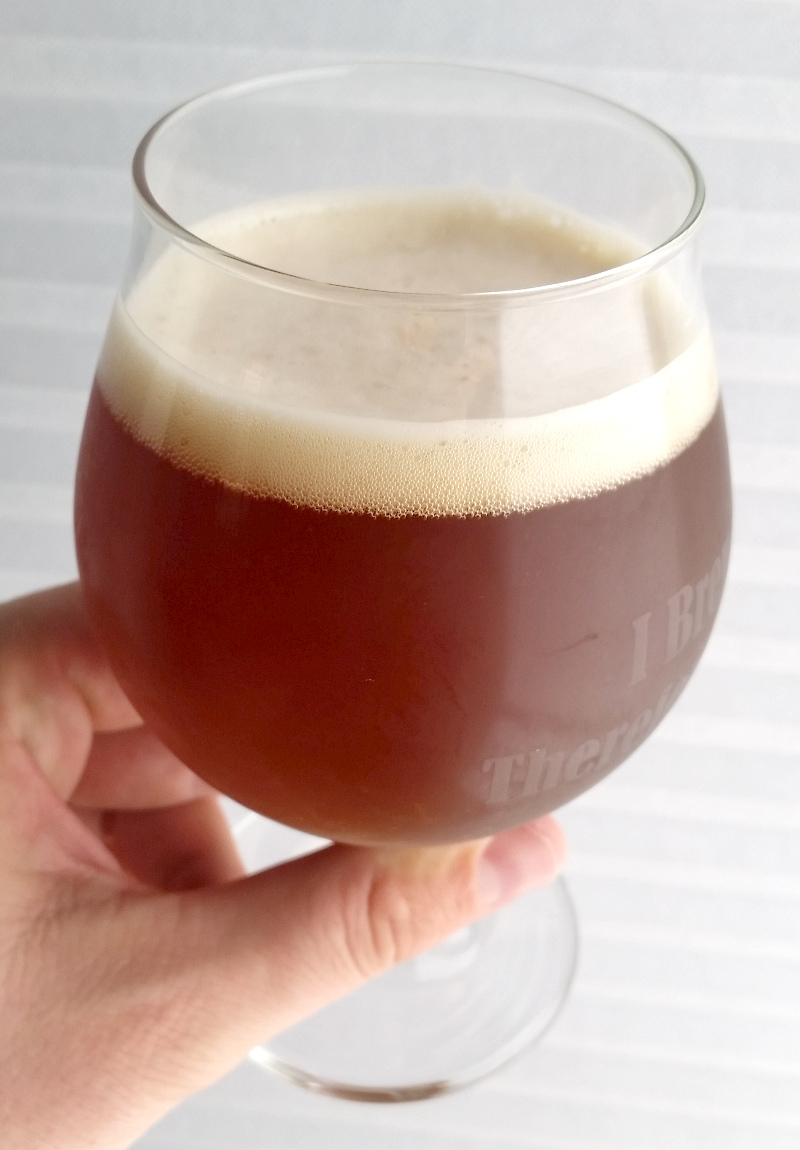
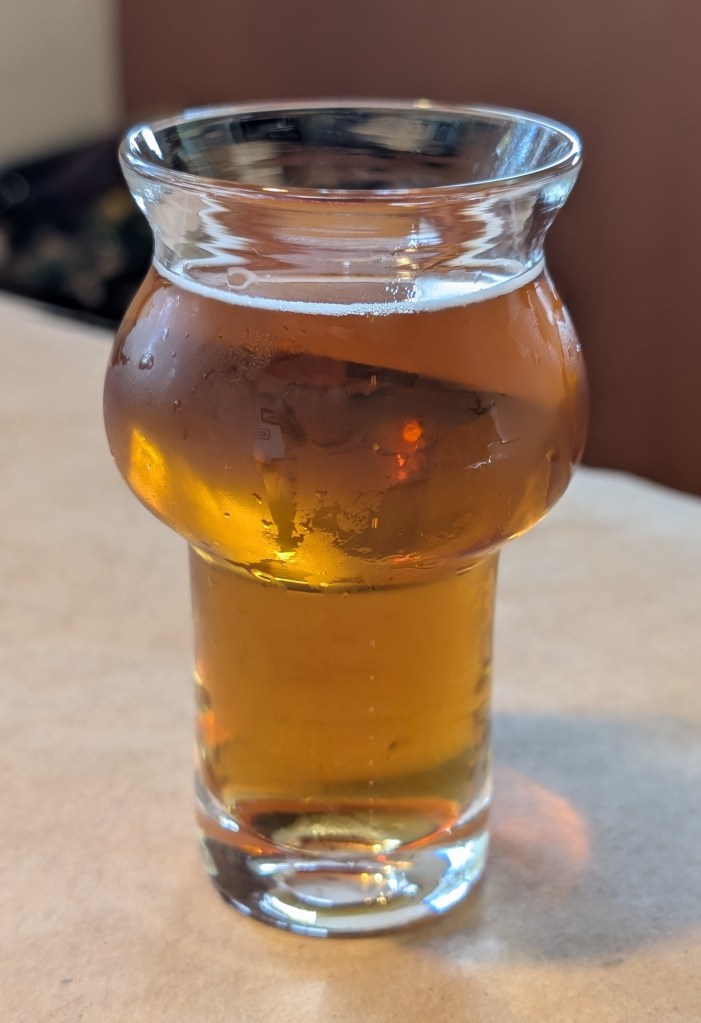
    • A very clear, light amber beer, which pours with a thin ivory head that quickly subsides. It’s a bit lighter in color than the original inspiration.
  • Aroma
    • Caramel notes are most prominent, with a little bit of candy, and a touch of light fruitiness behind that.
  • Flavor
    • Caramel and malty notes are at a moderate level. Medium-high bitterness. The hops, especially in initial tastes, have a woody and moderately herbal quality, in addition to a touch of earthiness. I don’t particularly care for the herbal notes here. I’m guessing they are coming from the hops; it doesn’t match EKG, so perhaps the Challenger is the culprit?
  • Mouthfeel
    • Moderate carbonation, medium body, smooth and slightly dry finish.
  • Would I Brew This Again?
    • This is definitely closer to what I want for an Old Speckled Hen clone, but the hops need a rework. I would probably ditch the Challenger and lean in on EKG entirely, or find another hop to sub in. The herbal notes I get here are more than I care for, but not something that totally wrecks the beer; it’s just not to my personal taste. It might be something with this lot of EKG (if that’s the true culprit), because I didn’t have that concern previously. The malt and yeast all do well, although I might go 50/50 on the crystal 40 and crystal 120 in order to round out the malt profile and deepen the color. I love the gentle fruitiness on the yeast and also how it dropped so clear. This is a very pretty beer!
  • Overall
    • 6/10

Beer Tasting: Old Speckled Hen Clone

After a month of keg conditioning, it’s time to do a taste test of my Old Speckled Hen clone attempt!

Old Speckled Hen Clone

  • Basics
    • Starting gravity = 1.055; final gravity = 1.011; abv = 5.8%; estimated IBU = 37
  • Appearance
    • The beer is a rich amber color with orangish hints; a modest bit of chill haze. Head is low, creamy and ivory-colored; fairly persistent.
  • Aroma
    • Light caramel notes, with a bit of maltiness at the core.
  • Flavor
    • Lightly malty, with a lingering bitterness on the finish. Very hop-centered. Unfortunately, I think the bitterness overrides the maltiness more than I like. This becomes a better beer as it warms up a bit, though.
  • Mouthfeel
    • In the mouth, the carbonation has an almost creamy effect that is quite nice. The overall body, though, is moderately thin and a bit thinner than I prefer in this type of beer.
  • Would I brew this again?
    • In it current incarnation, probably not. The aroma is delightful, but the bitterness:body ratio is just a too high for my preference. I attribute this primarily to the fairly low mash temperature called for in the recipe, as well as use of the highly attenuative Nottingham yeast strain. If I were to do this again, I would mash higher (maybe 156°), use a different yeast strain (perhaps WLP002), and cut back the bittering addition just a touch. As it is, the current iteration just doesn’t hit the round, malty notes that the original OSH does.
  • Overall rating
    • 4/10
Note (19 July 2015): After a few more weeks in the keg, this is a much better beer. The bitterness has rounded out quite a bit, and more balanced relative to the maltiness. So, I would up it to 6/10; brew again, with modifications to the mash temperature and a longer conditioning time (probably 6 or 7 weeks).

Brewing Update: Old Speckled Hen Clone and Red Oak Ale

Red Oak Ale sample

Tonight I transferred the Old Speckled Hen Clone and the Red Oak Ale (right) out of their respective primary fermenters and into their kegs. Visible fermentation had long since ceased for both.

Old Speckled Hen Clone
This beer had been in the primary fermenter for 10 days, with a reasonably vigorous fermentation. The Nottingham dry ale yeast was a little slow to start relative to the liquid yeasts I’ve been using lately, and didn’t display signs of active fermentation until nearly 24 hours after pitching.

This beer had fermented down to 1.011, and is still a little hazy. I’m expecting that should settle out as the beer chills. The beer has a nice toffee color, and was a little more bitter than I expected. I think it is mainly because I had memories of a much more malt-forward beer; I expect this will come back to the fore as the beer conditions and the yeast continues to drop out. The distinct hops flavor is also probably due to the “spicier” English hops (where I usually have been using American hops in my other beers–I had forgotten how big the difference was!). Starting gravity was 1.055, which works out to 5.8% abv.

The kegged beer (~4.5 gallons) went directly into the keezer, where it is force carbonating under 13.5 psi at 42°.

Red Oak Ale
This beer showed vigorous fermentation within 9 hours of pitching the yeast. I agitated the beer a bit after 3 days (and once or twice more after that), following notes from yeast reviewers that the WLP041 strain tended to slow or stall out if left alone. I figured this was a good idea given the relatively high starting gravity, too (1.070).

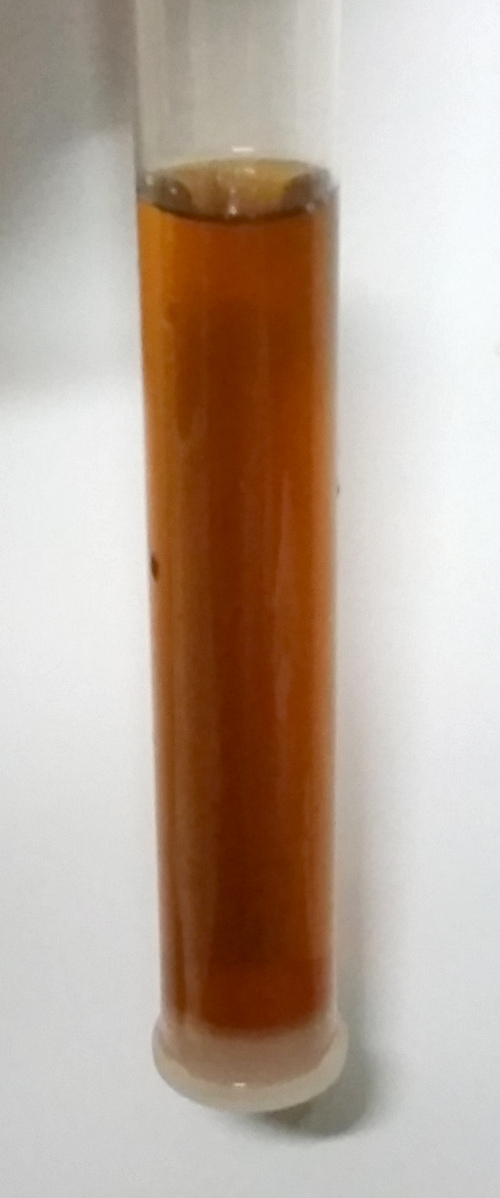
The beer had fermented down to 1.015 over the past 18 days, with a gorgeously clear burn umber color (see above picture). This works out to 7.3% abv, one of the “bigger” beers I’ve done in some time. So far, I’m pretty happy with how it is turning out.

Before sealing up the keg, I added a mesh bag with 2 oz. of Willamette hops pellets for dry hopping. They’ll stay in for ~14 days (or maybe even permanently). Tomorrow, I’ll add 2 oz. of French oak chips (medium toast), boiled in water and contained in a mesh sack. Those will stay in for just a week before being pulled. I’m leaving the keg at room temperature for at least the next week.

Old Speckled Hen Clone

Time for another new recipe. One of my favorite English beers readily available in the USA is Old Speckled Hen, an ale that falls somewhere in the English Pale Ale / Extra Special Bitter style. A quick internet search turned up this recipe at BIABrewer.info (also available on the BeerSmith recipe cloud). BIABrewer user hashie posted the recipe, so it has their name at the helm. The original recipe was developed for the brew-in-a-bag technique, so I had to modify the grain bill slightly for my own batch sparge setup.

Hashie’s Old Speckled Hen
  • 8.25 lbs. Maris Otter pale malt
  • 1 lb. 120° crystal malt
  • 0.90 oz. U.S. Northern Brewer hops pellets (9.9% alpha, 4.6% beta), 60 minute boil
  • 0.50 oz. U.K. Goldings (4.8% alpha), 15 minute boil
  • 0.5 oz. U.K. Goldings (4.8% alpha), 5 minute boil
  • 0.75 lb. Lyle’s golden syrup, 5 minute boil
  • 1 tsp. Irish moss, 10 minute boil
  • 1 pkg. Nottingham yeast (Danstar)
Procedure
  • I mashed in with 3 gallons of water at 164°, hitting 151.4° for the mash start. The mash temperature was at 148.5° after 35 minutes and 146° after 60 minutes. 
  • I added 1.3 gallons of water at 180°, which raised the mash bed to 151°. I let this sit for 10 minutes, vorlaufed, and collected 2.75 gallons of wort.
  • Next, I added 3.25 gallons of water at 185°, which raised the mash bed temperature to 168°. I let this sit for 10 minutes, vorlaufed, and collected the rest of the wort.
  • In total, I collected 6.2 gallons of wort with a gravity of 1.043. This works out to ~69% efficiency. It’s a little less than my best brews (~75%), so I wonder if that’s because I didn’t use 5.2 pH stabilizer on this batch.
  • I brought the wort to a boil and added the Northern Brewer hops.
  • After 45 minutes, I added the first dose of Goldings. After 50 minutes, I added the Irish moss. After 55 minutes, I added the second dose of Goldings and the golden syrup. The syrup has a really nice toffee note to it–I am interested to see how that will translate into the overall beer.
  • After 60 minutes, I turned off the flame and chilled the wort down to ~78°.
  • I transferred ~4.9 gallons of wort into the fermenter, with a starting gravity of 1.055.
  • After pitching the yeast, I sealed everything up and put it in the fermentation chamber. Temperature is set for 66°.