Denny Kong-ish West Coast IPA

I made my first version of this new-style West Coast IPA last year, and learned some lessons about hopping techniques in the process. During that previous batch, I used a hop bag that was too small for the dry hopping addition, and as a result the hop flavor/aroma were pretty underwhelming. This time around, I opted to let the hops float free in the fermenter. I use a BrewBucket 7.5, which has a rotating pickup arm, so I could do a closed transfer into the keg without excessive hop particles clogging things. The hop choices on this version used up some of my hop stash–three-quarters of a pound of hops went into the final recipe!

Denny Kongish West Coast IPA

  • 12 lb. 5 oz. pilsner malt (Rahr)
  • 1 lb. Vienna malt (Weyermann)
  • 0.5 tsp. BrewTanB, added to mash
  • 4 oz. dextrose, added to boil
  • 0.85 oz. Enigma hop pellets (17.9% alpha), 60 minute boil
  • 0.5 tsp. BrewTanB, 10 minute boil
  • 1 Whirlfloc tablet, 5 minute boil
  • 2 oz. LUPMOMAX Cashmere hop pellets (13.5% alpha), 30 minute whirlpool
  • 1 pkg. California ale dry yeast (WLP001, White Labs)
  • 4 oz. Idaho #7 hop hash (31.4% alpha), dry hop in primary fermenter
  • 2 oz. Azacca hop pellets (12.2% alpha), dry hop in primary fermenter
  • 2 oz. LUPOMAX Sabro HBC 438 hop pellets (19.0% alpha), dry hop in primary fermenter
  • 1.15 oz. Enigma hop pellets (17.9% alpha), dry hop in primary fermenter

Target Parameters

  • 1.063 s.g., 1.010 f.g., 7.0% abv, 64 IBU, 5 SRM
  • Full volume infusion mash, held at 149° for 120 minutes and 168° for 10 minutes
  • Neutralized Claremont tap water with Campden tablet, RO water, and mineral salts added to mash to achieve 51 ppm Ca, 8 ppm Mg, 33 ppm Na, 104 ppm SO4, 53 ppm Cl, 8 ppm CO3.

Procedure

  • Starting with 3 gallons of tap water, I added 2.5 mL of 88% lactic acid as well as a Campden tablet, along with 5 gallons of RO water, 0.75 CaCl, 1.5 g epsom salt, and 3.5 g gypsum to hit the target water parameters.
  • I heated the water to 155° and added the grains, along with 17.2 mL of 10% phosphoric acid for pH adjustment, to hit an estimated pH of 5.35.
  • I held the mash at 149° for 120 minutes, with recirculation, and then raised the mash to 168° for 10 minutes before pulling the grains.
  • In total, I collected 6.9 gallons of runnings with a gravity of 1.050, for 69% mash efficiency.
  • I brought the runnings to a boil, with a 90 minute total boil. After 30 minutes, I added the first round of hops, and then proceeded following the recipe.
  • After the 90 minute boil, I chilled to 170° before adding the whirlpool hops and letting them sit for 30 minutes while whirlpooling.
  • Next, I chilled to 68°, transferred to the fermenter, and chilled down to 64° before pitching the yeast.
  • I brewed the beer on 1 January 2025, and it had a starting gravity of 1.066.
  • I added the dry hops on 11 January 2025, loose into the fermenter.
  • I cold crashed the beer on 15 January 2025.
  • I kegged the beer on 18 January 2025, into a CO2 purged keg. Final gravity was 1.007–that’s wonderfully dry and works out to 7.8% abv. I had a similar experience last batch, so this mash regime works wonders!

Tasting

  • Appearance
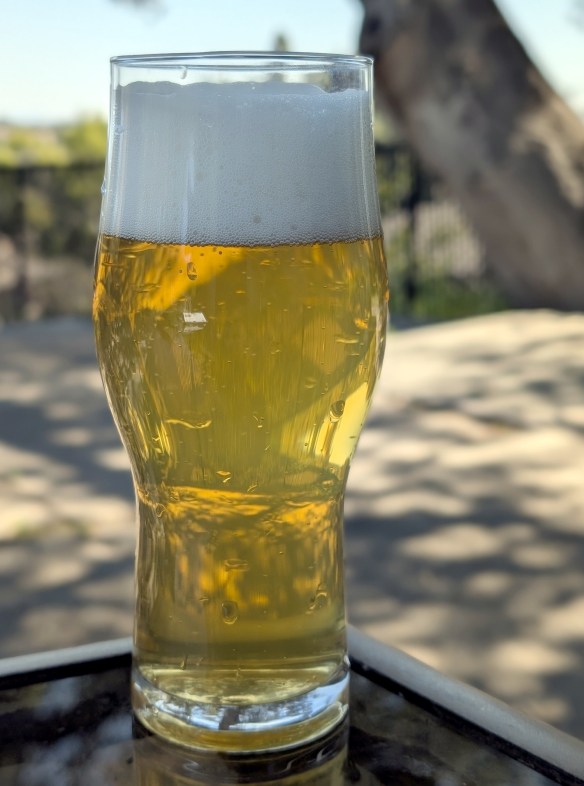
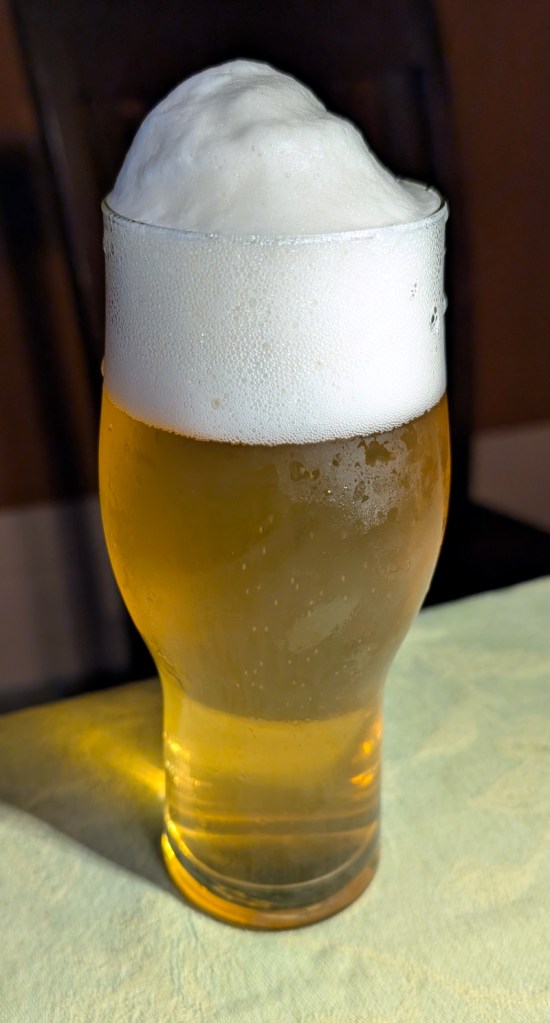
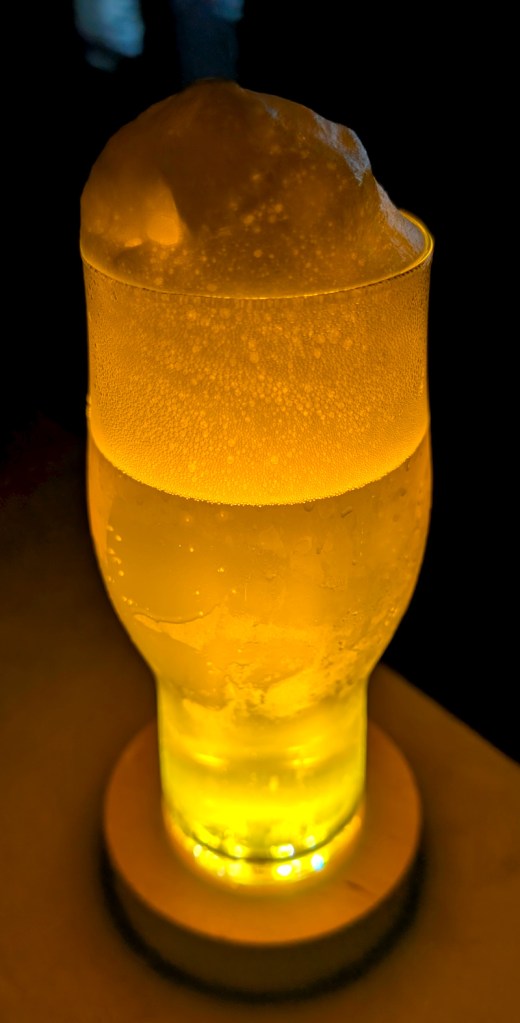
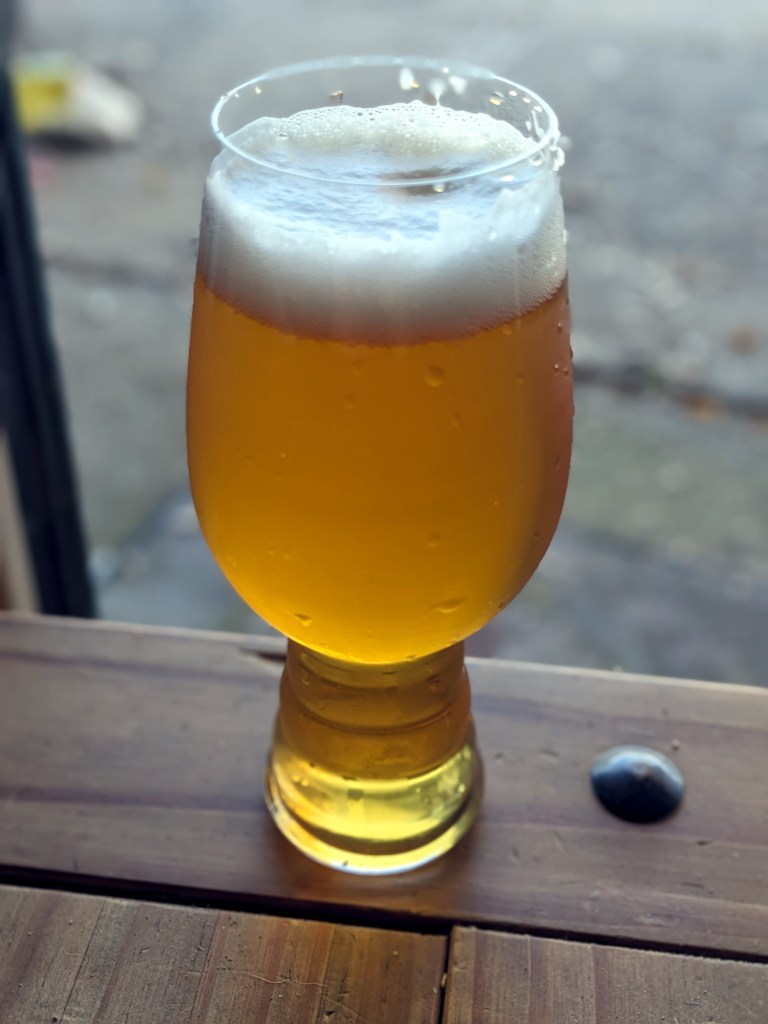
    • Light gold beer, slight haze, which pours with an exceptionally persistent and creamy white head–it’s like a meringue! This head leaves beautiful lacing down the side of the glass. The beer is surprisingly clear. As a result, I am feeling good about my decision not to use post-fermentation finings; this likely helped with oxidation reduction.
  • Aroma
    • Citrus and dank hop aroma at a high level, neutral yeast profile, and no malt character to speak of in the aroma.
  • Flavor
    • Very bitter, citrus pith and dank hop character, with a bit of grapefruit along the way, and a long-lingering hop aftertaste. The hop flavor is a bit one-note; it has the usual issue with Azacca to my tastebuds, which is an orange pith quality on the edge of rotten orange. I’ve never understood the appeal of that hop! Low level of maltiness, but it is there. Clean fermentation character.
  • Mouthfeel
    • Medium-high carbonation, medium-light body, very dry finish.
  • Overall
    • 7.5/10
  • Would I Brew This Again?
    • I really like this recipe as a template for a double IPA; it is a clean background to let the hops shine. This is the first time in awhile that I have let the hops float free for dry hopping, and with the Brew Bucket’s rotating pickup arm, things worked well. Thanks to the closed transfer (and perhaps the BrewTanB?), the hop character has held up well. The beer is clear enough without finings, so I think there is no need to use Biofine Clear as the original recipe stipulates. Azacca, as usual for my experience, gives a harshness in the citrus note that I don’t care for. This formulation is a bit one-note on the hops. But, it’s okay overall! In a beer like this, a different hop combo would be the ticket to hoppiness.
      • Interesting note: when I tasted this again last night, after a rauchbier, I got more tropical notes, and the unpleasant orange wasn’t as apparent. I would rate the beer higher in that case – perhaps a 8.5/10.

Denny Kongish West Coast IPA

Last fall, I managed to snag a can of the Denny Kong West Coast IPA, which was brewed by North Park Beer Co. for the 2023 Homebrew Con in San Diego. It was an incredibly delicious beer, and because the recipe is readily available, I thought it would be worth a try!

The malts parallel the original reasonably well, but I made some adjustments for my hop stash and also made an adjustment to the yeast. It should be in the general ballpark, but as Denny Conn would say, my version is an homage and not a clone. The main innovations I applied here were the long mash rest and the massive dose of hops.

Denny Kongish West Coast IPA

  • 12 lb. pilsner malt (Rahr)
  • 1.25 lb. Vienna malt (Weyermann)
  • 0.5 tsp. BrewTanB, added to mash
  • 4 oz. dextrose, added to boil
  • 1.3 oz. Magnum hop pellets (12.6% alpha), 60 minute boil
  • 0.5 tsp. BrewTanB, 10 minute boil
  • 1 Whirlfloc tablet, 5 minute boil
  • 2.8 oz. Cascade hop pellets (7.5% alpha), 30 minute whirlpool
  • 1 pkg. California ale dry yeast (WLP001, White Labs)
  • 2 oz. Eclipse hop pellets (17.6% alpha), dry hop in primary fermenter for 3 days
  • 2 oz. Idaho #7 hop pellets (14.0% alpha), dry hop in primary fermenter for 3 days
  • 2 oz. LUPOMAX Azacca hop pellets (16.0% alpha), dry hop in primary fermenter for 3 days
  • 2 oz. LUPOMAX Citra hop pellets (18.5% alpha), dry hop in primary fermenter for 3 days
  • 2 tbs. (30 mL) Biofine Clear, added to keg
  • 2 oz. Nelson Sauvin hop pellets (12.9% alpha), dry hop in keg

Target Parameters

  • 1.063 s.g., 1.010 f.g., 6.9% abv, 65 IBU, 5 SRM
  • Full volume infusion mash, held at 149° for 120 minutes and 168° for 10 minutes
  • Neutralized Claremont tap water with Campden tablet, and mineral salts added to boil to achieve 55 ppm Ca, 12 ppm Mg, 54 ppm Na, 106 ppm SO4, 60 ppm Cl, 10 ppm CaCO3, RA=-38, alkalinity=8 ppm

Procedure

  • Starting with 7.9 gallons of tap water, I added 5.6 mL of 88% lactic acid as well as a Campden tablet, followed by 3 g of CaCl.
  • I heated the water to 155° and added the grains, along with 2.9 mL of 88% lactic acid for pH adjustment.
  • I held the mash at 149° for 120 minutes, with recirculation, and then raised the mash to 168° for 10 minutes, before pulling the grains.
  • In total, I collected 6.9 gallons of runnings with a gravity of 1.046, for 65% mash efficiency.
  • I brought the runnings to a boil, for a 90 minute total boil. After 30 minutes, I added the first round of hops, and then proceeded following the recipe.
  • After the 90 minute boil, I chilled to 170° before adding the whirlpool hops and letting them sit for 30 minutes.
  • Next, I chilled to 70°, transferred to the fermenter, and chilled down to 63° before pitching the yeast.
  • I brewed the beer on 2 March 2024, and it had a starting gravity of 1.062–nearly exactly on target!
  • I added the dry hops on 10 March 2024, in a boiled (sterilized) hop bag. It was a bit tight for the volume of hops, so I was a bit concerned about how much hop contact I would get.
  • I kegged the beer on 26 March 2024, into a CO2 purged keg. Final gravity was 1.007–that’s quite low, and results in a 7.4% abv! The 120 minute, 149° mash really did the trick for drying things out. Hop flavor and aroma were a bit lower than expected, probably because of the thick concentration of hops in the bag.
  • Once the beer was down to around 34°, I quickly added the Biofine Clear, and then re-cycled the CO2.
  • I put the beer on tap on March 30.
  • Because hop aroma was underwhelming, I added 2 oz. of Nelson Sauvin hops to the keg (in a baggie) on 12 April 2024.

Tasting

  • Appearance
    • Light gold color, slight haze. Pours w/ a thick and persistent off-white head that leaves beautiful lacing on the glass.
  • Aroma
    • Light citrus aroma, a hint of white wine (presumably from Nelson Sauvin hops).
  • Flavor
    • High level of citrus-pith bitterness. Clean, light malty character behind that.
  • Mouthfeel
    • Moderate carbonation, medium-light body, dry finish.
  • Would I Brew This Again?
    • Yes, but with different hop handling. I am underwhelmed by the hop aroma and flavor, especially relative to the commercial version I tried. It was dumb of me to use such a tightly packed hop bag! The hops just didn’t shine like they should. I would definitely try a variation in the future, though. I love the dryness on this, but it might be too much for some. The low temperature, extended mash really did the trick! The BioFine also worked its magic, resulting in a fairly clear beer. Other than aroma, though this is a nice American IPA!
  • Overall
    • 7/10

Note: I tasted this again on 25 April 2024, after nearly two weeks with the extra hops. It definitely helped the beer! Although the appearance is now a bit hazier, the aroma has a fantastic tropical fruit profile (kiwi, guava, a bit of sweet white wine, and more). The flavor is perhaps a bit harsher now (I suspect due to the hops in the keg), but it also has a more prominent tropical aspect overall. Not a bad end result!