Stygimoloch Bock 2025

One of my favorite recipes has been Stygimoloch Bock, which looms large in my mind for its rich maltiness and drinkability. Somewhat surprisingly, then, my records show that I brewed this only twice before, in 2019 and 2020. Time for another batch!

The recipe is pretty well locked in, so I made only the smallest of adjustments. I swapped out the Caramel Munich 60L by Briess for CaraMunich by Weyermann, to get a 100% German malt bill. I also used Perle for the bittering hops (versus Magnum or Mt. Hood in previous versions) and swapped in Diamond lager yeast. So, I suppose that means it’s a very different recipe in some ways across versions, but the malt is the core here, and the proportions on that are fairly unchanged.

Stygimoloch Bock 2025

  • 9 lbs. Munich II malt (Weyermann)
  • 5 lbs. Munich I malt (Weyermann)
  • 8 oz. CaraMunich II (Weyermann)
  • 4 oz. melanoidin malt (Weyermann)
  • 1 oz. Carfa Special III malt (Weyermann)
  • 0.5 tsp. BrewTanB, added to mash
  • 1.15 oz. Perle hop pellets (6.3% alpha), 60 minute boil
  • 0.5 tsp. BrewTanB, 10 minute boil
  • 1 Whirlfloc tablet, 5 minute boil
  • 3 pkg. Diamond lager dry yeast (Lallemand)

Target Parameters

  • 60 minute infusion mash, 152°, full volume mash
  • 1.068 o.g., 1.017 f.g., 6.8% abv, 23 IBU, 16 SRM
  • Claremont tap water, with carbonates knocked back by addition of 6.5 mL 88% lactic acid, to hit target parameters of 44 ppm Ca, 8 ppm Mg, 89 ppm Na, 50 ppm sulfate, 110 ppm Cl, 20 ppm bicarbonate.

Procedure

  • I neutralized the carbonates in the tap water with 6.5 mL of 88% lactic acid in 7.65 gallons of water, along with a half of a Campden tablet to take care of chloramines.
  • I heated the water to 159° and added the grains, holding at a mash temperature of 152° for 60 minutes, with recirculation.
  • After 60 minutes, I raised the mash to 168°, held it there for 10 minutes, and then removed the grains.
  • In total, I collected 6.4 gallons of runnings with a gravity of 1.055, for 64% mash efficiency.
  • In order to raise the gravity a bit, I brought the runnings to a boil and boiled hard for 15 minutes before adding the hops.
  • Once the hops were added, I proceeded with 60 more minutes of the boil, adding finings per the recipe.
  • After boiling for a total of 75 minutes, I turned off the heat, and chilled down to 72° before transferring into the fermenter and cooling down to 50°. It took around 3 hours before I pitched the yeast.
  • I brewed this beer on 18 January 2025. Starting gravity was 1.067.
  • Starting fermentation temperature was 50°; I raised it to 51° on 21 January, and then to 60° on 10 February 2025. I cold crashed to 34° on 13 February 2025.
  • I pulled the beer to room temperature on 17 February 2025 to make room in the fermentation chamber, and then kegged it on 18 February 2025, with a non-closed transfer.
  • Final gravity was 1.020, for 6.3% abv.
  • I cold conditioned the beer until 26 March 2025, when I put it on tap. The beer was brilliantly clear at this point.
Tasting

  • Appearance
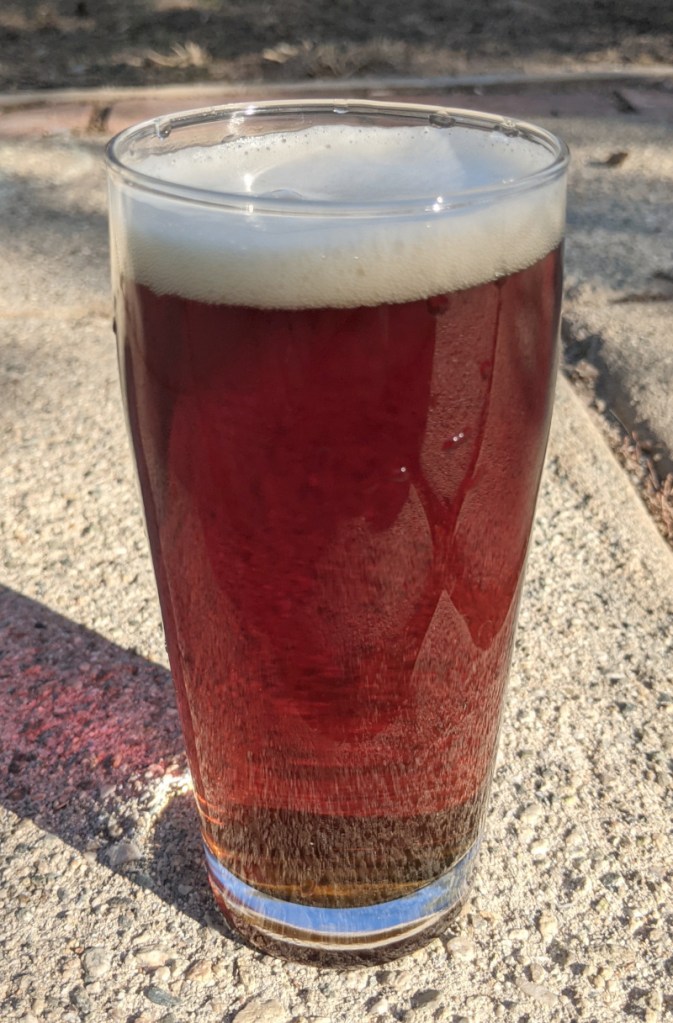
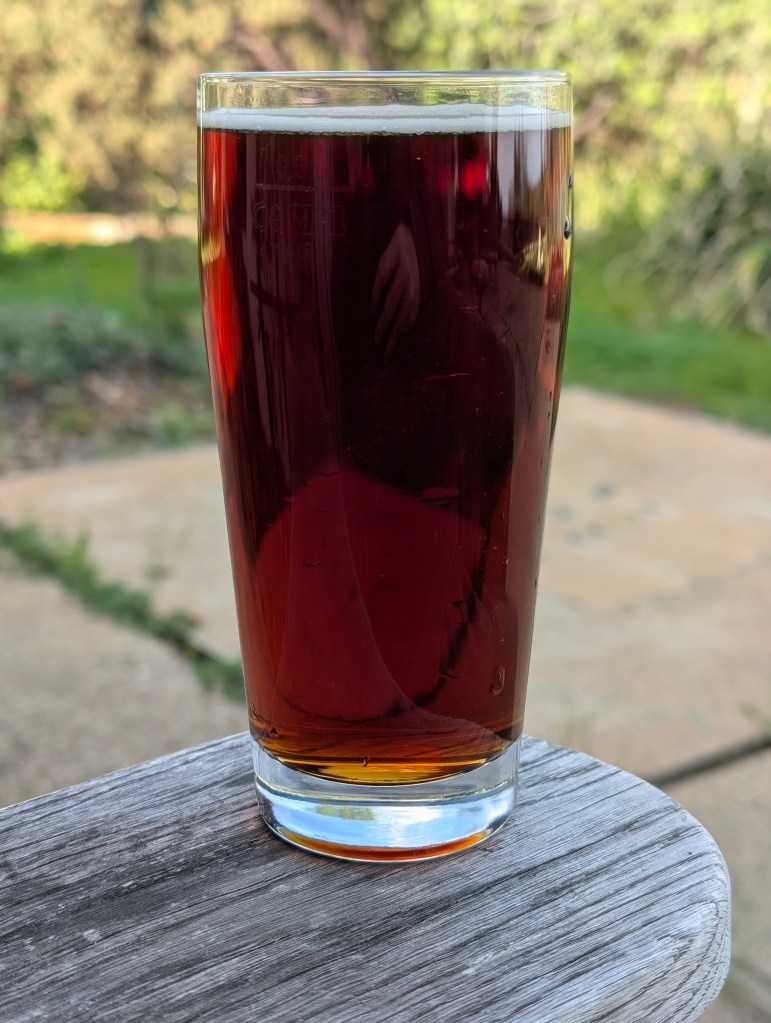
    • Brilliantly clear, deep amber beer, which pours with an ivory head of moderate persistence. It’s simply gorgeous!
  • Aroma
    • Toasty dark bread crust and dark fruit aroma in addition to rich maltiness. Clean yeast profile, hops perceptible.
  • Flavor
    • Rich maltiness with bread crust quality alongside that. Moderate bitterness, but the malt is definitely the center of attention.
  • Mouthfeel
    • Medium-full body, moderate carbonation, smooth finish, with only a slight lingering bitterness. Slightly dry, but not cloying.
  • Would I Brew This Again?
    • This recipe is a winner! It’s a perfect beer to close out the winter months and welcome cool spring afternoons and evenings. I wouldn’t change a thing about it at this point.
  • Overall
    • 10/10

Stygimoloch Bock 2020

Although we weren’t getting together with friends and family for Thanksgiving this year, I still wanted to do a rebrew of my Stygimoloch Bock. For this edition, the malt bill is identical, although I swapped in Mt. Hood for Magnum hops and used the Octoberfest/Marzen lager yeast (WLP820) instead of a Bavarian lager yeast. Last year’s version turned out pretty great, and this iteration did also. The recipe is a keeper!

Logo by Charon Henning

Stygimoloch Bock 2020

  • 9 lbs. Munich II malt (Weyermann)
  • 5 lbs. Munich I malt (Weyermann)
  • 8 oz. Caramel Munich 60L (Briess)
  • 4 oz. melanoidin malt (Weyermann)
  • 1 oz. Carfa Special III malt (Weyermann)
  • 1.75 oz. Mt. Hood hop pellets (4.6% alpha), 60 minute boil
  • 1 Whirlfloc tablet, 10 minute boil
  • 1 tsp. Fermax yeast nutrient, 10 minute boil
  • 1 pkg. Octoberfest/Marzen Lager yeast WLP820 (White Labs), repitched from Dog Days Pilsner

Target Parameters

  • 60 minute infusion mash, 153°, batch sparge
  • 1.070 o.g., 1.021 f.g., 6.5% abv, 23 IBU, 15 SRM
  • Claremont tap water, with carbonates knocked back by addition of 4.2 mL 88% lactic acid

Procedure

  • I neutralized the carbonates in the tap water with ~4.2 mL of 88% lactic acid in 5 gallons of water, along with a quarter of a Campden tablet to take care of chloramines.
  • I mashed in with 5 gallons of Claremont tap water at 162°, to hit a 153° mash temperature.
  • After 60 minutes, I added 0.5 gallons of water at 185°. I let it sit for 10 minutes, vorlaufed, and collected first runnings.
  • I next added 3.75 gallons of water at 185°, let sit for another 10 minutes, vorlaufed, and collected the second runnings.
  • In total, I collected 7.1 gallons of runnings with a gravity of 1.055, for 71% mash efficiency.
  • In order to raise the gravity slightly, I boiled for 15 minutes before adding the first round of hops. I then boiled another 60 minutes, adding the finings per the schedule.
  • After boiling for a total of 75 minutes, I turned off the heat, and chilled down to 80° before transferring into the fermenter and cooling down to 48°. I oxygenated for 60 seconds, and added a repitch of the Octoberfest yeast (from Dog Days Pilsner).
  • Starting gravity was 1.065, on 3 October 2020.
  • I fermented at 50°, until raising the temperature to 52° on 8 October 2020. I raised it to 53° on 17 October 2020, and up to 60° on 30 October 2020. I lowered it down to 55° on 1 November 2020, and had it down to 33° by 6 November. I held it at near-freezing until kegging on 13 November 2020.
  • Final gravity was 1.023, for 5.6% abv.

Tasting

  • Appearance
    • Brilliantly clear, deep amber beer, with a persistent beige head. This is really pretty!
  • Aroma
    • Rich, malty bread crust aroma dominates. Delicious! Not much for hops. Very clean yeast character, with no notable esters or phenols.
  • Flavor
    • Malty, bready flavor, with a clean, moderate hop bitterness behind that. There is no hop flavor to speak of. The finish tilts slightly towards the bitter side, but not overly so. As with the aroma, yeast character on the flavor is quite clean, accentuating the malt notes.
  • Mouthfeel
    • Moderate-full body, moderate carbonation. It’s maybe a touch towards the sweet side, but not to the point of being cloying.
  • Would I brew this again?
    • Absolutely! This iteration is a really solid version of the style, and I’m pretty pleased with it. It drinks so easily, I think it will be an annual brewing tradition! Malt character is spot-on perfect, and I think the hopping level is a bit closer to what I want on this version, too. It’s interesting that the attenuation is a bit less than expected; I wonder if this is because it’s a repitch of the yeast culture? It’s truly a perfect late autumn/early winter beer!
  • Overall
    • 9/10

Stygimoloch Bock

I have a Thanksgiving tradition of crafting a new “fancy” beer for our holiday get-together. After consulting with my friend Justin, we settled on a dunkles bock. It’s rich, malty, and eminently drinkable–a perfect beer for a late fall celebration. I don’t think I’ve ever brewed this style before, either, although I certainly have enjoyed drinking it!

The recipe is a modified version of Gordon Strong’s traditional bock, from Modern Homebrew Recipes. The base grist of dark and light Munich malts is basically the same, although I had to substitute in Briess’s Caramel Munich and some melanoidin malts instead of Caramunich III. Also, I used Magnum hop pellets instead of whole Hallertauer cones. In terms of techniques, I used a straight infusion mash rather than a double decoction.

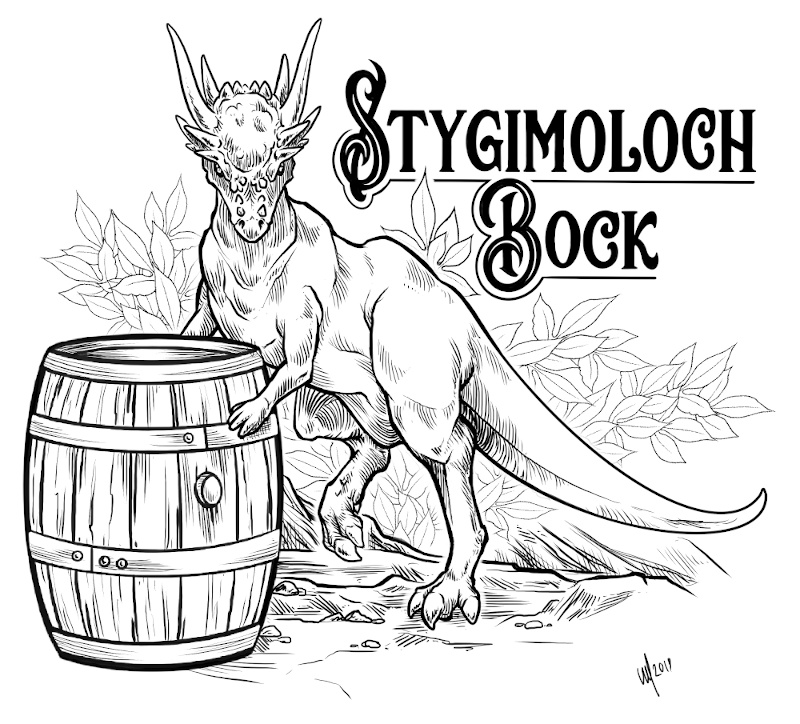
As an extra special treat, I wanted custom glassware with a unique logo for the beer. So, I commissioned the wonderfully talented Charon Henning to create a design. Bock labels often feature goats as part of a linguistic pun, but hey, I’m a paleontologist. Why not go with a prehistoric goat analog? The bone-headed dinosaur Stygimoloch*, with its goat-like spikes and potential butting behavior, seemed like a perfect fit. Charon did a superb rendering that pays homage to many old bock labels. Even better, she worked some leaves of prehistoric hops into the background!

StygiLoRes

Stygimoloch Bock

  • 9 lbs. Munich II malt (Weyermann)IMG_20191019_150917
  • 5 lbs. Munich I malt (Weyermann)
  • 8 oz. Caramel Munich 60L (Briess)
  • 4 oz. melanoidin malt (Weyermann)
  • 1 oz. Carfa Special III malt (Weyermann)
  • 0.65 oz. Magnum hop pellets (13.2% alpha), 60 minute boil
  • 1 Whirlfloc tablet, 10 minute boil
  • 1 tsp. Fermax yeast nutrient, 10 minute boil
  • 4 pkg. Bavarian lager dry yeast (Mangrove Jack’s M76)

Target Parameters

  • 60 minute infusion mash, 154°, batch sparge
  • 1.070 o.g., 1.017 f.g., 7.0% abv, 25 IBU, 15 SRM
  • Blend of Claremont tap water and RO water, with 3 g CaCl, to produce target water of 4 ppm Ca, 5 ppm Mg, 13 ppm Na, 22 ppm SO4, 53 ppm Cl, 119 ppm HCO3, RA=56 ppm.

Procedure

  • I mashed in with 5 gallons of Claremont tap water and 1/4 of a Campden tablet at 164°, to hit a 154.4° mash temperature.
  • After 60 minutes, I added 0.5 gallons of RO water blend (3 g of CaCl added to 4.5 gallons of water) at 185°. I let it sit for 10 minutes, vorlaufed, and collected first runnings.
  • I next added 4 gallons of the RO water blend at 185°, let sit for another 10 minutes, vorlaufed, and collected the second runnings.
  • In total, I collected 7.25 gallons of runnings with a gravity of 1.055, for 72% mash efficiency.
  • To up the gravity a touch, I boiled the wort for 15 minutes before adding the hops (a total of 75 minute boil). I figured this longer boil time would work well to add additional character.
  • After boiling for a total of 75 minutes, I turned off the heat, and chilled down to 80° before transferring into the fermenter and cooling overnight in the fermentation chamber. I oxygenated for 60 seconds, and added 4 packages of yeast. I used four packages because they were around 9 months past “best by” date. Nonetheless, they took off pretty well.
  • Starting gravity was 1.066, on 30 August 2019.
  • I fermented at 52°, until raising the temperature to 60° on 30 September 2019. I cooled back to 50° on 4 October 2019, and then down to 35° on 5 October 2019.
  • I kegged the beer on 9 October 2019. Final gravity was 1.020, for 6.1% abv.

IMG_20191021_185030Tasting

  • Appearance
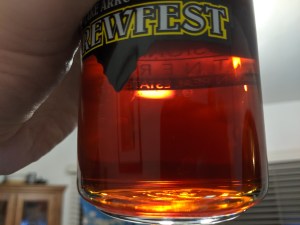
    • Color is a gorgeous deep copper, and the beer has become brilliantly clear in the keg. The tan head is quite persistent.
  • Aroma
    • Amazing malty, bready aroma, with a touch of caramel.
  • Flavor
    • Rich, bready flavor, with some toastiness–it is very reminiscent of a hearty bread crust. The beer is a touch more bitter than appropriate for the style. (note: the bitterness had mellowed a bit when I tasted it again on November 24)
  • Mouthfeel
    • Medium-full body, nice rounded finish.
  • Would I brew this again?
    • Yes! This is a really nice beer, with a phenomenal maltiness and drinkability that approaches slightly dangerous. Color and clarity are exceptional, and it’s only going to get better as it matures towards a Thanksgiving official launch date (I did the tasting in mid-October). It is maybe a touch more bitter than I would like for the style, so if I brew it again I’ll dial back the hops slightly.
  • Overall
    • 8/10

*Yes, I mostly agree with the hypothesis that Stygimoloch is probably a younger form of something like Pachycephalosaurus, so the name itself may or may not be valid. Even so, let’s just agree that we shouldn’t let nomenclatural pedantry overrule the fact that “Stygimoloch Bock” rolls off the tongue more easily than Pachycephalosaurus Bock”.