Nectaron Saison

I increasingly enjoy and appreciate saisons, for their easy drinkability and interesting flavors. A good saison can do a lot with simple ingredients! Many homebrew recipes out there are way higher alcohol than I want in five gallon quantities, though, often in the 6 or 7 or even 8 percent range. The first page of results in the AHA recipe archive averages 6.9% abv, and the smallest recipe clocked in at 5.8% abv; that’s just not to my personal tastes.

So, I was intrigued by an article in the Summer 2025 issue of Craft Beer & Brewing, which highlighted saisons and presented a clone recipe for a recent interpretation of the style. Upright Saison Elani originated at Upright Brewing in Portland, Oregon; it was light (4.8% abv), simple (only three grains in the grist), and featured the relatively new hop Elani. This sounded fantastic!

Because Elani is a somewhat new and niche hop, my local homebrew shop didn’t have it in stock, but they did suggest Nectaron as an alternative. I haven’t done anything with Nectaron previously, and the citrus/tropical/stone fruit profile seemed like a good substitute for Elani and a great match for a summer saison. I had some Belle Saison yeast in my stash, so opted for that instead of the Imperial B56 or Wyeast 3276 in the original recipe.

In the spirit of my Brew Year’s Resolution to increase my percentage of “small batch” beers, this was a 3 gallon batch. So far, three out of 13 batches this year (23 percent) have been in this smaller format; by comparison, I had three out of 23 batches in the 3 gallon size last year. I have one or two more 3 gallon batches planned for 2025, so I’m feeling on target to meet my goal. Beyond the metrics, it has been nice to have smaller batches for recipes in the “good beer but I don’t want 5 gallons” categories.

Nectaron Saison

  • 4 lb 2 oz. 2-row pale malt (Rahr)
  • 12 oz. white wheat malt (Briess)
  • 4 oz. Carapils malt (Briess)
  • 1.5 oz. rice hulls
  • 0.25 tsp. BrewTanB, added to mash
  • 0.5 oz. Hallertauer Mittelfrueh hop pellets (2.5% alpha), 75 minute boil
  • 1 oz. Nectacron hop pellets (10.1% alpha), 10 minute whirlpool
  • 1 pkg. Belle Saison yeast (Lallemand)

Target Parameters

  • 60 minute infusion mash, 147°, full volume mash
  • 1.044 o.g., 1.007 f.g., 4.8% abv, 21 IBU, 3 SRM
  • Water built from RO, to hit targets of 63 ppm Ca, 11 ppm Mg, 105 ppm SO4, 67 ppm Cl, RA=-52

Procedure

  • I built my water up from scratch, starting with 4.8 gallons of RO, to which I added 2 g epsom salt, 2 g gypsum, and 2.5 g calcium chloride.
  • Then, I heated the water to 151° before adding the grains and holding at 147° with recirculation for 60 minutes. I raised the mash temperature to 168° for 10 minutes, before removing the grains.
  • In total, I collected 4.5 gallons of runnings with a gravity of 1.035, for 81% mash efficiency.
  • I brought the runnings to a boil, boiling for 75 minutes and adding hops and finings per the recipe.
  • After the boil, I turned off the heat and chilled to 78° before transferring to the fermenter and pitching the yeast.
  • I brewed this beer on 7 June 2025. Starting gravity was 1.045.
  • I used an open fermentation, putting a bit of foil across the top instead of an airlock. I fermented at ambient temperature, in the mid-70s.
  • A good crown of krausen was on the beer within 24 hours of pitching, and the fermenter temperature was around 76°. The krausen had mostly fallen by 14 June 2025, and I put a blow-off tube on the beer on 16 June 2025.
  • I kegged the beer on 21 June 2025, with 1.8 oz. of corn sugar added. I allowed it to carbonate at room temperature.
  • The final gravity was 1.003, for 5.5% abv. This is drier than stated in the original recipe or predicted by software (1.007 at each), but I’m not surprised given the diastatic yeast strain and low mash temperature.

Tasting

  • Appearance
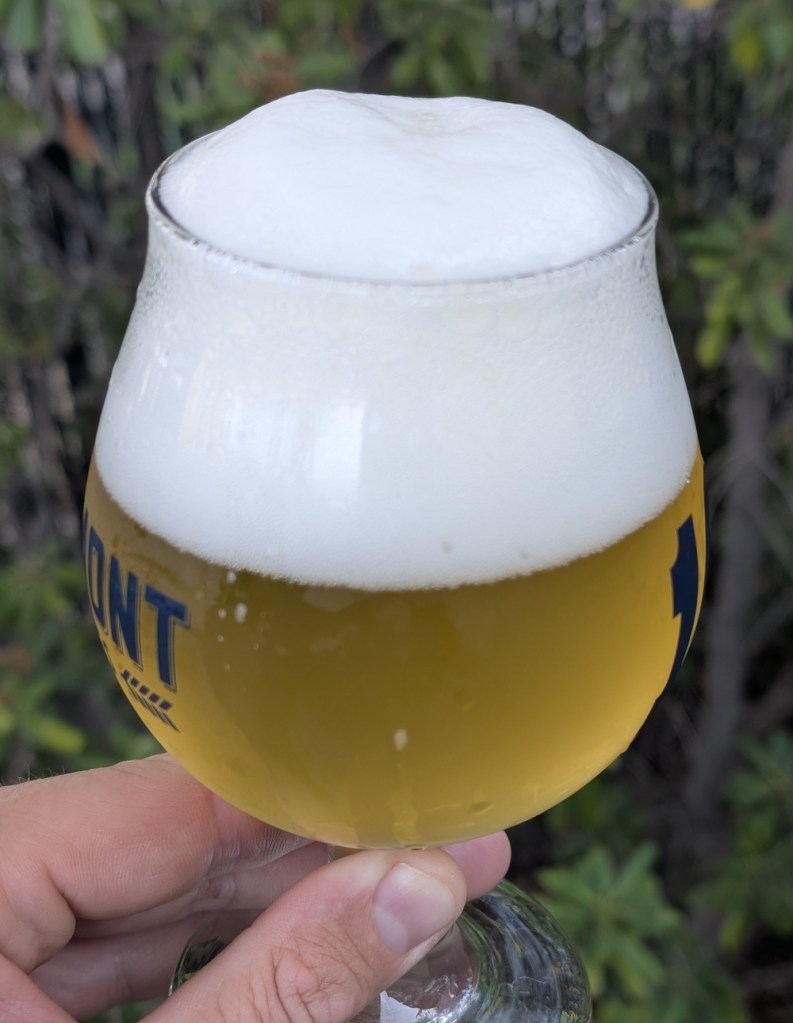
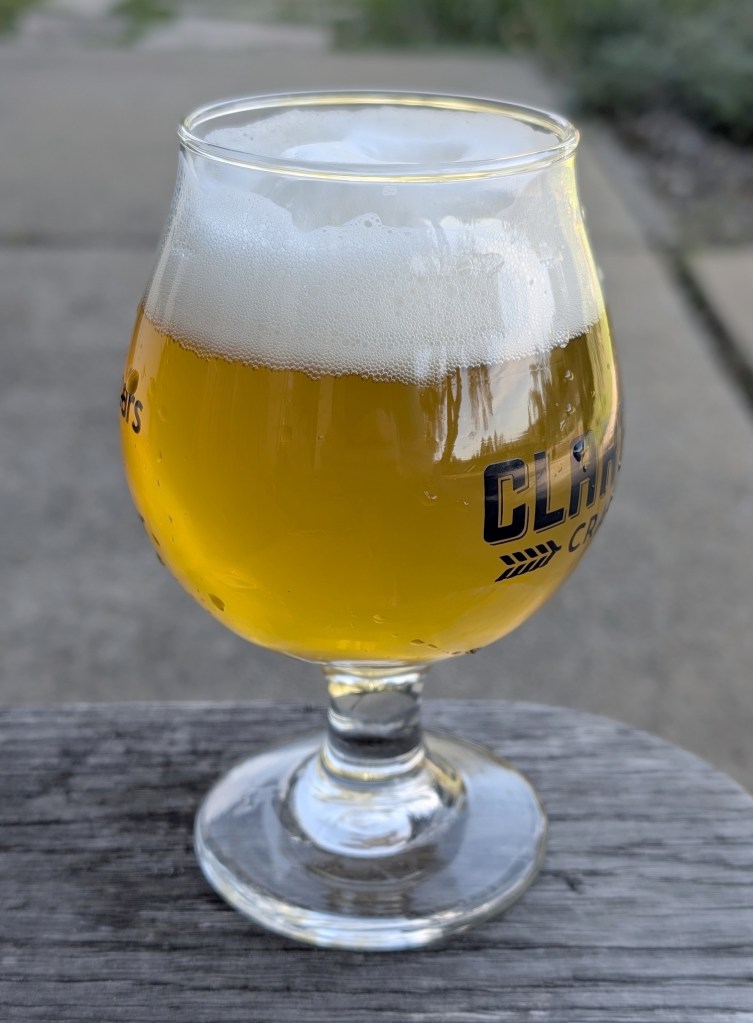
    • Pale yellow, slightly hazy beer; pours with a persistent and fluffy white head.
  • Aroma
    • Pineapple, lemony and slightly spicy aroma at a medium-low level; slight doughy character, too. Pineapple and peach come out as the beer warms, and a stronger peppery character.
  • Flavor
    • Medium low malt with slightly grainy quality; medium bitterness which is more apparent due to the dryness of the beer. Pineapple at a low level and peach appear as the beer warms.
  • Mouthfeel
    • Light body, high carbonation, dry finish.
  • Would I Brew This Again?
    • This is a highly drinkable, refreshing saison! I could see this becoming a house recipe, especially one against which to try out yeast variants. Because Belle Saison is no longer available in homebrew quantities, I suppose the issue is somewhat forced. I really like that strain’s subtlety here, though, and that it’s not a phenol bomb, even with ambient fermentation temperatures. I don’t know that Nectaron really stands out here; it might be better as a dry hop. That said, the hops show more character as the beer warms. It might be interesting to try a dry hop addition or a warmer fermentation, for more hop and yeast character–if that’s what I was looking for. As I have sampled the beer more recently, I’m happier and happier with the current level of things. So maybe it doesn’t need to become a dry hop bomb?
  • Overall
    • 8/10

Patersbier 2025

I love the concept of a patersbier (“Father’s Beer”), as a relatively light and low alcohol yet flavorful take on a Belgian ale. As with many Belgian ales that were associated with the monastic traditions, there is plenty of romance and a good dollop of fantasy around these brews. I’m not particularly interested into delving into historicity–I’m more interested in making a beer that I want to drink!

This particular version is a bit of a kitchen sink beer, intended to sweep out odds and ends from my brewing supply. Even so, I aimed to have a sturdy malt backbone. Hops were chosen, again, to use up a few varieties. I knew a Belgian yeast was in order, so Lallemand’s Abbaye Belgian fit the bill. It’s very different from the previous patersbier I made, which was a SMaSH with pilsner malt and Cascade hops.

Along the lines of my Brew Year’s Resolution to make more small batches, this was a 3 gallon batch. I also did a quick brew day, with 30 minute mash and 30 minute boil.

Patersbier 2025

  • 2.75 lb. Vienna malt (Weyermann)
  • 2 lb. 2-row malt (Great Western)
  • 0.5 lb. Caramel Munich 60L malt (Briess)
  • 0.5 lb. Munich II malt (Weyermann)
  • 0.25 lb. Caramel Malt 120L (Briess)
  • 0.25 tsp. BrewTanB, added to mash
  • 1 oz. Styrian Goldings hop pellets (3.2% alpha), 30 minute boil
  • 0.5 oz. Crystal hop pellets (4.5% alpha), 30 minute boil
  • 1 pkg. Abbaye Belgian ale yeast

Target Parameters

  • 1.045 o.g., 1.015 f.g., 3.9% abv, 13 SRM, 26 IBU
  • Full volume mash at 158° for 60 minutes
  • Claremont tap water, no adjustment

Procedure

  • I heated the mash water to 164°, added the grains, and held at 158° with recirculation for 30 minutes. Then, I raised the mash to 168° for 10 minutes before pulling the grains.
  • In total, I collected 4 gallons of runnings with a gravity of 1.037, for 66% mash efficiency.
  • I brought the kettle to a boil and added hops per the recipe. After 30 minutes, I turned off the heat and chilled the wort to 68° before transferring to the fermenter.
  • Starting gravity was 1.044. Once I pitched the yeast, I let it ferment at ambient. I brewed the beer on 12 March 2025.
  • I kegged the beer on 24 March 2025. Final gravity was 1.013, for 4.1% abv. I added 1.5 oz. of corn sugar dissolved in ~0.5 cup of water and boiled, in order to do natural carbonation. I finished off the carbonation with forced CO2. At the time of kegging, a pleasant and spicy yeast character was evident.

Tasting

  • Appearance
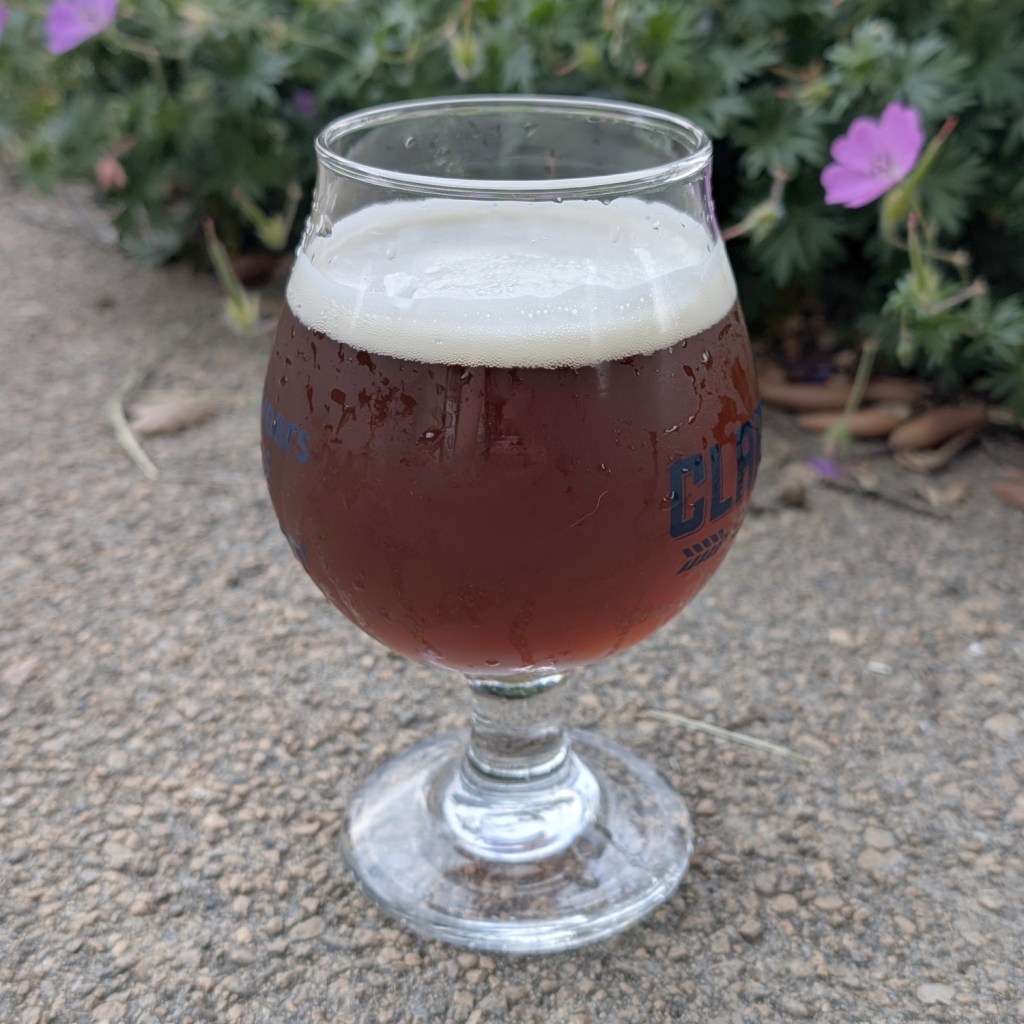
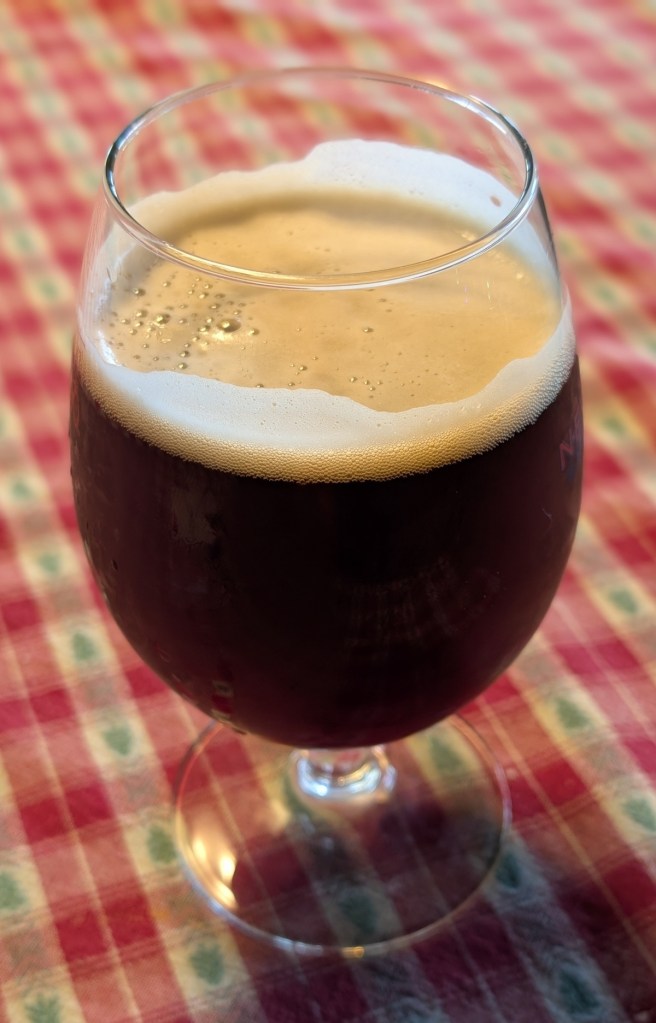
    • Medium amber beer, clear, ivory head with good persistence.
  • Aroma
    • Moderately high yeast aroma with good phenolic character; spicy notes, some red apple. Some bready and caramel notes come through as the beer warms up.
  • Flavor
    • Spicy yeast character at the forefront; medium level of malt character with a malty, bread crust quality. Medium-low level of hops.
  • Mouthfeel
    • Light body, medium level of carbonation, dry finish.
  • Would I Brew This Again?
    • This is good for what it is–easy drinking and lots of yeast character. It’s a bit thin on the body, so might benefit from a touch more crystal malt. The yeast character is perfect! As compared with my previous patersbier, I like the 2025 recipe much better.
  • Overall
    • 7/10

Unruly Gnome Belgian Blond Ale

La Chouffe is a darned good beer, and I will often get a pour if I find it on-tap at a quality alehouse (shout-out to The Back Abbey!). Belgian Blond Ale (or Belgian Blonde Ale) is not a style I have brewed previously, so it’s time to rectify that! I did a bit of research to find a clone recipe for La Chouffe, and a version from Brewer’s Friend inspired my own version, along with “The Gnome” recipe in Gordon Strong’s Modern Homebrew Recipes. The original recipe on Brewer’s Friend used decoction, but I decided to just put a little melanoidin malt into the grist instead. I also included a mash rest at 126°, in an attempt to improve the head.

Because this is an experimental beer, and a high alcohol one at that, I decided to make a small (3 gallon) batch.

Unruly Gnome Belgian Blond Ale

  • 7.75 lb. pilsner malt (Rahr)
  • 3 oz. melanoidin malt (Weyermann)
  • 0.5 tsp. BrewTanB (mash)
  • 12 oz. clear candi sugar (added to boil)
  • 1 oz. Styrian Goldings hop pellets (3.2% alpha), 60 minute boil
  • 0.5 oz. Saaz hop pellets (2.0% alpha), 15 minute boil
  • 0.25 tap. BrewTanB, 10 minute boil
  • 0.5 Whirlfloc tablet, 5 minute boil
  • 0.5 oz. Saaz hop pellets (2.0% alpha), 5 minute boil
  • 0.5 tsp. yeast nutrient WLN1000 (White Labs), 5 minute boil
  • 6 g. coriander seeds (Turkish), 5 minute boil
  • 1 pkg. Abbaye Belgian ale yeast (Lallemand)

Target Parameters

  • 1.068 s.g., 1.009 f.g., 7.9% abv, 6 SRM, 21 IBU
  • Full volume step mash, with 15 minutes at 126°, 90 minutes at 146°, and 10 minutes at 168°; 60 minute boil
  • Water built up from RO and Claremont tap water, to hit water target parameters of 50 ppm Ca, 4 ppm Mg, 45 ppm Na, 56 ppm SO4, 82 ppm Cl, 10 ppm bicarbonate, RA=-30.

Procedure

  • To get my strike water, I mixed 2.5 gallons Claremont tap water and 2.5 gallons distilled water, added 2.1 mL of 88% lactic acid, 1/4 Campden tablet, 1 g CaCl, and 1 g CaSO4.
  • I heated the strike water to 131°, added the grains and 1 tbs. of 10% phosphoric acid, and held the mash at 126° for 15 minutes, before raising the temperature to 146° for 90 minutes. Then, I raised the mash to 168° for 10 minutes before pulling the grains.
  • In total, I collected 4.5 gallons of runnings at a gravity of 1.050, for 75% mash efficiency.
  • I brought the runnings to a boil, adding finings per the recipe. After a 60 minute boil, I turned off the heat and chilled to 74° before transferring to the fermenter and pitching the yeast.
  • I brewed this beer on 7 December 2024. Starting gravity was 1.070.
  • I had vigorous fermentation within 18 hours of pitching the yeast; temperature was down to 72°, and so I moved the fermenter into the fermentation chamber on 8 December 2024, and set it at 74°.
  • Fermentation (as evidenced by bubbling) was pretty much done by 10 December 2024.
  • I kegged the beer on 23 December 2024, adding 1 oz. of corn sugar in 0.5 cups of water for carbonation, and let it sit at room temperature.
  • Final gravity was 1.011, for 7.8% abv.

Tasting

  • Appearance
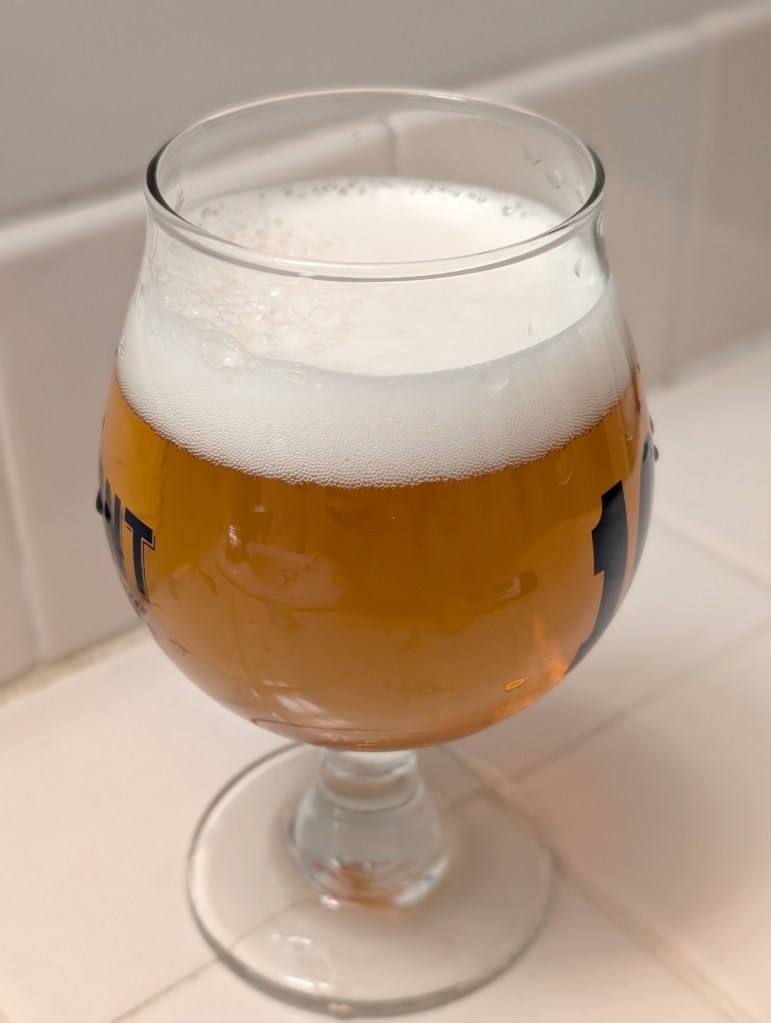
    • Very clear gold beer that pours with a creamy and persistent white head of foam. It’s quite pretty! I’ll note that it clarified a bit more after the photos were taken (about 10 days before this post).
  • Aroma
    • Moderate spicy phenolic notes, but overall pretty clean. A little light caramel malt comes through, and some citrus quality with light alcohol notes as it warms.
  • Flavor
    • Moderately high bitterness, crackery malt at a moderate level, with a touch of candy. Balance is towards the hops a bit. Orange peel citrus comes through as the beer warms. The yeast is perhaps a touch more prominent than what I remember in the commercial beer.
  • Mouthfeel
    • Highly carbonated, light body, dry finish. It drinks very easily!
  • Would I Brew This Again?
    • This is a good start. The yeast was perhaps a bit forward in the early samplings of the beer, but it has mellowed considerably over time. It might benefit from lower temperatures with this dry yeast strain, or a different strain at least relative to the style ideal (probably Ardennes for my next version, which isn’t available in dry yeast form; Belle Saison is another dry yeast I’m considering). Even so, this beer is dangerously drinkable! I might dial hops back a touch, perhaps to 15 IBU or so. The bitterness on the finish is just a touch harsher than I like. The coriander doesn’t come through, so I could safely ditch it; I don’t think anything would be lost. I might also try a fresher coriander from a different source area, which could also help.
    • Note added 10 February 2025: The beer has cleared to brilliant now!
  • Overall
    • 8/10

Winter in Antwerp 2024

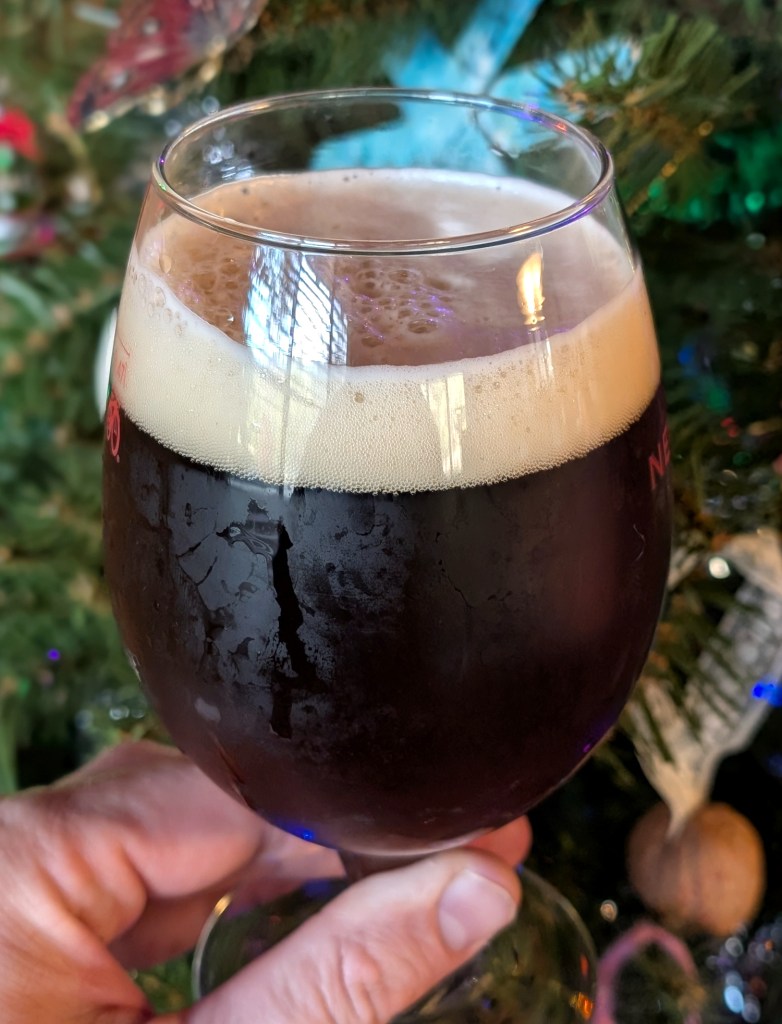
I like to make a holiday beer every once in awhile, for drinking during the Christmas and New Year’s stretch. It’s an opportunity to do a smaller batch of something unusual, which might not warrant a full 5 gallons. This year, I chose a version of a recipe from Gordon Strong’s Modern Homebrew Recipes, called “Winter in Antwerp.” It’s a spiced Belgian ale, roughly in the realm of a dark pale ale (yes, that’s an oxymoron). I made some malt substitutions and also used the Abbaye dry yeast, although the overall “feel” is pretty close.

Winter in Antwerp 2024

  • 4 lb. 2-row brewer’s malt (Great Western)
  • 2 lb. Vienna malt (Weyermann)
  • 0.5 lb. aromatic malt 20L (Briess)
  • 0.5 lb. caramel malt 60L (Briess)
  • 0.5 lb. Caramunich II (Weyermann)
  • 0.5 lb. Munich dark malt (Viking)
  • 0.25 lb. biscuit malt (Dingemans)
  • 2 oz. chocolate malt (Bairds)
  • 2 oz. Special B malt (Dingemans)
  • 0.5 oz. Liberty hop pellets (5.0% alpha), 60 minute boil
  • 1 oz. Liberty hop pellets (5.0% alpha), 10 minute boil
  • 0.5 oz. Liberty hop pellets (5.0% alpha), 5 minute boil
  • 1 vanilla bean, split, scraped, and steeped for 5 minutes after the boil
  • 1 cinnamon stick, steeped for 5 minutes after the boil
  • 1 pkg. Abbaye Belgian ale yeast (Lallemand)

Target Parameters

  • 1.068 s.g., 1.021 f.g., 6.2% abv, 30 IBU, 24 SRM
  • Full volume infusion mash, held at 156° for 60 minutes and 168° for 10 minutes
  • Claremont tap water with Campden tablet, with approximate ppm of 110 Cl, 50 SO4, 40 Ca, 156 HCO3, 12 Mg, 87 Na

Procedure

  • I heated 5 gallons of water (with Campden tablet) to 163°, and then mashed in the grains. I held the mash temperature, with recirculation, at 156° for 60 minutes before raising the temperature to 168° for a 10 minute mashout.
  • Once I pulled the grains, I collected 4.5 gallons of runnings at a gravity of 1.049, for 71% mash efficiency.
  • I brought the runnings to a boil, adding hops and finings per the recipe. After 60 minutes, I turned off the heat and added the spices in a mesh bag. Because the cinnamon was a bit old, I added two sticks (broken up). After a 5 minute steep, I removed the spices and continued the chilling process.
  • I chilled the wort to 78° before transferring to the fermenter. I chilled the rest of the way, down to 68°, in the fermentation chamber. I pitched the yeast at 68°, holding at this temperature for fermentation. Expecting a vigorous fermentation, I used a blow-off tube.
  • Starting gravity was 1.065. I brewed this beer on 17 November 2024.
  • I kegged the beer on 30 November 2024. Final gravity was 1.024, for 5.4% abv.

Tasting

  • Appearance
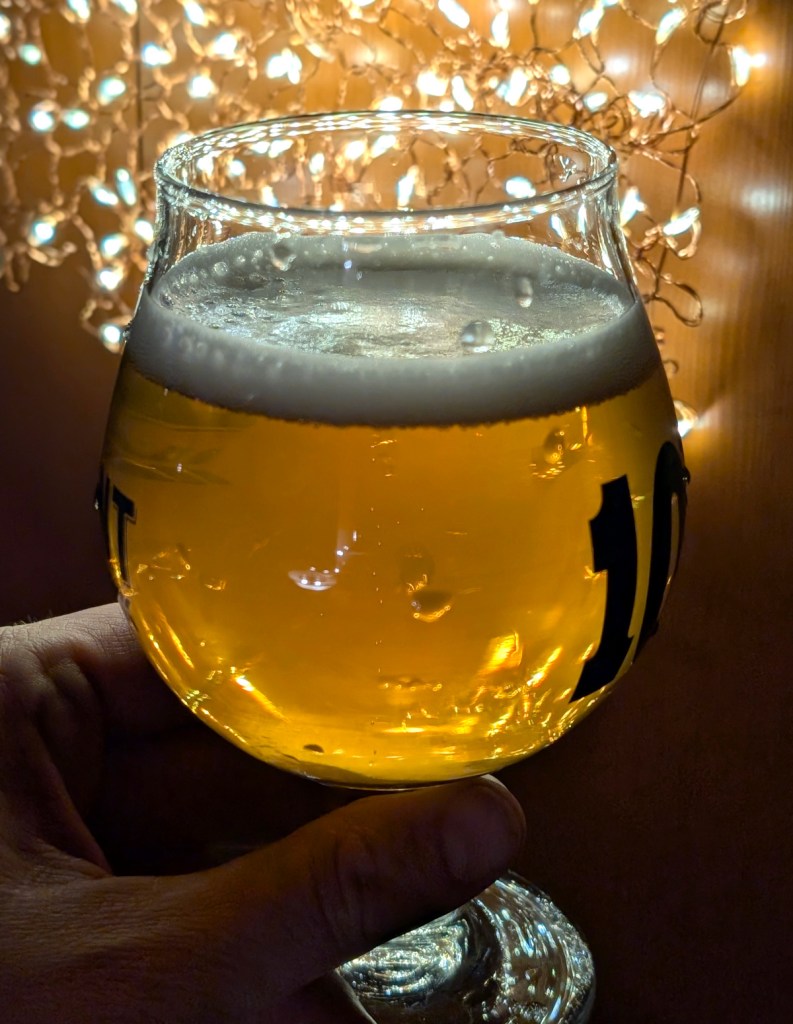
    • Deep reddish amber beer, very clear; pours with a creamy and persistent ivory head. It’s very pretty!
  • Aroma
    • Some dried dark fruit character as the beer warms and a hint of very ripe banana. Rich maltiness, but just a hint. Very faint cinnamon as it warms.
  • Flavor
    • Bread crust malt character, dried dark fruit in the yeast, medium level of bitterness. Less complex than I expected!
  • Mouthfeel
    • Medium body, medium high carbonation, very slightly dry finish.
  • Would I Brew This Again?
    • This is a good beer but nothing special. I was hoping for a bit more spice character, but there isn’t really any. I would probably increase the spicing rate a touch. For a similar beer next time, I would condition longer. It needs more body and malt “oomph”! Given all of the crystal malts, I’m surprised it doesn’t give the impression of more body. Perhaps for this kind of beer, it would benefit from a higher starting gravity or swapping in Munich for the 2-row malt. I would also age it for awhile longer. Another challenge is that I have this beer in my conditioning chamber, at around 35°, so it takes awhile to warm up after pouring. It’s definitely better at warmer temperatures!
  • Overall
    • 6/10

Session Saison

I’ve been spending lots of time in LagerTown (a few miles over from Flavertown) and overall feel like I have a good handle on many of these styles, especially pale lagers. So, I’m looking for some new challenges. The saison style has been of variable success for me, with the last saison session producing a good beer despite a ton of mishaps in the process. I’ve only made six batches of this style previously, most centered around the “Thumbspike Saison” incarnation.

For 2024, I decided to try a saison yet again, to have a drinkable and interesting brew on tap. I generally prefer lower alcohol beers, so used the Session Saison recipe at Great Fermentations as a starting point. It was a chance to use up some grains I had sitting around, while also experimenting with yeasts and techniques. Previously, I’ve never really been able to hit the attenuation I want in a saison consistently, so I focused on the areas of mash technique, ingredients, and yeast choice to move a few levers towards a drier beer.

The grain bill is pretty close to the original recipe, although I swapped in flaked oats instead of flaked barley based on what was accessible at home. I used honey instead of corn sugar, because I had a container of Costco honey and figured it would create the same result. This element of the recipe is important for getting towards a dry beer. Finally, I used up some of my hop stash–Ariana, a newer and high alpha German variety seemed like a good fit.

I haven’t used Lallemand’s Belle Saison strain before and wanted to give that a try here. It’s a diastaticus yeast, so I needed to keep this in mind in terms of separating out equipment later on, but I also hoped it would give me a better result than the diastaticus-negative yeasts I’ve used in most previous batches. I coupled this with creating a highly attenuative wort–I elected for a long mash of 120 minutes at only 149 degrees, in addition to the honey mentioned above.

Oddly enough, despite the low starting gravity (1.046 or so), the high attenuation takes it out of session territory — 5.3% calculated, and 5.9% actual when all was said and done! It’s not the monster 9.5% abv upper bound for the BJCP style, but it’s also not one anyone should chug by the pint.

I had an interesting experience on consumption of this one — the temperature probe on my keezer got knocked to the bottom of the chamber by accident, with a net result of the overall keezer temperature being around 50° instead of 40°. I was fairly disappointed in the carbonation and flavor of the saison–it wasn’t anywhere near highly carbonated, and the beer was a bit flabby. Once I figured out the temperature issue, things fell right into place with a more proper level of carbonation and a crisper beer. Beer held at 40° and 23 PSI will hit 3.5 volumes of CO2–but the the same PSI at 50° will be only 3 volumes. It was an amazing example of how critical temperature and carbonation are for beer enjoyment!

Session Saison

  • 3 lb. 9 oz. pilsner malt (Rahr)
  • 2 lb. 2-row malt (Briess)
  • 2 lb. Munich I malt (Weyermann)
  • 8 oz. Aromatic Munich malt 20L (Briess)
  • 8 oz. flaked oats
  • 0.5 tsp. BrewTanB, in mash
  • 1.25 oz. Ariana hop pellets (8.9% alpha), 15 minute boil
  • 0.5 tsp. BrewTanB, 10 minute boil
  • 1 lb. wildflower honey, 10 minute boil
  • 0.75 oz. Ariana hop pellets (8.9% alpha), 5 minute boil
  • 1 tsp. yeast nutrient (WLN1000, White Labs), 5 minute boil
  • 1 pkg. Belle Saison dry yeast (Lallemand)

Target Parameters

  • 1.046 s.g., 1.005 f.g., 5.3% abv, 26 IBU, 6 SRM
  • Full volume infusion mash to hit target of 149°, 120 minutes, no sparge
  • Claremont tap water, neutralized with lactic acid to reduce carbonates, target parameter of 60 ppm CA, 22 ppm Mg, 136 ppm Na, 175 ppm SO4, 150 ppm Cl, 10 ppm HCO3, RA=-48 ppm

Procedure

  • I added 6.5 mL of 88% lactic acid to 7.25 gallons of tap water, to remove the carbonates. As a result, no pH adjustment was needed (per calculations) for the mash.
  • I heated the water to 153°, added the grains, and held at 149° with recirculation for 120 minutes.
  • At the end of the mash, I raised the temperature to 168° for a 10 minute mash-out, before removing the grains.
  • In total, I collected 6.75 gallons of runnings with a gravity of 1.035, for 74% mash efficiency.
  • I brought the runnings to a boil and added hops and finings per the recipe. After 60 minutes, I turned off the heat and chilled to 75° before transferring the wort to the fermenter and chilling to 65° in the fermentation chamber before pitching the yeast.
  • I brewed this beer on 9 May 2024; it had a starting gravity of 1.048.
  • I held the fermentation at 68° until 14 May 2024, when I pulled the probe from the side of the fermenter and let the chamber free-rise to 85°.
  • I removed the beer to ambient temperature on 19 May 2024. At this point, final gravity was 1.003, presumably terminal.
  • I kegged the beer on 26 May 2024, adding 4 oz. of corn sugar to do some natural carbonation.
  • The abv on the final product was 5.9 percent — the combination of mash and yeast strain seemed to really do the trick for a dry beer!

Tasting

  • Appearance
    • Golden beer, slightly hazy, pours with a creamy white head that settles to a persistent blanket.
  • Aroma
    • Pear aroma, with a bit of spice/pepper alongside that, somewhat reminiscent of a pear cobbler. A light bit of maltiness as the beer warms.
  • Flavor
    • A fairly bitter beer with a spicy, peppery flavor from the yeast. Low level of grainy flavor from the malt. The fruitiness doesn’t come through as intensely as in the aroma, until the beer warms up a bit.
  • Mouthfeel
    • Very dry, highly carbonated, light body.
  • Would I Brew This Again?
    • Once I got temperature and carbonation dialed in, this was a fairly excellent saison. It could use a touch more malt character; perhaps a bit of Vienna in for some of the 2-row or pilsner malt? The aroma and mouthfeel are about perfect! I’m very pleased that I finally achieved “dry beer” status.
  • Overall
    • 7/10