What’s Brewing? July 2020 Edition

After a flurry of brewing in June, I took a few weeks off to let some batches ferment, condition, and carbonate. My lagers are often a little rushed to the tap, so my hope is to build in more wiggle room in my schedule so that the beers get more time to…well, lager. Even so, the fermenters and kegs are pretty full right now!

Beer Batch Updates

  • I kegged my amber ale on 23 June 2020, after 10 days in the fermenter. As is usual for ales these days, I’m carbonating with corn sugar, and topping that off with a bit of CO2 from my cylinder. I ended up with 5.0% abv, pretty much exactly along calculations for his recipe! I threw the beer into the lagering chamber on 7 July 2020, after two weeks of carbonating at ambient temperature.
  • My kölsch-style ale is carbonating and conditioning. In this case, I’m force carbonating at 33°, to help keep the delicate flavors more intact (versus letting it sit at roughly room temperature to carbonate), and also to get a jump start on dropping out the yeast. I used K-97 on the batch, which experience shows tends to flocculate pretty slowly. This beer started at 1.048 and ended at 1.009, for 5.1% abv. Initial tastes are pretty good–it’s still super hazy, but the flavor is really nice.
  • I brewed a light (lite) American lager on 20 June 2020, the famous “Mow the Damn Lawn” recipe from Annie Johnson. It’s a wonderfully simple beer, with just 2-row and flaked rice, clocking in at 1.045 o.g. I repitched a jar of Que Bueno yeast (Imperial) from my Mexican-style lager, and the little yeasties took off! Even though I was fermenting at 49°, I got pretty steady bubbling out of the blowoff tube within 12 hours. I’m going to let this beer get a good long fermentation, and hopefully a good long conditioning phase.
  • A few days after my light lager (24 June), I set in for a Munich helles-style lager. I patterned the recipe after one from Gordon Strong, with a bulk of pilsner malt supplemented by light Munich and touches of Carahell and Carapils. I’m also hoping to have a long conditioning phase with this one.
  • For both of the above lagers, they ran at 50° from 24 June to 1 July. I let them free-rise to 54° on the evening of 1 July, up to 58° on 3 July, up to 60° on 4 July, and then started a slow drop to 55° on 5 July. I ratched it down to 50° on 6 July. Over the course of the day on 7 July, I dropped to 45° and then 40°. On 8 July, I dropped to 35°, before a final drop to 33° on 9 July 2020 (today).

What’s On Tap?
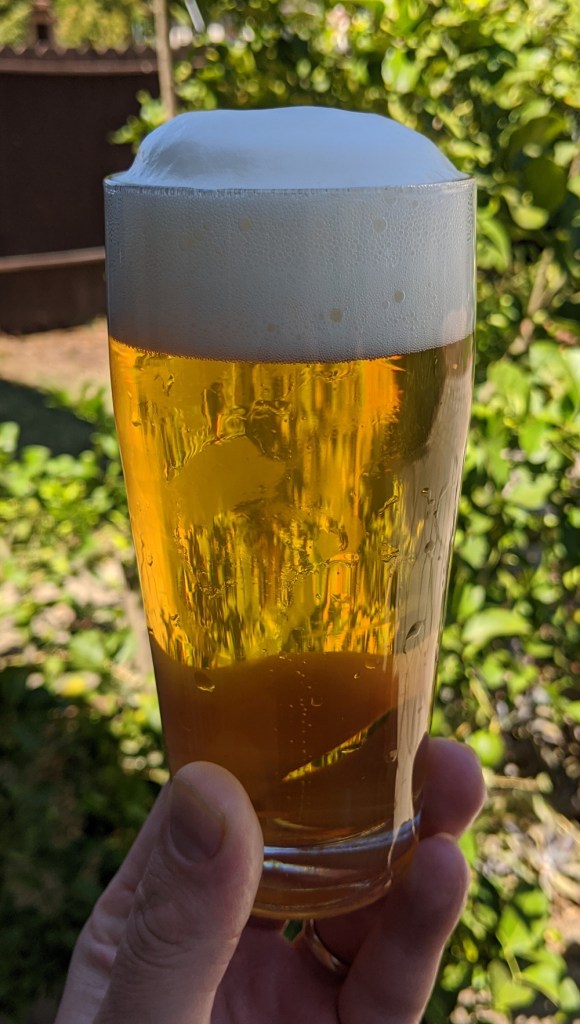
golden lager with frothy white head, held aloft in clear Willi Becher glass against green sunlit yard
Tremonia Lager, in a Willi Becher Glass
  • Adalatherium Pale Ale
    • I put this beer on tap just a few days before the June “What’s Brewing?” update, and now it’s really at peak drinkability, and pretty nice clarity too. As described in the tasting notes, the yeast/hop combo doesn’t quite work, but it’s not a dumper, either. How’s that for a ringing endorsement? It’s definitely gotten better as it sits in the keg.
  • Tremonia Lager
    • My first-ever Dortmunder Export is pretty delightful, and makes a nice pale lager for afternoon sipping. It continues to drink nicely, although I expect I’ll probably finish up the keg soon.
  • Alstadt Alt
    • After a month of kegging and conditioning, the beer is finally dropped clear. It’s super enjoyable!

What’s Coming Up?

  • I need/want to do another IPA soon, and am thinking about a session rye IPA (RyePA?). The idea is to do something in the classic northwest IPA tradition, with old-school citrus/piney hops.
  • It’s been years since I did a Berliner-weisse style beer, and with the warm summer months, there’s no better time. I’m going to give it a try sometime soon, probably with a smallish (3 gallon) batch and a yogurt-based culture.
  • Also along the lines of lightly soured beers, I plan to do the Raspberry Belgian.

Other Than Beer

  • I snagged some Willi Becher glasses, to upgrade my drinkware. I used to love my lonely single Willi Becher, but it broke. Searching online, it was easy to find these glasses in the 16 oz. and 20 oz. sizes, but I honestly don’t want (or need) to pour that amount of beer most of the time! I settled on 0.375 L / ~12 oz. glasses, but wow, they were hard to find at a decent price. I eventually got success, and am really happy with them (see the above photo). In a good slow pour, the head piles up so nicely!
What’s Brewing? June 2020 Edition

I’ve been able to get in a bit of brewing this past month during downtime, working through some of my ingredient stock and anticipating the kinds of styles I’ll want to drink over the summer. A perpetual problem is that I rarely have time to lager properly before a tap opens up, so I need to increase the frequency of my lager brew sessions!

Beer Batch Updates

  • I kegged my “kitchen sink pale ale” on 30 May, adding dry hops and priming sugar at that time. I let the beer carbonate for around 10 days before putting it on tap. It was super hazy, almost cloudy, for the first day or two, but has dropped out a bit since then. It has a ways to go before it comes close to clear, something I’ve noticed previously with the Windsor and S-04 dry yeast strains. The yeasts have nice character, but do not flocculate anywhere nearly as well or as quickly as the manufacturers imply (in my experience).
  • My Dortmunder Export Lager is in the keg, finishing out at 4.9% abv. I kegged it on 6 June 2020, and force carbonated at 33°. A week in, the flavor is really nice, bringing a good malt character without being overly heavy or cloying. It has a decent bit of haze still, so I added a dose of gelatin, anticipating that I’ll be serving the keg sooner than later. I would love to let my lagers condition for a longer stretch, but I just don’t brew often enough.
  • The altbier is kegged (11 June 2020), and now carbonating with priming sugar. I hope to let it go another week or so before cold crashing. I might give it a shot of gelatin then, because I’ll likely have a tap slot opening up soon. The beer clocks in at 4.6% abv, and has a really nice flavor on my first tasting.
  • I brewed a kölsch-style ale last weekend, trying a slightly different recipe from past iterations. I used 95% pilsner with 5% light Munich malt, Sterling hops, and K-97 dry yeast.
  • Yesterday, I made an American amber ale, with a newly devised recipe. It was 70% 2-row and 15% light Munich malt, with crystal 80 and crystal 60 to add a caramel note as well as to use up my supply of those malts. I also had a dash of Carafa III for color adjustment, and Cascade as the solo hop.

What’s On Tap?

  • Adalatherium Pale Ale
    • As described above, this was a quick pale ale to satisfy my hop needs.
  • The Celtic Elk Stout 1.1
    • I’m almost at the end of this keg, and it still drinks really nice. The altbier will go on tap to replace this one.
  • Alta California Lager 2020
    • This beer is nearly gone, also; it has clarified really well, and is a nice beer for hot afternoons.

What’s Coming Up?

  • As noted last month, I’m pretty keen on doing a light (lite) American-style lager. I finally punched in the recipe for Annie Johnson’s famous “Mow the Damn Lawn,” and hope to brew it soon. I’ll be repitching the Que Bueno yeast I harvested from my Alta California Lager.
  • I’m also thinking a new SMaSH pils, centered on Mt. Hood hops this time. It will be a standard German-style pils, and I’m hopeful I’ll have a little more time to lager it this round before it has to go on tap.
  • To use up some ingredients, I’m going to do a Rye IPA (RyePA?) with a Pacific Northwest style hop bill.

Other Than Beer

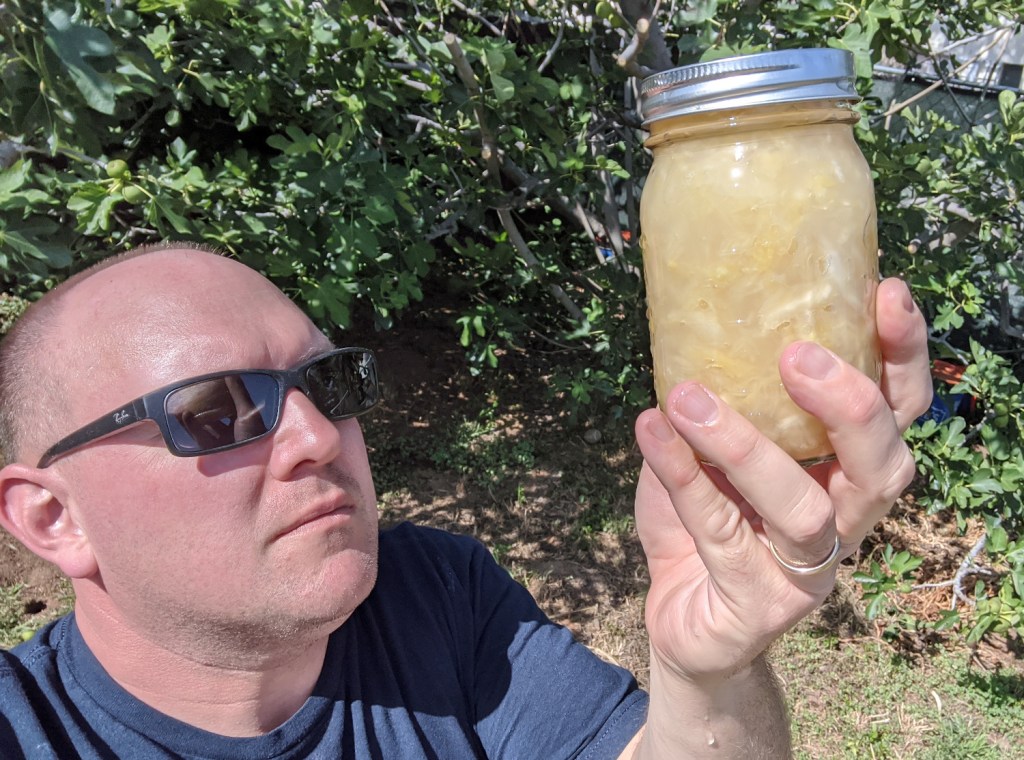
  • My lacto-fermented food projects have been doing pretty well. The carrot sticks I did were super tasty, and we just finished the jar last night. I’m also particularly pleased with my first batch of sauerkraut. It’s tart, crispy, and as good as anything I’ve gotten from the store. I started a second batch last weekend.
  • The juniper syrup I made last month was pretty good, and I made a second batch with some adjustments. Specifically, I halved the sugar–the problem with many syrup recipes (or I guess the point of many syrup recipes) is that they have too much sugar, and so you end up too….well, syrupy…in many cases. I’ll need to up the acid a touch, to help it keep, but I’m getting closer to something that works for me. The current recipe is 3 tbs. juniper berries, 3 cardomom pods, 1 srig rosemary, and the peel of an orange, simmered in a cup of water with 1/2 cup sugar for 15 minutes. I let it steep in the fridge overnight, and then filter it out.
  • Just for fun, I might try to make a pseudo-gin, by infusing vodka with various botanicals.
man with sunglasses looking up at a jar of sauerkraut held aloft
Behold the sauerkraut.

What’s Brewing? May 2020 Edition

Following the relatively quiet brewing months of March and much of April, I’ve been able to get back into the swing of things again. With extra time at home, I’ve also been making various syrups and other fermented goodies. It’s a lot of fun!

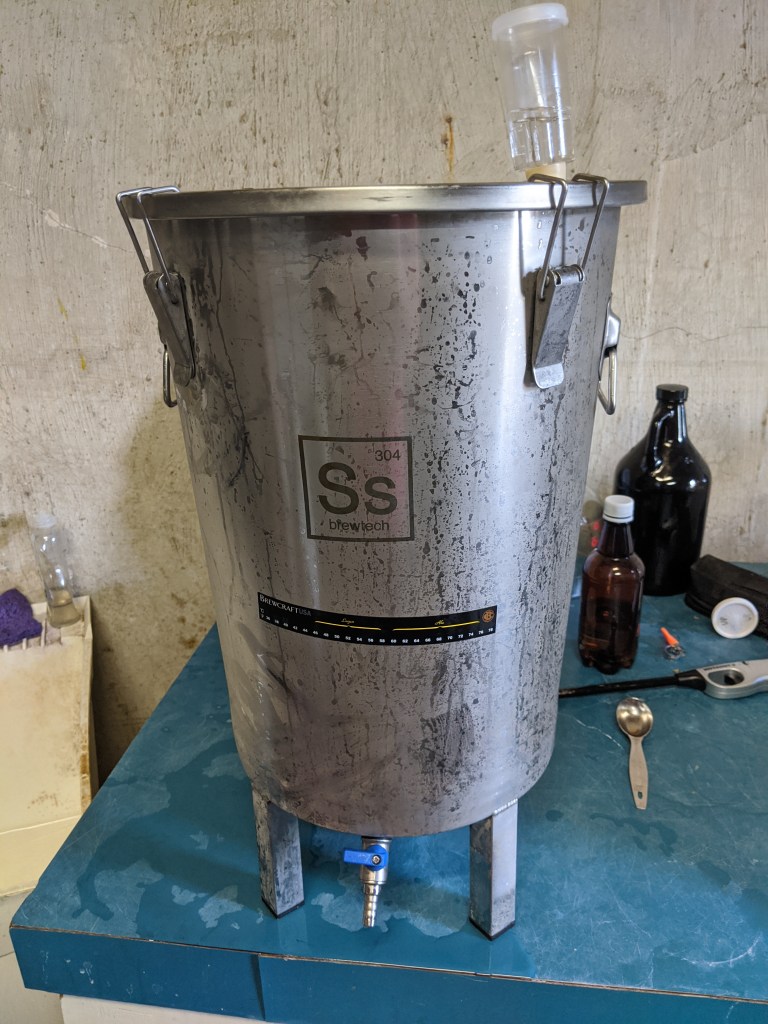
Fermenter with the Alta California Lager, ready for kegging

Beer Batch Updates

  • I brewed a German wheat ale on April 26 (Humboldt’s Hefeweizen), and it has been carbonated and is now on service! It’s a super straightforward recipe, with pilsner malt, wheat malt, and a touch of melanoidin (to finish out my stash of that malt). I’ve not brewed this style in some time (it looks like 2015 was my last batch), so it seemed like a good time to give it another try.
  • I kegged the 2020 edition of the Alta California Lager on 10 May 2020, and put it on tap yesterday. It has been lagering for just under three weeks, and has a ways to go yet before I’ll consider it optimal. Luckily, I can focus on the weizen for now, which is a bit better young anyhow.
  • On May 3, I brewed a kitchen sink pale ale, to use up a few stray ingredients. I’ll keg it in a day or two, using priming sugar for carbonation.
  • Last weekend, I made an altbier, repitching the yeast used in my kolsch-style ale earlier this year. The recipe is straight from the Brewing Classic Styles series book on altbier, just for a change of recipe pace. Fermentation took a few days to take off, but it’s now going gangbusters!
  • Yesterday I started a Dortmunder Export Lager, as a style new to me. I was going to repitch some German Lager yeast (WLP830), but the jar in my fridge hadn’t clarified terribly well. I took this as a sign to toss the yeast (which had already been through two batches), and just went with dry Saflager 34/70. I did some experimenting with water chemistry on this batch, which I plan to detail in a later post.

What’s On Tap?

  • Humboldt Hefeweizen — as described above, it’s a fairly traditional German wheat ale. I’m serving it at a pretty high carbonation (~3.5 volumes of CO2), and it has been quite enjoyable so far. This is one I want to drink quickly….it might be my favorite on tap at the moment!
  • Celtic Elk Irish Stout — this is a traditional-ish Irish stout, filling the dark beer morphospace in my tap selection. The batch is a slightly modified rebrew of one I did a few years back.
  • Alta California Lager — a Mexican-style lager, intended as a light and drinkable summer beer.

What’s Coming Up?

Freshly empty malt bag…now I’m all set to make more German beers!
  • I’m thinking a kolsch-style ale would be nice. Not sure yet on recipe.
  • An American-style lager (using a repitch of the yeast from my Mexican-style lager yeast) is also under consideration. I’m thinking something using rice to lighten it up.

Other Than Beer

  • I put a batch of sauerkraut out to ferment last weekend. Why not expand into other fermented foods, after all? Today I’ve also started a batch of fermented carrot sticks.
  • I’ve done a bunch of drink syrups…tonic syrup, of course, but also ginger syrup. For the latter, I need to cut back on the water (maybe 1 cup instead of 2?), because it ends up pretty thin, even though the flavor is great. I also did a juniper syrup, to have as an alternative for gin-based drinks. The initial taste is quite good!

What’s Brewing? April 2020 Edition

As mentioned last time, my brewing activity has slowed as we continue our general shut-down here in SoCal. Even so, I’ve managed to squeeze in a few sessions and enjoy some of my previously tapped kegs.

Beer Batch Updates

  • I kegged my imperial stout for the homebrew club project on April 11, and sent it off for transfer to the club barrel (all done without in-person contact, of course!). The final gravity was 1.030, down from 1.105, for 10.2% abv, and I ended up with just a shade below 5 gallons. The flavor is quite rich, and the Belgian character of the yeast comes through nicely. I’ll be interested to see what it tastes like when barrel aged with everyone else’s contributions!
  • I kegged my Schell’s Pils Clone on 4 April 2020 (using a purged keg and closed transfer), and it has a final gravity of 1.010 (for 5.7% abv). I saved the yeast culture for a future brew. I just moved the beer into the keezer (after a shade under two weeks lagering), because I had finished my kolsch and had an open tap. The beer really needs a little more time to condition, and should be quite a bit better in a week or two. It had a slightly harsh yeast edge to it during the first day or two on tap, and has improved dramatically since then. I’ve noticed this issue with WLP830 (White Labs’ German lager yeast) before, because it flocculates fairly slowly. The head and head retention on this beer are amazing! I can’t wait to see where it ends up when fully conditioned.
  • Two weeks ago (April 4), I brewed this year’s batch of Alta California Lager. The 2020 edition is vastly simplified, using flaked corn instead of a cereal mash with grits. I also am using the Mexican lager yeast strain from Imperial (instead of the White Labs version), because that’s what was available at my local homebrew shop. After two weeks at 51°, I let it free-rise to 60° to finish up. I will likely keg it in another week or so (but am not in a particular rush).
  • On Saturday, I spooled up my Celtic Elk Irish Stout, as a quick turn-around beer. I figure it will be ready to keg in around 10 days. As an experiment, I’m going to carbonate it in the keg with corn sugar, as a way to reduce the amount of CO2 gas I’m using.
Schell’s Pils Clone, with that beautiful foam cap!

What’s On Tap?

  • Wildfire IPA. Since posting the tasting, this beer has continued to clarify, and the hops are really singing now. I love this recipe!
  • Czech-Style Dark Lager. This is another great beer. I am enjoying it more and more as it continues to condition; I suppose it’s growing on me!
  • Schell’s Pils Clone. As mentioned above, it’s got a little ways to go in terms of maturing. I’ll post a review once the beer is in prime shape.

What’s Coming Up?

  • Within the next weekend or two, I’m going to do an altbier, with some of the yeast saved from my kolsch a few weeks back.
  • I’m going to try something in the Dortmunder Export world, because it’s one of the few (?only) pale lagers that is okay with heavily mineralized water. I may try to reduce the carbonate load a bit with slaked lime, but that’s a topic for another post.

New Equipment

  • I want to learn more about our tap water, and how it varies through the year. The annual test reports are handy, but they don’t tell me much about my water at-the-moment. I recently invested in the LaMotte water test kit, and have run the tests a few times already. Look for an upcoming blog post on the topic!

What’s Brewing? (Late) March 2020 Edition

March has been an…interesting…month for brewing. I didn’t have much activity during the first half of the month due to busy weekends, and there hasn’t been much brewing during the second half due to a global pandemic. Nonetheless, there are a few newsy bits.

My brew club is doing a barrel project (planned prior to the pandemic-related closures), with a Russian imperial stout. Members are brewing 5 to 10 gallon batches, which will go into a 53 gallon Maker’s Mark barrel for extended aging. This is probably one of the biggest beers I’ve ever made, filling the entirety of my mash tun. The grist used nearly 27 pounds of grain, and target starting gravity was 1.110. I hit 1.105–not shabby at all! I brewed the beer on 23 February, and it took off with a very vigorous fermentation. This created a bit of a mess in my temperature-controlled chamber, so I added a blow-off tube. The beer was was at 1.030 when I checked gravity on 7 March. I agitated the fermenter at that time, to hopefully re-rouse any dormant yeast and knock back the last few percentage points. I don’t expect it to end up south of 1.025. Due to the current health crisis, it’s a bit up in the air when we’ll be able to get it all into the barrel, but we’re working out some ways to safely move the beer where it needs to be without gathering a bunch of people together. The good thing is that this beer won’t be too awfully hurt by sitting for awhile. That’s the point, after all!

That’s one full mash tun!

My other brew for March was a rebrew of the Schell’s Pils Clone I did last year. This was one of my favorite pilsners, and I would love to have it on tap again! Plus, it fits nicely into my 2020 brewing goal of exploring more American equivalents of German hops. I brewed the beer on 7 March 2020, hitting a starting gravity of 1.053. It’s fermenting at 52°, and should be ready to keg soonish.

I still have my kölsch in the lagering chamber, and I kegged the Czech dark lager on 22 February 2020. Right now, I’ve got my red rye lager, Crystal pils, and Wildfire IPA on tap. All of them are drinking beautifully! It’s a shame I can’t more easily share them in the midst of social distancing restrictions…as a result, I’m not going through the beer as quickly as normal. This means a longer lagering time, which is perhaps the single silver lining to the current situation.

In the equipment upgrade realm, I’m now trying out the Clear Beer Draught System. This system replaces the dip tube in the keg with an intake that floats at the top of the liquid. The idea is that this area should typically have clearer beer than the stuff at the bottom of the keg where a normal dip tube would be. I will have a better idea of its efficacy in a month or two (the only beer on tap with it is my IPA, which has a giant hop load and thus is hazy by nature).

April will probably be pretty light in brewing. I’ve got an altbier and a weissbier on the horizon, but no formal brew date set yet. The former will reuse the yeast from my kölsch (which I have stored in the fridge), as a bit of an experiment. The latter will be a very quick turnaround, because the style is intended to be served quite fresh. Depending on events, their brew date may not even happen until May! There’s no rush…