
Citation Porter Bottled

After one month in the secondary fermenter, I bottled my Citation Porter on January 5. Final gravity was 1.014; with a starting gravity of 1.054, this calculates out to 5.3% abv. I primed the beer with 1/2 cup corn sugar dissolved in 2 cups of boiling water. This is a little less than I normally do, but some of my other batches have been more carbonated than I like. Plus, porters are supposed to be on the low end of carbonation.

The final yield was 25 12-oz. bottles, 10 18-oz. bottles, and 5 22-oz bottles. At bottling, the flavor was rich and toasty, pretty close to what I had expected. I can’t wait to try this one!
Citation Porter Update

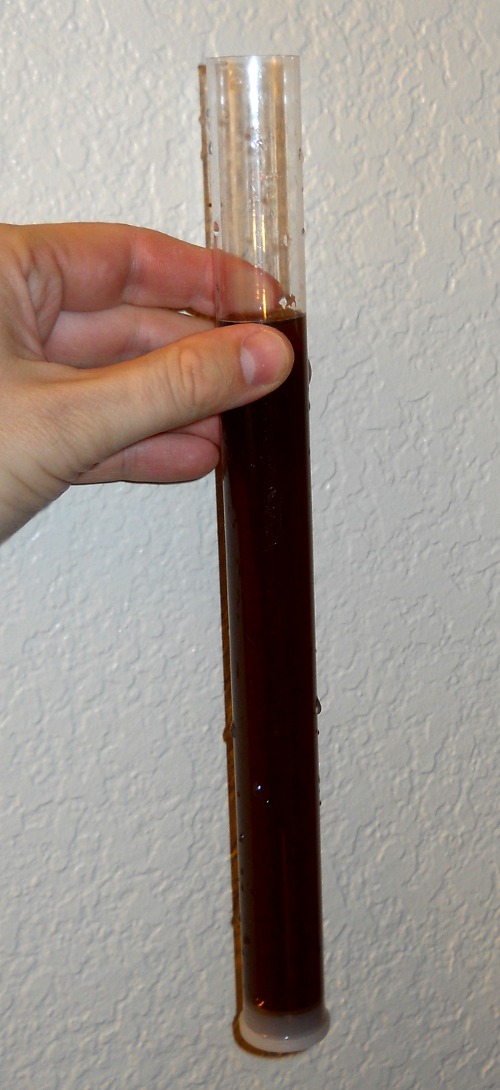
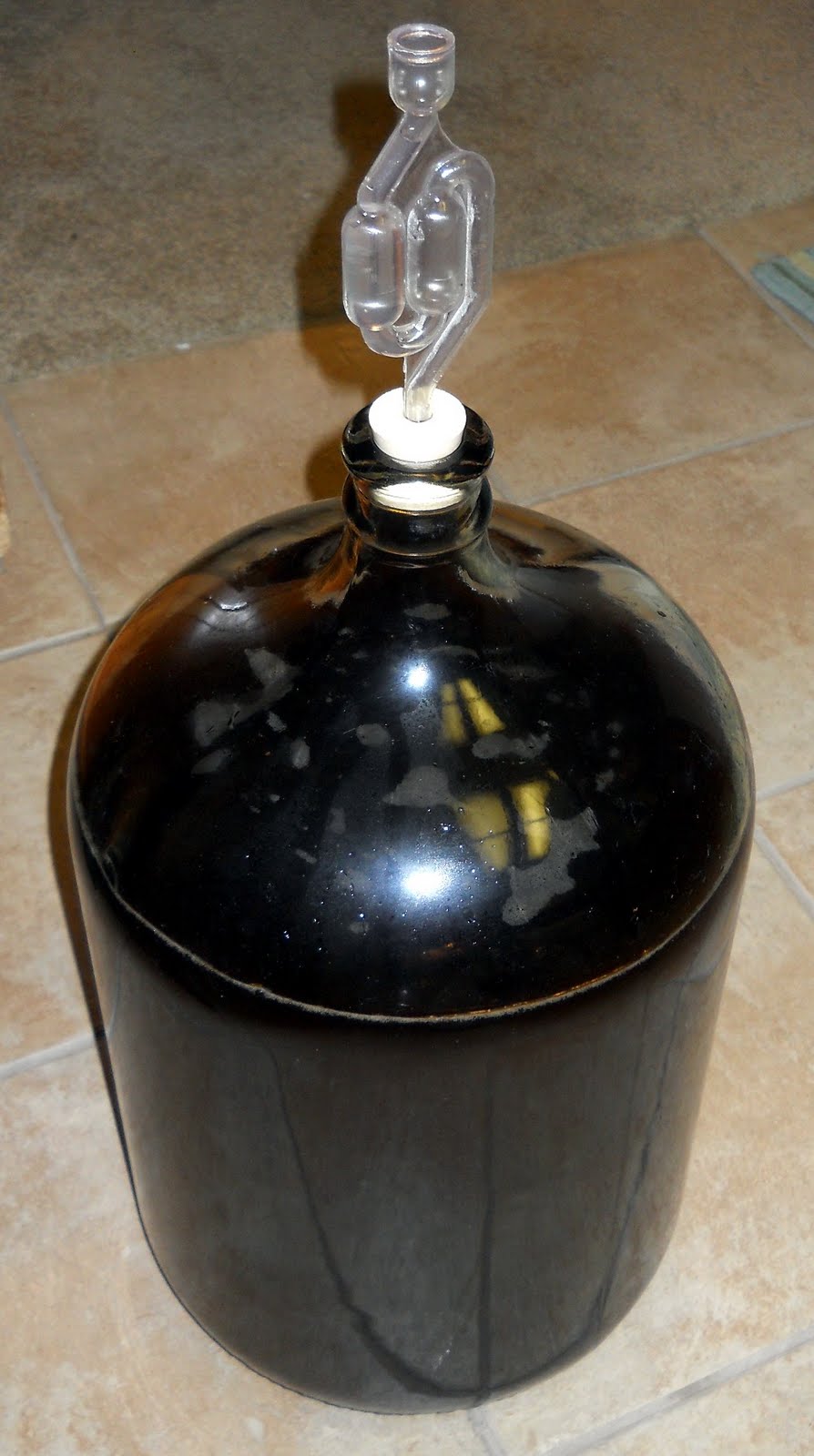
Tonight I transferred the Citation Porter over to the secondary fermenter, in which I will leave it for about 9-10 days before bottling (it was in the primary for 9 days). At 66°, it had an s.g. of 1.014; this translates to 1.014 s.g. at 60°, so no real difference there. Down from an o.g. of 1.054, I am now at 5.3% abv.

The beer is really nice; a clean taste (no overly bitter aftertaste or any off flavors), and you can really taste the roasted notes from the roasted barley coming through.

Citation Porter

It’s time for the 2013-2014 brewing season! My last few batches of the 2012-2013 tended on the lighter side (English-style bitters, wheat beers, etc.), so I have a hankering to do some porters and stouts. I rather like the Edmund Fitzgerald Porter from Great Lakes Brewing, so I found a clone recipe and modified that. The first batch is called….Citation Porter! So named because I brewed it on the night when I saw the first two citations on Google Scholar for a paper I published earlier this year. Now will this new batch increase the impact factor of my brewery?

Citation Porter

  • 12 oz. 60°L crystal malt
  • 8 oz. chocolate malt
  • 8 oz. roasted barley
  • 3 lbs. amber dry malt extract
  • 3 lbs. light dry malt extract
  • 1 oz. Northern Brewer pellet hops (9.9% alpha acid, __ beta acid)
  • 0.5 oz. Cascade whole hops (estimated 5.5% alpha acid)
  • 1 tsp. Irish moss
  • 0.5 oz. Cascade whole hops (estimated 5.5% alpha acid)
  • 1 vial White Labs London Ale Yeast #WLP013 (35 mL)

Directions

  • Steep crystal malt, chocolate malt, and roasted barley in 5 quarts of water at 154° for 45 minutes. Sparge with 2 quarts water. This is a smaller steeping volume than I normally do, but I saw a recommendation indicating that this would reduce tannin leaching (i.e., use a maximum of 3 quarts water per pound of grains). Based on the taste of the final wort, I am inclined to agree. 
  • Top up brew pot to 4 gallons, bring to a boil and add dry malt extract.
  • Once wort is boiling, add Northern Brewer hops.
  • At the 30 minute mark (post-boil), add 0.5 oz. Cascade whole hops.
  • At the 50 minute mark, add 1 tsp. Irish moss
  • At the 60 minute mark, turn off the heat and add the final 0.5 oz. of Cascade whole hops
  • Coil, transfer into primary fermenter (leaving behind most of the trub), (3 gallons into primary) and top up to 5 gallons.
  • Starting gravity was 1.053 at 74°, corrected to 1.054 at 60°. This is spot-on with what Beer Smith 2 calculated for the recipe.
  • Starting temperature, when I pitched the yeast, was 74°.

The wort is quite delicious, suggesting a nice final product is around the corner.

Vanilla Voay Porter Update

My vanilla porter has gone through the first stage of fermentation, and after one week I have now transferred it into a glass carboy for secondary fermentation. At the time of transfer, the gravity was 1.024, down from the starting gravity of 1.056. I expect that the gravity will go down a little more over the next two weeks before bottling.

The beer is nicely flavored, with no off character that I can detect. Dark color (see photo at left), lighter body, and heading towards the direction of a very drinkable porter. Interestingly, the yeast strain I used (White Labs California V ale yeast) produced a mild sulfurous aroma in the early stages of fermentation. I have read elsewhere that this is a normal characteristic for that strain, so I didn’t worry about that too much. It’s not detectable on tasting, either.

I also started some vanilla beans in vodka, to make an extract for the porter. At the recommendation of my brewing colleague Greg, I split the pods, scraped the seeds into the vodka, and then cut the pods up and threw them in too. In one week, I plan to add them to the secondary along with the rest of the beer.

Vanilla Voay Porter, in the secondary fermenter