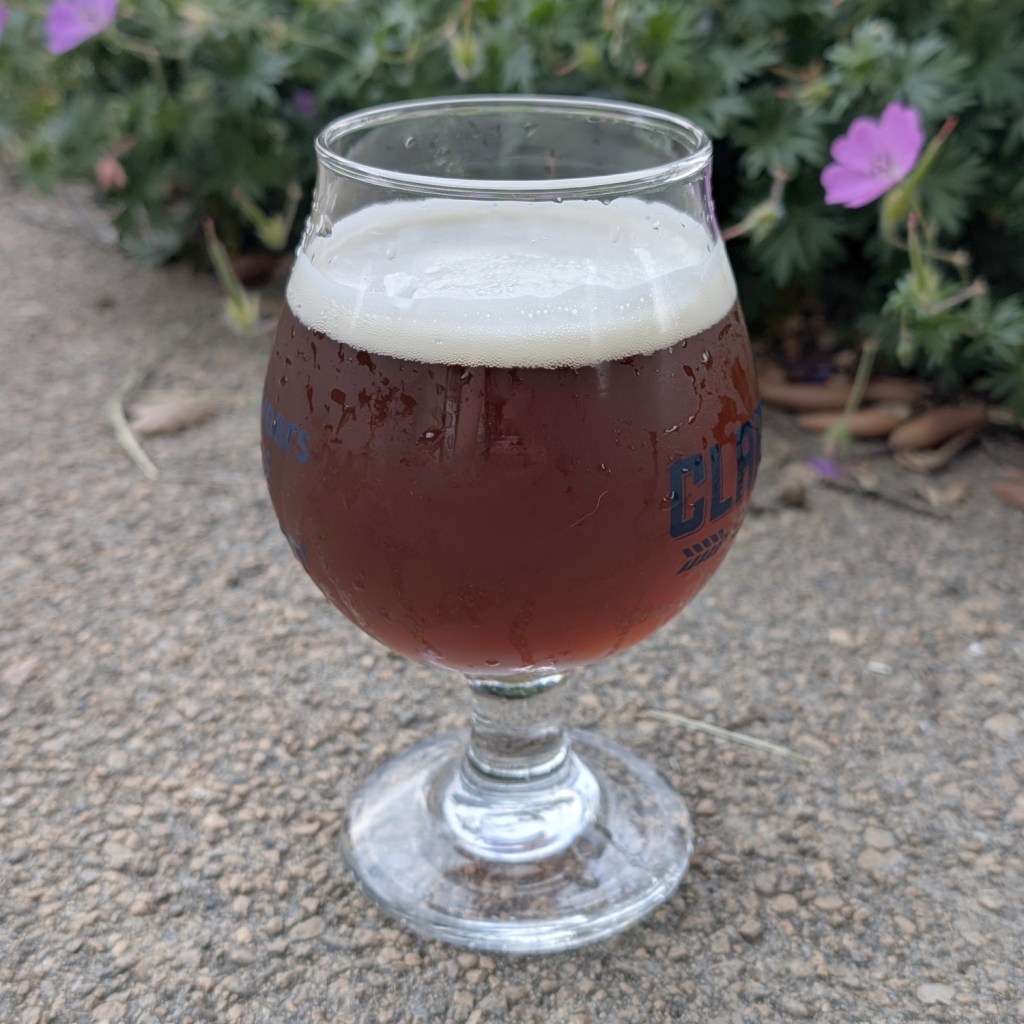
Patersbier 2025

I love the concept of a patersbier (“Father’s Beer”), as a relatively light and low alcohol yet flavorful take on a Belgian ale. As with many Belgian ales that were associated with the monastic traditions, there is plenty of romance and a good dollop of fantasy around these brews. I’m not particularly interested into delving into historicity–I’m more interested in making a beer that I want to drink!

This particular version is a bit of a kitchen sink beer, intended to sweep out odds and ends from my brewing supply. Even so, I aimed to have a sturdy malt backbone. Hops were chosen, again, to use up a few varieties. I knew a Belgian yeast was in order, so Lallemand’s Abbaye Belgian fit the bill. It’s very different from the previous patersbier I made, which was a SMaSH with pilsner malt and Cascade hops.

Along the lines of my Brew Year’s Resolution to make more small batches, this was a 3 gallon batch. I also did a quick brew day, with 30 minute mash and 30 minute boil.

Patersbier 2025

  • 2.75 lb. Vienna malt (Weyermann)
  • 2 lb. 2-row malt (Great Western)
  • 0.5 lb. Caramel Munich 60L malt (Briess)
  • 0.5 lb. Munich II malt (Weyermann)
  • 0.25 lb. Caramel Malt 120L (Briess)
  • 0.25 tsp. BrewTanB, added to mash
  • 1 oz. Styrian Goldings hop pellets (3.2% alpha), 30 minute boil
  • 0.5 oz. Crystal hop pellets (4.5% alpha), 30 minute boil
  • 1 pkg. Abbaye Belgian ale yeast

Target Parameters

  • 1.045 o.g., 1.015 f.g., 3.9% abv, 13 SRM, 26 IBU
  • Full volume mash at 158° for 60 minutes
  • Claremont tap water, no adjustment

Procedure

  • I heated the mash water to 164°, added the grains, and held at 158° with recirculation for 30 minutes. Then, I raised the mash to 168° for 10 minutes before pulling the grains.
  • In total, I collected 4 gallons of runnings with a gravity of 1.037, for 66% mash efficiency.
  • I brought the kettle to a boil and added hops per the recipe. After 30 minutes, I turned off the heat and chilled the wort to 68° before transferring to the fermenter.
  • Starting gravity was 1.044. Once I pitched the yeast, I let it ferment at ambient. I brewed the beer on 12 March 2025.
  • I kegged the beer on 24 March 2025. Final gravity was 1.013, for 4.1% abv. I added 1.5 oz. of corn sugar dissolved in ~0.5 cup of water and boiled, in order to do natural carbonation. I finished off the carbonation with forced CO2. At the time of kegging, a pleasant and spicy yeast character was evident.

Tasting

  • Appearance
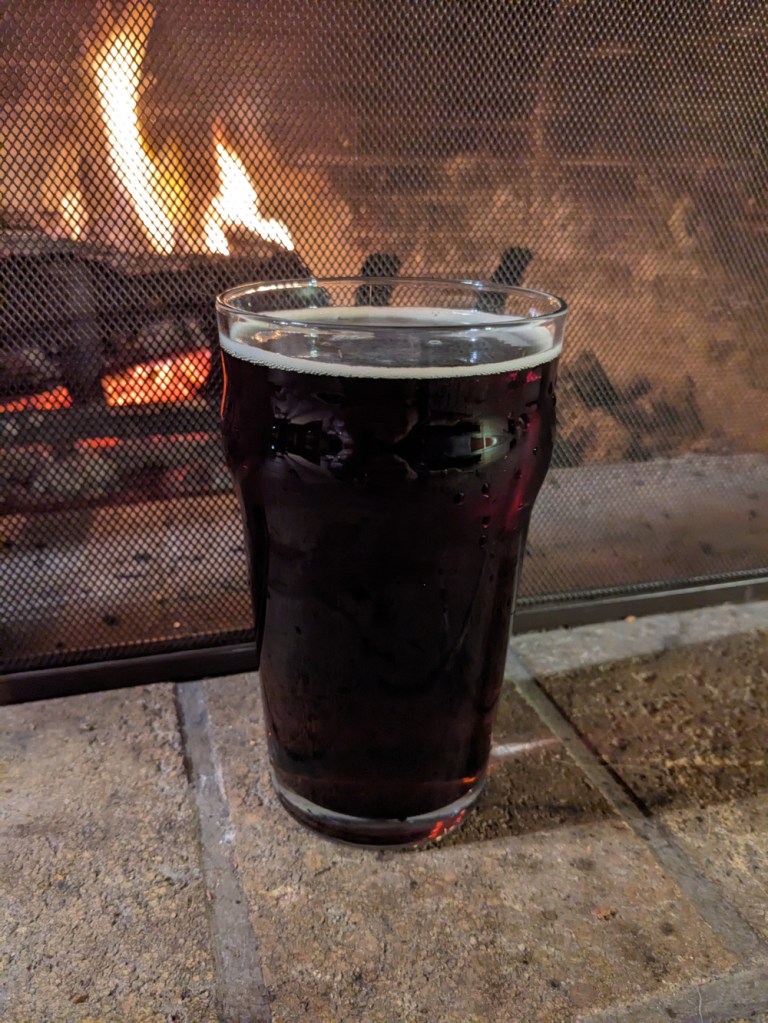
    • Medium amber beer, clear, ivory head with good persistence.
  • Aroma
    • Moderately high yeast aroma with good phenolic character; spicy notes, some red apple. Some bready and caramel notes come through as the beer warms up.
  • Flavor
    • Spicy yeast character at the forefront; medium level of malt character with a malty, bread crust quality. Medium-low level of hops.
  • Mouthfeel
    • Light body, medium level of carbonation, dry finish.
  • Would I Brew This Again?
    • This is good for what it is–easy drinking and lots of yeast character. It’s a bit thin on the body, so might benefit from a touch more crystal malt. The yeast character is perfect! As compared with my previous patersbier, I like the 2025 recipe much better.
  • Overall
    • 7/10

Nut Nut Brown Ale

I particularly enjoy dark English-style beers during the winter, and brown ale is a particularly nice style for my tastes. So, I put together a British Brown Ale recipe from an amalgamation of various online versions.

Nut Nut Brown Ale

  • 10 lb. Golden Promise malt (Simpsons)
  • 4 oz. crystal 75 malt (Bairds)
  • 4 oz. chocolate malt (Bairds)
  • 3 oz. Special B malt (Dingemans)
  • 1.25 oz. East Kent Goldings hop pellets (5.0% alpha), 60 minute boil
  • 0.25 oz. Fuggles hop pellets (4.6% alpha), 60 minute boil
  • 1 Whirlfloc tablet, 5 minute boil
  • 1 pkg. Windsor ale yeast (Lallemand)

Target Parameters

  • 1.047 o.g., 1.013 f.g., 4.5% alpha, 27 IBU, 17 SRM
  • Full volume mash at 156° for 60 minutes and 10 minute mash-out at 168°
  • Claremont tap water with Campden tablet

Procedure

  • I mashed in with 7 gallons of water at 162°, to hit a target mash temperature of 156°. I added 6 mL of 88% lactic acid to adjust the pH, at the start of the mash. After 60 minutes of recirculation, I increased the temperature to 168° and held it there for 10 minutes, before pulling the grains.
  • I collected 6.1 gallons of runnings at a gravity of 1.044, for 69% mash efficiency.
  • I brought the kettle to a boil, adding hops and finings per the recipe. After a 60 minute boil, I turned off the heat, chilled the wort, and transferred it to the fermenter.
  • I brewed this beer on 19 November 2022. It had a starting gravity of 1.049. I held the temperature at 68° for fermentation.
  • I kegged the beer on 10 December 2022. It had a final gravity of 1.025, for 3.1% abv. This was surprisingly low attenuation, which I attribute to the high mash temperature.

Tasting

  • Appearance
    • Deep cinnamon brown color with brilliant clarity; pours with a thin and persistent off-white head. Very pretty!
  • Aroma
    • Coffee and chocolate; light yeasty esters too; very pleasant.
  • Flavor
    • Cocoa and rich bread crust in the malt; moderate bitterness; slight yeasty esters again like in the aroma, with a very pleasant quality.
  • Mouthfeel
    • Medium-light body, moderate carbonation, smooth finish with a very very slightly dry quality.
  • Would I Brew This Again?
    • It’s not perhaps the most exciting style for me (relative to a porter or stout), but this is a super tasty beer that has come into its own. It’s interesting that it doesn’t taste nearly as thick as it should given the final gravity. The caramel qualities that this style is supposed to have aren’t terribly prominent, and the bread crust character is a bit off for the style also. This is a really interesting beer, but not to the literal BJCP standards. It would be a 10 on its own, but I gave it a 6 given the style considerations. It should probabkly have more caramel malts in the grist to hit the style marks.
  • Overall
    • 7/10

The Simple Monk

We’re into the season of Lent on the liturgical calendar, often observed through simple food choices or abstinence from dietary pleasures like chocolate and alcohol. Although I won’t go quite so far as to give up beer for the season, I do think it’s worth trying something a bit different for my beer. Along these lines, it seemed appropriate to make a Lenten beer, focused on the principle of simplicity.

I was inspired by the concept of a patersbier, or a low alcohol table beer that might be served at an abbey or monastery. This of course brings associations with Belgian styles, leading me towards a Belgian ale yeast. I was determined to go for simplicity in recipe and process, and so decided to execute a SMaSH recipe. I had some pilsner malt to use up, and chose whole Cascade hops from South Dakota. I also wanted to go lower alcohol, perhaps around 4% or so, to be safely on the session side of things. A hotter mash temperature would keep the result from getting too thin, and I also wanted to keep the hop rate down to avoid being overly bitter. Finally, I aimed to keep the fermentation simple. I would do an open-style fermentation (no airlock), and let it ride at ambient temperature. Finally, instead of force carbonating, I would let the keg condition with corn sugar. It was a fun experiment! I wouldn’t claim this fits any style particularly well — the whole concept is pure fantasy, but that made the brewing even more fun as a creative process.

The Simple Monk

  • 9 lb. Viking pilsner malt
  • 1 oz. Cascade whole hops (5.5% estimated alpha), 60 minute boil
  • 1 pkg. Abbaye Belgian ale yeast (Lallemand)

Target Parameters

  • 1.044 o.g., 1.013 f.g., 4.1% abv, 3 SRM, 19 IBU
  • Full volume mash at 154° for 60 minutes
  • Claremont tap water, no adjustment

Procedure

  • I mashed in with 7 gallons of water at 159°, to hit a mash rest of 154°. I added 7 mL of 88% lactic acid, and recirculated for 60 minutes before raising the temperature to 168° for 10 minutes.
  • When I pulled the grain basket, I had 6.4 gallons of runnings with a gravity of 1.039, for 75% mash efficiency.
  • I brought the wort to a boil, adding the hops and boiling for 60 minutes.
  • Once the boil was done, I chilled to 68° and transferred to the fermenter, before pitching the yeast.
  • Starting gravity was 1.043. I brewed the beer on 5 February 2022.
  • In the interest of simplicity, I left the beer to ride at ambient indoors (the garage was going to be a bit too cool). I also tried an open fermentation of sorts–instead of an airlock or blowoff tube, I just put a bit of foil over the outlet of the fermenter.
  • I kegged the beer on 16 February 2022, adding 2.6 oz. of corn sugar boiled in a cup of water. The beer carbonated at room temperature for about two weeks, before I put it into the keezer.
  • Final gravity was 1.014, for 3.8% abv.

Tasting

  • Appearance
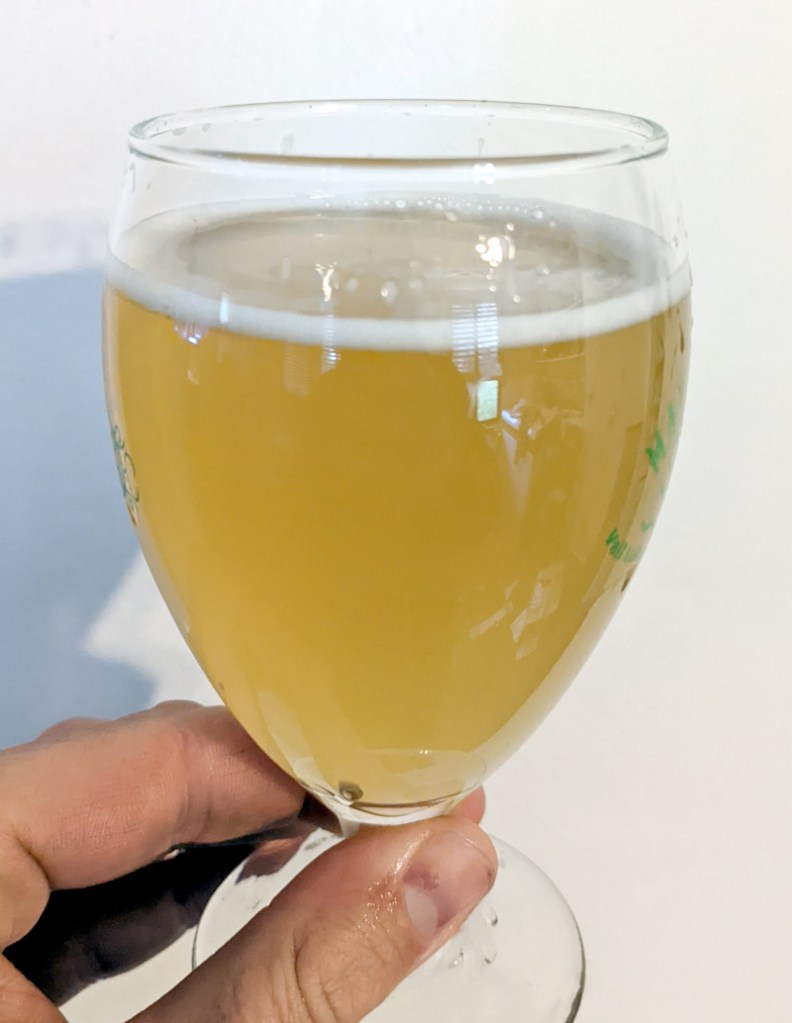
    • Straw colored beer, very hazy, with a thin white head that sticks around only as a thin ring around the margin of the glass.
  • Aroma
    • Spicy yeast character, and a bit of clove aroma. It’s very clearly Belgian, and pretty nice. As the beer warms up, I get a tiny bit of hot alcohol character.
  • Flavor
    • Slightly grainy malt flavor, with low bitterness. Yeast character has a very slight tartness, and a bit of pepper and clove.
  • Mouthfeel
    • Medium light body, with medium-low carbonation. There is a slight astringency on the finish; it’s not over the top, but a bit noticeable.
  • Would I brew this again?
    • This was a super fun experiment. I enjoyed the freedom that the simplicity brought, in not having to really fret over a recipe or over the details of mashing and fermentation. It isn’t the best beer I’ve ever made (the slight astringency is a bit of a ding), but the experience was really enjoyable, and it’s a highly drinkable brew.
  • Overall
    • 7/10

Winter Dream Ale

I often make a special, small-batch beer for Christmas, something that’s rich and high alcohol and perfect for cold (southern California) evenings next to the fire. For the 2021 edition, I threw together a Belgian-style winter warmer. I wanted a rich, sumptuous malt backbone, and to let the fermentation add any spice, rather than using actual species. I used up a few ingredients on-hand, which just happened to be perfect for my vision of the beer.

Winter Dream Ale

  • 8 lb. Vienna malt (Weyermann)
  • 1.25 lb. Munich light malt (Chateau)
  • 11 oz. Special B malt (Dingemans)
  • 4 oz. Crystal 120 malt (Great Western)
  • 0.75 oz. Magnum hop pellets (10.1% alpha), 60 minute boil
  • 1 Whirlfloc tablet, 5 minute boil
  • 1.5 g yeast nutrient (WLN1000, White Labs)
  • 8 oz. honey, add to flameout
  • 2 pkg. Abbay Belgian ale yeast (Lallemand)

Target Parameters

  • 1.086 o.g., 1.018 f.g., 9.2% abv, 22 IBU, 22 SRM
  • Mash held at 150° for 60 minutes, and 10 minute mash-out at 168°, with ~0.75 gallon sparge
  • Claremont tap water

Procedure

  • I heated 4.5 gallons of water to 159°, and added the grains to hit a mash temperature of 150°. I held here (with recirculation) for 60 minutes, before raising the temperature to 168° and holding there for 10 minutes. Then, I removed the grain basket and sparged with 0.75 gallons of hot water.
  • I collected 4.5 gallons of runnings with a gravity of 1.060, for 71% mash efficiency.This was a good efficiency but too high of a volume. So, I boiled for an extra 30 minutes before adding hops.
  • After 30 minutes of boiling, I added the hops, honey, and finings per the recipe, boiling for an addition 60 minutes.
  • Starting gravity was 1.076; this was a bit short of the recipe, but I didn’t worry about it too much.
  • I chilled to 80°, transferred to the fermenter, and let the wort chill overnight before pitching the yeast.
  • I brewed the beer on 12 October 2021, and pitched the yeast on 13 October 2021.
  • I fermented at 65°, and raised the beer to 70° (free rise) on 20 October 2021, to help the yeast ferment out.
  • I kegged the beer on 5 November 2021. Final gravity was 1.020, for 7.5% abv.

Tasting

  • Appearance
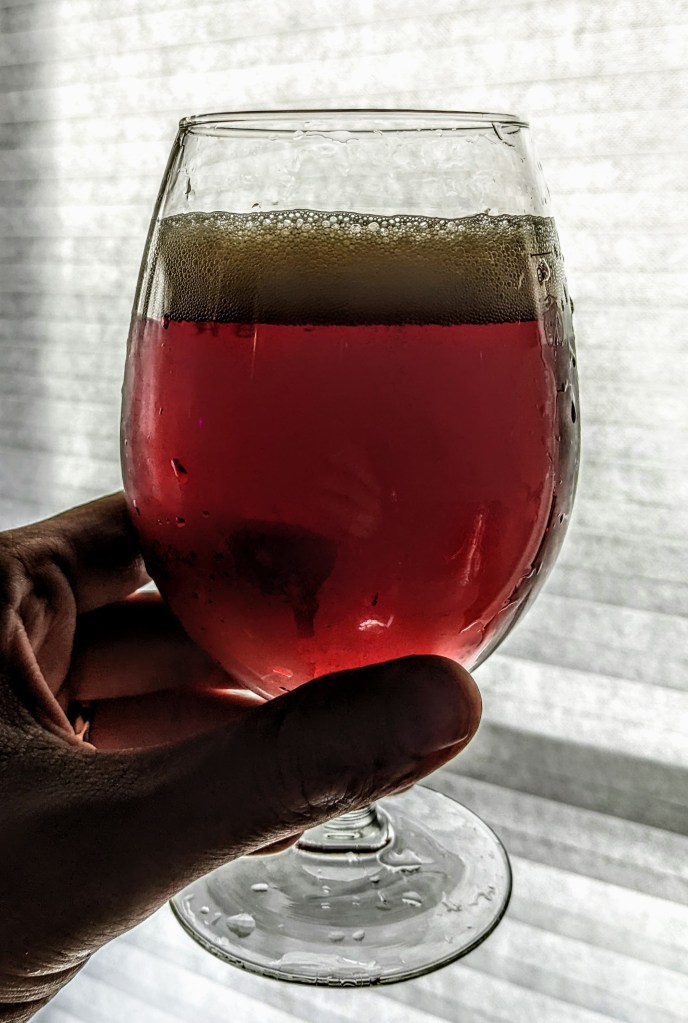
    • Deep reddish amber and very clear; there is a persistent and creamy ivory head.
  • Aroma
    • Spicy aroma, with a bit of caramel and dried dark fruit.
  • Flavor
    • Wonderfully rich! There is a caramel and toffee malt character with a bit of dried fruit and sweet candy. A bready malt quality sneaks up behind that. Bitterness is moderate, and the yeast character has a slightly spicy quality. Fermentation quality is really nice, and I dodged any hot alcohol character.
  • Mouthfeel
    • Medium body, with medium-high carbonation and a smooth finish. The body is maybe a little thinner than I had envisioned.
  • Would I brew this again?
    • I am really, really happy with the results in this recipe. It absolutely hit the rich, complex qualities I wanted, and is highly drinkable. The fermentation quality is perfect too! The only minor ding is that starting gravity was a touch low, which decreases the body a little, but I think that worked out okay in the end. I would rather the body be somewhat thin, than the beer be too sweet and cloying.
  • Overall
    • 8/10

Ill-Tempered Gnome Clone

As I am pretty sure I’ve lamented previously, I sometimes get too far down the rabbit-hole of brewing to a particular style. IPA, stout, porter, pilsner…all are great, but that can be at expense of creativity. On the other hand, I grew wary of the big and bitter beers that I gravitated towards early in my craft beer days. And yet…I now find myself picking up a bottle of Arrogant Bastard every few weeks, and kind of enjoying it. The excesses of craft beer recipes are still excessive, but I’m finding that they can be enjoyable in moderation and on occasion.

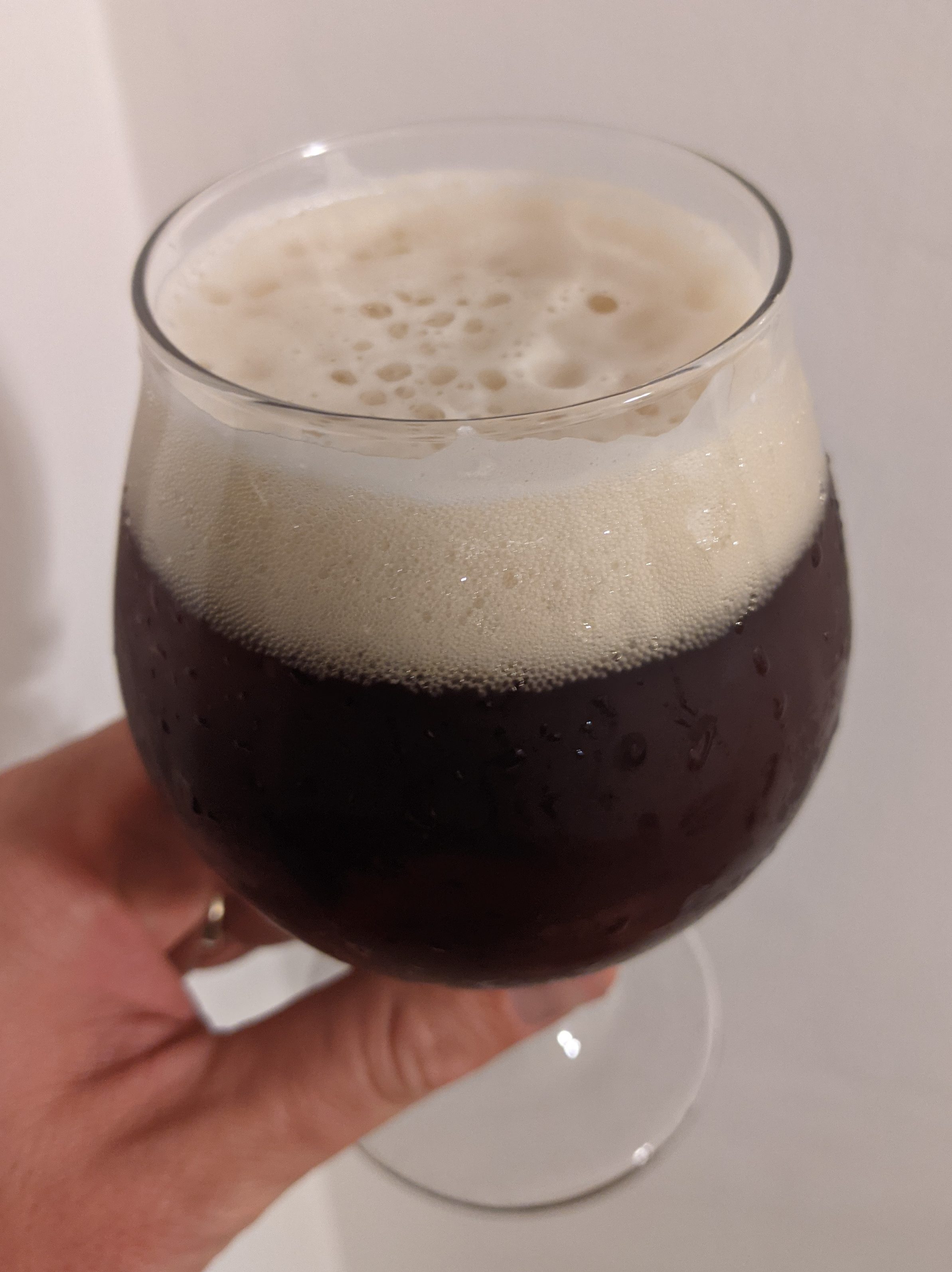
dark brown beer with tan head, held in clear tulip glass against a white wall

To scratch this itch, I paged through the Craft Beer For the Homebrewer book, and my eyes settled upon a clone recipe for something called Ill-Tempered Gnome. Produced by Oakshire Brewing, this recipe looked big, dark, and bitter, and was billed as an American Brown Ale (on the website) or a winter warmer (in the beer book).

Quite intrigued, I pulled together the ingredients, making a minor substitution or two based on availability for some of the harder-to-find malts (e.g., I had to go with a different brand of coffee malt versus Franco-Belges Kiln Coffee Malt in the original recipe). That said, I did try to adhere as closely as possible to the book’s version, which I was told (by Denny Conn himself) came direct from the brewer.

Ill-Tempered Gnome Clone

  • 12 lb. California Select 2-row malt (Great Western)
  • 11 oz. crystal 15° (Great Western)
  • 5 oz. coffee malt (Simpsons)
  • 5 oz. honey malt (Gambrinus)
  • 5 oz. special B malt (Dingemans)
  • 4.5 oz. special roast malt (Briess)
  • 3.5 oz. chocolate malt (Briess)
  • 1 oz. Nugget hop pellets (12.9% alpha), 60 minute boil
  • 0.5 oz. Centennial hop pellets (8.1% alpha), 20 minute boil
  • 0.5 oz. Crystal hop pellets (4.5% alpha), 20 minute boil
  • 1 Whirlfloc tablet, 5 minute boil
  • 1 oz Cascade whole hops (est. 5.5% alpha), 5 minute boil
  • 2 pkg. Safale American ale yeast (US-05)

Target Parameters

  • 1.062 o.g., 1.015 f.g., 6.3% abv, 58 IBU, 19 SRM
  • Full volume mash at 154° for 60 minutes, with 10 minute mash-out at 168°
  • Claremont tap water, adjusted to reach estimated profile of 75 ppm Ca, 11 ppm Mg, 93 ppm Na, 149 ppm sulfate, 105 ppm Cl, 156 ppm bicarbonate; RA 68, 128 ppm alkalinity; 60 ppm effective hardness.

Procedure

  • I heated 7.5 gallons of water to 161°, adding a Campden tablet to remove chloramines. Then, I mashed in with the grains to hit a temperature of 154°. I added 7 mL (1.5 tsp.) of 88% lactic acid to adjust the pH of the mash, and recirculated at 154° for 60 minutes. Then, I raised the mash temperature to 168° and held it there for 10 minutes, before removing the grains.
  • In total, I collected 6.35 gallons of runnings with a gravity of 1.055, for 68% mash efficiency.
  • As I brought the runnings to a boil, I added 5 g of gypsum to adjust the water profile.
  • To bring the gravity up a bit, I boiled for an extra 10 minutes, before beginning to add the hops. I then boiled for an additional 60 minutes, adding hops and kettle finings per the recipe.
  • After the 60 minute boil, I chilled to ~75°, transferred to the fermenter, and chilled down to 65° in the fermentation chamber. Then, I pitched the two packages of yeast.
  • I brewed the beer on 9 October 2021, and fermented at 65°. Starting gravity was 1.061.
  • On 20 October 2021, I let the beer free rise to 70° (after removing it from the fermentation chamber).
  • I kegged the beer on 23 October 2021. At this point, its gravity was 1.017. This equates to 5.9% abv.

Tasting

  • Appearance
    • The beer pours with a thick and frothy ivory head, and awesome lacing as the head subsides slowly. The beer is a brilliantly clear reddish amber in color in a tulip glass, and is a nice even brown in a tall glass.
  • Aroma
    • Resiny hops are at the front, with toffee and coffee malt aroma alongside some caramel. The malt/hop balance is spot-on.
  • Flavor
    • Moderately high bitterness, with a resin and pine quality to the hops, for an extended bitterness in the finish. This beer has a full malt character, with caramel at the front and a slight bit of chocolate at the back. Delicious!
  • Mouthfeel
    • Medium-full body, with moderate carbonation and an off-dry finish.
  • Would I Brew This Again?
    • YES! The resiny hops plus rich malt character are an awesome combo. The beer is straight out of 1997 in terms of its traditional hops and big flavors, but I love it for that. Who knows if my version is a true clone, but do I really care? I love this beer! In particular, it’s not really a winter warmer (in terms of the overspiced recipes so common out there), but definitely closer to an American brown ale. I’ll do this one again.
  • Overall
    • 10/10