
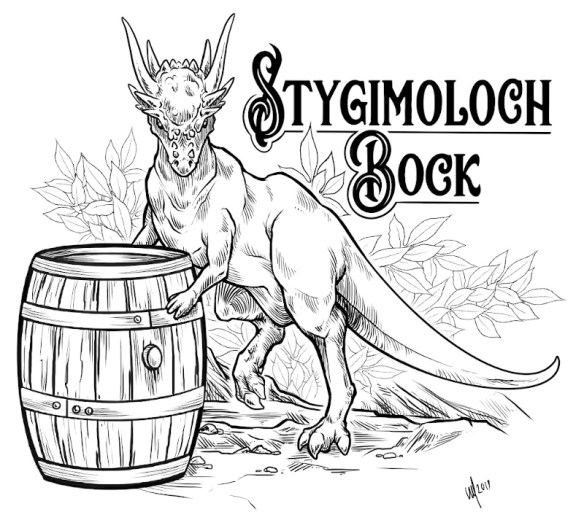
One of my favorite recipes has been Stygimoloch Bock, which looms large in my mind for its rich maltiness and drinkability. Somewhat surprisingly, then, my records show that I brewed this only twice before, in 2019 and 2020. Time for another batch!
The recipe is pretty well locked in, so I made only the smallest of adjustments. I swapped out the Caramel Munich 60L by Briess for CaraMunich by Weyermann, to get a 100% German malt bill. I also used Perle for the bittering hops (versus Magnum or Mt. Hood in previous versions) and swapped in Diamond lager yeast. So, I suppose that means it’s a very different recipe in some ways across versions, but the malt is the core here, and the proportions on that are fairly unchanged.
Stygimoloch Bock 2025
- 9 lbs. Munich II malt (Weyermann)
- 5 lbs. Munich I malt (Weyermann)
- 8 oz. CaraMunich II (Weyermann)
- 4 oz. melanoidin malt (Weyermann)
- 1 oz. Carfa Special III malt (Weyermann)
- 0.5 tsp. BrewTanB, added to mash
- 1.15 oz. Perle hop pellets (6.3% alpha), 60 minute boil
- 0.5 tsp. BrewTanB, 10 minute boil
- 1 Whirlfloc tablet, 5 minute boil
- 3 pkg. Diamond lager dry yeast (Lallemand)
Target Parameters
- 60 minute infusion mash, 152°, full volume mash
- 1.068 o.g., 1.017 f.g., 6.8% abv, 23 IBU, 16 SRM
- Claremont tap water, with carbonates knocked back by addition of 6.5 mL 88% lactic acid, to hit target parameters of 44 ppm Ca, 8 ppm Mg, 89 ppm Na, 50 ppm sulfate, 110 ppm Cl, 20 ppm bicarbonate.
Procedure
- I neutralized the carbonates in the tap water with 6.5 mL of 88% lactic acid in 7.65 gallons of water, along with a half of a Campden tablet to take care of chloramines.
- I heated the water to 159° and added the grains, holding at a mash temperature of 152° for 60 minutes, with recirculation.
- After 60 minutes, I raised the mash to 168°, held it there for 10 minutes, and then removed the grains.
- In total, I collected 6.4 gallons of runnings with a gravity of 1.055, for 64% mash efficiency.
- In order to raise the gravity a bit, I brought the runnings to a boil and boiled hard for 15 minutes before adding the hops.
- Once the hops were added, I proceeded with 60 more minutes of the boil, adding finings per the recipe.
- After boiling for a total of 75 minutes, I turned off the heat, and chilled down to 72° before transferring into the fermenter and cooling down to 50°. It took around 3 hours before I pitched the yeast.
- I brewed this beer on 18 January 2025. Starting gravity was 1.067.
- Starting fermentation temperature was 50°; I raised it to 51° on 21 January, and then to 60° on 10 February 2025. I cold crashed to 34° on 13 February 2025.
- I pulled the beer to room temperature on 17 February 2025 to make room in the fermentation chamber, and then kegged it on 18 February 2025, with a non-closed transfer.
- Final gravity was 1.020, for 6.3% abv.
- I cold conditioned the beer until 26 March 2025, when I put it on tap. The beer was brilliantly clear at this point.
Tasting
- Appearance
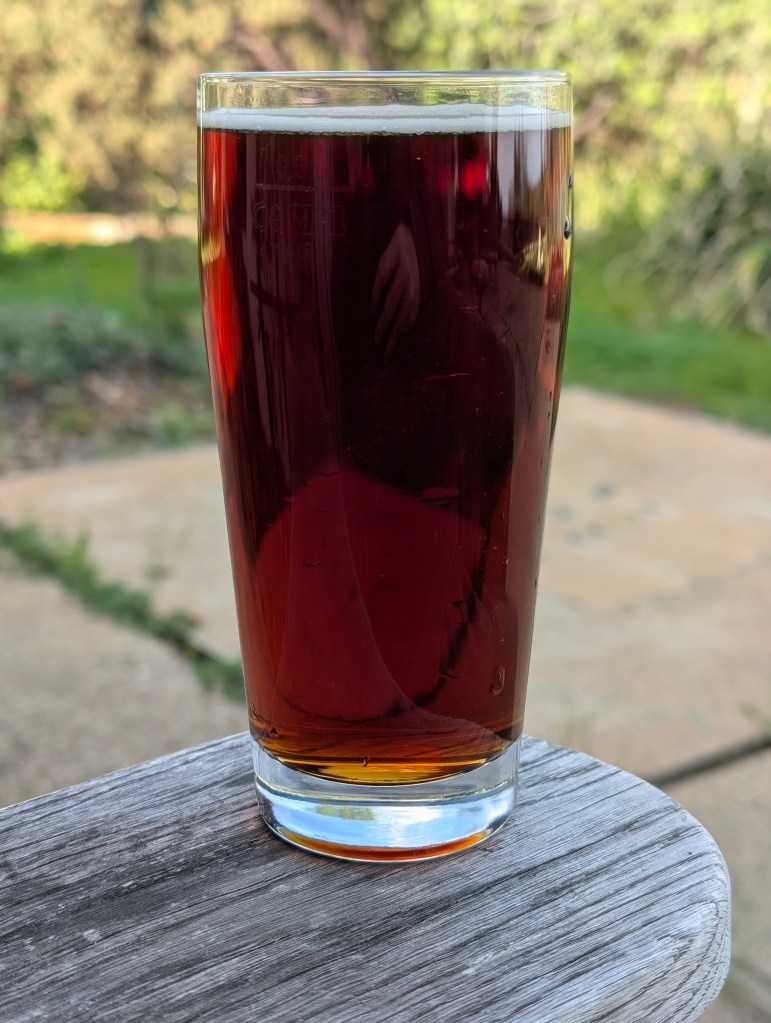
- Brilliantly clear, deep amber beer, which pours with an ivory head of moderate persistence. It’s simply gorgeous!
- Aroma
- Toasty dark bread crust and dark fruit aroma in addition to rich maltiness. Clean yeast profile, hops perceptible.
- Flavor
- Rich maltiness with bread crust quality alongside that. Moderate bitterness, but the malt is definitely the center of attention.
- Mouthfeel
- Medium-full body, moderate carbonation, smooth finish, with only a slight lingering bitterness. Slightly dry, but not cloying.
- Would I Brew This Again?
- This recipe is a winner! It’s a perfect beer to close out the winter months and welcome cool spring afternoons and evenings. I wouldn’t change a thing about it at this point.
- Overall
- 10/10
 Andy's Brewing Blog