Encampment American Strong Ale

It’s time for another Thanksgiving beer! I always make a special small batch for friends and family, usually aiming for something a little bigger and richer than my usual. It’s a good opportunity to try new styles, or at least styles I rarely brew. The Fall 2025 issue of Craft Beer & Brewing highlighted an American Strong Ale recipe, which seemed like a perfect Thanksgiving kind of ale. It’s a bit bigger, bolder, and maltier, getting close to IPA territory but not directly inside of it.

My attempt at the recipe is a touch more bitter than the original, at an estimated 65 IBU versus 54 IBU’s, and I used similar but not identical hops for the bittering and late additions (Columbus and Amarillo instead of Nugget and Motueka, respectively). I also used WLP066 (London Fog) instead of the recipe’s Wyeast 1318 (London Ale III). According to David Taylor’s Yeast Master chart, WLP066 is close to 1318, which is good enough for me. The grain bill is pretty much identical, so my interpretation is still in the ballpark.

Encampment American Strong Ale

  • 3.75 lb. Munich malt (BEST, ~7.6 SRM)
  • 3.75 lb. Maris Otter pale ale malt (Thomas Fawcett)
  • 10 oz. flaked barley
  • 8 oz. Victory malt (Briess)
  • 4 oz. Special B malt (Dingemans)
  • 4 oz. Viking caramel 100 (crystal 40 equivalent)
  • 0.5 oz. Columbus hop pellets (15.6% alpha), 60 minute boil
  • 0.5 oz. Amarillo hop pellets (10.4% alpha), 10 minute boil
  • 0.5 whirlfloc tablet, 5 minute boil
  • 1.5 g yeast nutrient (White Labs WLN1000), 5 minute boil
  • 1 oz. Amarillo hop pellets (10.4% alpha), 10 minute whirlpool
  • 1 pkg. London Fog ale yeast (White Labs WLP066)

Target Parameters

  • 60 minute infusion mash, 154°, full volume mash
  • 1.075 o.g., 1.017 f.g., 7.8% abv, 65 IBU, 17 SRM
  • Claremont tap water adjusted to hit target of 92 ppm Ca, 24 ppm Mg, 102 ppm Na, 200 ppm SO4, 130 ppm Cl, 10 ppm bicarbonate
  • 2.5 gallon yield

Procedure

  • I collected 4.1 gallons of tap water, adding a Campden tablet, 4.2 mL of 88% lactic acid, 3.5 g of gypsum, and 1 g of epsom salt to hit my water target.
  • Next, I heated the strike water to 162°, added the grains, and held at 154° with recirculation for 60 minutes. Finally, I heated the mash to 168° for 10 minutes, before removing the grains.
  • In total, I collected 3.5 gallons of runnings at 1.055, for 57% mash efficiency. That’s pretty dismal, but I suppose not surprising given the amount of grains used. Additionally, I’ve noted that this Maris Otter malt has been low on efficiency overall.
  • I heated the runnings to a boil, adding hops and finings per the recipe. I boiled at a higher level of vigor, to raise the gravity a bit.
  • After the 60 minute boil, I turned off the heat, added the whirlpool hops, and recirculated for 10 minutes before removing the hops and chilling to 78° before transferring to the fermenter.
  • I chilled the beer down to 64° before pitching the yeast.
  • I brewed this beer on 13 September 2025. Starting gravity was 1.072.
  • Fermentation kicked off within 24 hours, showing slight signs of fermentation on the surface of the beer. Active bubbling was evident within 36 hours.
  • I fermented the beer at 64°, and moved it to ambient on 21 September 2025.
  • I kegged the beer on 5 October 2025, with 2.7 oz. of corn sugar dissolved in 3/4 cup of water.
  • After two weeks, I moved the beer into the conditioning chamber and force carbonated the rest of the way.
  • Final gravity was 1.024, for 6.4% abv.

Tasting

  • Appearance
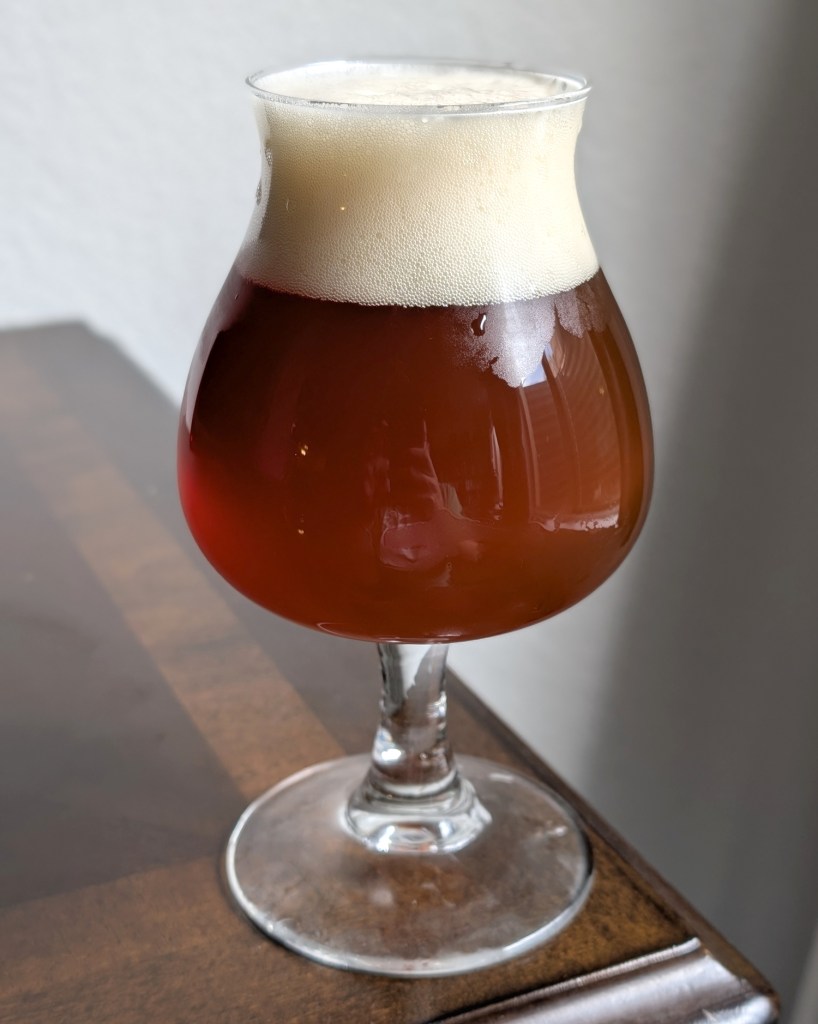
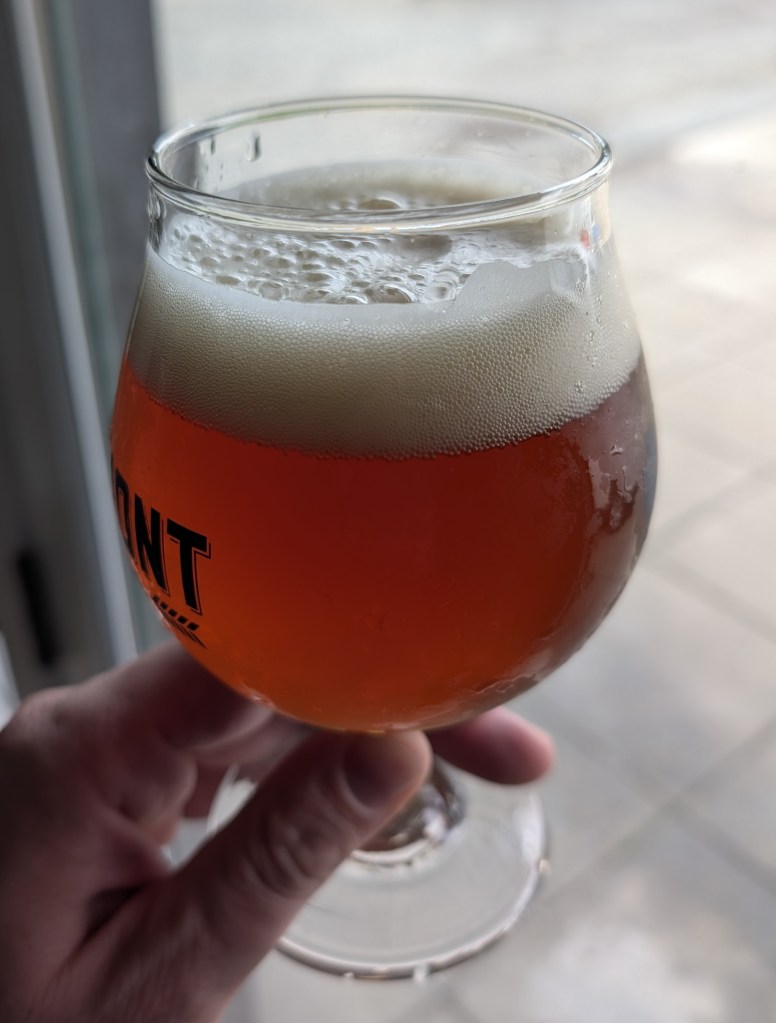
    • Amber-orange beer with a medium-low level of haze, pouring with a persistent ivory head that leaves a moderate level of lacing on the glass.
  • Aroma
    • Medium level of malty and caramel aroma. Resin and pine hop aroma at a medium-low level, with a slight citrus hint. Very slight alcohol hot note on the aroma.
  • Flavor
    • Bready and malty sweet malt character at a medium level, with a light caramel backend. Medium high level of bitterness, with resiny and piney character.
  • Mouthfeel
    • Medium-high body, moderate carbonation, smooth finish, only slightly dry.
  • Would I Brew This Again?
    • This is a nice beer, and perfect for the holiday season! The haze puts it out of perfection for the style, so that dings it a little bit. I might like a touch more malt complexity, but I think it might improve with more aging or dropping the yeast out via finings.
  • Overall
    • 7/10

Live Oak Canyon Ale 2024

As is tradition, I crafted a special batch for the Thanksgiving celebration, a multi-day affair with friends and family. This is a time when I like to roll out a special batch, often a bigger beer that can be savored in smaller (or bigger) pours. Last winter, I experimented with a wood-aged imperial red IPA, and it was so good that I decided to roll it forward into this year’s Thanksgiving beer. It was an extra fun brewing session, in that I hosted my homebrew club to assist with the brew day!

Stylistically, this is an imperial red IPA, or something like it. It’s very much a beer from yesteryear, in the thick of the IBU wars–big, bold, and unapologetically in your face. Versus the 2023 version, the 2024 edition is pretty much the same grist but different hops to reflect what I had on-hand. I used Moutere as my bittering hops, in order to finish out the ounce left in my hop stash; the addition of Centennial and Simcoe at the whirlpool and dry hop stages is different from last year (which used HBC 522 and Talus).

Live Oak Canyon Ale

  • 10.5 lb. 2-row malt (Briess)
  • 13 oz. caramel malt 120L (Briess)
  • 0.5 tsp. BrewTanB, added to mash
  • 1 oz. Moutere hop pellets (19.5% alpha), 60 minute boil
  • 0.25 tsp. BrewTanB, 10 minute boil
  • 0.75 lb. corn sugar, 5 minute boil
  • 1 Whirlfloc tablet, 5 minute boil
  • 2 oz. Centennial hop pellets (8.1% alpha), 15 minute whirlpool
  • 1 pkg. WLP001 (White Labs), California Ale dry yeast
  • 1 medium toast American oak Beer Stix carboy stick, added to primary and carried over to keg
  • 2 oz. Simcoe hop pellets (12.4% alpha), dry hop in keg

Target Parameters

  • 1.092 s.g., 1.015 f.g., 10.4% abv, 113 IBU, 17 SRM
  • Infusion mash, held at 152° for 60 minutes and 168° for 10 minutes, with sparge
  • Claremont tap water, with Campden tablet, adjusted with minerals to achieve 58 ppm Ca, 23 ppm Mg, 54 ppm Na, 155 ppm SO4, 60 ppm Cl, 10 ppm CO3, -47 ppm RA

Procedure

  • Starting with 5.6 gallons of water, I added 4 mL of 88% lactic acid to neutralize the carbonates. Then, I added 2 g epsom salts and 2 g gypsum, to achieve my target water profile.
  • I heated the strike water to 161°, added the grains, and hit a 152° mash temperature. I also added 4 mL of 88% lactic acid, to adjust the pH.
  • After a 60 minute mash and recirculation, I raised the mash temperature to 168° for 10 minutes, before pulling the grains.
  • I had neglected to pull the sparge water from the strike water, so I had to sparge with ~0.5 gallons of water, which topped up my volume a bit beyond that which was intended. This meant a longer boil.
  • In total, I collected 5.35 gallons of runnings with a gravity of 1.055, for 70% mash efficiency.
  • I boiled for 45 minutes before starting the formal timer, which meant a 105 minute boil total.
  • After the initial 45 minutes of boiling, I began adding hops and other finings per the recipe, with corn sugar added at the very end.
  • After the boil, I chilled the beer down to around 78°, before transferring to the fermenter and chilling to 64° in my fermentation chamber and pitching the yeast.
  • I brewed this beer on 12 October 2024; it had a starting gravity of 1.085. Once pitching the yeast, I fermented at 64°.
  • I soaked the oak stick in water overnight, and then put it into the microwave for around 90 seconds to flash steam and sanitize. I spritzed the oak with StarSan, before adding it to the fermenter. The oak was added to the primary fermenter on 15 October 2024.
  • I kegged the beer on 31 October 2024, adding the dry hops in a baggie and also transferring the oak to the keg. I left the beer at ambient for this phase.
  • Final gravity was 1.016, for 9.3% abv.
  • I left the keg at ambient until 6 November 2024, when I removed the dry hops and oak, moved the keg to the conditioning chamber, and let it condition and carbonate at 34°.

Tasting

  • Appearance
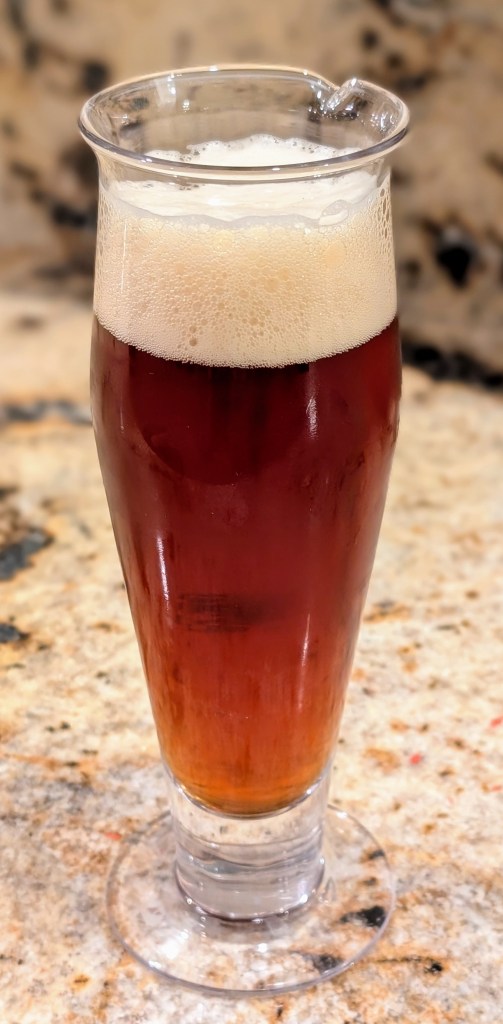
    • This is a deep reddish amber beer, very clear, which pours with a persistent and fine ivory head. It’s very pretty!
  • Aroma
    • The nose has a citrus and fresh pine hop aroma at a moderate level, with vanilla-type woodiness and light caramel behind that. The wood comes through more prominently as the beer warms, along with a light alcohol aroma.
  • Flavor
    • Very bitter, with resin and citrus pith qualities, and a hint of fresh orange zest; there is a modest level of woodiness as the beer warms up. A light and sweet caramel flavor is at the back end.
  • Mouthfeel
    • Medium body, moderate carbonation, dry finish.
  • Would I Brew This Again?
    • This is a good one! I think that last year’s version was maybe a touch better; perhaps Simcoe and Centennial don’t quite hit the mark for what the beer needs. The recipe upon which I based this beer used a mix of Simcoe and Mosaic, so I might try those in a future iteration. Either way, this is a highly drinkable beer for as big as it is, even if in the “sipping beer” category.
  • Overall
    • 9/10