Old Speckled Hen Homage

As a semi-mass-market English ale, Old Speckled Hen is one of my favorites. I think it’s mainly due to the name and associated nostalgia of my early days of better beer exploration, but in any case it’s something I come back to from time to time. A decade ago, I attempted a clone, which turned out okay but not great. This beer has been kicking around in my head ever since, and I even buy a bottle (or can) from time to time. It’s a legitimately enjoyable beer! Given that continued fascination, it was time for another attempt.
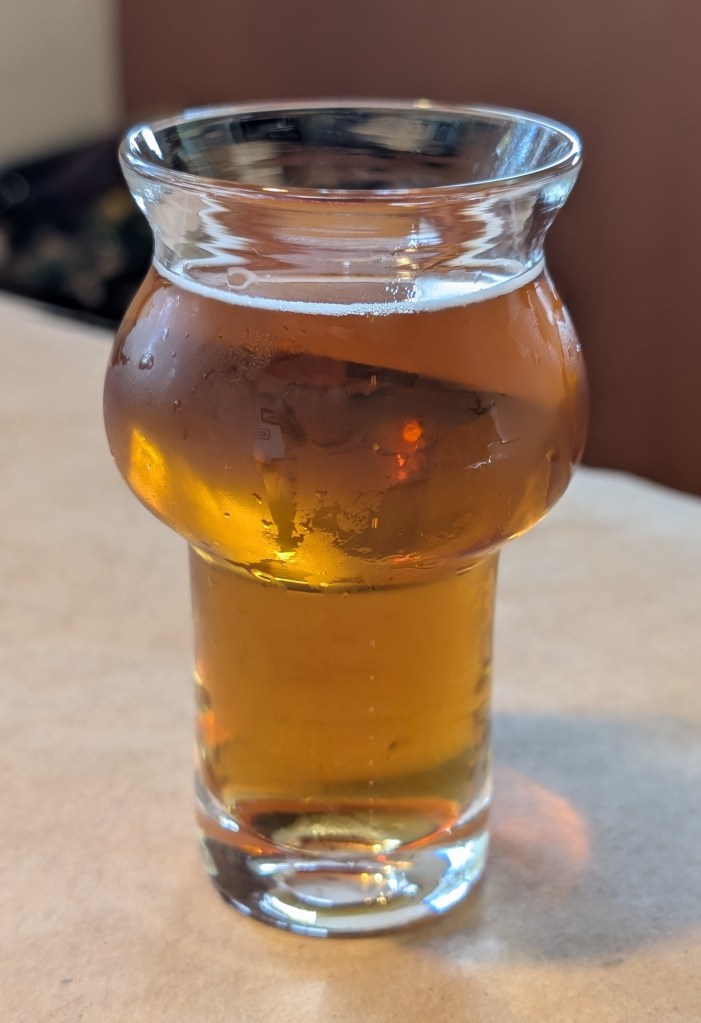
My new version is based on two recipes posted online, somewhat different from the previous template I used. The current edition leans into a more complex malt bill, reducing the previous substantial addition of crystal 120 and adding a major addition of crystal 40. I also used this as a chance to try out a dry version of WLP066 (London Fog Ale Yeast), which seemed to target much of what I was looking for in yeast character. A constant is the use of Maris Otter as the base malt, along with Lyle’s Golden Syrup to provide another flavorful fermentable.

Old Speckled Hen Homage

  • 9.5 lb. Maris Otter pale ale malt (Thomas Fawcett)
  • 1 lb. crystal 40 malt (Great Western)
  • 3 oz. caramel 120 malt (Briess)
  • 11.4 oz. Lyle’s Golden Syrup (added to boil)
  • 1 oz. Challenger hop pellets (5.6% alpha), 60 minute boil
  • 1 oz. East Kent Goldings hop pellets (5.4% alpha), 20 minute boil
  • 1 Whirlfloc tablet, 5 minute boil
  • 1 oz. East Kent Goldings hop pellets (5.4% alpha), 5 minute boil
  • 1 pkg. London Fog ale dry yeast (WLP066)

Target Parameters

  • 1.054 s.g., 1.013 f.g., 35 IBU, 10 SRM, 5.3% abv
  • Full volume mash with 60 minutes at 156° and 10 minutes at 168°; 60 minute boil
  • Claremont tap water, with Campden tablet added

Procedure

  • I heated 7.35 gallons of water to 162°, adding a Campden tablet to remove chloramines. I added the grains with 5.5 mL of 88% lactic acid, and let them mash at 156° for 60 minutes. Next, I raised the mash temperature to 168° for 10 minutes and then pulled the grains.
  • In total, I collected 6.25 gallons of runnings with a gravity of 1.046, for 73% mash efficiency.
  • I brought the mash to a boil, adding hops and finings per the recipe. After a 60 minute boil, I turned off the heat and chilled to 70° before transferring to the fermenter.
  • I brewed this beer on 24 December 2025. Starting gravity was 1.052; I am fermenting at ambient, around 65°.
  • I kegged the beer on 7 February 2025, adding 2.5 oz. of corn sugar to the keg dissolved in 0.5 cup of boiling water.
  • I let the keg sit for around 2 weeks before chilling down to ~35° until a free space opened up on my keezer.
  • Final gravity was fairly high, at 1.019, for 4.4% abv.

Tasting

  • Appearance
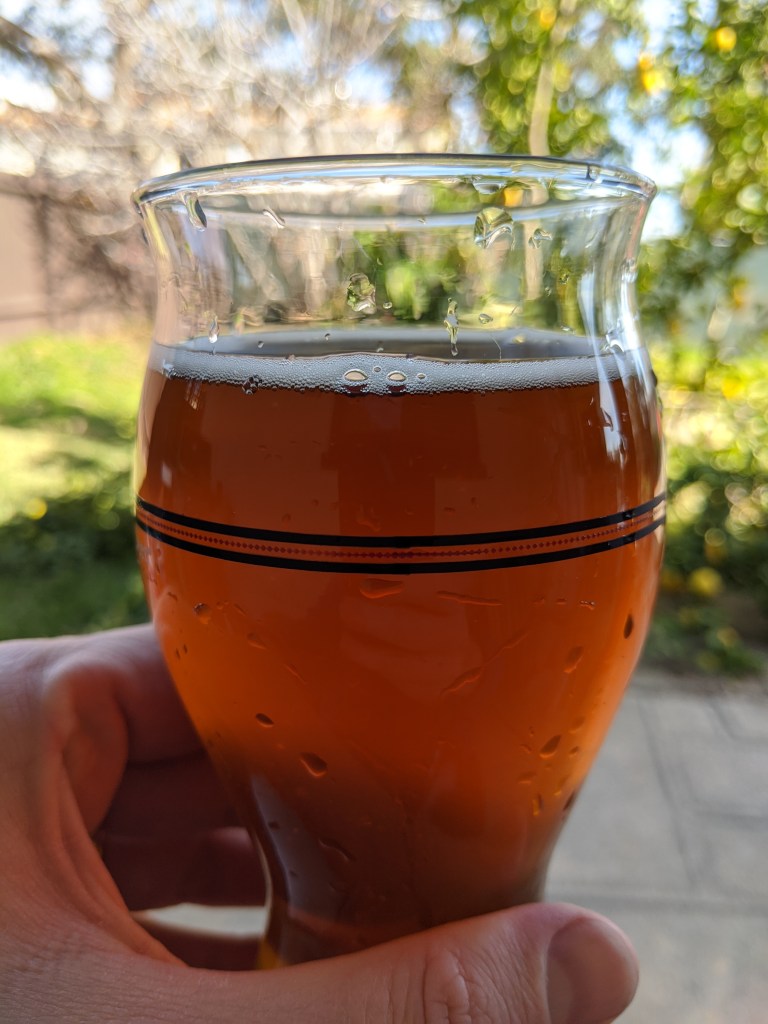
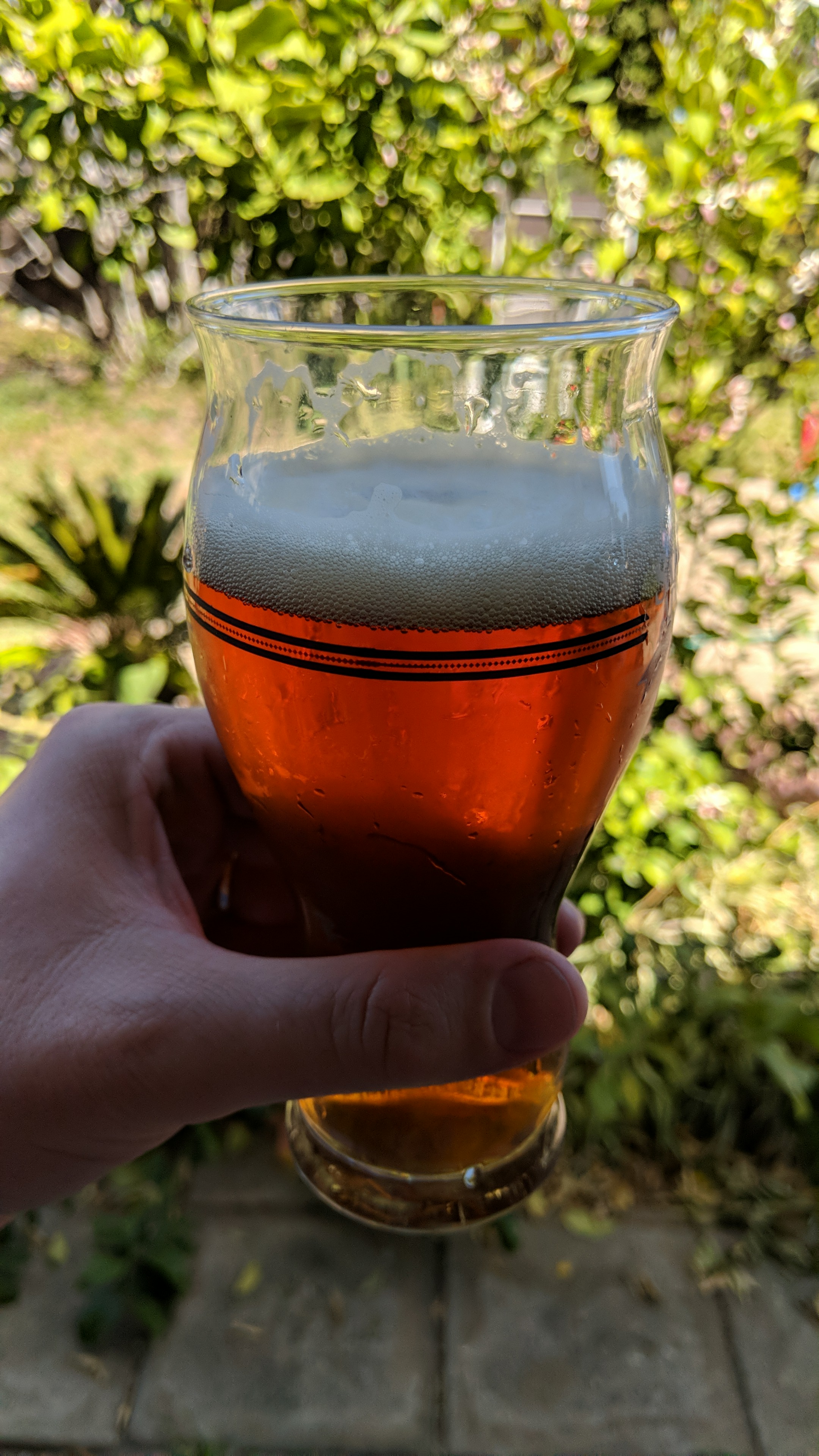
    • A very clear, light amber beer, which pours with a thin ivory head that quickly subsides. It’s a bit lighter in color than the original inspiration.
  • Aroma
    • Caramel notes are most prominent, with a little bit of candy, and a touch of light fruitiness behind that.
  • Flavor
    • Caramel and malty notes are at a moderate level. Medium-high bitterness. The hops, especially in initial tastes, have a woody and moderately herbal quality, in addition to a touch of earthiness. I don’t particularly care for the herbal notes here. I’m guessing they are coming from the hops; it doesn’t match EKG, so perhaps the Challenger is the culprit?
  • Mouthfeel
    • Moderate carbonation, medium body, smooth and slightly dry finish.
  • Would I Brew This Again?
    • This is definitely closer to what I want for an Old Speckled Hen clone, but the hops need a rework. I would probably ditch the Challenger and lean in on EKG entirely, or find another hop to sub in. The herbal notes I get here are more than I care for, but not something that totally wrecks the beer; it’s just not to my personal taste. It might be something with this lot of EKG (if that’s the true culprit), because I didn’t have that concern previously. The malt and yeast all do well, although I might go 50/50 on the crystal 40 and crystal 120 in order to round out the malt profile and deepen the color. I love the gentle fruitiness on the yeast and also how it dropped so clear. This is a very pretty beer!
  • Overall
    • 6/10

Farke’s ESB 1.1

Early in 2019, I made an English bitter that turned out exceptionally. Hoping to capitalize on that success, I did a second iteration at the end of November. The overall recipe is pretty similar, although the base malt brand was Crisp instead of Bairds. Also, I dropped the crystal 90 and used just crystal 80. Finally, I fermented a very slight touch warmer, at 67° instead of 66°.

The beer, a few days after adding gelatin

Farke’s ESB 1.1

  • 8.5 lb. Maris Otter malt (Crisp)
  • 0.75 lb. 80°L 6-row caramel malt (Briess)
  • 0.25 lb. 80°L caramel malt (Briess)
  • 1 oz. East Kent Goldings hop pellets (6.0% alpha), 60 minute boil
  • 1 Whirlfloc tablet, 10 minute boil
  • 1 oz. East Kent Goldings hop pellets (6.0% alpha), 5 minute boil
  • 1 pkg. London ESB English Style Ale Yeast

Target Parameters

  • 60 minute full volume infusion mash, 152°
  • 1.043 o.g., 1.012 f.g., 4.2% abv, 28 IBU, 11 SRM
  • Claremont tap water

Procedure

  • I mashed in with 7.5 gallons of water at 168°, to hit a mash temperature of 153°.
  • After 1 hour, I vorlaufed and collected the runnings.
  • In total, I collected 6.5 gallons of wort at 1.040 s.g., for 73% mash efficiency. This was a bit better than expected for a full-volume mash, so I adjusted the boil accordingly to try and hit my target starting gravity.
  • I boiled for 60 minutes, adding hops and whirlfloc as scheduled. Then, I chilled down to ~75°, pitched the yeast, and put it in the fermentation chamber. The temperature was set at 67°.
  • Starting gravity was 1.045, with the batch brewed on 25 November 2019.
  • I kegged the beer on 23 December 2019. Final gravity was 1.008, a bit lower than I expected. This works out to 82% attenuation and 5.0% abv.
  • This yeast is described as poorly flocculent–and it was. For the first week or so, the beer poured as a hazy, yeasty mess. It wasn’t terribly pleasant to drink, although it got a bit better as the yeast started to settle somewhat. On January 3, I decided to speed things along and add gelatin, with 1 tsp. in 1 cup of water. Within two days, the beer was pouring (and tasting) much better. It wasn’t perfectly brilliant, but it was much clearer.

Tasting

  • Appearance
    • Light amber color, somewhat hazy, with thin off-white head.
  • Aroma
    • Slight caramel aroma, bready, with light fruity ester. Not much for noticeable hop aroma.
  • Flavor
    • Light caramel and toffee notes on the flavor, with modest (but not over-the-top) bitterness.
  • Mouthfeel
    • Off-dry, light bodied, moderate carbonation.
  • Would I brew this again?
    • Although I really liked this recipe last time I brewed it, I am less of a fan this time around. I’m not sure why it ended up so dry (1.008 final gravity); maybe the mash temperature dropped too quickly, maybe it’s the brand of malt, or maybe I got some contamination that took off on fermenting the sugars? I don’t really taste any off flavors, but the beer is indeed a bit drier than I might like. I think the overall malt character is pretty good, and the ester character is a bit more where I want it on this batch. However, the ESB yeast is a horrible flocculator. I noticed this last time I brewed it, too, and it’s a bit on the ridiculous side, especially for a beer that I think should be drunk more fresh than not. For any future use, I would definitely cold crash and throw in gelatin right at the start, or else try a different yeast strain. I do think the overall package would be better, too, with going back to the original malt bill.
  • Overall
    • 5/10

Farke’s ESB

With a 55 lb. sack of Maris Otter malt on hand, I’ve been exploring the world of English beers. The latest stop along this journey was with a best bitter (known commercially sometimes as ESB, or Extra Special Bitter). In order to make this a quick-and-easy brew day, I opted to do a full-volume, no-sparge mash. Even with that shortcut, this one was a winner!

Farke’s ESB

  • 8.5 lb. Maris Otter malt (Bairds)
  • 0.5 lb. caramel 80° malt (Briess)
  • 0.25 lb. 90°L 6-row caramel malt (Briess)
  • 0.25 lb. 20°L caramel malt (Briess)
  • 1 oz. East Kent Goldings hop pellets (6.0% alpha), 60 minute boil
  • 1 Whirlfloc tablet, 10 minute boil
  • 1 oz. East Kent Goldings hop pellets (6.0% alpha), 5 minute boil
  • 1 pkg. London ESB English Style Ale Yeast (Lallemand)

Target Parameters

  • 60 minute full volume infusion mash, 152°
  • 1.042 o.g., 1.012 f.g., 4.0% abv, 28 IBU, 10 SRM
  • Claremont tap water

Procedure

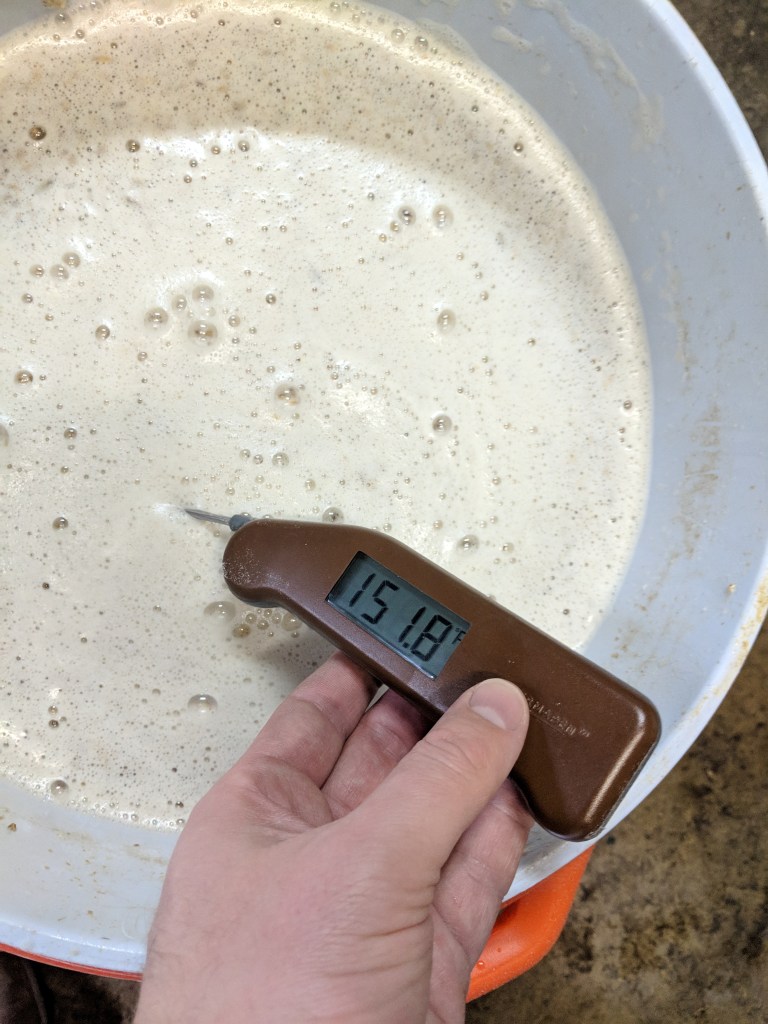
  • I mashed in with 7.5 gallons of water at 156.5°, to hit 151.8° mash temperature. After 60 minutes, I vorlaufed and collected the full volume for the boil.
  • In total, I collected ~6.25 gallons of wort with a gravity of 1.039, for 69.2% mash efficiency.
  • I boiled for 60 minutes, adding hops and finings per the schedule. Then, I chilled and trasnferred to the fermenter.
  • Starting gravity was 1.044, when I brewed this on 3 February 2019. I fermented at 66°.
  • I kegged the beer on 25 February 2019, at a final gravity of 1.015. This works out to 3.8% abv.
  • The beer started out pretty hazy in the keg, but dropped really clear after two or three weeks.

Tasting

  • The Basics
    • O.G. = 1.044; f.g. = 1.015; 3.8% abv; 10 SRM; 28 estimated IBU
  • Appearance
    • Clear, medium amber color, with a fine white head that is pretty persistent. This beer has clarified nicely over the past few weeks.
  • Aroma
    • Light caramel, slightly bready aroma, with a faint fruitiness; incredibly delicious overall!
  • Flavor
    • This is a malt forward beer with a pleasant bitterness on the finish. It’s highly drinkable, with none of the character being overwhelming. The hop character is moderate and balanced well against the malt.
  • Mouthfeel
    • Moderate carbonation appropriate for the style, with a really nicely balanced finish and mouthfeel.
  • Would I brew this again?
    • Yes! It’s a dead simple beer, but one that’s just enjoyable. Pretty much everything is on target here. It’s not one of those “blow your taste buds out of the water” styles, but instead is a solid, enjoyable brew. I might up the fermentation temperature a bit or consider a different yeast, to get more prominent yeast notes, but that’s a fairly minor thing. For being “only” 3.8% abv, this beer doesn’t taste like it!
  • Overall
    • 8.5/10