
CA IPA

Time to IPA it up again! I’ve been doing a lot of either “fruity” hops (Citra/Mosaic) or single hop IPA experiments, so for this recipe I wanted to do an American hop blend focusing on Centennial and Amarillo (hence the name “CA IPA”). I’m also going to switch up techniques a bit–rather than dry-hopping in the keg, I’m going to dry-hop in the fermenter towards the end of the main fermentation cycle, followed by cold crashing prior to kegging.

CA IPA

  • 11 lbs. 2-row malt (Rahr)
  • 2 lbs. 4.8 oz. Vienna malt (Weyermann)
  • 8 oz. crystal 20° malt (Briess)
  • 5 oz. crystal 10° malt (Briess)
  • 0.75 oz. Warrior hop pellets (15.8% alpha), 60 minute boil
  • 1 oz. Amarillo hop pellets (7% alpha), 15 minute boil
  • 1 oz. Centennial hop pellets (7.6% alpha), 15 minute boil
  • 1 Whirlfloc tablet, 10 minute boil
  • 1 oz. Amarillo hop pellets (7% alpha), 5 minute whirlpool
  • 1 oz. Centennial hop pellets (7.6% alpha), 5 minute whirlpool
  • 1 pkg. Burton Ale yeast (WLP023, White Labs), prepared in 1.25L starter
  • 1 oz. Amarillo hop pellets (7% alpha), 5 day dry-hop in primary fermenter
  • 1 oz. Centennial hop pellets (7.6% alpha), 5 day dry-hop in primary fermenter

Target Parameters

  • 150° mash, 60 minutes
  • 1.065 o.g., 1.015 f.g., 6.6% abv, 63 IBU, 6 SRM, 6 gallons into the fermenter

Procedure

  • The morning of my brew day, I prepared the yeast in a 1.25L starter. I don’t plan on setting any aside, so I did not bother with overbuilding the starter.
  • I prepared my mash water by adding a quarter Campden tablet, 8g gypsum, and 5g epsom salt to 4.75 gallons tap water. The 4.5 gallons of sparge water will be plain RO.
  • I heated the mash water to 170°, added it to the fermenter, and then let the temperature settle to 161.5° before adding the grains. This hit my mash temperature right at 150.2°, pretty much exactly where I wanted it.
  • Mash temperature was down to 148.5° after 30 minutes. I was visiting with some friends, so the mash ended up sitting a total of 90 minutes before I got back to it. At this point, I vorlaufed and then collected the first runnings.
  • Next, I added the sparge water (at around 155°, to hit a mash bed temperature of 152°), let it sit for 10 minutes, vorlaufed, and collected the remainder of the wort.
  • In total, I collected 8.1 gallons of wort at a gravity of 1.050 and 78% efficiency. This is a larger volume than expected–I think this is likely because I had assumed my RO jug had 4.5 gallon exactly, and it was probably a touch more than this. I’ll measure more carefully next time! For this particular batch, I boiled a bit harder than usual to bring the volume down and the gravity up.
  • Once I had the wort at a hard boil, I added the hops per the schedule, boiling for 60 minutes total. At the end of the boil, I added the whirlpool hops (in a mesh bag) and let them sit for 5 minutes before chilling the wort.
  • Once the beer was down to ~75°, I transferred to the fermenter and pitched the yeast. I put approximately 5.75 gallons into the primary. I pitched the yeast, and will be fermenting at 67°. I plan to add the dry hops in 5 days.
  • Starting gravity was 1.060, a bit below my target (but not surprising given the extra boil volume).
  • I brewed this beer on 25 March 2017. Visible yeast activity was evident in under 24 hours.
Equinox IPA

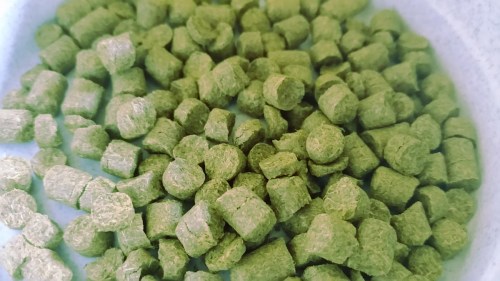
I have been seeing a fair bit about Equinox…err, HBC 366…hops during the past year, and wanted to try them for myself. Like many of the recent American varieties, it is supposed to pack quite an aroma and flavor punch. Even if it’s totally stereotypical for a homebrewer, I do like big, aroma-rich hops, so a batch with Equinox made it onto my “brewing goals” list.

This was also an opportunity to continue my exploration of Vienna malt, so I crafted a SMaSH-ish recipe that had a decent late-hopping dose of Equinox. The only minor deviation from a true SMaSH is that I threw in a touch of de-bittered black malt for color.

Finally, I am using this batch to recalibrate some of my brewing parameters. For a few batches now, I have noticed that my wort volumes and starting gravities are a touch off, so I am going to adjust the mash and boil-off assumptions accordingly in BeerSmith. Additionally, the night before brewing, I completely disassembled and cleaned my mill (a Monster Mill 2). There was some grain dust worked into places, and as a result it wasn’t holding the gap as well as it should (hence my low mash efficiency on some previous batches). After reassembly, I set the gap to around 0.039″. As noted below, I had incredible mash efficiency (84%!), but the mash itself was a little slow to drain. So, after this brew I widened my gap to 0.041″.

equinox

Equinox IPA

  • 12 lbs. Vienna Malt (Weyermann)
  • 1 oz. de-bittered black malt (Dingemans)
  • 0.5 oz. Equinox (HBC 366) hop pellets (14.2% alpha), first wort hop
  • 0.5 oz. Equinox (HBC 366) hop pellets (14.2% alpha), 60 minute boil
  • 1 oz. Equinox (HBC 366) hop pellets (14.2% alpha), 5 minute boil
  • 1 oz. Equinox (HBC 366) hop pellets (13.4% alpha), whirlpool
  • 0.5 tsp. gypsum, added to boil
  • 1 Whirlfloc tablet, 10 minute boil
  • 2 pkg. Safale American dry yeast (US-05)

Brewing Targets

  • Mash temperature = 149°
  • Original gravity = 1.067 (actual = 1.062)
  • Color = 8.5 SRM
  • IBU = 63
  • Note that I originally targeted this for a lower gravity, ~1.058. Because I ended up with very high mash efficency (~84%), I had to adjust the recipe per the above. If I brew this again, after adjusting my mill gap, I’ll need to tweak the malt bill to reach the same gravity.

Procedure

  • I mashed in with 4.6 gallons of water at 159°, to hit a mash temperature of 151°. The mash was down to 147° after 30 minutes, and 146.5° by 60 minutes.
  • After 60 minutes, I added 0.7 gallons of water at 190°, to raise the mash bed to 148°. After 10 minute, I vorlaufed and collected the first runnings. Due to the fine crush, it took awhile to drain the mash bed.
  • I then added 3.75 gallons of water at 182°, to raise the mash temperature to 160°. I let it sit for 10 minutes, vorlaufed, and collected the second runnings.
  • Wow! I collected 7 gallons of wort at a gravity of 1.055, for 84% efficiency. As a result, I adjusted my original recipe to the one above.
  • As soon as the wort was on the flame, I added hops. At the boil, I added the second addition, and everything else was dropped in at the appropriate time.
  • After flame-out, I chilled the wort to 84°. This wasn’t quite cool enough to pitch the yeast, so I transferred into my fermenter and put it all into the fermentation chamber for a few hours. Once the overall temperature had come down, I pitched in the two packets of yeast.
  • Starting gravity was 1.062, a little lower than expected (probably due to a slightly lower boil-off rate than assumed by BeerSmith). I brewed this on 27Aug2016, and am fermenting at 66°.