Fall Brown Ale

American brown ales seem somewhere between American IPAs and porters, and consequently hit a broad range of characteristics (at least in practice). I enjoy brown ales, brewing them whenever the mood hits me–I have nine previous versions on the books, with six of those American versus English styles. My current recipe is lightly modified from “Dirty Water Brown Ale” in Brewing Classic Styles. I changed the first addition from Horizon to Chinook, and also turned that first addition into a first wort hop addition. In order to increase hop aroma and flavor, I added an ounce of Cascade hops at the end, and changed a flameout charge of Amarillo into a dry hop addition. Everything else is pretty much the same. I elected to do a ~2.75 gallon batch, instead of a full 5 gallons.

Fall Brown Ale

  • 5 lb. 2-row pale malt (Rahr)
  • 5 oz. chocolate malt (Bairds)
  • 5 oz. caramel malt 100 / crystal 40 (Viking)
  • 2 oz. crystal 60 malt (Great Western)
  • 2 oz. Victory malt (Briess)
  • 0.25 oz. Chinook hop pellst (12.3% alpha), first wort hop and 60 minute boil
  • 0.25 oz. Amarillo hop pellets (10.4% alpha), 15 minute boil
  • 1 Whirlfloc tablet, 5 minute boil
  • 1 oz. Cascade whole hops (~4.5% alpha), 5 minute boil
  • 1 pkg. BRY-97 American Ale Yeast (Lallemand)
  • 0.75 oz. Amarillo hop pellets (10.4% alpha), dry hop in fermenter

Target Parameters

  • 60 minute infusion mash, 152°, full volume mash
  • 1.049 o.g., 1.011 f.g., 5.1% abv, 37 IBU, 25 SRM
  • Water built from neutralized Claremont tap water to hit 85 ppm Ca, 18 ppm Mg, 102 ppm Na, 157 ppm SO4, 130 ppm Cl, 10 ppm bicarbonate
  • 2.75 gallon batch

Procedure

  • I added 4.4 mL of 88% lactic acid to 4.25 gallons of water, along with 3 g of gypsum, in order to hit my water target.
  • Next, I heated the water to 157°, added the grains, and held at 152° with recirculation for 60 minutes. Then, I raised the mash temperature to 168° for 10 minutes, before removing the grains, collecting all of the runnings, and then adding the hops on the way to the boil.
  • In total, I collected 3.9 gallons of runnings with a gravity of 1.039, for 69% mash efficiency.
  • I boiled the runnings and added hops and other finings per the recipe. After a 60 minute boil, I turned off the heat, chilled to 74°, and transferred to the fermenter. I pitched the yeast, and then chilled to 66° in my fermentation chamber.
  • I brewed this beer on 7 October 2025, and it had a starting gravity of 1.047.
  • Signs of fermentation had kicked off within 24 hours after pitching the yeast. I held the fermenter at 66° for the bulk of fermentation, and pulled it to ambient on 11 October 2025.
  • I kegged the beer on 18 October 2025, adding the dry hops in a bag at this point, leaving the keg to sit at ambient.
  • I removed the dry hops on 22 October 2025, and then moved it to the conditioning chamber for cold crashing and carbontation.
  • Final gravity was 1.011, working out to 4.8% abv.

Tasting

  • Appearance
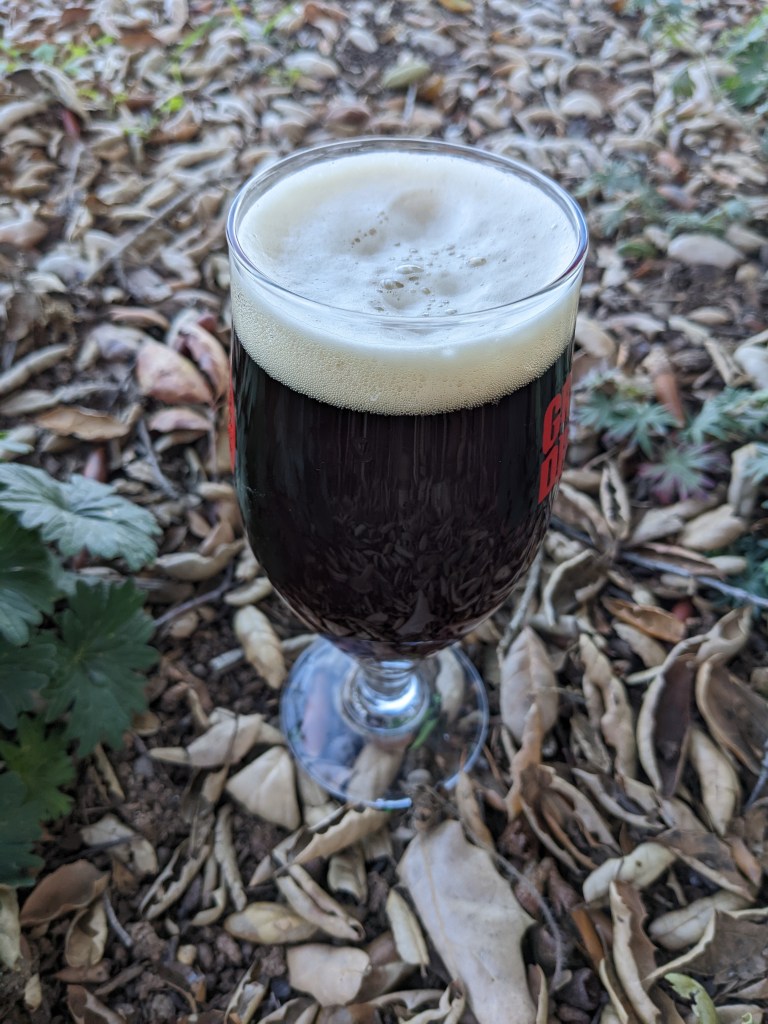
    • A deep brown beer with a garnet tinge, brilliantly clear; it pours with a tall and exceptionally persistent deep tan head.
  • Aroma
    • Citrus and pine hop aroma at a medium level, alongside a medium-low malt character–chocolate, caramel, faint nuttiness. A grainy quality comes into perception as the beer warms. Clean yeast profile.
  • Flavor
    • Bitter beer with a resiny quality. Moderate level of maltiness with a slight chocolate, caramel, and toasty character. This beer definitely tips more bitter than malty.
  • Mouthfeel
    • Medium-high carbonation–a touch overcarbonated, perhaps. Medium light body and dry finish.
  • Would I Brew This Again?
    • This is a good beer! It is probably closer to a brown IPA than a brown ale, given the lighter malt character and body, as well as the more prominent hops aroma on the nose. It’s super drinkable! I like the dry hop aroma–it is perfect for this beer, and melds well with the malts. I might dial back the bitterness on future versions, down to around 30 IBU. Although the recipe calls for ~35 IBU, I think it’s a bit much, at least to my palate at the moment.
  • Overall
    • 8/10

Ill-Tempered Gnome Clone 2022

Another year, another brew of the excellent Ill-Tempered Gnome clone recipe! This version is identical, except I swapped in BRY-97 for US-05. Without any further introduction, all of the details are below.

Ill-Tempered Gnome Clone

  • 12 lb. 2-row pale malt (Rahr)
  • 11 oz. crystal 15° (Great Western)
  • 5 oz. coffee malt (Simpsons)
  • 5 oz. honey malt (Gambrinus)
  • 5 oz. special B malt (Dingemans)
  • 4.5 oz. special roast malt (Briess)
  • 3.5 oz. chocolate malt (Bairds)
  • 1 oz. Nugget hop pellets (13.0% alpha), 60 minute boil
  • 0.5 oz. Centennial hop pellets (8.1% alpha), 20 minute boil
  • 0.5 oz. Crystal hop pellets (4.5% alpha), 20 minute boil
  • 1 Whirlfloc tablet, 5 minute boil
  • 1 oz Cascade whole hops (est. 5.5% alpha), 5 minute boil
  • 2 pkg. American West Coast ale yeast (BRY-97)

Target Parameters

  • 1.063 o.g., 1.015 f.g., 6.3% abv, 58 IBU, 21 SRM
  • Full volume mash at 154° for 60 minutes, with 10 minute mash-out at 168°
  • Claremont tap water, adjusted to reach estimated profile of 75 ppm Ca, 11 ppm Mg, 93 ppm Na, 149 ppm sulfate, 105 ppm Cl, 156 ppm bicarbonate; RA 68, 128 ppm alkalinity; 60 ppm effective hardness.

Procedure

  • I heated 7.5 gallons of water to 162°, adding a Campden tablet to remove chloramines. Then, I mashed in with the grains to hit a temperature of 154°. I added 7 mL (1.5 tsp.) of 88% lactic acid to adjust the pH of the mash, and recirculated at 154° for 60 minutes. Then, I raised the mash temperature to 168° and held it there for 10 minutes, before removing the grains.
  • In total, I collected 6.5 gallons of runnings with a gravity of 1.054, for 68% mash efficiency.
  • As I brought the runnings to a boil, I added 5 g of gypsum to adjust the water profile.
  • The Foundry had some issues with turning on and off, but I approximated a 60 minute boil, adding hops and kettle finings per the recipe.
  • After the 60 minute boil, I chilled to ~75°, transferred to the fermenter, and chilled down to 65° in the fermentation chamber. Then, I pitched the two packages of yeast.
  • I brewed the beer on 2 October 2022, and fermented at 65°. Starting gravity was 1.060.
  • On 8 October 2022, I removed the beer from the fermentation chamber and let it free rise to ambient to finish out fermentation.
  • I kegged the beer on 30 October 2022. At this point, its gravity was 1.015. This equates to 5.9% abv.

Tasting

  • Appearance
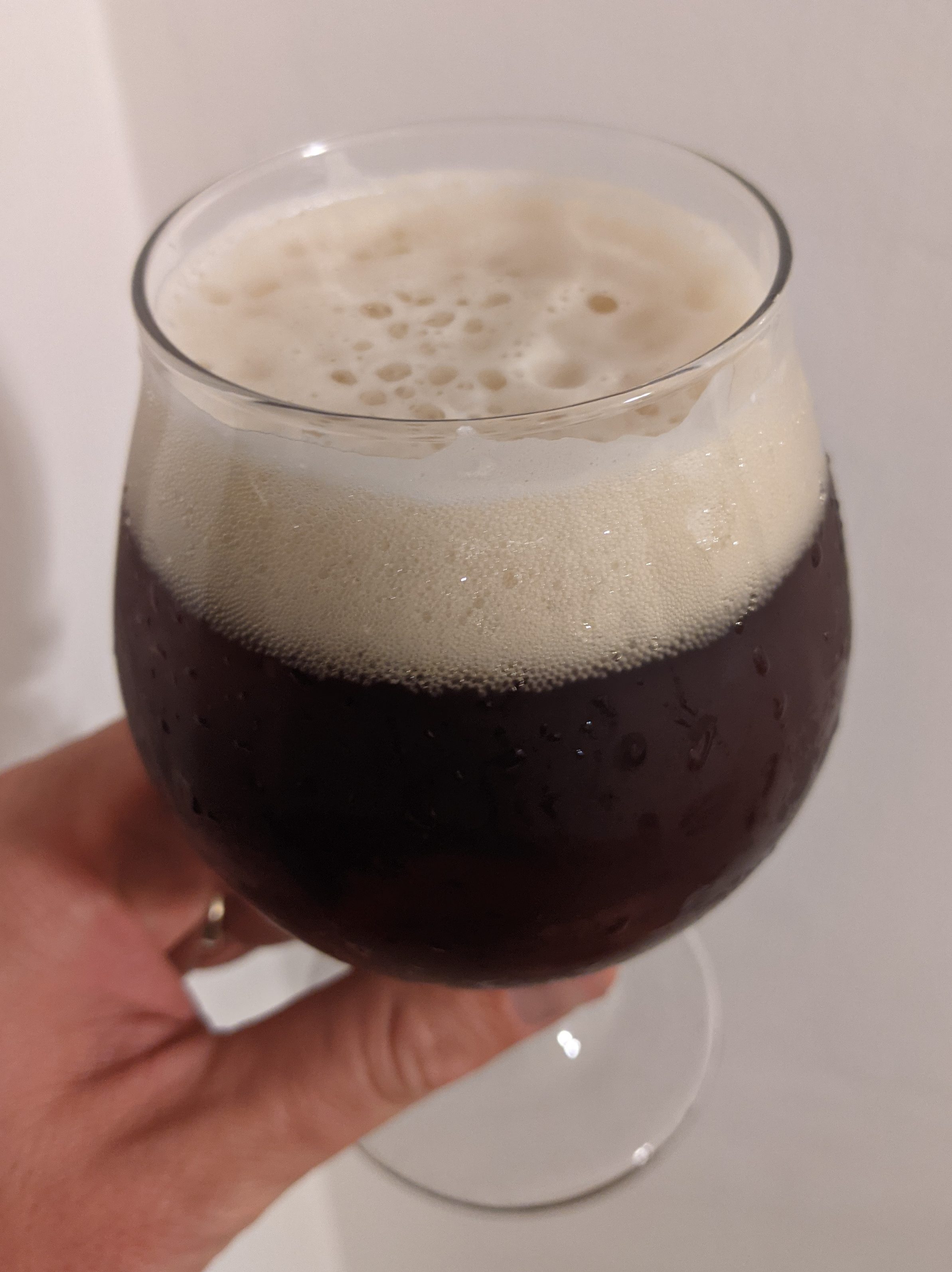
    • Thick, creamy, persistent tan head. Brilliantly clear, reddish-brown beer. Very pretty!
  • Aroma
    • Dark caramel and coffee malt aroma.
  • Flavor
    • Resiny hop bitterness at a moderately high level is very prominent, with a coffee and dark chocolate malt character behind that. There is a very very faint fruity character in the yeast, barely detectable. The bitterness lingers on the finish, quite pleasantly.
  • Mouthfeel
    • Medium body and moderate carbonation, with a smooth finish.
  • Would I Brew This Again?
    • Yep! This is a nice recipe; my memory of last year’s version is that it was a touch better, although I think that’s in part the keg. I split the beer into two 2.5 gallon kegs, and I suspect the one I’m sampling from (the less filled one) may have had a touch of oxidation due to the head space. Either way, it’s enjoyable!
  • Overall
    • 9/10

Ill-Tempered Gnome Clone

As I am pretty sure I’ve lamented previously, I sometimes get too far down the rabbit-hole of brewing to a particular style. IPA, stout, porter, pilsner…all are great, but that can be at expense of creativity. On the other hand, I grew wary of the big and bitter beers that I gravitated towards early in my craft beer days. And yet…I now find myself picking up a bottle of Arrogant Bastard every few weeks, and kind of enjoying it. The excesses of craft beer recipes are still excessive, but I’m finding that they can be enjoyable in moderation and on occasion.

dark brown beer with tan head, held in clear tulip glass against a white wall

To scratch this itch, I paged through the Craft Beer For the Homebrewer book, and my eyes settled upon a clone recipe for something called Ill-Tempered Gnome. Produced by Oakshire Brewing, this recipe looked big, dark, and bitter, and was billed as an American Brown Ale (on the website) or a winter warmer (in the beer book).

Quite intrigued, I pulled together the ingredients, making a minor substitution or two based on availability for some of the harder-to-find malts (e.g., I had to go with a different brand of coffee malt versus Franco-Belges Kiln Coffee Malt in the original recipe). That said, I did try to adhere as closely as possible to the book’s version, which I was told (by Denny Conn himself) came direct from the brewer.

Ill-Tempered Gnome Clone

  • 12 lb. California Select 2-row malt (Great Western)
  • 11 oz. crystal 15° (Great Western)
  • 5 oz. coffee malt (Simpsons)
  • 5 oz. honey malt (Gambrinus)
  • 5 oz. special B malt (Dingemans)
  • 4.5 oz. special roast malt (Briess)
  • 3.5 oz. chocolate malt (Briess)
  • 1 oz. Nugget hop pellets (12.9% alpha), 60 minute boil
  • 0.5 oz. Centennial hop pellets (8.1% alpha), 20 minute boil
  • 0.5 oz. Crystal hop pellets (4.5% alpha), 20 minute boil
  • 1 Whirlfloc tablet, 5 minute boil
  • 1 oz Cascade whole hops (est. 5.5% alpha), 5 minute boil
  • 2 pkg. Safale American ale yeast (US-05)

Target Parameters

  • 1.062 o.g., 1.015 f.g., 6.3% abv, 58 IBU, 19 SRM
  • Full volume mash at 154° for 60 minutes, with 10 minute mash-out at 168°
  • Claremont tap water, adjusted to reach estimated profile of 75 ppm Ca, 11 ppm Mg, 93 ppm Na, 149 ppm sulfate, 105 ppm Cl, 156 ppm bicarbonate; RA 68, 128 ppm alkalinity; 60 ppm effective hardness.

Procedure

  • I heated 7.5 gallons of water to 161°, adding a Campden tablet to remove chloramines. Then, I mashed in with the grains to hit a temperature of 154°. I added 7 mL (1.5 tsp.) of 88% lactic acid to adjust the pH of the mash, and recirculated at 154° for 60 minutes. Then, I raised the mash temperature to 168° and held it there for 10 minutes, before removing the grains.
  • In total, I collected 6.35 gallons of runnings with a gravity of 1.055, for 68% mash efficiency.
  • As I brought the runnings to a boil, I added 5 g of gypsum to adjust the water profile.
  • To bring the gravity up a bit, I boiled for an extra 10 minutes, before beginning to add the hops. I then boiled for an additional 60 minutes, adding hops and kettle finings per the recipe.
  • After the 60 minute boil, I chilled to ~75°, transferred to the fermenter, and chilled down to 65° in the fermentation chamber. Then, I pitched the two packages of yeast.
  • I brewed the beer on 9 October 2021, and fermented at 65°. Starting gravity was 1.061.
  • On 20 October 2021, I let the beer free rise to 70° (after removing it from the fermentation chamber).
  • I kegged the beer on 23 October 2021. At this point, its gravity was 1.017. This equates to 5.9% abv.

Tasting

  • Appearance
    • The beer pours with a thick and frothy ivory head, and awesome lacing as the head subsides slowly. The beer is a brilliantly clear reddish amber in color in a tulip glass, and is a nice even brown in a tall glass.
  • Aroma
    • Resiny hops are at the front, with toffee and coffee malt aroma alongside some caramel. The malt/hop balance is spot-on.
  • Flavor
    • Moderately high bitterness, with a resin and pine quality to the hops, for an extended bitterness in the finish. This beer has a full malt character, with caramel at the front and a slight bit of chocolate at the back. Delicious!
  • Mouthfeel
    • Medium-full body, with moderate carbonation and an off-dry finish.
  • Would I Brew This Again?
    • YES! The resiny hops plus rich malt character are an awesome combo. The beer is straight out of 1997 in terms of its traditional hops and big flavors, but I love it for that. Who knows if my version is a true clone, but do I really care? I love this beer! In particular, it’s not really a winter warmer (in terms of the overspiced recipes so common out there), but definitely closer to an American brown ale. I’ll do this one again.
  • Overall
    • 10/10