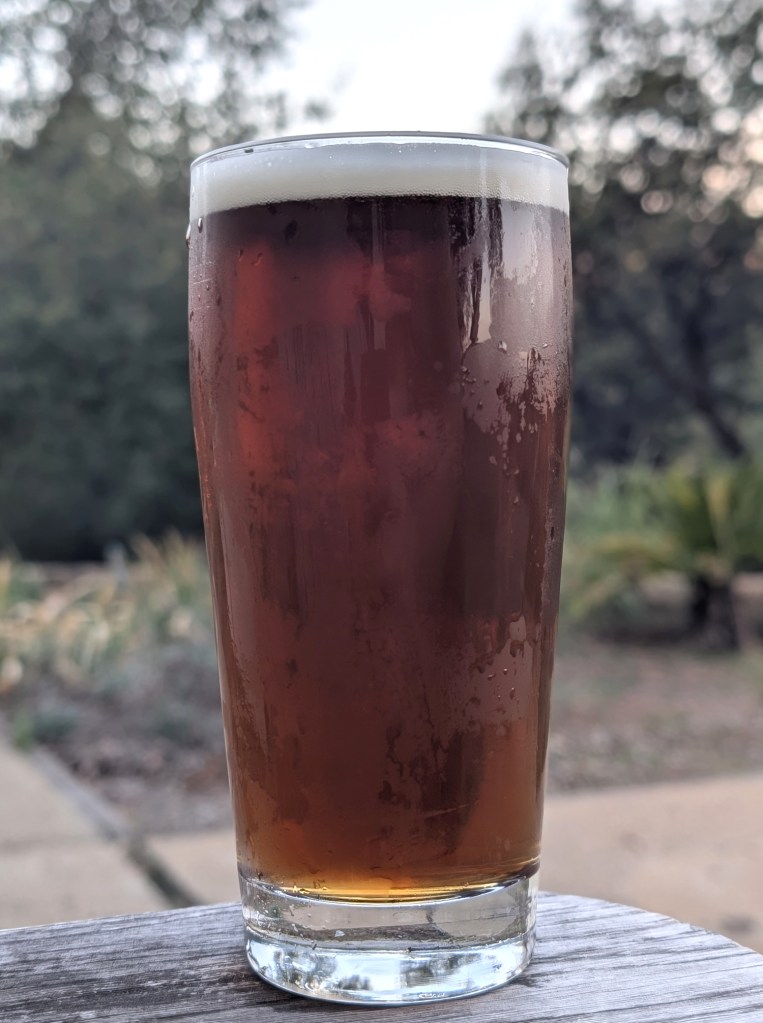
Alstadt Altbier 2.3

My Alstadt Altbier is one of my favorite recipes, and now we’re into the sixth iteration for this fall. I inevitably have some variation, but the core philosophy of Pilsner+Munich+Vienna at the core with a ~60L crystal/caramel malt of some sort to round out the profile (and a bit of Carafa Special II for color) has been consisten. The main difference from last batch is that I used all Caramunich I instead of a 50/50 mix of Caramel Munich 60L and Caramunich II. I also switched up the yeast a bit this time, because Lallemand’s Köln strain is no longer available.

Recipe Name

  • 6.5 lb. Viking Pilsner Zero malt
  • 1.5 lb. Munich malt (BestMalz)
  • 1.5 lb. Vienna malt (Weyermann)
  • 1 lb. Caramunich I (Weyermann)
  • 2 oz. Carafa Special II (Weyermann)
  • 0.5 tsp. BrewTanB, added to mash
  • 2 oz. Spalt Spalter hop pellets (4.3% alpha), 60 minute boil
  • 0.5 tsp. BrewTanB, 10 minute boil
  • 1 Whirlfloc tablet, 5 minute boil
  • 1 oz. Spalt Spalter hop pellets (4.3% alpha), 5 minute boil
  • 1 pkg. Kaiser liquid yeast (Imperial G02)
  • 1 pkg. SafAle German Ale (Fermentis K-97)

Target Parameters

  • 60 minute infusion mash, 152°, full volume mash
  • 1.048 o.g., 1.011 f.g., 4.9% abv, 35 IBU, 13 SRM
  • Claremont tap water, adjusted with Campden tablet

Procedure

  • I made a 1L shaken-not-stirred vitality starter for the yeast (which had a package best-by date of January 2025). I used a can of starter propper with distilled water, started at 2:30 pm on brew day.
  • I heated 7.3 gallons of water to 157° and added the grains, letting it settle at 152° for 60 minutes, with recirculation. Unfortunately, I had mis-entered the strike water temperature, so I overshot the mash temperature by about 10 degrees. Once this was done, I raised the temperature to 168° for a 10 minute rest before removing the grains.
  • The mash yielded 6.5 gallons of runnings at at gravity of 1.040, for 65% mash efficiency.
  • I brought the runnings to a boil, adding hops and finings per the recipe. Once the boil was done, I chilled to around 80° and then transferred to the fermenter for an overnight chill the rest of the way.
  • I brewed the beer on 30 August 2025. Starting gravity was 1.046.
  • The starter had minimal signs of life by the afternoon of 31 August 2025, so I pitched the starter as well as a packet of K-97. I fermented at 64°.
  • The fermentation kicked off vigorously within 12 hours.
  • I kegged the beer on 11 September 2025. It had a final gravity of 1.015, for 4.1% abv.

Tasting

  • Appearance
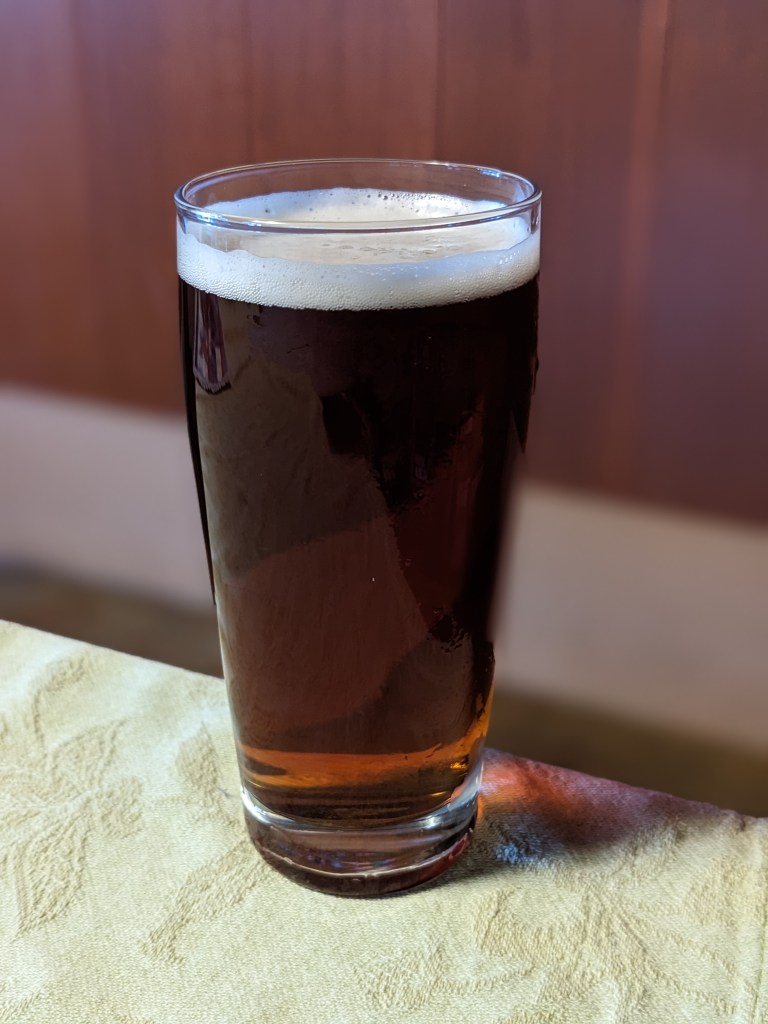
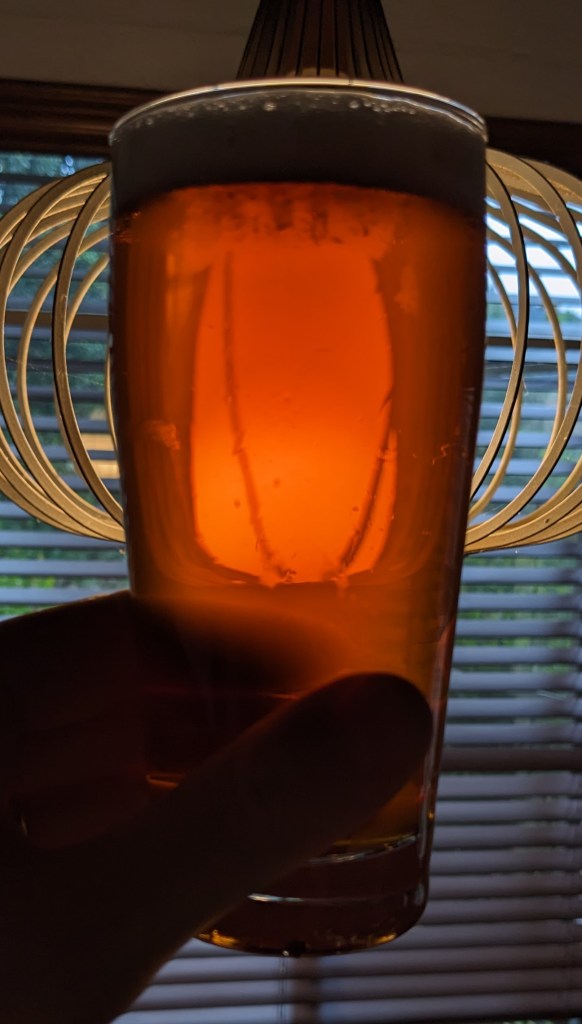
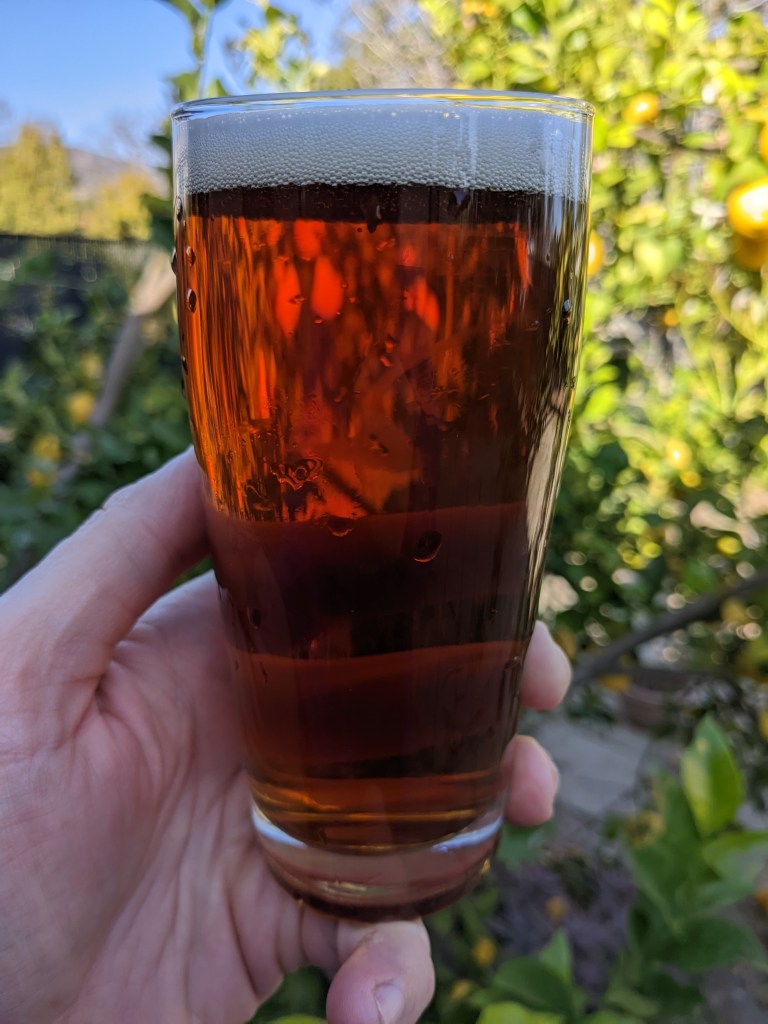
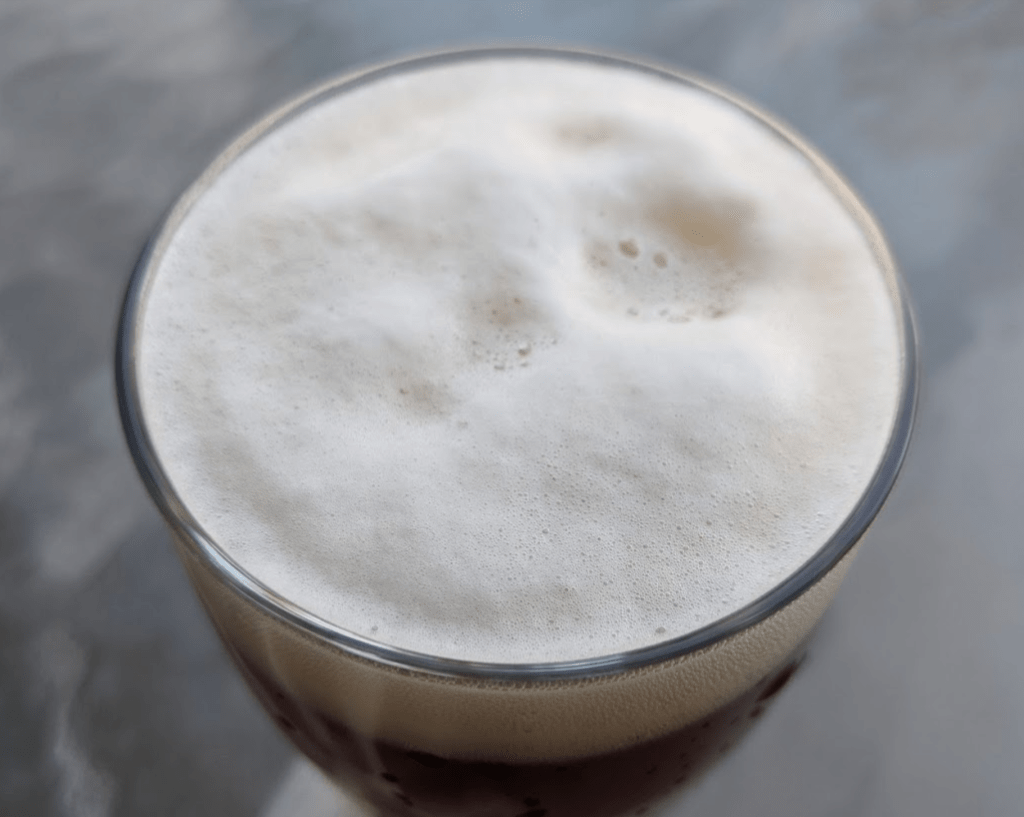
    • Pours with a creamy ivory head of reasonable persistence. The beer itself is a deep amber, and brilliantly clear.
  • Aroma
    • Light caramel and malty aroma at a moderate level, with light toffee notes; no major yeast aroma. Slight herbal hop character.
  • Flavor
    • Medium malty and light caramel flavor. Medium high bitterness. Herbal and spicy hop character, at a moderate level.
  • Mouthfeel
    • Moderately light body, medium carbonation, slightly dry finish. The body is surprisingly thin.
  • Would I Brew This Again?
    • This very is decent, but the body is a little lighter than usual, and the flavor seems thinner relative to my recollections and past notes. I might increase the mash temperature next time (but not as much as was here). This is not my best version of the beer! It’s odd that it feels so thing given the final gravity.
  • Overall
    • 6/10

Alstadt Altbier 2.2

I love it when I have honed a house recipe, and altbier is one of my annual favorites. This is largely similar to what I made previously; the 2024 version is my fifth brew of the recipe! Compared to last year, I altered the CaraMunich addition to include a blend of Caramel Munich 60L (Briess) and Caramunich II, versus just Caramunich I as I did last year. Because the 2023 version was a bit harsh on bitterness, I swapped out the Magnum hops and went with Spalt alone for the hop additions. Finally, I used a blend of K-97 and Köln dry yeasts; sadly, Köln’s days are numbered in my brewery, because it has been discontinued by Lallemand.

Alstadt Alt 2.2

  • 6.5 lb. pilsner malt (Rahr)
  • 1.5 lb. Munich I malt (Weyermann)
  • 1.5 lb. Vienna malt (Weyermann)
  • 0.5 lb. Caramel Munich 60L (Briess)
  • 0.5 lb. Caramunich II malt (Weyermann)
  • 2 oz. Carafa Special I malt (Weyermann)
  • 0.5 tsp. BrewTanB, added to mash
  • 2.0 oz. Spalt Spalter hop pellets (4.3% alpha), 60 minute boil
  • 0.5 tsp. BrewTanB, 10 minute boil
  • 1.0 oz. Spalt Spalter hop pellets (4.3% alpha), 5 minute boil
  • 1 Whirlfloc tablet, 5 minute boil
  • 1 pkg. Köln Kölsch Style Ale Yeast (Lallemand)
  • 1 pkg. SafAle German Ale yeast K-97 (Fermentis)

Target Parameters

  • 1.048 s.g., 1.011 f.g., 4.9% abv, 35 IBU, 14 SRM
  • 60 minute infusion mash, full volume, 152°
  • Claremont tap water treated with Campden tablet

Procedure

  • I mashed in with 7.5 gallons of water at 157°, to hit a mash temperature of 152°. I added 4 mL of 88% lactic acid and held the mash here (with recirculation) for 60 minutes, before raising to 168° for the 10 minute mash-out.
  • After removing the grain basket, I had 6.5 gallons of wort with a gravity of 1.043, for an efficiency of 71%.
  • I brought the runnings to a boil, adding malt and finings per the recipe. After the 60 minute boil, I chilled to 80° and transferred to the fermenter. I let it chill a bit down to 60° in the fermentation chamber, before pitching the yeast and setting the fermentation temperature to 64°. I ended up using a mix of yeast, because the K-97 was a year past expiration.
  • I brewed the beer on 11 August 2024, and it had a starting gravity of 1.051.
  • I let the beer free-rise to 66° on 22 August 2024, when I started fermenting a pale ale. Finally, I let the beer finish at ambient on 22 August, around 75° to 80°.
  • I kegged the beer on 23 August 2024, and it had a final gravity of 1.011. This works out to 5.3% abv.

Tasting

  • Appearance
    • Deep copper color, very clear, with a fine and reasonably persistent ivory colored head.
  • Aroma
    • Bread crust malt aroma at the front, along with dark caramel. A slight touch of spicy hop aroma.
  • Flavor
    • Relatively bitter beer; malt flavor is of dark breadcrest and rich mattiness. I pick up some dried fruit character, from the malt/yeast interplay.
  • Mouthfeel
    • Medium body, medium carbonation, slightly dry finish.
  • Would I brew this again?
    • This remains a wonderful althier recipe, despite slight tweaks over the years. It took a bit of time to clear, but is now fantastic! I love this beer!
  • Overall
    • 10/10

Alstadt Alt 2.1

Alstadt Alt is one of my all-time favorite recipes, and I’ve brewed it annually since 2020. I’ve finally realized that altbier is basically the German version of amber ale, which squarely puts it into my favorite flavor wheelhouse. The original recipe was by Horst Dornbusch, and is just superb.

The grain bill on this version is nearly identical to the 2022 version, only with Viking’s Pilsner Zero instead of plain-old Viking Pilsner malt. I used Magnum hops for bittering, with a generous dose of Spalt Spalter. Finally, I used Köln Kölsch Style Ale Yeast — my go-to dry German ale yeast. I recently learned that Lallemand is discontinuing the strain, which is a major bummer. I can only guess that my personal homebrew demand wasn’t enough to float the line for the long-term. Ah well. I stocked up recently, so I’ll be set for the next year or two before having to find an alternative. K-97 is okay, but just not the same…although I note from past notes that it worked well in an alt. I might have to try it again.

Alstadt Alt 2.1

  • 6.5 lb. Viking Pilsner Zero malt
  • 1.5 lb. Munich I malt (Weyermann)
  • 1.5 lb. Vienna malt (Weyermann)
  • 1 lb. Caramunich I malt (Weyermann)
  • 2 oz. Carafa Special I malt (Weyermann)
  • 0.75 oz. Magnum hop pellets (10.1% alpha), 60 minute boil
  • 0.5 oz. Spalt Spalter hop pellets (3.9% alpha), 60 minute boil
  • 1.5 oz. Spalt Spalter hop pellets (3.9% alpha), 5 minute boil
  • 1 Whirlfloc tablet, 5 minute boil
  • 1 pkg. Köln Kölsch Style Ale Yeast (Lallemand)

Target Parameters

  • 1.048 s.g., 1.011 f.g., 4.9% abv, 38 IBU, 12 SRM
  • 60 minute infusion mash, full volume, 152°
  • Claremont tap water treated with Campden tablet

Procedure

  • I mashed in with 7 gallons of water at 158°, to hit a mash temperature of 152°. I added 5 mL of 88% lactic acid and held the mash here (with recirculation) for 60 minutes, before raising to 168° for the 10 minute mash-out.
  • After removing the grain basket, I had 6.3 gallons of wort with a gravity of 1.040, for an efficiency of 63%.
  • I brought the runnings to a boil, adding malt and finings per the recipe. After the 60 minute boil, I chilled to 78° and transferred to the fermenter. I let it chill a bit down to 60° in the fermentation chamber, before pitching the yeast and setting the fermentation temperature to 62°.
  • I brewed the beer on 2 September 2023, and it had a starting gravity of 1.048.
  • I let the beer free-rise to 66° on 11 September 2023.
  • I kegged the beer on 16 September 2023, and it had a final gravity of 1.012. This works out to 4.7% abv.

Tasting

  • Appearance
    • The altbier pours with a persistent ivory head; the beer itself is a deep amber and brilliantly clear. It’s gorgeous!
  • Aroma
    • A malty bread crust character predominates, especially as the beer warms in the glass. There is perhaps a hint of fruitiness from the yeast. I don’t get much hop aroma.
  • Flavor
    • I get a rich, somewhat bready and toasty malt character, against a fairly prominent bitterness. This batch feels a bit more bitter than past versions, with a bit of herbal character.
  • Mouthfeel
    • Medium body, moderate carbonation, extended dryness on the finish.
  • Would I brew this again?
    • This remains one of my favorite recipes, but I think I would adjust the hops for my next batch. Magnum ended up just too bitter, taking this just over the edge into what works well for the recipe. For my next version, I think I’ll go back to Sterling for the bittering hops. I might also go back to Briess’s Caramel Munich 60L, to see how that works out.
  • Overall
    • 8/10

Alstadt Alt 2.0

Altbiers are one of my favorite styles, so I have made a few versions over the years. I had great success with a recipe from the Altbier book by Horst Dornbusch. I first brewed it back in 2020, and it turned out really well. The 2021 edition was similarly great, so I made only minor tweaks for the 2022 brew. Instead of a mix of Briess Caramel Munich 60L and Caramunich I, I went with straight Caramunich I. Additionally, I switched the yeast from K97 to Lallemand’s Kolsch-style ale yeast. Everything else is pretty much the same.

Alstadt Alt 2.0

  • 6.5 lb. Viking Pilsner malt
  • 1.5 lb. Munich I malt (Weyermann)
  • 1.5 lb. Vienna malt (Weyermann)
  • 1 lb. Caramunich I malt (Weyermann)
  • 2 oz. Carafa Special I malt (Weyermann)
  • 1.2 oz. Sterling hop pellets (7.5% alpha), 60 minute boil
  • 1.0 oz. Spalt Spalter hop pellets (5.6% alpha), 5 minute boil
  • 1 Whirlfloc tablet, 5 minute boil
  • 1 pkg. Köln Kölsch Style Ale Yeast (Lallemand)

Target Parameters

  • 1.050 s.g., 1.011 f.g., 5.1% abv, 36 IBU, 12 SRM
  • 90 minute infusion mash, full volume, 152°
  • Claremont tap water treated with Campden tablet

Procedure

  • I mashed in with 7.25 gallons of water at 158°, to hit a mash temperature of 152°. I added 3mL of 88% lactic acid and held the mash here (with recirculation) for 90 minutes, before raising to 168° for the 10 minute mash-out. I extended the mash a touch so as to aim for a slightly higher attenuation.
  • After removing the grain basket, I had 6.5 gallons of wort with a gravity of 1.044, for an efficiency of 72%.
  • I brought the runnings to a boil, adding malt and finings per the recipe. After the 60 minute boil, I chilled to 68° and transferred to the fermenter. I let it chill a bit more in the fermentation chamber, before pitching the yeast and setting the fermentation temperature to 64°.
  • I brewed the beer on 22 January 2022, and it had a starting gravity of 1.049. I kegged the beer on 14 February 2022, and it had a final gravity of 1.014. This works out to 4.6% abv.

Tasting

  • Appearance
    • Brilliantly clear beer, of medium-dark amber color, with a fine and persistent ivory colored head.
  • Aroma
    • Rich and malty, with a bread crust character; a low level of spicy hop character is also present.
  • Flavor
    • Malty and bready, with a firm and assertive but not over the top bitterness. There is a very, very slight fruity yeast character.
  • Mouthfeel
    • Medium body, moderate carbonation, with a dry finish. Very pleasant.
  • Would I brew this again?
    • This one of my favorite recipes! The hop presence isn’t quite as nice this time around, but otherwise it’s a really great beer. It’s very drinkable and very flavorful.
  • Overall
    • 9/10

Alstadt Altbier 2.0

Altbier is a really enjoyable style for me, but it’s tough to find a good version commercially in our area. So, I’ve been brewing it from time to time in the quest for a perfect batch. I think I might have found one!

My jumping off point was the Alstadt Altbier recipe from Horst Dunbusch’s Altbier book. I made a version of it last year, and was fairly happy with the results. At the time, I noted that I would like a touch more hop character, and would also like to experiment with using CaraMunich or something similar instead of American Crystal 60. So…that’s what I did for the latest version!

The base of the new batch is fairly similar to the old one, with 61% pilsner malt,14% Munich I, and 14% Vienna malt. Instead of crystal 60, though, I used an even split of Briess’s Caramel Munich 60L and Weyermann’s Caramunich I. I also swapped out Carafa Special III for Carafa Special I, in the color adjustment (I figure such a small amount won’t make a major flavor difference, but the devil is in the details). Finally, I dropped in some Spalt for the aroma addition (instead of Mt. Hood).

The end result is spectacular. The aroma in a freshly poured glass is absolutely heavenly, and the beer drinks so easily. I will be making this again!

Alstadt Altbier 2.0

  • 6.5 lb. Pilsner Zero malt (Viking)
  • 1.5 lb. Munich I malt (Weyermann)
  • 1.5 lb. Vienna malt (Weyermann)
  • 0.5 lb. Caramel Munich 60L malt (Briess)
  • 0.5 lb. Caramunich I malt (Weyermann)
  • 2 oz. Carafa Special I malt (Weyermann)
  • 1.2 oz. Sterling hop pellets (7.4% alpha), 60 minute boil
  • 1.0 oz. Spalt Spalter hop pellets (3.0% alpha), 5 minute boil
  • 1 Whirlfloc tablet
  • 1 pkg. German ale dry yeast (Fermentis K-97)

Target Parameters

  • 1.048 s.g., 1.012 f.g., 4.8% abv, 34 IBU, 13 SRM
  • 60 minute infusion mash, full volume, 152°
  • Claremont tap water treated with Campden tablet

Procedure

  • I mashed in with 7.1 gallons of water at 158°, to hit a mash temperature of 152°. I added 4mL of 88% lactic acid and held the mash here (with recirculation) for 60 minutes, before raising to 168° for the 10 minute mash-out.
  • After removing the grain basket, I had 6.4 gallons of wort with a gravity of 1.040. This is only 64% mash efficiency–this spurred me to tighten down the mill from 0.037″ to 0.034″.
  • I brought the runnings to a boil, adding malt and finings per the recipe. After the 60 minute boil, I chilled to 78° and transferred to the fermenter. I think let it sit at ambient for a few hours before pitching the yeast at ~69°. Ambient was around 60°, so the beer finished out fermentation at that temperature.
  • I brewed the beer on 1 January 2021, and it had a starting gravity of 1.046. I kegged the beer on 31 January 2021, and it had a final gravity of 1.013. This works out to 4.3% abv.

Tasting

  • Appearance
    • Deep amber color, brilliantly clear. Persistent and creamy ivory colored head.
  • Aroma
    • Floral hops and rich bread crust aroma, both very prominent. This is a delicious combo! So good!
  • Flavor
    • Rich malty flavor of bread crust, and a clean yeast character. There is a slightly floral hop flavor. The beer is moderately bitter, with the balance tilted very slightly to bitter over malty. There is a low level of a cherry/fruity ester.
  • Mouthfeel
    • Medium body, moderate carbonation, slightly dry finish, but not too much so.
  • Would I brew this again?
    • YES. This is the best altbier I have ever done, and it is a massive step beyond the previous (also pretty good) version. The malt and hop character are amazing, making an incredibly interesting and very drinkable beer.
  • Overall
    • 10/10