
Alstadt Alt is one of my all-time favorite recipes, and I’ve brewed it annually since 2020. I’ve finally realized that altbier is basically the German version of amber ale, which squarely puts it into my favorite flavor wheelhouse. The original recipe was by Horst Dornbusch, and is just superb.
The grain bill on this version is nearly identical to the 2022 version, only with Viking’s Pilsner Zero instead of plain-old Viking Pilsner malt. I used Magnum hops for bittering, with a generous dose of Spalt Spalter. Finally, I used Köln Kölsch Style Ale Yeast — my go-to dry German ale yeast. I recently learned that Lallemand is discontinuing the strain, which is a major bummer. I can only guess that my personal homebrew demand wasn’t enough to float the line for the long-term. Ah well. I stocked up recently, so I’ll be set for the next year or two before having to find an alternative. K-97 is okay, but just not the same…although I note from past notes that it worked well in an alt. I might have to try it again.
Alstadt Alt 2.1
- 6.5 lb. Viking Pilsner Zero malt
- 1.5 lb. Munich I malt (Weyermann)
- 1.5 lb. Vienna malt (Weyermann)
- 1 lb. Caramunich I malt (Weyermann)
- 2 oz. Carafa Special I malt (Weyermann)
- 0.75 oz. Magnum hop pellets (10.1% alpha), 60 minute boil
- 0.5 oz. Spalt Spalter hop pellets (3.9% alpha), 60 minute boil
- 1.5 oz. Spalt Spalter hop pellets (3.9% alpha), 5 minute boil
- 1 Whirlfloc tablet, 5 minute boil
- 1 pkg. Köln Kölsch Style Ale Yeast (Lallemand)
Target Parameters
- 1.048 s.g., 1.011 f.g., 4.9% abv, 38 IBU, 12 SRM
- 60 minute infusion mash, full volume, 152°
- Claremont tap water treated with Campden tablet
Procedure
- I mashed in with 7 gallons of water at 158°, to hit a mash temperature of 152°. I added 5 mL of 88% lactic acid and held the mash here (with recirculation) for 60 minutes, before raising to 168° for the 10 minute mash-out.
- After removing the grain basket, I had 6.3 gallons of wort with a gravity of 1.040, for an efficiency of 63%.
- I brought the runnings to a boil, adding malt and finings per the recipe. After the 60 minute boil, I chilled to 78° and transferred to the fermenter. I let it chill a bit down to 60° in the fermentation chamber, before pitching the yeast and setting the fermentation temperature to 62°.
- I brewed the beer on 2 September 2023, and it had a starting gravity of 1.048.
- I let the beer free-rise to 66° on 11 September 2023.
- I kegged the beer on 16 September 2023, and it had a final gravity of 1.012. This works out to 4.7% abv.
Tasting
- Appearance
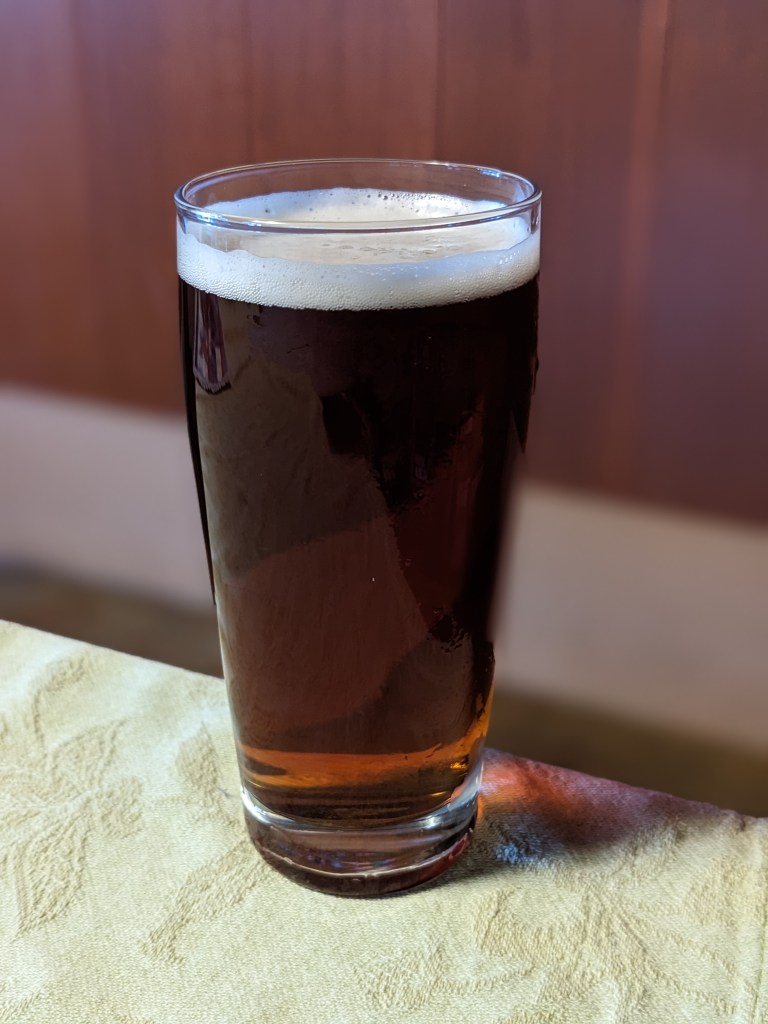
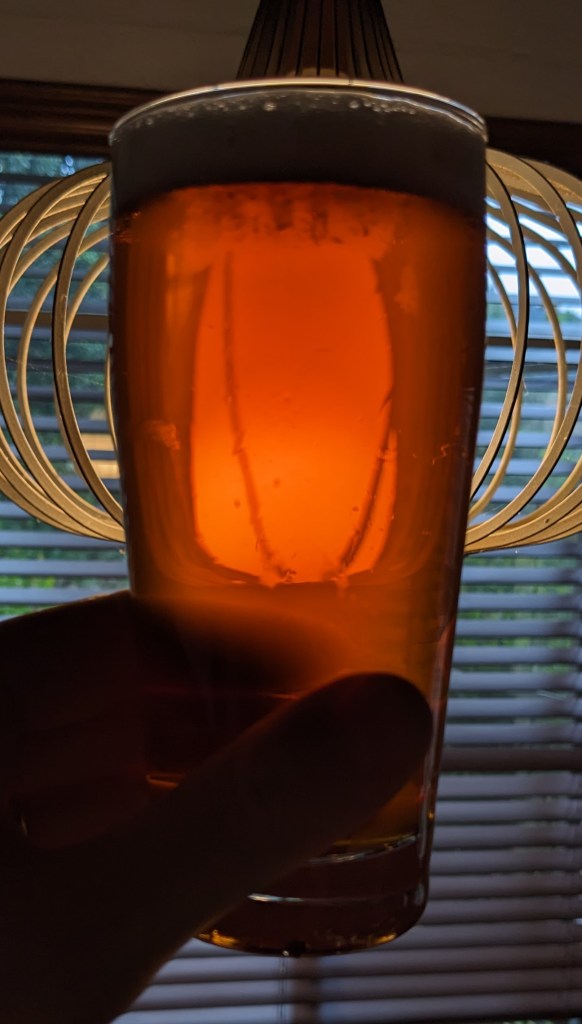
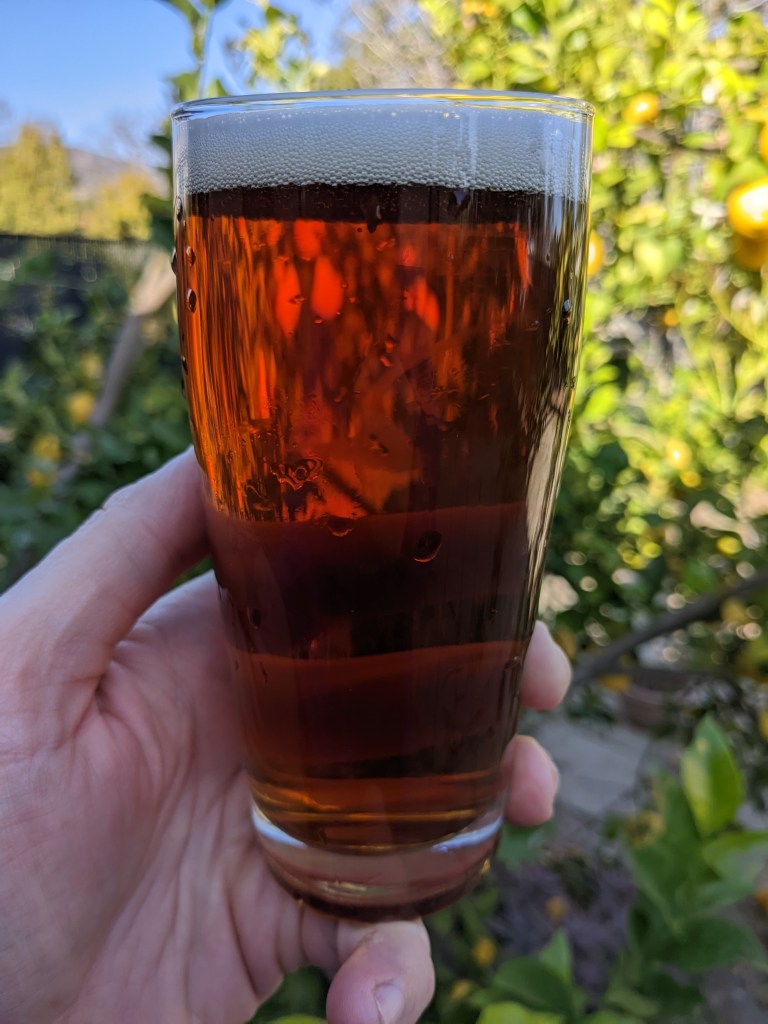
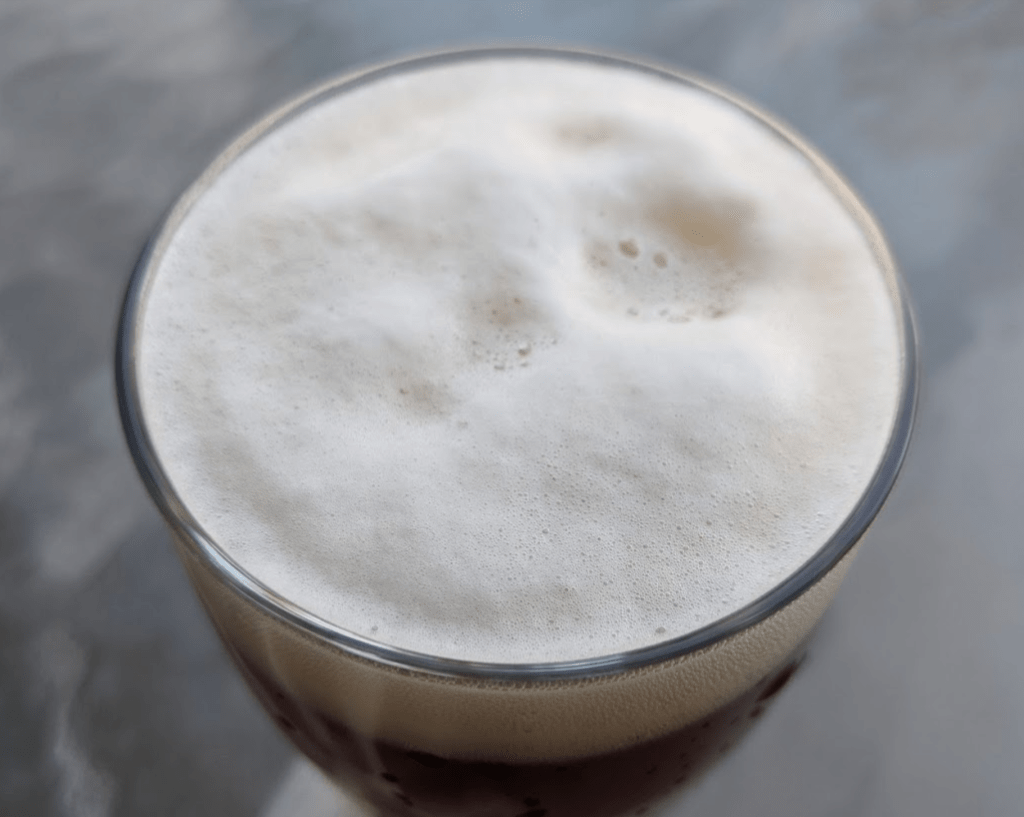
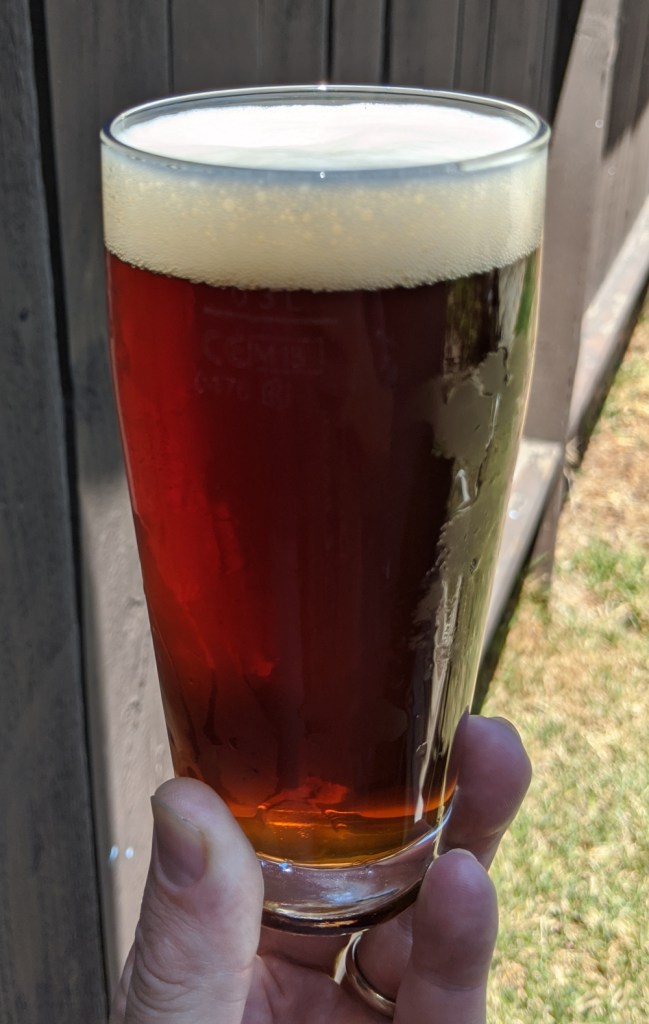
- The altbier pours with a persistent ivory head; the beer itself is a deep amber and brilliantly clear. It’s gorgeous!
- Aroma
- A malty bread crust character predominates, especially as the beer warms in the glass. There is perhaps a hint of fruitiness from the yeast. I don’t get much hop aroma.
- Flavor
- I get a rich, somewhat bready and toasty malt character, against a fairly prominent bitterness. This batch feels a bit more bitter than past versions, with a bit of herbal character.
- Mouthfeel
- Medium body, moderate carbonation, extended dryness on the finish.
- Would I brew this again?
- This remains one of my favorite recipes, but I think I would adjust the hops for my next batch. Magnum ended up just too bitter, taking this just over the edge into what works well for the recipe. For my next version, I think I’ll go back to Sterling for the bittering hops. I might also go back to Briess’s Caramel Munich 60L, to see how that works out.
- Overall
- 8/10


 Andy's Brewing Blog